Wednesday, May 04, 2022

Now What?
[Below is both the live stream video of the 11:00 AM worship service with the people and friends of Living Water Lutheran Church, Centerville, Ohio, and the text of the message presented during worship. Ordinarily, I would also link to our 8:45 AM service, the traditional worship service, but we had technical difficulties that prevent that.]
John 21:1-19
John 21:1-19
Today’s gospel lesson, John 21:1-19, is part of the epilogue of John’s gospel. John’s gospel, of course, has a prologue. It starts out, “In the beginning was the Word, and the Word was with God, and the Word was God.” (John 1:1)
John’s prologue prepares us to hear Jesus when He says things like, “For God so loved the world that he gave his one and only Son, that whoever believes in him shall not perish but have eternal life.” (John 3:16)
Or, “I am the resurrection and the life. The one who believes in me will live, even though they die; and whoever lives by believing in me will never die…” (John 11:25-26)
But now, after taking us on this dizzying journey with Jesus, John comes to today’s Gospel lesson. The rest of the gospel poses questions like, “Who are you, [Jesus]?” (John 8:25) Or, “How can someone be born [that is, how can someone born in sin start all over again in the righteousness of God] when they are old?” (John 3:4)
But, today’s lesson asks the question, “Now what?”
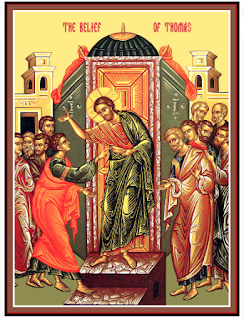
After I’ve come to believe in Jesus as “my Lord and my God,” like the once unbelieving Thomas, and so have eternal life with God, now what? How do I live my life from now until the resurrection?
The opening of today’s Gospel lesson finds seven of Jesus’ disciples hanging out together. That in itself is healthy. We Christians need each other. This is why the New Testament book of Hebrews tells the Church: “to [not neglect to] meet together, as is the habit of some, but encouraging one another…” (Hebrews 10:25)
So, here we meet those seven disciples of Jesus, gaining strength from their fellowship around God’s Word, but still not clear about what they should do now.
Then, Peter announces, “I’m going out to fish…” (John 21:3) Friends, the call to follow Jesus and the call to gather with His Church, is not a call away from the world or its mundane pursuits. Part of the call of Jesus is, as we’re regularly fortified and challenged by God’s Word through the Church in worship, the Church in study, and the Church in service, to go into the everyday places of life, fulfill our daily duties, and be Christ’s witnesses “out there.”
We can’t share the Gospel with others if we spend all our time with the people in our church family who agree with us about Jesus. Imagine a football team that spent all of their games in a huddle. Not much would happen.
Jesus has sent us into the world. That’s why I told Trish a few weeks ago during our staff meeting that I want to personally devote two nights a week this summer to doing kindness outreaches.
Peter decides to go fishing and the other disciples, even the ones who weren’t formerly fishermen, say, “We’ll go with you.” (John 21:3)
The disciples spend the night fishing and catch nothing. Life can be like that, even when you’re following Jesus. You seek to be faithful, maybe faithful in sharing Jesus with others, and nothing happens, no one is interested. At times like these, the life of discipleship seems futile and meaningless.
Early in the morning following this futile fishing venture, someone calls the disciples from the shore. They don’t recognize the risen Jesus at first. Jesus doesn’t say, as our translation puts it, “Friends, haven’t you any fish?” (John 21:5) Rather than “friends," the word Jesus uses here to address them is Παιδία (paidia). It means children. It’s the Greek word that gives us the English words pediatrician and pediatrics. Jesus tenderly calls out to the disciples who have been seeking to be faithful in spite of the challenges of this world, “Children, you don’t have any fish, do you?” No, they don’t have any fish, the disciples admit.
So, echoing a similar incident that occurred near the beginning of His earthly ministry recounted in Luke, chapter 5, Jesus tells the disciples, still unaware of His identity, to throw their net to the right side of the boat. No one says as Peter did in that earlier incident, “We’ve been out all night. There aren’t any fish to be had.” Instead, like little children, credulous and unmarred by cynicism, they toss the net over the side of the boat. The net becomes so heavy with fish that they can’t haul it in.
This is a picture of God’s grace. There is no end to it. He loves us. His Son died to free us from our sin, from death, and from our idolatries. He covers those who trust in Jesus with His abundant forgiveness and new life, even in the midst of life’s frequent futility.
I’d been called to the hospital room of a twenty-one-year-old who had been fighting cancer for seven years. She had taken a turn for the worse. On the car ride, I prayed I could get there before she died. I walked into her room to find her sitting in a chair, eating a chicken dinner her grandmother had sent. I just looked at her, a bit shocked. She smiled at me and said, “I know. I’m complicated.” After that rally, she did, some weeks later, die. But I reflected later that while her life had been complicated by cancer and this life, she wasn’t complicated at all. She trusted in Jesus and was committed to taking the next step in His rich grace even in the midst of great pain and uncertainty.
The rich, abundant grace, love, and favor of Christ are on offer to us all, no matter how complicated (or futile) our lives can become.
John is the first to recognize the man on the shore as the risen Jesus. On hearing John say, “It is the Lord,” Peter throws himself into the water to meet Jesus.
This incident provides another contrast between that earlier miraculous catch of fish Luke talks about and this one. There, you’ll remember, after Jesus caused Peter’s nets to fairly burst at the seams, Peter fell on his face and said, “Go away from me, Lord; I am a sinful man!” (Luke 5:8) But now Peter can’t wait to get to Jesus.
This is the difference between life under the Law and life under the Gospel.
A life lived under the Law is one in which we labor under the delusion that we can or must be good enough or work hard enough to gain God’s favor and forgiveness. That was the life that Peter was living earlier. God’s Law is good because it describes the life of righteousness. But it’s pure egomania for us to think that we can keep God’s Law. As the layperson (not the comedian) Steve Martin, wrote on Twitter the other day, “The job of God’s Law is to obliterate any confidence that you might have in anything outside of Jesus Christ.” Martin Luther said that the function of God's Law is to drive us to despair over our sin to the foot of Jesus Christ, to the only One Who can set us free from the debt for sin we owe our Maker!
But now, after Easter Sunday, Peter understands that despite his sins, he lives life under the Gospel of Jesus Christ. As Christians, we still sin. That’s why Jesus calls us to daily acknowledge our sin so that its power over us can be covered in the grace of Jesus.
This is what Peter experiences now as he comes into Jesus’ presence.
On the shore, Peter finds that Jesus has lit a charcoal fire, “burning coals” in our reading translating the Greek word, ἀνθρακιὰν (anthrakian), from which we get the English word, anthracite. The only other time we encounter this word in the whole Bible is in John 18:18, where Peter warms himself by a fire set by Roman soldiers in the place where Peter denied knowing Jesus three times. As Peter sees the burning coals, he no doubt remembers how he had abandoned the Lord on the night of Jesus’ trial.
Peter doesn’t run away though. He already knows that Jesus has forgiven him and sent him into the world, as he sends us, despite our sins and imperfections, to point others to Jesus as the way and the truth and the life.
Jesus then, in a reversal of Peter’s three denials of his Lord, underscores His forgiveness and His sending of Peter, when, three times, He asks: “Simon son of John, do you love me more than these?” “Feed my lambs.” “Take care of my sheep.” “Feed my sheep.” (John 21:15-17)
When we live under Christ’s Gospel, not only are our sins forgiven, we also have a mission, to feed the Church and to feed the world on the truth of the same Gospel that has saved us from sin, death, and darkness for everlasting life with God.
Following Jesus isn’t easy. Jesus tells Peter that his life is no longer his own, that he will die as one sent into the world to fish for people. But, you can be sure that as he walked with the risen Christ for the rest of his life, Peter, knowing that he lived under Christ's gospel, would always say, “Lord, to whom shall we go? You have the words of eternal life.” (John 6:68)
Jesus has died and risen for you. That's an accomplished fact.
So, now what?
How should we live each day?
Simply in this way: By turning to Jesus each day, confident that wherever we may go and whatever the duties of our lives may call us to do, we live under His gospel, set free to be God’s people now and always.
Amen
Tuesday, May 03, 2022
Wednesday, April 27, 2022
The Work, the Mission, the Power, and the Model
[This past Sunday, I was privileged to lead worship and preach at the non-denominational Emma Anderson Memorial Chapel in Topsail, North Carolina. As they do with guest pastors fifty Sundays a year, the people of the chapel provided my family and me with a parsonage-by-the-sea, an opportunity to rest and recharge our batteries, and incredible hospitality!]
EMMA Anderson Sunday Worship Service from Emma Anderson Memorial Chapel on Vimeo.
John 20:19-31Today, in light of the Bible lesson, I want to talk with you about four things: the work, the mission, the power, and the model.
The lesson opens with Jesus’ disciples huddled in a locked room on the first Easter evening. The doors are locked because they’re afraid of their fellow Jews, afraid that, like their Lord and teacher, they might become targets for rejection, arrest, torture, and death.
Now, the disciples had heard the report of some of the women of their group that Jesus was risen and alive. John’s gospel tells us that John himself had hurried to the tomb in that foot race with Peter and, as a consequence, believed the women’s words. But most of the disciples seem to have concluded that, even if the reports were true, they had no idea of whether, if they were crucified like Jesus, they would also rise again. Besides, because we’re all averse to pain, they surely don’t want to be crucified even if they are going to be raised again!
Some have suggested that on that first Easter evening, the disciples may have had another fear. Namely, if Jesus really was risen, what would He do or say to them after they had scattered and abandoned Him the second He was arrested?
Amid this scene of fear and uncertainty, the risen Jesus, no longer constrained by time or space, appears in that locked room and says, “Peace be with you!” These are more than the words of a well-wisher. Jesus is God the Son and when God speaks, things happen. When, at the creation of this universe, God said, “Let there be light,” there was light. God said through the prophet Isaiah: “My Word will not return to me empty, but will accomplish what I desire...” (Isaiah 55:11) So, in pronouncing peace on the disciples, Jesus isn’t just wishing them His peace, He’s giving them peace.
When Jesus talks about peace, He’s not telling the disciples that their lives on earth will be a smooth ride and they’ll never know conflict and they’ll always get what they want. To have Jesus’ peace is to have a right relationship with God, our sins are forgiven, and we have life with God, both here in this imperfect world and in perfection in life beyond the grave.
And this brings us to our first word; work. Peace with God is not something we can work for or attain. Peace is God’s gift to us through Jesus. Ephesians 2:8-9 tells us, “For it is by grace you have been saved, through faith—and this is not from yourselves, it is the gift of God...”
When Jesus said from the cross, “It is finished,” He meant it. Everything necessary for the forgiveness of your sins and for everlasting life with God has already been accomplished by Jesus. He took the death sentence for sin we deserve. He rose again to open up your never-ending life with God. True peace is God’s work and God’s gift to us through Jesus. I hope that’s as big a relief to you as it is to me!
The Bible teaches that we are born in sin. That is, we have a sinful nature that leads us to commit individual sins. Our sin is a serious matter. The Bible is unblinking in saying the rightful punishment for our sinful nature is separation from God, eternal chaos and condemnation rather than peace. That’s why Jesus’ work from the cross and tomb is so amazing and wonderful! With the apostle Paul, we can say: “Who will rescue me from this body that is subject to death? Thanks be to God, who delivers me through Jesus Christ our Lord!” (Romans 7:24-25) Thank God for the finished work of Jesus Christ for us!
After giving His disciples His peace, Jesus says, “As the Father has sent me, I am sending you.” (John 20:21) This is a remarkable thing! Jesus was sent into our fallen world by God the Father to do the work of our salvation. Now, Jesus says, He’s sending His disciples, including you and me, into the world. He does because He has a particular calling for us: We’re to share the good news of new and everlasting life for all who believe in Jesus and the work He’s already accomplished for every human being. Giving others the Word of new and everlasting life for sinful people who trust in Jesus is our mission. This, of course, is called the great commission, the mission Jesus gives the Church and individual Christians: to be and make disciples, sharing what Jesus has done to save us from sin and death to give us His peace! He describes that mission in today’s lesson as declaring God’s forgiveness to repentant believers in Jesus and withholding God’s forgiveness from those who refuse to trust in Jesus.
I’m convinced that more people are open to our mission from Christ than we Christians often realize. Part of my personal mission field is the deli of a Kroger grocery stor near me. I’ve gotten to know some of the employees and there’s one man in particular that our church has been able to help in the past. A few weeks ago, I was at the deli counter again. While another employee waited on me, this man we’ll call Bill wrote a note for me on the back of a deli order form. In large letters, he wrote, “Please! Please pray for my son!” I looked at him after reading his note. I could see how much he wanted God in his son’s life circumstances. You and I are surrounded by people like Bill who need Christian disciples who will pursue the mission Jesus has given to us of sharing the Gospel with everyone!
Of course, if we try to do our mission on the basis of our own sparkling personalities, we won’t get done what Jesus has sent us to get done. That’s why after Jesus had given the disciples–all disciples, including you and me–His mission, John says, “with that [Jesus] breathed on them and said, ‘Receive the Holy Spirit.’” (John 20:22) This brings us to our third word for the morning. After Jesus has done all the work for us to know God’s peace and after He gives us our mission, He gives us the power to fulfill that mission. He gives us the Holy Spirit!
Jesus says elsewhere in John’s gospel, “apart from me you can do nothing.” (John 15:5) We Christians often forget this. When I was a seminary student, our spiritual and academic progress was assessed annually by a committee that included laypeople, professors, and classmates. In preparation for these evaluations, we had to write essays in response to a series of questions. I’m embarrassed to say that in my first year, I began one essay with these words, “I have great confidence in my potential for being a good pastor.” I was rightly called out for arrogance! No Christian and no Christian pastor will ever fulfill Christ’s mission for them by their own “potential” or abilities. That’s why Jesus gives the Holy Spirit to every believer. Jesus promised this to His disciples before His crucifixion: “I will ask the Father, and he will give you another advocate to help you and be with you forever— the Spirit of truth.” (John 14:16-17) If you can say that Jesus is your Lord, you can be assured that Jesus has given you the Holy Spirit. God’s power for fulfilling His mission for you is in you!
The last part of our lesson is well known to you. It takes place one week after the resurrection. Thomas, who hadn’t been in the locked room when the risen Jesus appeared, had refused to believe that Jesus was risen. But Jesus didn’t give up on Thomas, any more than He gives up on us when we stubbornly refuse to trust Him or when we violate His will. Jesus appears to Thomas and the other disciples. Jesus invites Thomas to touch His wounds. Then Jesus tells Thomas, literally, in John 20:27, “Do not be unbelieving, but believing.” At this, the formerly unbelieving Thomas calls Jesus, “My Lord and my God.” (John 1:28) Here, Jesus becomes our model for pursuing our mission. Jesus doesn’t upbraid Thomas. He doesn’t criticize Thomas’ lack of faith. Instead, He calls Thomas to believe in Him and so to know the peace of God. Would Thomas have come to believe in Jesus had Jesus not been patient with Thomas? As a former atheist, I can tell you that it was the patient, loving witness of Christians who shared Christ and His Gospel with me that brought me to being able to say of Jesus, “My Lord and my God!”
Often today, it seems that Christians treat their unbelieving neighbors as enemies. But the Bible tells us that our real enemies aren’t other people. Our enemies are the devil and the spiritual forces of darkness who imprison people in unbelief and sin. Our neighbors are people who, just like us, need the peace Jesus has secured through His death and resurrection. This is why 1 Peter tells us: “Always be prepared to give an answer to everyone who asks you to give the reason for the hope that you have. But do this with gentleness and respect…” (1 Peter 3:15) For this, friends, Jesus is our model.
So, four words for us to consider today. The work for our peace with God, others, and ourselves, which has already been completed by Jesus; the mission Jesus gives to share that peace; the power Jesus gives us to fulfill our mission by sending the Holy Spirit; and the model Jesus has given us for pursuing our mission with gentleness and respect. May Jesus bless and guide you as you and this remarkable fellowship of believers follow Him and lift Him up to this community and world. Amen
The lesson opens with Jesus’ disciples huddled in a locked room on the first Easter evening. The doors are locked because they’re afraid of their fellow Jews, afraid that, like their Lord and teacher, they might become targets for rejection, arrest, torture, and death.
Now, the disciples had heard the report of some of the women of their group that Jesus was risen and alive. John’s gospel tells us that John himself had hurried to the tomb in that foot race with Peter and, as a consequence, believed the women’s words. But most of the disciples seem to have concluded that, even if the reports were true, they had no idea of whether, if they were crucified like Jesus, they would also rise again. Besides, because we’re all averse to pain, they surely don’t want to be crucified even if they are going to be raised again!
Some have suggested that on that first Easter evening, the disciples may have had another fear. Namely, if Jesus really was risen, what would He do or say to them after they had scattered and abandoned Him the second He was arrested?
Amid this scene of fear and uncertainty, the risen Jesus, no longer constrained by time or space, appears in that locked room and says, “Peace be with you!” These are more than the words of a well-wisher. Jesus is God the Son and when God speaks, things happen. When, at the creation of this universe, God said, “Let there be light,” there was light. God said through the prophet Isaiah: “My Word will not return to me empty, but will accomplish what I desire...” (Isaiah 55:11) So, in pronouncing peace on the disciples, Jesus isn’t just wishing them His peace, He’s giving them peace.
When Jesus talks about peace, He’s not telling the disciples that their lives on earth will be a smooth ride and they’ll never know conflict and they’ll always get what they want. To have Jesus’ peace is to have a right relationship with God, our sins are forgiven, and we have life with God, both here in this imperfect world and in perfection in life beyond the grave.
And this brings us to our first word; work. Peace with God is not something we can work for or attain. Peace is God’s gift to us through Jesus. Ephesians 2:8-9 tells us, “For it is by grace you have been saved, through faith—and this is not from yourselves, it is the gift of God...”
When Jesus said from the cross, “It is finished,” He meant it. Everything necessary for the forgiveness of your sins and for everlasting life with God has already been accomplished by Jesus. He took the death sentence for sin we deserve. He rose again to open up your never-ending life with God. True peace is God’s work and God’s gift to us through Jesus. I hope that’s as big a relief to you as it is to me!
The Bible teaches that we are born in sin. That is, we have a sinful nature that leads us to commit individual sins. Our sin is a serious matter. The Bible is unblinking in saying the rightful punishment for our sinful nature is separation from God, eternal chaos and condemnation rather than peace. That’s why Jesus’ work from the cross and tomb is so amazing and wonderful! With the apostle Paul, we can say: “Who will rescue me from this body that is subject to death? Thanks be to God, who delivers me through Jesus Christ our Lord!” (Romans 7:24-25) Thank God for the finished work of Jesus Christ for us!
After giving His disciples His peace, Jesus says, “As the Father has sent me, I am sending you.” (John 20:21) This is a remarkable thing! Jesus was sent into our fallen world by God the Father to do the work of our salvation. Now, Jesus says, He’s sending His disciples, including you and me, into the world. He does because He has a particular calling for us: We’re to share the good news of new and everlasting life for all who believe in Jesus and the work He’s already accomplished for every human being. Giving others the Word of new and everlasting life for sinful people who trust in Jesus is our mission. This, of course, is called the great commission, the mission Jesus gives the Church and individual Christians: to be and make disciples, sharing what Jesus has done to save us from sin and death to give us His peace! He describes that mission in today’s lesson as declaring God’s forgiveness to repentant believers in Jesus and withholding God’s forgiveness from those who refuse to trust in Jesus.
I’m convinced that more people are open to our mission from Christ than we Christians often realize. Part of my personal mission field is the deli of a Kroger grocery stor near me. I’ve gotten to know some of the employees and there’s one man in particular that our church has been able to help in the past. A few weeks ago, I was at the deli counter again. While another employee waited on me, this man we’ll call Bill wrote a note for me on the back of a deli order form. In large letters, he wrote, “Please! Please pray for my son!” I looked at him after reading his note. I could see how much he wanted God in his son’s life circumstances. You and I are surrounded by people like Bill who need Christian disciples who will pursue the mission Jesus has given to us of sharing the Gospel with everyone!
Of course, if we try to do our mission on the basis of our own sparkling personalities, we won’t get done what Jesus has sent us to get done. That’s why after Jesus had given the disciples–all disciples, including you and me–His mission, John says, “with that [Jesus] breathed on them and said, ‘Receive the Holy Spirit.’” (John 20:22) This brings us to our third word for the morning. After Jesus has done all the work for us to know God’s peace and after He gives us our mission, He gives us the power to fulfill that mission. He gives us the Holy Spirit!
Jesus says elsewhere in John’s gospel, “apart from me you can do nothing.” (John 15:5) We Christians often forget this. When I was a seminary student, our spiritual and academic progress was assessed annually by a committee that included laypeople, professors, and classmates. In preparation for these evaluations, we had to write essays in response to a series of questions. I’m embarrassed to say that in my first year, I began one essay with these words, “I have great confidence in my potential for being a good pastor.” I was rightly called out for arrogance! No Christian and no Christian pastor will ever fulfill Christ’s mission for them by their own “potential” or abilities. That’s why Jesus gives the Holy Spirit to every believer. Jesus promised this to His disciples before His crucifixion: “I will ask the Father, and he will give you another advocate to help you and be with you forever— the Spirit of truth.” (John 14:16-17) If you can say that Jesus is your Lord, you can be assured that Jesus has given you the Holy Spirit. God’s power for fulfilling His mission for you is in you!
The last part of our lesson is well known to you. It takes place one week after the resurrection. Thomas, who hadn’t been in the locked room when the risen Jesus appeared, had refused to believe that Jesus was risen. But Jesus didn’t give up on Thomas, any more than He gives up on us when we stubbornly refuse to trust Him or when we violate His will. Jesus appears to Thomas and the other disciples. Jesus invites Thomas to touch His wounds. Then Jesus tells Thomas, literally, in John 20:27, “Do not be unbelieving, but believing.” At this, the formerly unbelieving Thomas calls Jesus, “My Lord and my God.” (John 1:28) Here, Jesus becomes our model for pursuing our mission. Jesus doesn’t upbraid Thomas. He doesn’t criticize Thomas’ lack of faith. Instead, He calls Thomas to believe in Him and so to know the peace of God. Would Thomas have come to believe in Jesus had Jesus not been patient with Thomas? As a former atheist, I can tell you that it was the patient, loving witness of Christians who shared Christ and His Gospel with me that brought me to being able to say of Jesus, “My Lord and my God!”
Often today, it seems that Christians treat their unbelieving neighbors as enemies. But the Bible tells us that our real enemies aren’t other people. Our enemies are the devil and the spiritual forces of darkness who imprison people in unbelief and sin. Our neighbors are people who, just like us, need the peace Jesus has secured through His death and resurrection. This is why 1 Peter tells us: “Always be prepared to give an answer to everyone who asks you to give the reason for the hope that you have. But do this with gentleness and respect…” (1 Peter 3:15) For this, friends, Jesus is our model.
So, four words for us to consider today. The work for our peace with God, others, and ourselves, which has already been completed by Jesus; the mission Jesus gives to share that peace; the power Jesus gives us to fulfill our mission by sending the Holy Spirit; and the model Jesus has given us for pursuing our mission with gentleness and respect. May Jesus bless and guide you as you and this remarkable fellowship of believers follow Him and lift Him up to this community and world. Amen

Monday, April 18, 2022
Celebrating Easter for What It Is
[Below you'll find live stream videos of the traditional and modern Easter worship services of Living Water Lutheran Church in Centercille, Ohio, along with the text of the message for the day. Christ is risen! He is risen indeed! Alleluia!]
Luke 24:1-12
Luke 24:1-12
It seems that much of the world celebrates Easter. Every year, stores ply their Easter food, Easter candies, Easter eggs, Easter cards, and even Easter wardrobes. None of this has much to do with Easter itself, of course.
In the meantime, in churches around the world, pastors and worship leaders tell their congregations, “Christ is risen!” and congregations respond, “He is risen, indeed!” But I wonder if even we Christians have a clear handle on what it means to celebrate Easter for what it is. Easter, along with Good Friday which precedes it, is, as I’ve said before, the most important event in history. Do we celebrate it as though that were true?
In a sermon preached thirty-two years ago, the late Lutheran pastor and novelist, Bo Giertz, talked about three things that make a happy Easter, that is, an Easter in which we truly celebrate the day for the eternity-changing event it is. I want to point to those three things as we consider today’s Gospel lesson in which Luke the evangelist tells us what happened on the first Easter, the day when Jesus Christ, truly God and truly human, rose from the dead.
The first element of celebrating Easter for what it truly is, Giertz says, is remembering again that Jesus rising from death was “unexpected and unbelievable.” You and I may know–you and I may even be–people who have, medically speaking, been brought back from the dead. We’ve all thrilled at accounts of people’s NDEs, near-death experiences. But none of us know–and none of us are–people who, like Jesus, were dead and buried on a Friday, laid lifeless in a tomb on a Saturday, and raised to life again on a Sunday. It’s not within our normal experience.
When the women–Mary Magdalene, Joanna, Mary the mother of James, and others–went to Jesus’ tomb early on Easter Sunday morning, they had no expectation of learning that Jesus had risen from the dead. Jesus had said many times during His ministry that, as the Old Testament prophesied of God’s Messiah, He was going to die and then rise again. But it was hard for the first disciples to believe that such a thing could happen. It’s harder still to believe that a person who dies and rises, sinless Himself, would do it not for Himself, but for others, you and me, and for every other sinful human being. As the women gazed into the empty tomb on that first Easter Sunday, two men–angels, messengers of God–say, “Why do you look for the living among the dead? He is not here; he has risen! Remember how he told you, while he was still with you in Galilee: ‘The Son of Man must be delivered over to the hands of sinners, be crucified, and on the third day be raised again.’ ” (Luke 24:5-7) It’s now, when the Word of God the Son, Jesus, is preached to them, that they remember and begin to have faith. (Luke 24:8) That’s the power of God’s Word. It can create faith where there has been unbelief.
We shouldn’t be hard on the women for not “getting it” at first, for needing to be reminded of Jesus’ promises. We have the same problem. We confess our faith in Jesus during worship on Sunday mornings and as soon as the service is ended, we’re accosted by our own sinful impulses, by temptation and adversity, and, worst of all by unbelief. Martin Luther spoke for us all when he wrote, “We need to hear the Gospel every day because we forget it every day.”
And if it’s hard for believers like Mary Magdalene and you and me to remember that Jesus has risen from the dead for the whole cosmos, we should have compassion and patience for all the unbelievers in the world who find it hard to believe in Jesus conquering sin, death, and futility through His resurrection.
The Church Council is currently reading a book, The Reason I Believe. It’s a book of Christian apologetics. Christian apologetics seeks to explain the empirical bases for believing in God and the crucified and risen Jesus, God the Son. When I was an atheist, it was partly from reading or hearing Christian apologetics, as in Mere Christianity by C.S. Lewis and Who Moved the Stone by Frank Morison, that my mind was opened to the possibility of faith in Christ. Christians need to know how to lovingly and respectfully respond to the skepticism and unbelief many feel about faith in Christ. But apologetics will not cause people to believe in Jesus. A man I know used to say, “I accept the fact that Jesus rose from the dead. Why do I need to follow Him?” It’s only the Word of God, shared with compassion, respect, and patience by many Christians, that will create faith in the risen Jesus Christ. That’s how I came to believe in Jesus and in Easter. The Bible tells us that “faith comes from hearing the message, and the message is heard through the word about Christ…” (Romans 10:17) It’s the Word about Jesus, and the Word alone, that creates faith in Christ and the outrageous good news that, “Jesus Christ is risen from the dead!” Christians need to learn to speak it to all the world.
The second element in celebrating Easter for what it is, Giertz says, is to remember that “the Resurrection is a fact, a unique fact.”
In the meantime, in churches around the world, pastors and worship leaders tell their congregations, “Christ is risen!” and congregations respond, “He is risen, indeed!” But I wonder if even we Christians have a clear handle on what it means to celebrate Easter for what it is. Easter, along with Good Friday which precedes it, is, as I’ve said before, the most important event in history. Do we celebrate it as though that were true?
In a sermon preached thirty-two years ago, the late Lutheran pastor and novelist, Bo Giertz, talked about three things that make a happy Easter, that is, an Easter in which we truly celebrate the day for the eternity-changing event it is. I want to point to those three things as we consider today’s Gospel lesson in which Luke the evangelist tells us what happened on the first Easter, the day when Jesus Christ, truly God and truly human, rose from the dead.
The first element of celebrating Easter for what it truly is, Giertz says, is remembering again that Jesus rising from death was “unexpected and unbelievable.” You and I may know–you and I may even be–people who have, medically speaking, been brought back from the dead. We’ve all thrilled at accounts of people’s NDEs, near-death experiences. But none of us know–and none of us are–people who, like Jesus, were dead and buried on a Friday, laid lifeless in a tomb on a Saturday, and raised to life again on a Sunday. It’s not within our normal experience.
When the women–Mary Magdalene, Joanna, Mary the mother of James, and others–went to Jesus’ tomb early on Easter Sunday morning, they had no expectation of learning that Jesus had risen from the dead. Jesus had said many times during His ministry that, as the Old Testament prophesied of God’s Messiah, He was going to die and then rise again. But it was hard for the first disciples to believe that such a thing could happen. It’s harder still to believe that a person who dies and rises, sinless Himself, would do it not for Himself, but for others, you and me, and for every other sinful human being. As the women gazed into the empty tomb on that first Easter Sunday, two men–angels, messengers of God–say, “Why do you look for the living among the dead? He is not here; he has risen! Remember how he told you, while he was still with you in Galilee: ‘The Son of Man must be delivered over to the hands of sinners, be crucified, and on the third day be raised again.’ ” (Luke 24:5-7) It’s now, when the Word of God the Son, Jesus, is preached to them, that they remember and begin to have faith. (Luke 24:8) That’s the power of God’s Word. It can create faith where there has been unbelief.
We shouldn’t be hard on the women for not “getting it” at first, for needing to be reminded of Jesus’ promises. We have the same problem. We confess our faith in Jesus during worship on Sunday mornings and as soon as the service is ended, we’re accosted by our own sinful impulses, by temptation and adversity, and, worst of all by unbelief. Martin Luther spoke for us all when he wrote, “We need to hear the Gospel every day because we forget it every day.”
And if it’s hard for believers like Mary Magdalene and you and me to remember that Jesus has risen from the dead for the whole cosmos, we should have compassion and patience for all the unbelievers in the world who find it hard to believe in Jesus conquering sin, death, and futility through His resurrection.
The Church Council is currently reading a book, The Reason I Believe. It’s a book of Christian apologetics. Christian apologetics seeks to explain the empirical bases for believing in God and the crucified and risen Jesus, God the Son. When I was an atheist, it was partly from reading or hearing Christian apologetics, as in Mere Christianity by C.S. Lewis and Who Moved the Stone by Frank Morison, that my mind was opened to the possibility of faith in Christ. Christians need to know how to lovingly and respectfully respond to the skepticism and unbelief many feel about faith in Christ. But apologetics will not cause people to believe in Jesus. A man I know used to say, “I accept the fact that Jesus rose from the dead. Why do I need to follow Him?” It’s only the Word of God, shared with compassion, respect, and patience by many Christians, that will create faith in the risen Jesus Christ. That’s how I came to believe in Jesus and in Easter. The Bible tells us that “faith comes from hearing the message, and the message is heard through the word about Christ…” (Romans 10:17) It’s the Word about Jesus, and the Word alone, that creates faith in Christ and the outrageous good news that, “Jesus Christ is risen from the dead!” Christians need to learn to speak it to all the world.
The second element in celebrating Easter for what it is, Giertz says, is to remember that “the Resurrection is a fact, a unique fact.”
As to its facticity, we have more documentation of Jesus' life, death, and resurrection, closer to the events themselves, than we do for many of the most prominent figures of ancient history.
And it isn't just ancient documentation that underscores the truth of Jesus' resurrection. Israeli theologian and historian Pinchas Lapide, an orthodox Jew, did not become a Christian and claimed that Jesus was only the Messiah for Gentiles, concluded, "I accept the resurrection of Easter Sunday not as an invention of the community of disciples, but as a historical event." Based on the facts and Jesus' track record, Lapide also concluded that Jesus would return to this world at the end of history.
Jesus' resurrection is also a unique fact. We may be inspired by the words and actions of human beings in history or by the beauty of the universe God created, but only Jesus, risen and living, can forgive our sins, cover us with His grace, make us new, and give us life with God to be enjoyed even now in this imperfect world and one day to be enjoyed in the perfect peace of eternity when we live in His direct presence. Only Jesus can say, “I am the resurrection and the life. The one who believes in me will live, even though they die; and whoever lives by believing in me will never die.” (John 11:25-26)
The third thing that lets us truly celebrate Easter is that “Jesus’ resurrection has decisive consequences for us all.” Jesus’ resurrection was the beginning of the transformation God is going to bring to all who belong to Him. Jesus’ Easter victory over sin and death–our sin and death–shows us that when He returns to this creation at the end of its life, the old heavens and the old earth will pass away and the new heavens and new earth will come into being. It will be a new creation: free of sin, death, and futility.
The risen Jesus Himself shows us what this new creation will be like for those who believe in Him. For the most part, on that first Easter, Jesus’ disciples failed to recognize Him in His risen form. He seemed like just another man. But He was different. Jesus was like Himself, but different, new. He still bore the scars of His crucifixion and, like any other human being when hungry, asked for something to eat. But He also walked past walls into locked rooms. He was unbound by space or time. When Jesus raises believers in Him from the dead, we will no longer be bound by the constraints of this universe, nor by sin, death, or unbelief. The Bible says that believers in Jesus already are children of God and that while “what we will be has not yet been made known…[we do] know that when Christ appears [that is, when He returns], we shall be like him, for we shall see him as he is.” (1 John 3:2) This is the greatest and most amazing consequence of Easter: Because Jesus died and rose for us, all who believe in Him, we will one day be like the risen Jesus. Today, Jesus is with us through His Word, the Sacraments, and the Church. On the day when He returns to this world, He will call us from death and raise us to live in God’s presence in, as The Small Catechism puts it, “in righteousness and purity forever.”
Friends, we can celebrate Easter with joy because, on Easter, God did something unexpected and, from a human perspective, unbelievable, the Resurrection of Jesus, in which we can only believe by the power of God’s Word.
We can also celebrate Easter with joy because Jesus’ resurrection is an accomplished fact, attested to by more than five hundred practical, hard-headed, less than perfect, self-centered people, Jesus’ first followers who, despite their imperfections, risked and, often, without anything to be gained in this world and much to be lost. gave their lives to pass on the good news that they had seen and witnessed, that Jesus Christ, truly God and truly human, actually died and actually rose from the dead to give forgiveness and eternity to all who believe in Him.
We can also celebrate Easter with joy because Easter has consequences for all who believe, consequences that will last for all eternity. Even as He faced the cross, Jesus could exalt over the eternal consequences of His crucifixion and resurrection for all who believe. As He told God the Father in prayer, “I give them eternal life, and they shall never perish; no one will snatch them out of my hand.” (John 10:28)
We have good reason to truly celebrate Easter, folks. Christ is risen! He is risen indeed! Amen
The third thing that lets us truly celebrate Easter is that “Jesus’ resurrection has decisive consequences for us all.” Jesus’ resurrection was the beginning of the transformation God is going to bring to all who belong to Him. Jesus’ Easter victory over sin and death–our sin and death–shows us that when He returns to this creation at the end of its life, the old heavens and the old earth will pass away and the new heavens and new earth will come into being. It will be a new creation: free of sin, death, and futility.
The risen Jesus Himself shows us what this new creation will be like for those who believe in Him. For the most part, on that first Easter, Jesus’ disciples failed to recognize Him in His risen form. He seemed like just another man. But He was different. Jesus was like Himself, but different, new. He still bore the scars of His crucifixion and, like any other human being when hungry, asked for something to eat. But He also walked past walls into locked rooms. He was unbound by space or time. When Jesus raises believers in Him from the dead, we will no longer be bound by the constraints of this universe, nor by sin, death, or unbelief. The Bible says that believers in Jesus already are children of God and that while “what we will be has not yet been made known…[we do] know that when Christ appears [that is, when He returns], we shall be like him, for we shall see him as he is.” (1 John 3:2) This is the greatest and most amazing consequence of Easter: Because Jesus died and rose for us, all who believe in Him, we will one day be like the risen Jesus. Today, Jesus is with us through His Word, the Sacraments, and the Church. On the day when He returns to this world, He will call us from death and raise us to live in God’s presence in, as The Small Catechism puts it, “in righteousness and purity forever.”
Friends, we can celebrate Easter with joy because, on Easter, God did something unexpected and, from a human perspective, unbelievable, the Resurrection of Jesus, in which we can only believe by the power of God’s Word.
We can also celebrate Easter with joy because Jesus’ resurrection is an accomplished fact, attested to by more than five hundred practical, hard-headed, less than perfect, self-centered people, Jesus’ first followers who, despite their imperfections, risked and, often, without anything to be gained in this world and much to be lost. gave their lives to pass on the good news that they had seen and witnessed, that Jesus Christ, truly God and truly human, actually died and actually rose from the dead to give forgiveness and eternity to all who believe in Him.
We can also celebrate Easter with joy because Easter has consequences for all who believe, consequences that will last for all eternity. Even as He faced the cross, Jesus could exalt over the eternal consequences of His crucifixion and resurrection for all who believe. As He told God the Father in prayer, “I give them eternal life, and they shall never perish; no one will snatch them out of my hand.” (John 10:28)
We have good reason to truly celebrate Easter, folks. Christ is risen! He is risen indeed! Amen
Life for the Journey
[Below you'll find the live stream video of this past week's Maundy Thursday service with the people ad friends of Living Water Lutheran Church in Centerville, Ohio, and the text of the message.]
Luke 22:7-20
Luke 22:7-20
On Maundy Thursday, we remember two things about the meal Jesus shared with the twelve apostles on the Thursday before His crucifixion.
First, we remember the new commandment, or, as in the Latin from which the word Maundy comes, a new mandatum, a new mandate, that Jesus gives to His Church on Thursday of the first Holy Week. Jesus commands, mandates us to love each other with the same self-sacrifice with which He has loved us. If that commandment doesn’t alarm us and drive us to repent for our sin, asking God to love others through us, we’re living in a state of denial. That’s because none of us can fulfill this commandment in our own power or goodness. We need Jesus, remembering that He tells us the total truth when He says, “apart from me you can do nothing.” (John 15:5)
The second thing we remember on Maundy Thursday, the topic that will occupy us this evening, is Jesus’ institution of the sacrament of Holy Communion.
Holy Baptism, of course, is the sacrament by which Jesus gives us new life, Holy Communion is the sacrament by which Jesus sustains us in our life with Him. After Jesus was baptized at the Jordan River, He was led by the Spirit to face temptations in the wilderness. After you and I are baptized, until we die and are called from the dead by Jesus to live with Him in a sinless eternity, we still live in this world, wrestling with the temptations and tests thrown at us by the devil, the world, and our own sinful selves. The Gospel of Matthew tells us that after Jesus was in the wilderness for forty days, God sent angels to minister to, to take care of, Jesus. (Matthew 4:11) In Holy Communion, Jesus ministers to you and me directly and personally. He gives us His own sinless, eternally triumphant self. “This is my body given for you…,” He says. And, “This cup is the new covenant in my blood, which is poured out for you.” (Luke 22:19-20)
Our Gospel lesson for tonight begins with Jesus sending two of His disciples–Peter and John–into Jerusalem to make preparations so that He could celebrate the Passover Seder with His disciples. In sending Peter and John, we see that Jesus is bringing both the fulfillment of the old covenant and instituting the new covenant. Under the old covenant, the one between God and His people, the Jews, it was customary for two men from a family to go to the outer courts of the temple in Jerusalem so that the Passover lamb their families would eat during the Seder dinner could be slaughtered. They would then take the slaughtered lamb back to the homes or inns in which the meal would take place. But, in a break from tradition, Peter and John weren’t sent to do this on behalf of their biological families. Jesus would have this meal with His new family, the family of God called together by His Gospel Word, the Church. You’ll remember Jesus once said, “My mother and brothers are those who hear God’s word and put it into practice.” (Luke 8:21) Here are Peter and John putting Jesus’ Word into practice, preparing to celebrate a meal that encompasses not just one’s relatives, but all people who believe in Jesus.
Passover was the central festival of the Jewish calendar. It memorialized that moment when God’s people, then enslaved in Egypt, were set free and sent off to the land God promised them. Before the first Passover, God instructed His people to prepare for the tenth and final plague God brought on Egypt. The angel of death would take the life of the firstborn in every home and barnyard in Egypt unless the blood of a sacrificed lamb was smeared on the doorposts of those places. Blood is the means by which oxygen, the breath of God, gives life to every human being and every vertebrate animal. Blood is the means by which carbon dioxide, the toxic gas produced by respiration, is taken out of the tissues of the body. Blood then is life. When Cain killed his brother Abel in the Old Testament book of Genesis, his blood–his taken life–cried out to God. At the first Passover, the blood of the lambs, whose death was for the people who trusted in God, barred death access to the lives of the firstborn.
Another festival of the Jewish year was Yom Kippur, the Day of Atonement. On this day, a perfectly unblemished lamb was sacrificed at the temple. The lamb bore the sins of God’s people from the previous year. After it was sacrificed, the priest would sprinkle the people with the blood of this perfect lamb. By this means, the people were covered with life from God and the toxic impurity of their sin was removed from them. The problem was that under the old covenant, the effects of the sacrifice lasted, at the most, only a year. And so year after year, God’s guilt-plagued people were called to offer yet another lamb, to be covered once again by its blood. Even at that, people would often offer sin sacrifices throughout the year.
Friends, we too, would be plagued by sin and uncertainty about our standing with God were it not for one thing: Jesus has instituted a new covenant in which we can rest. John the Baptist talked about this new covenant when, pointing to Jesus, He said, ““Look, the Lamb of God, who takes away the sin of the world!” (John 1:29) The sin of the world, of the whole world, of every time and every place, including our sin, yours and mine.
Under the old covenant, priests daily, made sacrifices of lambs, doves, and grain to first, purify themselves of their own sin before they then offered sacrifices of people who came to the temple laden with guilt. Nothing but these constant sacrifices could assure people their sins were forgiven or carry them from death to life. But, referring to Jesus as our great high priest, the book of Hebrews tells us, “Unlike the other high priests, [Jesus] does not need to offer sacrifices day after day, first for his own sins, and then for the sins of the people. [Sinless Himself] He sacrificed for their sins once for all when he offered himself.” (Hebrews 7:27)
In Holy Communion, we don’t sacrifice Jesus on the cross again. That’s bad theology, intimating that what Jesus did on the cross wasn’t good enough. Controlling the timetable and circumstances ordained by God, Jesus offered the sacrifice of His innocent body and blood on the cross once and for all. This is why when biblically heedless people ask you when you were saved, you can confidently answer, “On a hill outside Jerusalem two thousand years ago.” Jesus has already done everything necessary for your sins to be forgiven by God and for you to have life with God. As I’ve said before: When Jesus said before dying on the cross, “It is finished,” He meant it! The apostle Paul wasn’t lying when He said, “If you declare with your mouth, ‘Jesus is Lord,’ and believe in your heart that God raised him from the dead, you will be saved.” (Romans 10:9) We become Christians not because we’ve made a decision for God, but because God made a decision for us. He decided to die for us! “While we were still sinners,” the Bible says, “Christ died for us.” (Romans 5:8) So, friends, in Jesus Christ, our sins are already forgiven. The only question is, do we believe in Him?
This is where Holy Communion comes in. While our salvation has already been accomplished and God’s decision for us is unchangeable, even when the Holy Spirit’s Word has convinced us to believe in Jesus, we can get wobbly in our walk with God. The devil, the world, and our sinful selves constantly press us toward unbelief. They lie to us, telling us we’re not good enough, that Jesus didn’t really die and rise, that we’re too bad and the world is too bad for the good news of new and everlasting life with God through faith in Jesus to be true. On top of that, life can batter us with setbacks, tragedies, and difficulties. “Pastor, I believe in Jesus,” someone told me recently, “but my life is so hard right now.” Holy Communion happens when the word of Jesus, along with Jesus’ promises to us, meets the bread and the wine and Jesus tells us, “This is My body and This is My blood. What I accomplished at the cross and tomb was for you. Your sins are forgiven. My good news is for you. I will never leave you nor forsake you. (Hebrews 13:5) Though your sins are like scarlet, I make your life as white as snow (Isaiah 1:18). As far as the east is from the west, so far have I removed your sin from you. (Psalm 103:12) I am with you always, to the close of the age. (Matthew 28:20) All who believe in Me will not perish, but have everlasting life. (John 3:16)”
Friends, life in this world is hard. But we are blessed that during our journey through this life, Jesus gives us Himself, body and blood, in, with, and under the bread and the wine, and fills those who receive Him in faith with life that never ends. Amen
First, we remember the new commandment, or, as in the Latin from which the word Maundy comes, a new mandatum, a new mandate, that Jesus gives to His Church on Thursday of the first Holy Week. Jesus commands, mandates us to love each other with the same self-sacrifice with which He has loved us. If that commandment doesn’t alarm us and drive us to repent for our sin, asking God to love others through us, we’re living in a state of denial. That’s because none of us can fulfill this commandment in our own power or goodness. We need Jesus, remembering that He tells us the total truth when He says, “apart from me you can do nothing.” (John 15:5)
The second thing we remember on Maundy Thursday, the topic that will occupy us this evening, is Jesus’ institution of the sacrament of Holy Communion.
Holy Baptism, of course, is the sacrament by which Jesus gives us new life, Holy Communion is the sacrament by which Jesus sustains us in our life with Him. After Jesus was baptized at the Jordan River, He was led by the Spirit to face temptations in the wilderness. After you and I are baptized, until we die and are called from the dead by Jesus to live with Him in a sinless eternity, we still live in this world, wrestling with the temptations and tests thrown at us by the devil, the world, and our own sinful selves. The Gospel of Matthew tells us that after Jesus was in the wilderness for forty days, God sent angels to minister to, to take care of, Jesus. (Matthew 4:11) In Holy Communion, Jesus ministers to you and me directly and personally. He gives us His own sinless, eternally triumphant self. “This is my body given for you…,” He says. And, “This cup is the new covenant in my blood, which is poured out for you.” (Luke 22:19-20)
Our Gospel lesson for tonight begins with Jesus sending two of His disciples–Peter and John–into Jerusalem to make preparations so that He could celebrate the Passover Seder with His disciples. In sending Peter and John, we see that Jesus is bringing both the fulfillment of the old covenant and instituting the new covenant. Under the old covenant, the one between God and His people, the Jews, it was customary for two men from a family to go to the outer courts of the temple in Jerusalem so that the Passover lamb their families would eat during the Seder dinner could be slaughtered. They would then take the slaughtered lamb back to the homes or inns in which the meal would take place. But, in a break from tradition, Peter and John weren’t sent to do this on behalf of their biological families. Jesus would have this meal with His new family, the family of God called together by His Gospel Word, the Church. You’ll remember Jesus once said, “My mother and brothers are those who hear God’s word and put it into practice.” (Luke 8:21) Here are Peter and John putting Jesus’ Word into practice, preparing to celebrate a meal that encompasses not just one’s relatives, but all people who believe in Jesus.
Passover was the central festival of the Jewish calendar. It memorialized that moment when God’s people, then enslaved in Egypt, were set free and sent off to the land God promised them. Before the first Passover, God instructed His people to prepare for the tenth and final plague God brought on Egypt. The angel of death would take the life of the firstborn in every home and barnyard in Egypt unless the blood of a sacrificed lamb was smeared on the doorposts of those places. Blood is the means by which oxygen, the breath of God, gives life to every human being and every vertebrate animal. Blood is the means by which carbon dioxide, the toxic gas produced by respiration, is taken out of the tissues of the body. Blood then is life. When Cain killed his brother Abel in the Old Testament book of Genesis, his blood–his taken life–cried out to God. At the first Passover, the blood of the lambs, whose death was for the people who trusted in God, barred death access to the lives of the firstborn.
Another festival of the Jewish year was Yom Kippur, the Day of Atonement. On this day, a perfectly unblemished lamb was sacrificed at the temple. The lamb bore the sins of God’s people from the previous year. After it was sacrificed, the priest would sprinkle the people with the blood of this perfect lamb. By this means, the people were covered with life from God and the toxic impurity of their sin was removed from them. The problem was that under the old covenant, the effects of the sacrifice lasted, at the most, only a year. And so year after year, God’s guilt-plagued people were called to offer yet another lamb, to be covered once again by its blood. Even at that, people would often offer sin sacrifices throughout the year.
Friends, we too, would be plagued by sin and uncertainty about our standing with God were it not for one thing: Jesus has instituted a new covenant in which we can rest. John the Baptist talked about this new covenant when, pointing to Jesus, He said, ““Look, the Lamb of God, who takes away the sin of the world!” (John 1:29) The sin of the world, of the whole world, of every time and every place, including our sin, yours and mine.
Under the old covenant, priests daily, made sacrifices of lambs, doves, and grain to first, purify themselves of their own sin before they then offered sacrifices of people who came to the temple laden with guilt. Nothing but these constant sacrifices could assure people their sins were forgiven or carry them from death to life. But, referring to Jesus as our great high priest, the book of Hebrews tells us, “Unlike the other high priests, [Jesus] does not need to offer sacrifices day after day, first for his own sins, and then for the sins of the people. [Sinless Himself] He sacrificed for their sins once for all when he offered himself.” (Hebrews 7:27)
In Holy Communion, we don’t sacrifice Jesus on the cross again. That’s bad theology, intimating that what Jesus did on the cross wasn’t good enough. Controlling the timetable and circumstances ordained by God, Jesus offered the sacrifice of His innocent body and blood on the cross once and for all. This is why when biblically heedless people ask you when you were saved, you can confidently answer, “On a hill outside Jerusalem two thousand years ago.” Jesus has already done everything necessary for your sins to be forgiven by God and for you to have life with God. As I’ve said before: When Jesus said before dying on the cross, “It is finished,” He meant it! The apostle Paul wasn’t lying when He said, “If you declare with your mouth, ‘Jesus is Lord,’ and believe in your heart that God raised him from the dead, you will be saved.” (Romans 10:9) We become Christians not because we’ve made a decision for God, but because God made a decision for us. He decided to die for us! “While we were still sinners,” the Bible says, “Christ died for us.” (Romans 5:8) So, friends, in Jesus Christ, our sins are already forgiven. The only question is, do we believe in Him?
This is where Holy Communion comes in. While our salvation has already been accomplished and God’s decision for us is unchangeable, even when the Holy Spirit’s Word has convinced us to believe in Jesus, we can get wobbly in our walk with God. The devil, the world, and our sinful selves constantly press us toward unbelief. They lie to us, telling us we’re not good enough, that Jesus didn’t really die and rise, that we’re too bad and the world is too bad for the good news of new and everlasting life with God through faith in Jesus to be true. On top of that, life can batter us with setbacks, tragedies, and difficulties. “Pastor, I believe in Jesus,” someone told me recently, “but my life is so hard right now.” Holy Communion happens when the word of Jesus, along with Jesus’ promises to us, meets the bread and the wine and Jesus tells us, “This is My body and This is My blood. What I accomplished at the cross and tomb was for you. Your sins are forgiven. My good news is for you. I will never leave you nor forsake you. (Hebrews 13:5) Though your sins are like scarlet, I make your life as white as snow (Isaiah 1:18). As far as the east is from the west, so far have I removed your sin from you. (Psalm 103:12) I am with you always, to the close of the age. (Matthew 28:20) All who believe in Me will not perish, but have everlasting life. (John 3:16)”
Friends, life in this world is hard. But we are blessed that during our journey through this life, Jesus gives us Himself, body and blood, in, with, and under the bread and the wine, and fills those who receive Him in faith with life that never ends. Amen
Subscribe to:
Posts (Atom)