Tuesday, February 20, 2007

Ash Wednesday and Lent
 Tomorrow, Christians all over the world will be celebrating Ash Wednesday. It begins a forty-day season of spiritual renewal and preparation that precedes Easter Sunday. The season is called Lent.
Actually, there are more than forty days between Ash Wednesday and Easter. But the Sundays that fall during Lent are never counted as part of that somber season. For Christians, Sundays are always "little Easters," days when the resurrection of Jesus Christ from the dead is celebrated.
Lent emphasizes other aspects of Christian belief, which is why many churches, including the congregation I serve as pastor, hold special Lenten services on Wednesday nights during this period.
The word Lent is from Middle English and means spring, the season of the year with which Lent somewhat corresponds.
According to Philip H. Pfatteicher and Carlos R. Messerli, writing in a book called Manual on the Liturgy, "Lent [as a season of the Church Year] derives from the [period of] preparation of [adult] candidates for Baptism [in the Church's early history]. By the middle of the fourth century at Jerusalem, candidates for Baptism fasted for 40 days, and during this period...[instructional] lectures...were delivered to them."
Of course, forty is an important number in the Bible. Jesus was tempted in the wilderness for forty days. The Old Testament book of Exodus says that God's people wandered in the wilderness for forty years. The rains that produced the great flood recorded in the book of Genesis lasted forty days and forty nights. So, it was natural that Lent would become a forty-day period.
Pfatteicher and Messerli say that after Christian faith was legalized in the Roman Empire in 313 A.D., "the period of preparation for Baptism became a general period of preparation of all Christians for Easter." That continues to this day.
Ash Wednesday itself, say Pfatteicher and Messerli, features a mood of "penitence and reflection on the quality of our faith and life." The goal is to call believers to remember their mortality, dependence on God, and need to seek God's help in disciplining themselves to surrender every part of their lives to Jesus Christ.
At our congregation tomorrow evening, we'll begin our time of worship together with the singing of Just As I am, Without One Plea, followed by corporate confession, the reading of a Bible lesson, and then, the imposition of ashes on the foreheads of the repentant. Each person will receive this sign with the words, “Remember that you are dust, and to dust you shall return.”
Ashes, in a Jewish and Christian context, suggest three things:
- judgment and God’s condemnation of sin;
- our total dependence upon God for life; and
- repentance, joyful turning back to God.
Ashes are also a symbol of cleansing and renewal. This makes sense when you think about it. When I was a boy and would lodge splinters into my hands, I'd go to my dad. Dad inspected things and soon, got a needle from my mom's sewing kit, and pulled out his lighter. He turned the tip of the needle over and over again in the flame of the lighter for maybe thirty seconds and after that, wave the needle through the air to cool it off. Then, he used it to pick the splinter out of my hand. Of course, the reason that Dad ran the needle through the flame was to kill off any bacteria that might cause infection.
In the Greek of the New Testament, the word for fire is pur, from which we get such English words as purge, pure, and purify, among others. When we open ourselves to letting Jesus Christ be in charge of our lives, He begins to purge us of all the old, destructive habits that previously blocked God's presence from our lives and He creates a place of purity where He can live with us and transform our lives. The old life is burnt and a new life begins.
Just as baptismal water suggests death and brand new life with God...so do the ashes of Ash Wednesday.
If you happen to be in the Cincinnati area tomorrow, I invite you to be with us for Ash Wednesday worship, starting at 7:00PM. For directions, go to our church web site.
[THANKS TO: Andrew Jackson of SmartChristian.com for linking to this post.]
[THANKS ALSO TO: Pat Richardson of The Christian Critical Thinker for linking to this post.]
[THANKS TO: Matt Brown of Good Brownie for linking to this post. I agree with the commenter who there says that Lent isn't really about abstinence, but about spiritual discipline, asking God to help us clear away the debris in our lives that keep us from having a close relationship with Him. Matt is one of my favorite bloggers!]
Monday, February 19, 2007
Last Week's Ice and Snow Storm


Two weeks ago, on February 6, we got hit with a fairly heavy snowstorm here in the Cincinnati area. One week later, freezing rain along with more snow arrived.
The second storm left behind it scenes of terrible beauty. Beauty, because, as my wife put it, the treetops looked as though they had been dipped in silver. But terrible in that the burdened trees and electric lines gave way in many area communities. Branches and whole trees fell onto power lines, meaning that about 100,000 homes in our area were without electricity, some for as little as an hour-and-a-half and others for several days. (Places north of us, like Columbus, were hit with more snow than ice.)
The ice also took the life of a little girl in our community. While playing outside on a snow day, a large branch fell and killed her.
But if you were able to safely observe the scenes left behind by the recent storms, there were some incredible sights. These are some of the pictures taken by my son, Philip, here in our neighborhood just last week.
[By the way, another Cincinnati area pastor has some interesting reflections inspired by our ice storm here.]
Letters to My Non-Churchgoing Friends (#1: Can You Be Christian without the Church?)
 [This series of posts, which are to be columns I submit to the Community Press newspapers, for whom I've been writing since 1996, are heartfelt letters to non-churchgoing people. My hope is that whether people are active participants in the lives of local congregations, only occasionally worshipers, Christian skeptics, or atheists, all will find them useful.]
Dear Friend:
Since you and I may never meet personally, I've decided to send a few letters to you about why so many people choose to be part of the church. And why you might want to make the same choice.
If we did actually talk together, our conversation wouldn't be as one-sided as these letters are. I could ask you questions and listen to your story. But at least for now, that option isn't open to us.
Nonetheless, I do think I have some understanding of why you might not be part of a church. For more than a decade of my life, I considered myself to be an atheist. I had little use for churches or Christians.
Most non-churchgoing people aren't atheists, of course. They just don't see the need for being part of a church. This leads me to the most common reason I hear non-churchgoing friends give for not participating in a church. They say, “I can be as good a Christian without the Church as I can be with it.”
If you you said this to me, there are two main things I might say in response.
The first thing is that being Christian isn’t about being good.
Don't misunderstand me. God does care about whether we treat others well and that we not violate His will. But good morals aren't the object of the Christian life. Better morality is a byproduct of a strong relationship with God. (Although no Christian will ever be morally faultless this side of the grave. I'm speaking from personal experience here. More on that in a future letter.)
Being a Christian is really about having a relationship with the God we meet in Jesus Christ. That relationship begins when we acknowledge our moral deficiencies, asking God to help us to turn away from sin and to surrender our whole lives to Christ. Turning away from sin is what the Bible calls repentance. Surrendering to Christ is what it calls faith. When we repent and believe in Christ, God sends His Holy Spirit to initiate a makeover of our souls. He also intends for us to be part of a church where we can be supported in living our faith and support others in living theirs.
That leads to the second thing I might say if you told me that you can be as good a Christian without the church as you can be with it.
I would tell you that it may be theoretically possible to maintain a vital relationship with God outside of the fellowship of the church. But only theoretically.
Two-thousand years of church history suggest that no one is likely to remain a faithful Christian without a connection to the living organism of the church, which the Bible calls "the body of Christ."
"What about Bono, lead singer of the rock band, U2?" you might ask. "Isn't he a Christian who doesn't belong to a church?"
Bono, who is one of my heroes, is often described as a nonchurchgoing Christian. And it's true that he doesn't belong to a congregation. But Bono is networked with the church. Much of his work on debt relief and AIDS-eradication in Africa is done with the cooperation of the church. Bono is more connected to the church than even he might realize.
Asserting that we can be Christian without the church is sort of like saying, "I don't need to regularly eat food or drink water to live." Those who forego food and water will die. Without the fellowship of the Church, our faith dies.
Tell me what you think.
Sincerely,
Mark
Some Presidents' Day Reading
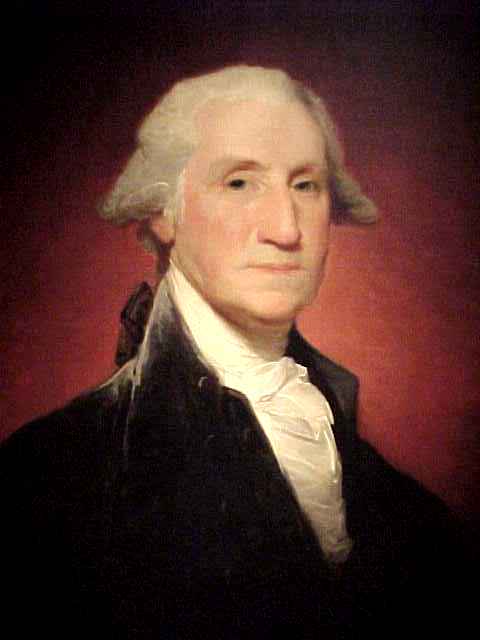 Here is a sampling of some of the posts on Presidents and the presidency that have appeared here at Better Living. Happy Reading!
A New Approach to Naming Our Greatest Presidents
The Other Adams
Note for 2008: Dump or Change Presidential Debates
Veterans' Day Reading
Carter's 'Living Faith'
His Excellency, Samuel Betances, and the Promise of America
Bush Takes Oath: Here Are Consequences, Unintended and Otherwise
My Picks for the Four Best US Presidents
The Rest of My Top Ten
The Book I Always Meant to Write
TR: Leadership and the Call to Sacrifice
Garry Wills' Account of James Madison's Presidency
Our Visit to the New Lincoln Museum in Springfield, Illinois
My Four Favorite Lincoln Books
I Like the US Way of Electing Presidents Better
The 'Curse' of Second Presidential Terms
Reflections on JFK's Assassination
Abraham Lincoln Really Was Great
'1776' Underscores Washington's Greatness
Image Making and the Crapshoot of American Democracy
The Dangers of Sanctimony
Schlesinger, Lincoln, and Preventive War
When Presidents Theologize
Would JFK Have Won in 1964?
Gerald Ford: Our Insurance Policy
Clinton and 'Experience'
To Be Normal May Mean To Be Great
Presidential Campaigns Are Too Long
The Grayson Letters and Presidential Health
Interpreting Lincoln's Second Inaugural 'Sermon' (seven parts)
[THANKS TO the generous Andrew Jackson at SmartChristian.com for linking to this post.]
Sunday, February 18, 2007
OH...Yes...IO
After a frustrating road win against Penn State, in which The Ohio State University Men's Basketball team blew a 24-point lead before prevailing in a 2-point squeaker, OSU's convincing road win over Minnesota was a relief.
The Buckeyes are a freshman-dominated team with enormous talent. Getting big leads can sometimes be a bad thing for young teams: They're prone to letting up on their intensity under such circumstances. That's clearly what happened at Penn State with the Buckeyes. But today's win may indicate that Coach Thad Matta has convinced his team that even talented teams must play the entire forty minutes of every game.
In a way, the Buckeyes' close call against Penn State may have happened at just the right time of the season, shortly before their game with Wisconsin in Columbus and just prior to the Big Ten and NCAA tournaments. The Buckeyes now have a better understanding of the fact that talent without effort, especially against other good teams, doesn't always equal victories.
That's the good news. But the potential bad news for Ohio State fans is that defending national champions Florida may have learned the same lesson in their loss the other day. Could it be OSU v. Florida in the men's basketball national championship game this year? If so, it'll be like deja vu all over again...but I hope with a different result.
Go, Buckeyes!
Picture This

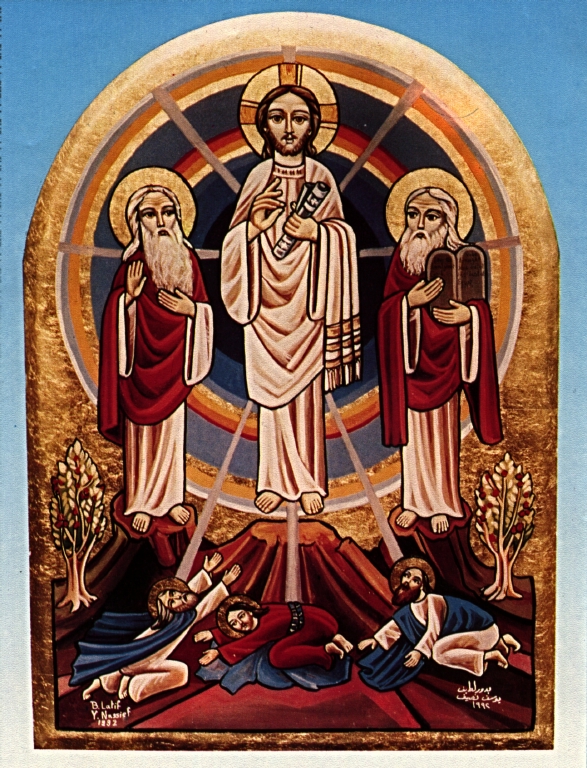
[This message was shared during the weekend worship celebrations of Friendship Lutheran Church, Amelia, Ohio, on February 17 and 18, 2007. If you live in or are visiting the Cincinnati area, you're invited to worship with us on Saturdays at 5:30PM or Sundays at 10:00AM.]
Luke 9:28-36
Many of you may know about the Magic Eye books. They contain page after page of illustrations, often just mazes of colorful shapes or dots, sometimes single images. But there's more to these simple pictures than what a surface glance shows. My kids taught me that if you stared at the pages just right, you could see new images that somehow formed in the midst of the page.
I was looking at some Magic Eye images on the Internet the other day. Take a look at this one. It’s a picture of roses. But if you look closer, more intently, another image emerges among the flowers.
Truth be told, there’s a pretty important lesson to be learned from these Magic Eye images: It’s possible that there may be more than meets the eye to anything or anyone we see, including Jesus Christ.
As the events recounted in today’s Bible lesson begin, the apostles think they have a clear picture of Who Jesus is. Just a few verses earlier in Luke’s Gospel, Peter has said that Jesus is “The Messiah of God.” But soon, we’ll see that like many people who have no knowledge of Jesus Christ or many Christians who mumble creeds and prayers without faith or commitment, the apostles then were sleepwalking through life. They were inattentive to Who Jesus really was and the life to which He really calls all people.
Jesus takes Peter, John, and James up on a mountain. As Jesus prays and the apostles fight off sleep, Jesus’ appearance is changed. (This is what that word transfiguration means.) An aura of brilliant light surrounds Him, the very light of heaven. Then, two great Old Testament figures, Moses, the bringer of God’s Law, and Elijah, the greatest of all the prophets, both of whom had lived many centuries earlier, show up beside Jesus. They talk about Jesus’ impending crucifixion.
Shaking off his sleep, amazed by what he sees, Peter suggests that monuments to Jesus, Moses, and Elijah be built on the mountaintop. Just as he says this, a cloud, like the cloud of fire that led the ancient people of Israel through the Promised Land, surrounds them. The apostles are terrified. They squint in the blinding light and all they see is Jesus. Next comes a voice that says something like this: “This is My Son. Listen to Him. Listen only to Him!”
Peter, James, and John now get a different picture of Jesus. It will take His death and resurrection for them to see it clearly.
But the picture should be clear to us.
Jesus is more than a miracle worker.
More than a Teacher.
More than a King.
He isn’t Mister Rogers in a bathrobe or just a carpenter who knew how to preach.
Jesus was and is God and the Savior of the universe...
the only One Who can give us life that lasts forever,This is the definitive picture of Jesus--the God wrapped in the man, the Savior seen in the signs, the Messiah behind the miracles--to which all the Bible lessons of this Epiphany season have been moving us.
the only One Who can help us make sense of this life,
the only One Who can give us hope that never fails!
But if our lives on this planet and the life of Friendship are ever going to be all that God intends for them to be, our picture of Jesus must be more than just Biblically accurate. After all, even the devil of hell has a Biblically accurate picture of Jesus.
This picture of Jesus as God and Savior must be more than an image we hold in our minds or hang on our walls or that we memorialize in our sanctuaries.
We must make Jesus...
our obsession,We must commit ourselves to letting this picture of Jesus so fill us that whenever others talk to us, hear us, or spend time with us, they will see Jesus’ pictured in us. According to the Bible, God has destined all who follow Christ, “to be conformed to the image of his Son...”
our food,
our breath,
our lives.
In the Lenten season which starts this coming week with our Ash Wednesday worship at 7:00PM, I challenge you...
- to attend our Wednesday Soup and Salad gatherings,
- to read the ‘Making Room for Jesus’ daily devotions with your household or friends as well as follow its daily action steps, and
- to be in worship every Saturday or Sunday.
But I challenge you in one more important way. Before I tell you what it is, I need to explain something.
It would have been easy for Jesus, Peter, James, and John to have stayed on that mountain. For Jesus, it would have been especially inviting, I imagine. He knew what suffering and rejection awaited Him. He knew that He would die on the executioner's cross.
Staying on the mountain would have appealed to the three apostles with Jesus, too. They could have spent the rest of their lives reminiscing about that spectacular moment when Jesus was revealed as Savior and King. That, in fact, is very like what most churches do: They reminisce about the glory days, whether the glory days refer to when Jesus walked the earth or former times in their congregations.
Most churches are nothing more than groups of nice people who treat each other nicely and hear old stories and sing old songs, all the while secretly wondering...
- why they never sense God speaking to them,
- why their sanctuaries aren’t bursting at the seams with people wanting to follow Jesus,
- why they have no joy in the Lord,
- why Christ doesn’t show up in their lives.
He took them down from the mountain, down where their neighbors lived, down where people struggled with problems, down where people looked for hope.
Luke's other book in the New Testament, Acts, tells us that as the apostles and the other followers of Jesus
dared to put Jesus Christ first in their everyday lives,God spoke to their hearts and minds.
dared to love others as they loved themselves,
dared to serve in Jesus’ Name, and
dared to invite others to follow Jesus, Christ showed up in their lives even after He’d died, risen, and gone to heaven.
The fellowship of believers grew steadily day by day.
And they had real joy!
Your Church Council has decided that, just as last year was the time when the life of servanthood was wired into the our congregation’s culture, 2007 is when we will make sharing Christ and growing as a church central to the life of Friendship.
Speaking of pictures, picture this: Our sanctuary filled with people every Saturday and Sunday.
Or this: A congregation not only serving in Jesus’ Name, but telling others about the new life to be had in Christ.
Picture every member of Friendship inviting a new person to worship with us every month.
Picture yourself bringing one more spiritually-disconnected friend into Jesus’ Kingdom in 2007.
Picture us worshiping together not too long from now, every chair filled and people standing and sitting on the perimeter, each one in awe of the Savior Who loved them enough to go to a cross and to rise so that they could have life with God forever!
Soon, the Church Council will be voting on a plan for Congregational Growth. They’ll be setting a goal for how many new members we will receive in Friendship by the end of this year.
More than that, they will be offering you the tools by which you can individually contribute to this growth. You’ll get those tools through something called Witnesses for Christ.
This plan for growth will also entail your being actively engaged in the Christian life--starting with regular worship, which we call our weekly pep rally.
The members of your church council will also be sharing with us their personal evangelism goals; that is, they’ll share their personal goals for how many people they will bring into relationship with Christ and into the life of Friendship.
We’ll urge each of you to have your own personal goals.
We’ll have a thermometer in the church lobby to track our progress, just as we did last year when, with prayer and reliance on Christ, we set and then smashed an ambitious goal for outside-of-the-congregation service hours in the community.
Let me summarize those challenges again:
- 1. Read and act on the ‘Making Room for Jesus’ devotions this Lenten season.
- 2. Participate in each of our ‘Soup and Salad’ gatherings which start on Wednesday, February 28.
- 3. Be in worship on Saturdays or Sundays.
- 4. Get involved with the Witnesses for Christ training when it’s offered.
- 5. Embrace personal goals of inviting at least one spiritually disconnected person to worship with us every month.
- 6. Make it your goal to bring one spiritually-disconnected person into the fellowship of the Church by the end of this year.
- 7. And finally, pray that Friendship will grow in faith and numbers in 2007.
Every Christian is called to be a witness for Christ. In fact, we’re commanded to be witnesses for Christ. And because God always gives us the capacity to do what He commands us to do, every Christian is also given the ability by God to be witnesses for Christ in their own unique ways.
Let Christ change your picture not only of Him, but of yourself. Allow Him to show you that you can use your own unique talents, gifts, and personalities to bring others into Christ’s Kingdom. You can tell others about Christ. You can invite them to worship with us.
I know that every member of our congregation wants Friendship to grow. We all want others to experience life with Jesus Christ. Through the Witnesses for Christ sessions we'll start to offer after Easter, you will be given the tools by which you'll be able to share your faith without being pushy or anyone other than who you are.
Jesus Christ, the glorious Savior, King, and God, revealed on the mountain of Transfiguration is still alive and still in business. So, above all, I challenge you (and me), not just in the Lenten season about to start, but every day of your life, to let people see Jesus living in you so that they too will turn from sin and have life with God forever.
ABSOLUTELY NOTHING IS MORE IMPORTANT FOR US AS A CHURCH OR AS INDIVIDUAL CHRISTIANS THAN FOR US TO BE ACTIVE WITNESSES FOR CHRIST!
Thursday, February 15, 2007
Are Tiny Houses the Wave of the Future?


My idea of roughing it is a night in a Holiday Inn.
And one of the complaints I have about the home in which my wife and I raised our two children--in which we still live--is that there really is no place to which I can "get away."
Without the doors that used to subdivide the first floors of homes, there's no place on our home's first floor where I can read in silence if someone else wants to watch television.
So how to account for my fascination with the Tiny House movement? I mean, here I am lamenting not having more personal space, yet being drawn to the notion of living in a forty, sixty, or seventy-square foot place.
My interest in micro-homes began when I listened to an interview on NPR with Jay Shafer of the Tumbleweed Tiny House Company, back in 2005. He described his tiny houses, one of which was his residence at the time, a small home set among the giant California Redwoods. Intrigued, I looked up the company web site and looked over the photos of the various models offered by Tumbleweed.
I suppose, in part, the homes appeal to the little boy in me. In my growing-up years, I loved building club houses and forts.
Once, I remember, going to a local appliance store and begging a clerk to give me several large cardboard crates in which refrigerators had been shipped. After he complied with my request, I went to a nearby lumberyard and convinced the people there to give me their wood scraps.
I used some of the lumber as the internal frame for one box. Then I cut a hole in the bottom of the other one--to act as the passageway to the second floor, nailed the larger pieces of wood to my frame, and stacked it onto the first. .
Later, I covered the whole thing with Saran Wrap I commandeered from the kitchen--unbeknownst to my Mom--in the hopes of saving my cardboard structure from the rain. That didn't work. But for several days, I had a little pad of my own out behind the garage where the garden used to be.
An only slightly more practical reason for my interest in micro-homes was the thought that while not living in such a house, it might be a great "place away" out in my backyard, somewhere that I could read and write.
I even made a half-hearted attempt to pitch the idea to my wife, who is much more conversant with the limitations of our family finances. "I could get all of my books out of here," I told her. "And that little house might add to the value of this house."
But I knew that I was getting nowhere with her, even when I suggested that we might be able to get two tiny houses, one for my study and one for an art studio for her, something of which I've always dreamed. She didn't even go for the idea when I leavened my presentation with a little humor: "They would cut down on how much yard I have to mow, too."
Truth be told, the primary market for tiny houses are probably not people trying to add to their possessions. Rather, I'd guess that their appeal is more to people with a well-developed social conscience who love being close to nature. Or people who want to right-size their lives.
Shafer, the founder of Tumbleweed Tiny Homes is probably among these kinds of people. He explains on his company's web site:
...since 1997 I have been living in a house smaller than some people's bathrooms. I call the first of my little hand built houses Tumbleweed...My decision to inhabit just 100 square feet arose from some concerns I had about the impact a larger house would have on the environment, and because I do not want to maintain a lot of unused or unusable space. My houses have met all of my domestic needs without demanding much in return. The simple, slower lifestyle my homes have afforded is a luxury for which I am continually grateful.According to this article in today's New York Times, a growing number of people are opting for tiny homes. That includes people like those whose story leads the article:
John Friedman and Kristin Shepherd of Berkeley, Calif., purchased 160 acres in the mountains near Telluride, Colo., it was with the intent to build — just not right away. Before designing a small, ecologically sensitive second home they wanted to spend a year or two visiting the land to determine the most suitable building site. But at an elevation of 9,600 feet, living in tents was out.According to the article, even families are buying these places:
So, early last summer, Mr. Friedman, 69, an industrial photographer, rented a truck and trailered a pre-built 65-square-foot Tumbleweed Tiny House up mountain roads, into a meadow and parked. To compensate for the lack of interior space, the couple cook, entertain and, for the most part, live outdoors. “We live in our view rather than look at it,” said Ms. Shepherd, 58, a retired youth counselor and an avid hiker. At night the two nestle in a sleeping loft with three feet of clearance, gazing at stars through a skylight. “It’s shelter, pure and simple,” Ms. Shepherd said.
Stephanie Arado, a Minnesota Orchestra violinist, said that it took living in a tiny house to learn how little space she really needed. For about $45,000, she bought a 392-square-foot weeHouse with no electricity and no bathroom as the solution to a siting problem on her 32 acres in western Wisconsin. Ms. Arado, who has two children, planned to use the tiny house as a springboard to building something bigger.And, the article points out:
But four years have passed, and she now has no intention of supersizing. “Something happened,” Ms. Arado said. “I started to see the beauty in how it works.” There is a queen-size bed for her and a bunk for her two children. When friends visit, sleeping pads and cots are pulled out. “The glass walls make the house feel much bigger than it is,” she said. “People are surprised to hear it’s only 14 feet wide.”
The tiny-house movement complements another vacation-home trend: buying land with an eye to conservation. John Friedman and Kristin Shepherd will return to their Tumbleweed Tiny House in Telluride this spring, not only to hike, but also to observe wildlife patterns and work to ensure that the land, which they purchased with the express purpose of conservation, remains protected.Of course, these folks are bucking an ongoing trend toward bigger and bigger new homes. A November, 2005 article in Demographia.com noted that a US Census Bureau report showed that in the preceding year:
...house sizes continued to increase. The median single unit (detached and semi-I wonder if we Christians might not eventually get caught up in the tiny house movement. Jesus once told a story that would seem to say that we ought to at least cast a wary eye on getting caught up in the McMansion trend:
detached) housing start was on course for a record 2,461 square feet (229 square meters) in 2005. The median multiple unit size was also on course for a record in 2005, at 1,262 square feet (117 square meters).
By international standards, Americans live in larger housing and receive superior value for their money. For example, the average new house in the United Kingdom is just 76 square meters, two-thirds smaller than the median US new multiple unit. The median new single unit house in the United States was nearly three times as large as the average new house size in the United Kingdom. Indeed, the increase (more than 80 square meters) in median new single unit house size since 1973 exceeds the size of a new house in the United Kingdom. Australian new house sizes are almost identical to the United States figure.
Someone in the crowd said to [Jesus], “Teacher, tell my brother to divide the family inheritance with me.” But he said to him, “Friend, who set me to be a judge or arbitrator over you?” And he said to them, “Take care! Be on your guard against all kinds of greed; for one’s life does not consist in the abundance of possessions.” Then he told them a parable: “The land of a rich man produced abundantly. And he thought to himself, ‘What should I do, for I have no place to store my crops?’ Then he said, ‘I will do this: I will pull down my barns and build larger ones, and there I will store all my grain and my goods. And I will say to my soul, ‘Soul, you have ample goods laid up for many years; relax, eat, drink, be merry.’ But God said to him, ‘You fool! This very night your life is being demanded of you. And the things you have prepared, whose will they be?’ So it is with those who store up treasures for themselves but are not rich toward God.” (Luke 12:13-21)Maybe I should begin thinking about a tiny home not as a place to get away, but as a countercultural way to follow Jesus. A way to downsize and rightsize, remembering that it will be easier for a camel to pass through the eye of a needle than for a wealthy person--and all white middle class Americans are wealthy people by world and historical standards--to enter the Kingdom of God.
I don't know if I have the guts to try moving into a tiny house. But I wish that I did!
(UPDATE: In response to one person's question: Yes, the bathroom does have a door. But the bathroom isn't a very comfortable place to read for long stretches of time.)
[THANKS TO: Andrew Jackson of SmartChristian.com for linking to this post.]
[THANKS ALSO TO: TeachingMom.com for linking here.]
[WELCOME TO: Readers brought here by BuzzFeed. Feel free to explore the whole blog.]
Third Pass at This Weekend's Bible Lesson: Luke 9:28-36
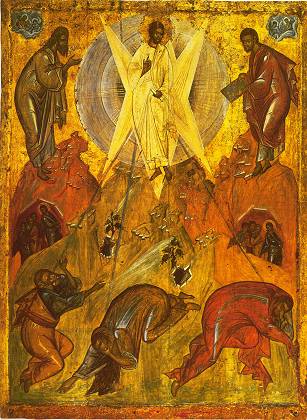 [The first pass at this Bible lesson will explain what this is all about and give general comments about it. Here is the second pass, which began the verse-by-verse comments.]
Verse-by-Verse Comments (continued)
32Now Peter and his companions were weighed down with sleep; but since they had stayed awake, they saw his glory and the two men who stood with him.
(1) Sleep can probably be read both literally and metaphorically. Throughout Luke, chapter 9, there is one moment of cogency, of "being awake." That's when Peter confesses faith in Jesus as, "The Messiah of God." In fact, while Jesus is always the central character of the Gospels, Luke 9 and 10 are really about the disciples, their faint grasping of what it means to follow Jesus, and Jesus directives to them as His followers.
It's difficult not to connect this incident with Luke 22:45-46, where Jesus mournfully upbraids the apostles for falling asleep as He prayed in the Garden of Gethsemane. His concern was their spiritual well-being:
“Why are you sleeping? [Jesus asked them] Get up and pray that you may not come into the time of trial.”How many of us sleepwalk through a lot of our lives, unaware of the damage happening in our relationship with God and other people? We need to be awake, attentive, and prayerful! When we are, Christ can bring healing to our lives and relationships.
(2) Fortunately, in this instance, the three apostles did stay awake and so saw this glistening sign of Jesus' deity and Sonship!
33Just as they were leaving him, Peter said to Jesus, “Master, it is good for us to be here; let us make three dwellings, one for you, one for Moses, and one for Elijah” —not knowing what he said.
(1) Dwellings can be translated as booths, like those used by Jews even today during the Festival of Booths. This festival celebrates the harvest. But more significantly, it's also associated with the temporary dwellings used by the ancient Hebrews during their wilderness wanderings from Egypt to the Promised Land. This underscores the fulfillment motif of Luke's Gospel that says that Jesus wasn't a departure from historic Judaism, but its fulfillment.
(2) Well-meaning though he may have been, Luke dismisses Peter's suggestion, saying, "not knowing what he said." What was wrong with Peter's plan of building boths for Jesus, Moses, and Elijah. I think that there are several elements that are wrong:
- First: It puts Moses and Elijah on the same level as Jesus, both equally worthy of our attention. The voice from heaven will soon disabuse Peter, James, and John of this notion: "This is my Son, my Chosen; listen to him!” the Voice says.
- Second: Peter proposes to capture this moment of epiphany, to capture God. This is the approach of dead religion against which Jesus and the entire Bible warns believers. Faith in the God we know in Jesus Christ can't be boiled down to stale propositions, dead bricks and mortar, stained glass windows, or religious ritual, though each may point us to Christ and a living relationship with Him.
Come to him [Jesus], a living stone, though rejected by mortals yet chosen and precious in God’s sight, and like living stones, let yourselves be built into a spiritual house, to be a holy priesthood, to offer spiritual sacrifices acceptable to God through Jesus Christ. [First Peter 2:4-5]These words can be a corrective to our tendency to worship our religion and its props rather than God Himself. I think Peter probably learned this lesson up on the Mount of Transfiguration.
An old hymn has these words:
Not in our temples made with handsI sometimes get concerned about all the money we Christians spend on putting up church buildings and maintaining them.
God, the Almighty, is dwelling;
High in the heav'ns His temple stands,
All earthly temples excelling.
Yet He Who dwells in heav'n above
Deigns to abide with us in love,
Making our bodies His temple.
- Is it God that we're glorifying or our own righteousness and sanctimony?
- Or are we, like Peter, trying to capture Christ, hoping that imposing architecture will help us to "feel religious," instead of doing as the Father's voice instructed Peter, James, and John: LISTEN TO JESUS?
(1) More Old Testament allusions here. Beginning in Exodus 13:21, a cloud led the Hebrews during their wilderness wanderings. The cloud was thought to be the presence of God among them, leading them.
(2) Of course, they were terrified in the cloud. They knew now that they were in the presence of God. Theologians, as we've noted before, call this numinous awe.
35Then from the cloud came a voice that said, “This is my Son, my Chosen; listen to him!”
(1) Bryan Findlayson notes:
A divine word corrects Peter's mistake. Jesus is not to be compared with Moses and Elijah. Jesus is the divine "Son", the "chosen" one, the "elect" one, and therefore, the disciples should "listen" to him. The divine word declares Jesus as the royal Son of God, the messianic servant and the eschatological prophet like Moses, Deut.18:15. It is to Jesus the disciples must submit...36When the voice had spoken, Jesus was found alone. And they kept silent and in those days told no one any of the things they had seen.
There is many an Elijah or Moses to divide our loyalties, but in the end, it is Jesus we must "listen" too; he must be our focus, our Lord. Through his word, read, expounded, studied..... we can take up his life-giving truth and experience its transforming power, preparing us for our reign with Christ in eternity. Therefore, like those disciples of long ago, let us "listen to him."
(1) Until later, when the cross and empty tomb made sense of it all and the Holy Spirit gave the Church the power to tell the world about Jesus!
Wednesday, February 14, 2007
Second Pass at This Weekend's Bible Lesson: Luke 9:28-36
 [For an explanation of what this is about and to see the first pass, go here.]
Verse-by-Verse Comments:
28Now about eight days after these sayings Jesus took with him Peter and John and James, and went up on the mountain to pray.
(1) The incident to be recounted happened, according to Luke, eight days after Peter had confessed that Jesus was "The Messiah of God" and then this:
He sternly ordered and commanded them not to tell anyone, saying, “The Son of Man must undergo great suffering, and be rejected by the elders, chief priests, and scribes, and be killed, and on the third day be raised.” Then he said to them all, “If any want to become my followers, let them deny themselves and take up their cross daily and follow me. For those who want to save their life will lose it, and those who lose their life for my sake will save it. What does it profit them if they gain the whole world, but lose or forfeit themselves? Those who are ashamed of me and of my words, of them the Son of Man will be ashamed when he comes in his glory and the glory of the Father and of the holy angels. But truly I tell you, there are some standing here who will not taste death before they see the kingdom of God.” (Luke 9:21-27)(2) these sayings: The phrase translates Luke's Greek narration, which literally is these words.
(3) According to Mark, there's a six day gap between Peter's confession/Jesus' words and the Transfiguration. I can't explain the difference.
But it is fair to point out that eight days is highly significant in the Gospels. Bryan Findlayson writes:
As with many resurrection appearances, 24:1, 13, 33, eight days symbolizes entrance into a new age, a new creation following the seventh day of God's rest.The phrase may signal that in the midst of Jesus' passion (and predictions of it) and the weakness of the disciples, Jesus will ultimately prevail and establishing a new creation.
(4) Over the past several weeks, our Bible lessons from Luke have shown us that there were various audiences who listened to Jesus with varying levels of attentiveness and who followed Him with varying levels of devotion, for varying motives.
Last week, we talked about three different groups. They were, from the outside moving toward Jesus:
- the crowds: the curious, those desiring healing
- the disciples: the students of Jesus who are following Him
- the apostles: those disciples who have been chosen (elected) by Jesus for leadership, under the guidance of the Holy Spirit, in the multiplication of disciples
Jesus takes this inner circle with Him to a mountaintop. During His earthly ministry, Jesus spends the greatest amounts of time with the inner circle, the least with the crowds.
Discipleship entails moving closer to Jesus, while continuing to be in touch with the crowds, asking God's help in moving them closer to Jesus as well. This is the dual mission of the Church.
(5) to pray: Luke emphasizes that every major event or initiative by Jesus is always preceded by times of prayer. Here, Jesus' prayers come before a great epiphany (or theophany) displaying Jesus' deity.
29And while he was praying, the appearance of his face changed, and his clothes became dazzling white.
(1) Moses' face glowed when he came into the presence of God at Mount Sinai. (See here.)
30Suddenly they saw two men, Moses and Elijah, talking to him.
(1) Moses and Elijah represent the twin pillars of the Old Testament Scriptures: the Law and the Prophets. Moses was the law-giver. Elijah was Israel's greatest prophet. Throughout the two New Testament books authored by Luke, the Gospel from which our lesson is taken and Acts, he points out that Jesus' life, death, resurrection, and the new life He gives to all with faith in Him, fulfills the Law and the Prophets.
(2) Brian P. Stoffregen has this interesting insight:
Only Luke uses the phrase "two men" (vv. 30, 32). This most closely relates to the "two men" who are sitting in the empty tomb in dazzling clothes (24:4).If you see the Transfiguration within the context of events recounted by Luke in chapter 9, it seems clear that his decision to speak of "two men" of Moses and Elijah here and of "two men" of the angels at the empty tomb, you see that he means for this account to be an oasis of hope amid the foreshadowing of Good Friday and the discussions of the demands of discipleship.
(3) We're told little of what Jesus was talking about with Moses and Elijah; we'll be given that information in the next verse. But I'm inclined to think that while the evidence in the rest of the lesson indicates that Peter, at least, listened with rapt attention to what Jesus and Moses and Elijah were saying, God will soon tell him to listen to Jesus. Many voices will contend for attention in life, some of them the voices of mentors and loved ones we revere. But disciples are to be focused on what Jesus tells us. (This theme will become more explicit as we consider the rest of this lesson.)
31They appeared in glory and were speaking of his departure, which he was about to accomplish at Jerusalem.
(1) The word departure is interesting here. Both Moses and Elijah were well-known for their departures. Moses led the people of Israel out of slavery in Egypt. Elijah, according to the Old Testament, didn't die, but departed from the world on a chariot of fire.
The departure referred to here is Jesus' crucifixion.
[More tomorrow, I hope.]
[Note: The words in the graphic are in Portugese and I think can be translated, "Listen to what He says.]
Tuesday, February 13, 2007
Desi Metcalfe...
may become famous, even if she understands how unimportant it really is.
To learn more about this talented young singer-songwriter, go here. (You'll also find a rough cut of a new song Desi has just recorded.)
To learn more about this talented young singer-songwriter, go here. (You'll also find a rough cut of a new song Desi has just recorded.)
First Pass at This Weekend's Bible Lesson: Luke 9:28-36
 [Most weeks, I present as many updates on my reflections and study of the Biblical texts on which our weekend worship celebrations will be built as I can. The purpose is to help the people of the congregation I serve as pastor, Friendship Lutheran Church of Amelia, Ohio, get ready for worship. Hopefully, it's helpful to others as well, since our Bible lesson is usually one from the weekly lectionary, variations of which are used in most of the churches of the world.]
The Bible Lesson: Luke 9:28-36
28Now about eight days after these sayings Jesus took with him Peter and John and James, and went up on the mountain to pray. 29And while he was praying, the appearance of his face changed, and his clothes became dazzling white. 30Suddenly they saw two men, Moses and Elijah, talking to him. 31They appeared in glory and were speaking of his departure, which he was about to accomplish at Jerusalem. 32Now Peter and his companions were weighed down with sleep; but since they had stayed awake, they saw his glory and the two men who stood with him. 33Just as they were leaving him, Peter said to Jesus, “Master, it is good for us to be here; let us make three dwellings, one for you, one for Moses, and one for Elijah” —not knowing what he said. 34While he was saying this, a cloud came and overshadowed them; and they were terrified as they entered the cloud. 35Then from the cloud came a voice that said, “This is my Son, my Chosen; listen to him!” 36When the voice had spoken, Jesus was found alone. And they kept silent and in those days told no one any of the things they had seen.
General Comments:
1. We come now to Transfiguration Weekend. This is the last weekend of the Epiphany season. It began on January 6, the date on the Church calendar when we remember the arrival of the wise men (the magi), who bore gifts for the Christ Child. Throughout Epiphany, the Gospel lessons have recounted times when Jesus was revealed to be more than a mere human being, but was also God and the Messiah. (For more, see here.)
2. Every year, the Gospel lesson for the first weekend after Epiphany, whether taken from the Gospels of Matthew, Mark, or Luke, is about the baptism of Jesus in the Jordan River by His relative, John the Baptizer. Each of those three accounts, in their own peculiar ways, see Jesus being affirmed as the Son--the very reflection--of God by a voice from heaven.
The season is always capped by either Matthew's, Mark's, or Luke's accounts of Jesus' transfiguration (the alteration of His appearance) in the presence of three apostles: Peter, James, and John. In them, as in the accounts of Jesus' Baptism, a heavenly voice affirm Jesus' Sonship, as well as the need to listen to Him.
3. During the week following Transfiguration Sunday, we come to Ash Wednesday, the first day of the Church's season of Lent. Lent is the run-up to Easter. The length of the Epiphany season each year is shortened or lengthened by when Easter happens.
J.A. Dell in the wonderful old book, Senior Catechism, explains how the date for Easter is determined each year:
Christ's death and resurrection took place at the season of the Jewish Passover, a feast which was regulated by the moon. Ever since that time Easter has been celebrated on the Sunday after the full moon after March 21. Easter can come as early as the 22nd of March or as late as the 25th of April...Easter is what's called a movable feast, as opposed to Christmas and Epiphany day, the dates for which are fixed at December 25 and Januray 6, respectively.
Because Easter falls on April 8 this year, there are two less weekends after Epiphany this year than there would be if Easter came in the latter part of April.
4. This Roman Catholic resource has information on the Transfiguration.
5. Once again, we return to one of the key principles for understanding a given passage of Scripture: context affects content.
Preceding our text in Luke's Gospel, Peter confesses that Jesus is the Messiah of God. Jesus affirms this, but orders him and the other apostles not to tell anybody for the time being. (We'll talk about why Jesus gives this directive when the text comes up later.) Jesus then tells the apostles what is going to happen to Him--cross and resurrection--and warns them that following Him in this world won't always be a picnic.
Immediately following our lesson, Jesus and the three apostles ascend from the mountain where the nine remaining apostles proved incapable of exorcising a demon from a boy. Jesus performs the exorcism.
By Luke 9:51, we find Jesus resolutely moving toward Jerusalem, where He knows that He will be crucified.
In the midst of the chaos then, Jesus' glory as God and Messiah is manifest on the Mount of Transfiguration, a dazzling moment of promise in the midst of humanity's sin and the inexorable movement toward the death of humanity's Savior, Whose face is set for Jerusalem.
6. This then, is the fault line or the turning point in Luke's telling of the story of Jesus' life, death, and resurrection. While opposition to Him has been gathering up to this point in Luke's Gospel, it's been a period when He has, by words and actions, demonstrated His identity as Messiah and God. Now, with determination. He begins to unpack what it means to follow Him, opposition to Him increases, and He moves with determination to His cross.
[Verse-by-verse comments tomorrow, I hope.]
Monday, February 12, 2007
Can You Say, "Splat"?
Matt Brown says that he loves the Grand Canyon. But the next time he goes back, he doesn't plan on looking at it through a new glass sky walk that will jut out from the rock face, literally giving one a bird's eye view of the canyon.
I love to fly. (I'm especially mad-keen for take-offs and landings!) I love climbing to the tops of landmarks like the Washington Monument, the Empire State Building, or the John Hancock Tower.
But I think that I would take a pass on that glass walkway myself!
Several years ago, my family and I, including my then-seventy-four year old mother-in-law, went to Mesa Verde in Colorado. It was spectacular! And I was impressed by the m-i-l's gameness and physical agility. But I have to say that it gave me the willies to walk as closely to 8000-foot dropoffs as we did. My palms are sweating all over the keyboard just writing about it.
Anthropologists say that the most ancient of human fears is that of falling. Students of the brain say that may explain why people's most frequent recurring dreams is about falling.
My personal experience tells me that's so. The only recurring dream from my childhood that I can remember is one in which I stumbled, out of control, down creaky basement steps on a dark stairway that seemed to go on forever.
Isn't it interesting, too, that when describing humanity's alienation from God, beginning with Adam's and Eve's rebellion, we've always used the term, 'the fall'?
Maybe that's what frightens us so much about heights, an old memory of a bad decision.
That, and the fact that the combination of height and gravity can have negative consequences for the human body. Can you say, "Splat"?
I Enjoy...
serving as a member of the Clermont County Board of Mental Retardation and Developmental Disabilities. We recently were sworn in for 2007. Here's how The Cincinnati Enquirer shared the story.
Sunday, February 11, 2007
Richard is Back
Richard Lawrence Cohen has sauntered, leisurely like, back to bloggin'. Yeh c'n read his wonderful piece, The Adagio Kid, here. But tek it kinda slow.
Richard is absolutely one of my favorite bloggers. As he explains here, he's approaching things a bit differently this time. But Richard, being Richard, shows in his first two return posts that he remains a wordsmith of wit, insight, and candor.
Treat yourself by going to his site now.
Richard is absolutely one of my favorite bloggers. As he explains here, he's approaching things a bit differently this time. But Richard, being Richard, shows in his first two return posts that he remains a wordsmith of wit, insight, and candor.
Treat yourself by going to his site now.
From Epiphany to Discipleship
 [This message was shared with the people of Friendship Lutheran Church, Amelia, Ohio, during worship celebrations on February 10 and 11, 2007.]
Luke 6:17-26
He was a sophomore second-string quarterback at Boston College. The son of a former NFL player, he had all sorts of talent. But, maybe because up to that point in his life everything had come so easily to him, he was, by most accounts, a so-so college player. Years later, he recalls, “...also...I didn’t work as hard as I needed because I think that gave me an out if I wasn’t successful...”
Then, during his second year of college, he took a mission trip to Jamaica with a priest and sixteen classmates. First stop was a place called Riverton City, “a shanty-town built on a garbage dump near Jamaica’s capital city of Kingston...” There, the young quarterback saw poverty as he’d never seen it before. For several days, “he worked in a home for elderly lepers.” Leprosy, Hansen’s Disease, “can eventually cause a variety of skin problems, loss of feeling, and paralysis of the hands and feet.”
A recent article in the magazine, Sports Spectrum, says: “He cleaned, scraped, then painted a bathroom in the home. In the evenings after a day’s work, he’d join the lepers for song and worship. It was then that [he] met George McVee, [a] man disfigured by leprosy. That first evening, [the college athlete] was the last to arrive and only one chair remained. It was next to McVee.
“’I’m ashamed to say this, but it was hard to look at him,’” he recalls. “’I didn’t really want to sit next to him. His leprosy was so much worse than everyone else’s. They said it wasn’t contagious, but I was a kid. I didn’t know.'"
Once the young man was seated, George McVee, the man disfigured by this horrible disease, who had lost his forearms, held a harmonica to his mouth with his remaining stumps. He played songs of praise to God. All around the room, accompanied by McVee’s harmonica, voices emanating from aged bodies being destroyed by leprosy joined together to worship God.
“In between songs, McVee...[recited] long passages of Scripture and poems he had composed. One of his poems he called, ‘My Cup Runneth Over.’” In his affliction and desperate poverty, McVee still regarded himself as a blessed man, all because of the God we know in Jesus Christ.
The athlete from Boston College recalls: “’I’m saying to myself these people should be angry. What they were born into--poverty, poor health. What do they have to be happy about?...But in their eyes, it was the exact opposite. Their attitude was what my attitude should have been like.”
The young man saw a lot of other things on that trip to Jamaica. And the thing that struck him most was how faithful and how joyful the people he encountered in Jamaica were.
Shortly after his return, the quarterback was stricken with Hepatitis A, which he probably contracted while in Jamaica. In the hospital for six days, he went from 215 to 185 pounds. As “he lay in the hospital, [jaundiced], waiting for his release” he wondered “about his future in football. ‘But I never really thought, “Why me?”’” he says. “’I thought, “This is nothing compared to what the lepers in Jamaica deal with.” And they had so much joy in their hearts because of the Lord, despite their circumstances.’”
It was then that sophomore Matt Hasselbeck, who would go on to play in Super Bowl 40 in 2006, “made a promise to God.” He first apologized to God for not being all that he could be and told the Lord that in all departments of his life, he would always try his hardest. Second string, practice squad, also ran, whatever, he would always do his best. Hasselbeck says that it was not only the moment that changed him as an athlete, but also the moment that changed him as a human being. And it all happened because of the faith and joy he saw in people suffering from the worst poverty and disease, people the world would say had nothing. But Hasselbeck knew that the world was wrong: George McVee and the others he met had Jesus Christ!
Today’s Bible lesson begins a section in Luke’s Gospel in which Jesus delivers what’s called, The Sermon on the Plain. It has a lot in common with the more famous Sermon on the Mount, found in the Gospel of Matthew. You’d expect to find similarities in them; after all, Jesus was the preacher in both cases. But I’ve sometimes wondered, why is the sermon in Matthew more quoted than the one in Luke? Both are equally beautiful and important.
I think I know the answer: In the Sermon on the Mount, Jesus says, “Blessed are the poor in spirit.” In our lesson today, Jesus says, “Blessed are the poor.” Jesus was saying: Blessed are the George McVees, the elderly lepers in Jamaica, the homeless in downtown Cincinnati, the destitute in New Orleans, the fleeing refugees of Darfur, the orphans in Iraq, the military veterans of America living on the street.
This is a jarring thought, this notion that those who have nothing of the world’s wealth are blessed by heaven. We’d much rather quote Jesus’ words from Matthew and speak of ourselves as “poor in spirit.” (I know that I would.) To be poor in spirit sounds less specific, like a description of people who are, well, just like us...you know, humble, kind, nice folks.
But when Jesus says, “Blessed are the poor,” it may make us feel left out. I know that I do. My wife and I are by no means wealthy. But we raised our kids in two different houses, one in northwest Ohio and the one in which we’ve been living for the past sixteen and a half years. Both houses are much larger than the homes in which I grew up. And my parents raised five of us in them! Five kids in a house with one bathroom and two bedrooms, one of which my dad subdivided. For much of the first twenty-two years of their marriage, my folks had to sleep on hide-a-beds to make room for all of us. Yet, my parents and our family in those years wouldn’t have fit under the category of the blessed poor Jesus describes in His words today. We were strapped, to be sure. And my Dad worked two full time jobs for a chunk of my childhood. But we never lived in grinding poverty. And few of us in white middle class America ever have!
But where exactly is the blessedness of poverty? Matt Hasselbeck saw how the poor are blessed during his mission trip to Jamaica. They were stripped of the things the world counts as valuable, things I appreciate as much as anybody else, things like money, property, position, even health. But precisely because they lacked such things, these people turned to Jesus Christ and found...
- a God Who loved them,
- a Friend Who would stand by them no matter what,
- a Lord Who would give them a peace that passes all understanding,
- a life that will never end.
Jesus, of course, isn’t saying that only the poor can have a relationship with Him.
Nor is he saying that the poor aren’t sinners.
Salvation is still a matter of sinful human beings--and that’s all of us--turning from our sin and trusting our whole lives to Jesus Christ. That’s true whether we have money or not.
But the poor have less of the stuff of the world, the medical care, the clean water, the luxury items that allow you and me to pretend, sometimes for decades, that we’re not mortal, not vulnerable, not in need of God. The poor have a much easier time knowing how much they need God!
So, where does that leave you and me, we, the world’s wealthiest people?
We find the answer to that question at the very beginning of our lesson for today. It says: “He came down with them and stood on a level place, with a great crowd...”
Just before our lesson, Jesus had called the twelve apostles. It happened up on a mountaintop. We all love the mountaintop. But Jesus calls us to go to the level places, to live among and to share with those of all economic conditions. He calls us to love our neighbors in practical ways: to donate coats for the homeless; to give gifts to children in Third World countries; to help build homes for the homeless.
He calls us too, to fill the empty hearts of those suffering from the ultimate poverty, a life without Jesus Christ.
All around us are people hungry for Jesus Christ, spiritually disconnected people who need the Savior.
They need someone wealthy with the riches of heaven--someone like you and me--to bless them by telling them the Good News of Jesus Christ.
The life of the Church, the continuing life of this congregation, depends on our willingness to tell others about Jesus and to invite them to worship with us. But more importantly, we have been commanded to make disciples.
How many disciples will you and I allow God to make through us this year? With how many people--wealthy or poor--are you and I willing to share the Good News that can allow a person to live with God forever?
You know, a funny thing happened to Friendship Church. I remember that in our early years, we had nothing: no sanctuary, no classrooms, no place for our youth to gather, no rooms for meetings or dinners. Yet, for all the things we lacked, we did have a passion for telling others about Jesus.
But since we moved into our building, we seem to have grown passive. We are a praying church. We are a serving church. And both of those things are marks of people who follow Jesus.
But we aren't reaching out to others as we need to.
We're not inviting others to worship with us as we need to.
We're not telling others about Jesus as we need to.
And I am as guilty of this oversight as anybody else!
All of this needs to change.
It's great that we serve others in Jesus' Name. But we also need to be willing to tell others why we serve in Jesus' Name. We need, as I told the Church Council the other evening, to "close the sale": We need to let others know about the Savior Who motivates and empowers our serving and gives us confidence for living this life and for facing the one to come!
From today, let's change the way we've been thinking and living.
Let this be the first day of a new life at Friendship!
I hope that each of us will make it our goal to invite at least one person to worship each month and to make at least one disciple before the end of this year...and every year!
We also all need to take responsibility for telephoning or emailing the people we haven’t seen in worship for awhile. People expect to hear from the pastor, the hired hand, when it comes to inviting people to worship or to check on how folks who haven't been around for awhile are doing. But when you do these things, your simple gestures of love have tremendous impact!
We have so much to give--to the poor in money and the poor in spirit.
Let’s make a vow this day that like Matt Hasselbeck, we will do our best every day for Jesus Christ!
Let’s share the riches of heaven with everybody--in word, in deed, and in telling the good news of Jesus.
Talking About the True Meaning of Love and Saint Valentine's Day...

during this morning's children's message at Friendship Lutheran Church. Thanks to Truman for taking this photograph and many others! (Click on the pic to see an enlarged version.)
Subscribe to:
Posts (Atom)