Showing posts with label History. Show all posts

Wednesday, June 17, 2020

Remembering Versus Memorializing

History is important to me. My parents made a point of teaching history to me from the time I was a little boy. From them, I learned the meaning and the privilege of being an American.


At Ohio State, I graduated with a degree in Social Studies, which was composed mostly of the study of history. I’ve always felt that anyone who votes needs to study history in order to exercise the privilege responsibly. And I love visiting historical sites.


All of this means that I am following the current debate over whether confederate monuments and symbols should come down with deep interest.


Here’s the deal.


There’s a difference between remembering history and memorializing it. 


To remember is to be equipped for good citizenship. 


To memorialize is to honor people and movements from the past.


There are people and movements it’s important to remember. But you would never take up public space to honor their memory.


Two years ago, my wife and I were in Germany. In Berlin, across the street from the US Embassy, close to the Brandenburg Gate, is a deeply moving Holocaust Memorial. It honors those victimized by Hitler’s Nazi movement. Germany also has Holocaust museums, as we do in America, and young people there are taught about the horrors of Germany’s fascist past. All of this is wise because, as President Kennedy said, “A knowledge of the past prepares us for the crisis of the present and the challenge of the future.” 


The Germans believe that by remembering the worst of their nation’s past, they can work to avoid a repetition of its horrors.


But I’ve noticed something. In Germany, there is no Fort Adolf Hitler. There’s no Goebbels Air Base, no Himmlerstrasse, no memorials to Joseph Mengele or Albert Speer. And, with the exception of marginal kook groups in that country, the Nazi flag is only seen in museums.


Why? The Germans remember their past. But they do not honor the people who made hatred and murder into public policies. They don’t memorialize those who by their warped philosophy, brought death and suffering to millions, along with destruction and shame to their land. They don’t have monuments to those who denied that Jews, descendants of Abraham and Sarah, were made in the image of God.


There’s a lesson in this for we Americans. 


The confederacy was the most grievous and consequential act of treason in American history. A group of US States initiated a war to break up the union and destroy constitutional government in defense of their desire to extend the evil of slavery into new American territory. 


The confederacy was predicated on the belief that Blacks were inferior beings not made in the image of God.


In all of this, the confederacy denied the Christian faith it professed as well as the principles of America’s founding.


Even many in America’s founding generation, which had wrestled to form a union despite differences on slavery, recognized that slavery’s days were and ought to be numbered. (Thomas Jefferson was a notable exception.)


Franklin advocated for abolition. 


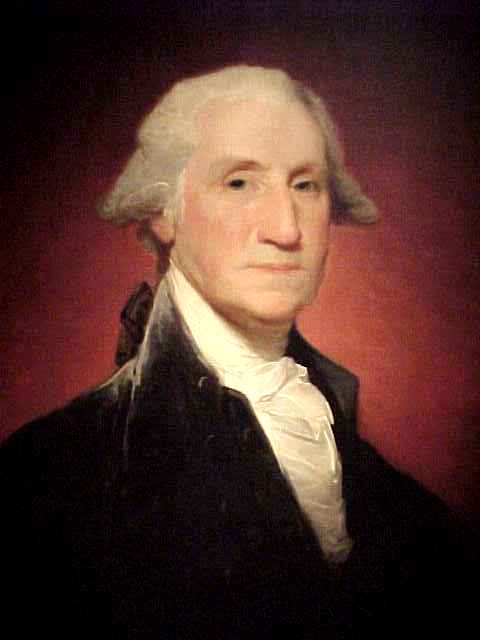
Washington recognized the unsustainability of slavery and its inconsistency with our founding principles. His will provided for the emancipation of his slaves on his wife’s death.


But the confederacy insisted that slavery, their “peculiar institution” with its plantations, more aptly described by someone as “slave labor camps,” needed to be extended into more of the United States. 


That’s why the embryonic confederacy attacked United States soldiers at Fort Sumter, then unleashed the horrors of the Civil War on the country.


We need to remember the demented ideology of the confederacy in the same way that Germany remembers the demented ideology of Hitler and Nazism. 


Remembering the confederacy should call us to a deeper patriotism, a deeper commitment to the twin principles of our founding: (a) liberty (b) guaranteed by our mutual commitment and accountability. It should call us to affirm our belief in the sanctity and value of every human life and the equality of all people.


We should remember Jefferson Davis, Robert E. Lee, Stonewall Jackson, and the other confederate traitors the way Germans remember Hitler, his sick ideology, and the horrors he unleashed on the world. But the confederacy and its battle flag deserve no honor. Traitors and haters don’t deserve to be memorialized.


[New Orleans removed a large stature of Robert E. Lee from Lee Circle back in 2017. The photo, taken by the AP, is from NPR's story on the event.]

Buy me a BookBuy me a Book

Tuesday, January 30, 2018

On State of the Union Messages (Briefly...please)

Tonight's State the Union address, which I did not see, clocks in as the third longest ever.

This reminds me of a story about Woodrow Wilson, the twenty-eighth president. A noted orator, Wilson was lauded for his usually short speeches. A member of his cabinet asked him how long it took him to prepare his addresses.


Wilson replied: “If I am to speak ten minutes, I need a week for preparation; if fifteen minutes, three days; if half an hour, two days; if an hour, I am ready now.”

That quote has often reined me in as a preacher and incited me (most weeks) to begin preparing early.

By the way, Wilson, despite his placid exterior, was a man of volcanic passions who could be as deeply wrong as he was stunningly right.

He was deeply wrong about race and the first "Red Scare" created by his administration.

He was right about what needed to happen in post-World War 1 to prevent a future global conflagration.

On this second issue, Wilson hurt his own cause by insisting that the agreement he brought home from France, the Treaty Versailles, be approved by the Senate with no amendments. His intransigence, which led to Senate rejection of the treaty, meant that the United States wouldn't play the positive role it could have played in the League of Nations toward preventing World War 2.

But on speech writing and delivery, he was a champ, which is why he became the first president since Thomas Jefferson, who loathed public speaking, to deliver the State of the Union address to Congress in person.

[By the way, I wrote about State of the Union messages and the need to get rid of their "Skutnik moments" twelve years ago here.]

Friday, December 15, 2017

On finding two old family photos

My sisters are helping my dad clean out his attic right now. The house was built by my mom’s parents in 1950.

The other day, the girls (despite our respective ages, they are always the girls and my brother and I are always the boys) found a box filled with photos of people none of us could identify. They were almost all taken at photography studios along North and South High Street in Columbus.

My guess is that they were probably acquired by some family member in hopes of using them in a craft project or, likelier, they may have been among the refuse found by my grandfather in his many search-among-the-trash missions.

But in the box of those studio photos were two family snapshots, seen here.

The first is of my grandmother, no doubt taken in her teens while she still lived in Columbus’ Linden area. (My great-great-grandfather, Martin Ranck, a carpenter and former schoolteacher, built a number of homes in Linden.) This would have been in the 1920s, shortly before my great-grandparents moved the family to the Bottoms, Columbus’ near-west side. My grandmother was a member of Central High School’s first graduating class in 1925.

In the picture, my grandmother looks as though she could easily be transported to today. Though in later years, she became a whining passive-aggressive, in those days, I think she was a handful, who liked and was liked by the boys.

When I saw the second photo, I immediately spotted my mom. She’s in the center, unmistakable. The back of the photo has a caption that says it was taken on February 28, 1941, making mom exactly nine years and four months old.

The caption also says that the other two in the picture are “Uncle Burt” and “the little girl next door.” Because my mom’s middle name is misspelled (Jean instead of Jeanne), I imagine the picture was taken by someone other than her parents, probably one of my great-uncles. None of us knows of an Uncle Burt. But I’m guessing it’s one of my great-grandfather’s brothers or brothers-in-law.

My mom died earlier this year. My grandmother passed in 1991.

There’s a treasure trove of history in every family tree. These pics were interesting for me to see.

By the way, my sisters also uncovered three songs in sheet music. One was copyrighted 1910; the other two were from 1917. The latter were both songs about young men leaving their families, their mules, and their sweethearts, in that order, to fight in the First World War. One song also extolled the leadership of President Wilson.

The last point is unsurprising because my great-grandparents were staunch Democrats. My grandmother often told me how the Republican kids would taunt her and other kids from Democratic families for their political allegiance, telling them, "Beans is good enough for Democrats."


[I'm the pastor of Living Water Lutheran Church in Centerville, Ohio.]


Friday, August 04, 2017

Calvin Coolidge, his dad, and the majesty of Constitutional Democracy

While Calvin Coolidge was out of his depth as president, particularly as it relates to understanding the twentieth century's new economic realities, I've always admired him as a person.

The story of his swearing-in has been a favorite since I first read it when I was a boy. It captures the simple majesty of US constitutional democracy and George Washington's great legacy to our country, the peaceful transfer of executive power.

One highlight of a tour of New England several years ago was seeing the room in which Coolidge's father administered the presidential oath of office to his son. I literally got goosebumps.

The tale was recounted again yesterday in a post from the White House Historical Association:
John Coolidge received several telegrams during the early hours of August 3, 1923, all of which bore the same message: President Warren G. Harding was dead.

This meant that John’s son, Vice President Calvin Coolidge, would soon be sworn in as the President of the United States.

The news shocked the Coolidges, who were enjoying a family trip to their home in Plymouth Notch, Vermont. President Harding had also been touring the country during his “Voyage of Understanding.” Coolidge received reports that the president showed signs of recovery from a recent illness; his death was completely unexpected.

Calvin Coolidge sent a telegram expressing his condolences to First Lady Florence Harding shortly after receiving the news. Meanwhile, the family accommodated the crowd gathering outside their home, setting aside one room for reporters as John Coolidge greeted curious neighbors. Despite the commotion, the new president’s youngest son, Calvin, Jr., remained asleep. The family decided to wait until the morning to tell him the news.

The elder Coolidge, a notary public, administered the oath of office. Calvin Coolidge placed his hand on the Bible in a dimly lit room in front of a small audience, becoming the thirtieth president of the United States. His first act as president? Returning to bed.

As President Coolidge slept, a new telephone line was installed, creating a direct line of communication between the farm and the White House.

The next day, President Coolidge returned to the capital in his new role as commander in chief.

[Blogger Mark Daniels is pastor of Living Water Lutheran Church in Centerville, Ohio.]


Saturday, April 02, 2016

Books I'm Reading Right Now

I usually have two books going at the same time. (Reading them, not writing them.) Right now, there's How to Say No to a Stubborn Habit: Even When You Feel Like Saying Yes by Erwin Lutzer and The Wild Blue: The Men and Boys Who Flew the B-24s Over Germany 1944-1945.

Ambrose was a favorite historian of mine. His biography of Dwight Eisenhower, one of the best studies of Ike I've read and Citizen Soldiers, a moving account of the heroism of G.I.s who were central to the Allied victory in World War 2, are among my favorites.

The Wild Blue focuses particularly on a man whose heroism and patriotism were later impugned when he ran for president in 1972, George McGovern. The South Dakotan who would later become an historian and a US Senator, piloted what were, by common consent, the most difficult-to-fly aircraft of the war. This is a great book!

Lutzer, a very conservative Christian evangelical, provides tremendous insights and guidance for anyone wanting to defeat bad habits in their lives.

Without the Bible, God's book, and other reading material, life would be barren. (In saying this, I'm not putting other books on a par with the Bible, by the way. It would be ridiculous to compare any book to the Word of God! But I am glad that God has gifted some people to author all kinds of books.) I'm so thankful for the gift of reading, for authors, and for the fact that my mom took me to the library to get borrowing privileges when I was little. (My first book was an oversized book containing photographs by Matthew Brady and others chronicling Abraham Lincoln and his times. Already a nerd, I was about four at the time.)


Sunday, October 19, 2014

Two Additions to the Amazon Wish List

This past week, I added Fred C. Kelly's biography of the Wright Brothers to my Amazon wish list. I saw and looked through it in the National Museum of the United States Air Force in Fairborn this past week. It appears readable and accessible, two real assets for someone like me. That's because in other bios I've read of the brothers, I've gotten lost in confusion over the mathematics and science of flight, which, for example, the brothers figured out, revising previous calculations of optimal wing shapes hypothesized by Otto Lilienthal.

I just added Richard Norton Smith's new biography of Nelson Rockefeller. Smith is talking about the book right now on CSPAN. I love Smith as an historian and a writer. (His biography of George Washington is one of my favorite treatments of the first president.) And Rockefeller loomed large on the American political scene when I was growing up.

Thursday, July 26, 2012

Ripley and the Underground Railroad

Ripley, Ohio is celebrating its bicentennial this coming week. An Ohio River town, Ripley was an important stop on the Underground Railroad for slaves seeking freedom from the pre-Civil War South. This release from the Ohio Historical Society has information not only on Ripley's planned celebrations, but also a few interesting looking books.

Monday, June 08, 2009

History Matters: Tell Ohio General Assembly You Believe That

[File this under JUMP: Just my opinion.]

The Ohio Historical Society is a fantastic organization from which I've learned a lot throughout my life. From it, I've gained an appreciation of the political, social, ancient, and geologic history of my home state. That's important, because without an appreciation for the journey taken by preceding generations, you can't possibly participate responsibly in life today.

History then, is the most important subject taught in our public schools. This is especially true in times of economic crises, when people are more susceptible to the rhetoric of demagogues who twist history, convincing people of quick fixes that trample on people's rights and on the heritage of mutual responsibility built into our life in the US and in Ohio. The Ohio Historical Society plays a critical role in helping teachers and students in the knowledge and mastery of history. The society knows well the truth of what President Kennedy wrote shortly before he died:
A knowledge of the past prepares us for the crisis of the present and the challenge of the future.
Below is a release from the Ohio Historical Society about major funding cuts being considered bou our state's legislative body, the Ohio General Assembly. The society receives state funding and also membership dues and contributions from caring Ohio citizens:
On Wednesday, June 3, 2009 Ohio Senate passed its version of the state budget bill. In a 20-11 vote along party lines, the Senate approved a $53.6 billion budget, which includes cuts to the Ohio Historical Society's Outreach Services-slashed from $703,638 to $0. The Senate also removed $750,000 in funding for historical sites. Now the budget goes to a House-Senate conference committee where the legislature and Strickland Administration try to work out the differences by June 30.
The reductions would reduce the Society's budget to its lowest funding level since 1994. The budget cuts eliminated funding from the Society's Outreach area that directly serves teachers, students, local history organizations and Ohio communities. The current budget proposal would cut important funding for historic sites and eliminate:
  • Teacher training and educational programs that leverage federal funding. These educational programs not only enrich student experiences, but also help students to prepare for the Ohio Achievement Test
  • National History Day in Ohio (national program that originated in Ohio)
  • The Local History Office that serves 800 local history organizations
  • Coordination of the Civil War Sesquicentennial (2011-2015) initiative
  • Local historical markers program
What's next? Differences between the bills will need to be reconciled by the conference committee in the coming weeks. Please use the resources below to tell your state legislators how critical the Society's Outreach and partnerships are to Ohio students, teachers and local communities. Contact your state legislator and Governor Strickland now and tell them to restore $1.45 million to the Society 's FY10 budget.
Go to this web site to find out what you can do to make your voice heard. History really does matter. Please let the General Assembly know that this is how you feel.

Sunday, May 03, 2009

Do Your Part to Save Ohio History

The work of the Ohio Historical Society is so important. A knowledge of the state's past is intrinsically important, of course. People who live in a place ought to have an awareness of the journey traveled so far.

But, as the country learns every four years, Ohio has played a pivotal role in the history of the country and of the world.

People, particularly young people, learn about this not only from the Ohio Historical Museum and the nearby Ohio Village, a representation of a typical Ohio town in the early-1800s, but in sites and museums maintained by the Society throughout the state.


Just a few weeks ago, my son and I visited Adena near Chillicothe, the home of the father of Ohio's statehood. As we drove a winding around the modest, but impressive mansion, I told my son, "Look over there." His eyes lit up as he recognized that this was the spot that, more than two centuries ago, gave inspiration to the design of the seal of the state. A small, but not unimportant thing.


The Ohio Historical Society, which depends in part on state funding, is facing tough times. The governor's next biennial budget cuts state appropriations dramatically, for understandable reasons. Among the sites facing possible closure is the Neil Armstrong Air and Space Museum in Wapakoneta, the hometown of the first person to walk on the Moon. This modest, but informative, museum is a perfect introduction to the history of space flight for young people. After July 20, the 40th. anniversary of Armstrong's walk, the place may be shut down.


The Ohio Historical Society is working on getting a local organization and volunteers to keep the museum open. That may be necessary and may work out well, as I've seen local groups doing fantastic work, as with the boyhood home of General William Tecumseh Sherman and brother, Congressman John Sherman, in Lancaster, Ohio.

But there are things that you and I can do to fill the gap precipitated, in part, by the economic downturn: Join the Ohio Historical Society. You can learn more about the Society here and you can join here. Please consider doing it. Preserving history is one of the ways we find our ways to better futures.

[Pictured from top to bottom: Adena, the home of Thomas Worthington, near Chillicothe; the Great Seal of the State of Ohio, inspired by a sunrise seen by Worthington and other early Ohio leaders, over the Ross County hills; and the Neil Armstrong Air and Space Museum in Wapakoneta.]

Thursday, April 23, 2009

Geeky Fun!

This is where I went today. It's absolutely awesome!

[UPDATE: This appeared in The Columbus Dispatch the day after my visit.]

Wednesday, March 11, 2009

History Day

History is one of the most important subjects with which a functioning human being can be conversant. "A knowledge of the past prepares us for the crisis of the present and the challenge of the future," President Kennedy once observed.

That's true not because history repeats itself in some cyclical game of futility, but because there are certain constants and frequently recurring themes that run through history. Being aware of history can help--but only help--us avoid making the same mistakes repeatedly.

We can also draw inspiration, wisdom, and insight from history.

History also explains how we got to where we are, an essential element in discerning where we think we should go.

And, in the case of the United States, a nation that decided itself into being around some basic premises and principles--as opposed to evolving organically around ethnicity or language, a knowledge of national history is essential to citizenship. It scares me to think of how people who know more about the personal lives of Brad and Angelina than they do about Abraham Lincoln or the Great Depression are casting votes in elections.

That's why I think National History Day (March 14) and Ohio History Day (April 25) are so important. Something like 8000 young people in the sixth through twelfth grades here in Ohio will, on those days, compete for scholarships and the chance to represent the state in a national competition, based on their historical research. This year's topic: The Individual in History: Actions and Legacies.

I'm excited to be a judge for the April 25 competition.

Here's the Ohio Historical Society blog on History Day. It coaches participants.

You might want to look into how you can support similar efforts to encourage a knowledge of history in your area.

Sunday, June 22, 2008

Lots of couples honeymoon in Niagara Falls...

But maybe because this couple was from Niagara Falls, they honeymooned on the Lusitania and so, made a rendezvous with history.

Saturday, November 24, 2007

One Lesson from Life of Logan Man: History Matters

This past week, the community to which my family and I recently moved, buried one of its most beloved citizens. Leland Conner was killed after a thirteen year old boy stole a vehicle from a rental agency and proceeded to cause a five-car crash that involved Mr. Conner's car.

Conner's death is one of those freakish tragedies that sometimes happen in this world, ample reason for the community's grief. Although seventy-seven years old, he remained an active person. On top of this, everybody who knew him with whom I spoke this week described him as a good man, a nice person. His death is rightly viewed as horrible in and of itself.

But there was an added dimension to the community's grief this past week. Simply put, Leland Conner was a keeper of the past. He knew the rich history of this part of Ohio. And not just the history that has unfolded since whites first came here as settlers. He also was apparently a font of information on the area's Native American history. He played a vital role in preserving and passing on that history, helping give tours to some of the many visitors who come to Hocking County each year and giving presentations to local students.

Fortunately, Conner committed some of his knowledge to several booklets, which are sold by the local historical society. (And for which he received no royalties.)

But his mind was a repository of more important information which, it may be, no other resident of the area possesses. His friends feel that loss keenly. "I've lost my main source. Now who are we going to ask?" one grief-stricken man told the Logan Daily News this past week.

Near the end of the Daily News article profile of Conner, reporter Gretchen Roberts writes:
Conner's research into the region of Hocking Hills has helped provide a firmer foundation for the people of the region to learn about their past.
It makes me feel good to be living now in a community that values its past and that can mourn one of its local historians.

Sadly, we live in ahistorical times. By that I mean, we live in an era with little regard for history. A "regard for history" has nothing to do with wanting to engage in some romantic nostalgia trip into the "good old days." I would rather be alive today than to have lived in the frontier times or earlier about which Leland Conner spoke and wrote.

I admit that I have my prejudices when it comes to the question of whether we should pay heed to history or not. As a boy, I was a nerd who loved hiding under a blanket with a flashlight and a volume of my Funk and Wagnalls encylopedia or one from the American Heritage illustrated history of the United States, after my parents had tucked me in for the night.

To this day, reading history and biography is among my favorite leisure-time pursuits. (I'm currently reading Michael Korda's fine biography of Dwight Eisenhower, Ike.) I was a Social Studies major at Ohio State, focusing mostly on history. My favorite vacations involve going to historical sites.

Much of my interest in things historical can be attributed to my parents and grandparents who saw to it that we understood history to be the story of the human drama and not just collections of dreary facts and dates.

Because I assumed history to be an essential area of knowledge--akin to knowing to fasten your seatbelt when you get into a car or avoiding puddles of water when using electric devices, I was surprised when an Ohio State Political Science professor I admired once told me, "History is a worthless subject." For me, it was one of those, "Come again?" moments. "Wait a minute," I said to him. "Your own discipline depends on history of a sort: polls about voters' attitudes over time, accounts of the work of what you call 'administrative decision-makers.' That's all history. How can you say that history is worthless?" On this topic my professor was as unmoved as any member of the Flat Earth Society would be by evidence that the planet is round.

But that professor was simply wrong. The past has its lessons and we ignore them at our peril.

Historical knowledge is an especially important possession for voters in a democracy like ours. We can't make good decisions about who to support in the upcoming presidential election, for example, if we don't have an appreciation for our constitutional system, why we do things the way we do, what has worked in the past and what hasn't.

John Kennedy wrote a preface to that multi-volume American Heritage illustrated history of the United States that I read by flashlight as a boy. The books were given to Goodwill long ago. But one phrase from the preface which I memorized at the time has stuck with me for forty-five years:
A knowledge of the past prepares us for the crisis of the present and the challenge of the future.
History, the human story, is entertaining. But it's also essential. Failure to learn its lessons will make us no better than cavemen. Knowing it will contribute to our wisdom and our capacity to live and thrive.

Thursday, March 01, 2007

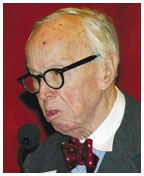
A Few Thoughts on Arthur M. Schlesinger, Jr.


Arthur Schlesinger, Jr., who died on Wednesday, was the first serious historian I ever read, back when I was in junior high school.

My first Schlesinger book was A Thousand Days, his account of the Kennedy Administration, of which he had been a minor White House functionary. No doubt Kennedy, himself a Pullitzer Prize winner in history--although there are those who believe that speechwriter Ted Sorenson was the actual author of his Profiles in Courage--wanted Schlesinger, renowned for his works on Andrew Jackson and Franklin Roosevelt, close at hand to chronicle his presidency. But Kennedy probably also thought that he and Schlesinger would pen the account together. The tragic events of November 22, 1963 put an end to that plan.

The account that Schlesinger produced without Kennedy can rightly be criticized as being more hagiography than biography. But one shouldn't be too critical of him for that. Other members of the Kennedy Administration produced similarly worshipful books at almost the same time, most notably Sorenson and press secretary Pierre Salinger. Given the assassination of Kennedy and the sense of lost promise they all carried, that's probably to be expected. Their approach, that of casting their boss as a hero worthy of a place on Mount Rushmore, isn't unique among the volumes produced by presidential subordinates, before or since.

But even in A Thousand Days, Schlesinger applied the three elements that seemed to characterize almost all of his work:
  • the novelist's gift with words;
  • meticulous scholarship (It was Schlesinger who caused me to fall in love with the footnote.); and
  • an intense commitment to the liberal tradition in Democratic Party politics.
Schlesinger was unrepentantly partisan and his work largely chronicled the icons of the Democratic Party, among which he insisted on including Kennedy, while delivering robust condemnations of Republicans.

But this intensely partisan and deeply liberal academic could also be a pragmatic pol. Like John Kenneth Galbraith, another Harvard scholar, Schlesinger never lost his love for Adlai Stevenson, the Illinois politician who had the misfortune of facing Dwight Eisenhower in both 1952 and 1956, when he was overcome by electoral landslides. To the end of his days, Schlesinger contended that Stevenson would have made a great President. But when Stevenson made a third run at the Democratic presidential nomination in 1960, Schlesinger (and Galbraith) made the calculation that an unambiguous liberal like Adlai, who had already lost twice, wouldn't be as palatable to the American people as a fresh-faced, World War Two veteran who was less than enthusiastic about civil rights and had a tough record as a Cold Warrior. He supported Kennedy for President, bringing many of his Americans for Democratic Action (ADA) friends in tow.

In more recent years, Schlesinger served as general editor of the wonderful New York Times series of books on US Presidents. The old master did a great job!

Each volume is about 150-pages in length, providing scant details on the lives of the chief executives before their terms and after, if they survived them. The focus of each was the periods of their presidencies.

I love this series, although not every volume is a homerun. Hans L. Treffouse, for example, could have provided more information on Rutherford B. Hayes, rather than assuming that readers knew more of the background of this obscure President than is likely the case.

Robert V. Remini, known more for his work on Andrew Jackson and Henry Clay, was, I thought, intensely unfair to John Quincy Adams and his admittedly prickly family.

But Schlesinger's selection of who should author the various books bordered on the inspired.

He picked John Dean, Marion, Ohio-native and the Nixon adviser whose testimony unraveled the 37th. President's scandal-plagued Administration, to write the story of Marion, Ohio native Warren Harding's posthumously scandal-plagued presidency.

Roy Jenkins, the British politician and eminent Churchill biographer, was selected to write about Franklin Roosevelt's White House tenure.

Novelist E.L. Doctorow, with his appreciation of the ironic, of history, and of the poetic in life, was assigned the account of Abraham Lincoln's administration.

Tom Wicker, the Times correspondent who had covered Eisenhower's presidency, critically, wrote a volume on Ike's tenure that was, with the benefit of passing years, surprisingly appreciative.

John Siegenthaler, the Tennessee journalist who served in the Kennedy Justice Department, wrote the volume on Tennesseean James K. Polk, who probably worked himself into an early grave through his control freak approach to the presidency.

Today on NPR, I heard historian Robert Dallek say that Schlesinger never expected that what he wrote would be the definitive accounts of any era or any historical figure. Historians always debate and revise, he knew. Schlesinger's judgments will be questioned. But his scholarship never will be. And, I think, anywhere people appreciate language, his writing will continue to be enjoyed.

Monday, February 19, 2007

Some Presidents' Day Reading

Here is a sampling of some of the posts on Presidents and the presidency that have appeared here at Better Living. Happy Reading!

A New Approach to Naming Our Greatest Presidents
The Other Adams
Note for 2008: Dump or Change Presidential Debates
Veterans' Day Reading
Carter's 'Living Faith'
His Excellency, Samuel Betances, and the Promise of America
Bush Takes Oath: Here Are Consequences, Unintended and Otherwise
My Picks for the Four Best US Presidents
The Rest of My Top Ten
The Book I Always Meant to Write
TR: Leadership and the Call to Sacrifice
Garry Wills' Account of James Madison's Presidency
Our Visit to the New Lincoln Museum in Springfield, Illinois
My Four Favorite Lincoln Books
I Like the US Way of Electing Presidents Better
The 'Curse' of Second Presidential Terms
Reflections on JFK's Assassination
Abraham Lincoln Really Was Great
'1776' Underscores Washington's Greatness
Image Making and the Crapshoot of American Democracy
The Dangers of Sanctimony
Schlesinger, Lincoln, and Preventive War
When Presidents Theologize
Would JFK Have Won in 1964?
Gerald Ford: Our Insurance Policy
Clinton and 'Experience'
To Be Normal May Mean To Be Great
Presidential Campaigns Are Too Long
The Grayson Letters and Presidential Health
Interpreting Lincoln's Second Inaugural 'Sermon' (seven parts)

[THANKS TO the generous Andrew Jackson at SmartChristian.com for linking to this post.]

Monday, January 15, 2007

It doesn't surprise me...

that so many children are ignorant of Martin Luther King, Jr. and the Civil Rights movement. A recent survey indicates that a huge percentage of students think that King was fighting against slavery.

Much of what passes for Social Studies Education today is a joke, superficial topical surveys. Few parents attempt to pass on any appreciation of this country's or the world's past to their kids. (I'm grateful that my own parents did have this commitment, for example first taking me to Washington, D.C. when I was five years old, a trip I still recall vividly, forty-eight years later.)

On top of that, the adolenticization of our society, a phenomenon that Christopher Lasch first identified in The Culture of Narcissism, has filled post-modern America with a general ahistorical view of life, devoid of any appreciation or understanding of the past.

We have a culture so "in the moment" that it's literally hell-bent on learning history's lessons. Another figure who was assassinated in the 1960s, John Kennedy, wrote these words which I committed to memory as a child: "A knowledge of the past prepares us for the crisis of the present and the challenge of the future."

King's birthday, Presidents' Day, and other national holidays should be more than just days off. An informed patriotism can be an antidote to things like militant nationalism and hedonistic cynicism, both of which can kill the American Dream, King's dream: freedom within a community of mutual accountability and concern.

[THANK YOU TO: Charlie Lehardy of AnotherThink, who links to this post in a wonderful tribute to Dr. King. Charlie's post, introducing excerpts from King's letter from the Birmingham jail reminds us "of the Christian faith that was the foundation of his beliefs and actions." Those tempted to ignore the facts by dismissing all religious belief as inherently superstitious and dangerous would do well to contemplate people like King, Desmond Tutu, Mother Teresa, Albert Schweitzer, C.S. Lewis, and the billions of ordinary Christians who have fought slavery, poverty, injustice, prejudice, and disease down through the centuries and continue to do so today. The good infection of Jesus Christ continues to bring healing and hope even though there have been and are people who misuse and pervert the faith.]

[THANKS TO: Andrew Jackson of SmartChristian.com for linking to this post.]