[The following is a piece I wrote for our congregation's November newsletter.]
While some of us may have taken advantage of early voting by now, November 4, brings election day. What is the Christian’s responsibility when it comes to voting?
For the follower of Jesus Christ living in a democracy, the command to love our neighbor, I believe, includes responsible citizenship. And responsible citizenship, in turn, can entail voting.
I say that it can entail voting because merely casting a ballot is no sign of being a good citizen.
The right to vote can be abused or misused as easily as other privileges we have in life. To cast an uninformed vote, to vote for a candidate simply because of their party affiliation, or because we like the way a candidate looks, are common ways in which we can misuse the privilege of voting.
If we’re uninformed about a particular race, we should probably not vote in that contest. We exercise good stewardship of our citizenship when we cast an informed vote. If we do feel informed though, then we should by all means, vote. One could even say that we have a Christian duty to vote.
This raises another question: What do we do if after fully informing ourselves, we feel no enthusiasm for any candidate?
Here are a few points to consider.
First: Remember that politicians are people too. Those who seek public office are, just everybody else, members of the human race of whom the Bible observes: “There is no one who is righteous, not even one...” (Romans 1:10) Perfection is not the benchmark standard for us to apply to our political leaders. I’m certainly not suggesting that you overlook what appears to be an overtly rotten character in a candidate. But I do suggest cutting candidates some slack for being human. Remember that even George Washington, as great as he undeniably was, didn’t start out with his face chiseled onto Mount Rushmore.
Second: Pray about your vote. Ask God to clarify your thinking and to give you wisdom. The Bible says, “If any of you is lacking in wisdom, ask God, who gives to all generously and ungrudgingly, and it will be given to you” (James 1:5).
Finally: “Sin boldly.” This strange bit of advice came from Martin Luther for Christians sincerely weighing decisions. Luther advised Christians to read God’s Word, talk things over with trusted Christian friends, and to pray. If, after all of that, your course remains unclear, do what you think is right. Your judgment could be wrong. But you can have a clear conscience because you know that your intent is to do God’s will.
Showing posts with label 2008 Presidential Election. Show all posts
Showing posts with label 2008 Presidential Election. Show all posts
Monday, November 03, 2008

Wednesday, May 14, 2008
No Politics from the Pulpit...or From Preachers
Two really intelligent people I've gotten to know over on Facebook, supporters of Senator Hillary Clinton, have assumed that because of some of what I've written about Clinton's fading prospects for the presidency that I'm a supporter of Senator Barack Obama.
The fact is that while I am intensely interested in politics, I've come to believe it's morally wrong for pastors to get involved in partisan politicking.
As I've said many times, God is not a Republican, God is not a Democrat, and God is not an American.
It's impossible to draw a straight line between one's faith and a political party or a political candidate. Attempts to do so, it seems to me, result in putting God in a box and making idols of ideologies or political figures. God is bigger than all of politics and preachers who get involved in politics--something I did four years ago when, concerned about the funding of public education in Ohio, I ran for the state House of Representatives, an effort I now regret--risk sending the wrong signals about God and the message of the Gospel.
Politics is an abiding interest of mine, as is history. I majored in Social Studies at Ohio State, worked as volunteer coordinator for a 1976 congressional campaign, and worked for the Ohio House of Representatives. As an avocation, as one always interested in history, current events, and the political process, I do write about politics from those vantage points.
But unless the voice of Scripture is, to my satisfaction, unambiguous, I never advocate policy positions here. And certainly never do so from the pulpit. I never endorse candidates. And so long as I am under call as a pastor of Christ's Church, I never will.
By the way, it's my view that pastors who get into endorsing political candidates or policy positions from the pulpit are doing a great disservice to our Lord. We all sin and are imperfect, of course. But I hope that, absent the kinds of clear Scriptural imperatives I've mentioned, all pastors will refrain from political activism.
Here are links to a few past discussions of these and related matters...
The fact is that while I am intensely interested in politics, I've come to believe it's morally wrong for pastors to get involved in partisan politicking.
As I've said many times, God is not a Republican, God is not a Democrat, and God is not an American.
It's impossible to draw a straight line between one's faith and a political party or a political candidate. Attempts to do so, it seems to me, result in putting God in a box and making idols of ideologies or political figures. God is bigger than all of politics and preachers who get involved in politics--something I did four years ago when, concerned about the funding of public education in Ohio, I ran for the state House of Representatives, an effort I now regret--risk sending the wrong signals about God and the message of the Gospel.
Politics is an abiding interest of mine, as is history. I majored in Social Studies at Ohio State, worked as volunteer coordinator for a 1976 congressional campaign, and worked for the Ohio House of Representatives. As an avocation, as one always interested in history, current events, and the political process, I do write about politics from those vantage points.
But unless the voice of Scripture is, to my satisfaction, unambiguous, I never advocate policy positions here. And certainly never do so from the pulpit. I never endorse candidates. And so long as I am under call as a pastor of Christ's Church, I never will.
By the way, it's my view that pastors who get into endorsing political candidates or policy positions from the pulpit are doing a great disservice to our Lord. We all sin and are imperfect, of course. But I hope that, absent the kinds of clear Scriptural imperatives I've mentioned, all pastors will refrain from political activism.
Here are links to a few past discussions of these and related matters...
A Pledge I Wish Every Christian Leader Would Make
Jesus is Not a Republican. Jesus is Also Not a Democrat.
Who is the 'Values Voter'?
"Do religious ideas undermine democratic discourse?"
Dr. Dobson, Stop Playing This Dangerous Game!
Politics Endorsed by a Church? I Don't Think So!
Why Separation of Church and State is Best for the Church and Its Cause
Iraq, the Church, and 'Christian' Political Commentary
Friday, April 18, 2008
Presidential Debates: Can't We Do Better?
Scorn has been heaped on ABC News anchors Charles Gibson and George Stephanopoulos for their work on this week's debate between Democratic presidential contenders Hillary Clinton and Barack Obama. Obama, his supporters, and some pundits have been critical of the two for using more than half of the debate to pose what they regard as "gotcha" questions, rather than ones dealing with substantive issues.
Stephanopoulos defended the approach taken by he and Gibson, saying, "We wanted to focus at first on the issues that were not focused on during the last debates."
The "last debates" includes a body of twenty, count 'em twenty, previous encounters involving the two senators!
By this time, we've probably all heard what the two senators have to say about the biggest issues of the campaign--from Iraq to the economy, health care to special interests' influence on public policy.
In fairness to Gibson and Stephanopoulos then, a different approach was warranted. They're news people and it's legitimate for them to look for the candidates to "make news" by being forced to answer different questions.
And, it probably would have been unnatural to expect that in the wake of some of the comments and gaffes perpetrated by the candidates and their respective campaigns that there wouldn't have been some questions about their alleged elitism (Obama) or distance from the truth (Clinton).
But, it seems to me that Gibson and Stephanopoulos also missed a golden opportunity. "Senators, we've heard where you stand on some of the marquee issues," they might have said, "but how about if we spend some time on other issues the lay beneath the surface?"
For example, time might have profitably been spent on discussing the interrelated issues of suburban sprawl, white flight, energy costs and alternative energy development, and how the US can be a leader of Third Wave economic pursuits while still maintaining its agricultural and industrial bases. Or, given the candidates' critiques of current policy in Iraq, they might have been asked about the disintegration of realpolitik as a guiding principle for foreign policy in both parties and whether today the only alternatives are Wilsonian interventionism and isolationism.
Prior to one recent debate, I suggested 23 questions that might be posed to the candidates. Most of the topics I thought worthy of exploration were ignored.
There are too many debates and presidential campaigns are way too long. Those two facts no doubt play their part in yielding insubstantial "debates."
But if the two ABC anchors were serious about focusing on issues not focused on in previous debate encounters, they could have done a lot better job than they did this week.
Stephanopoulos defended the approach taken by he and Gibson, saying, "We wanted to focus at first on the issues that were not focused on during the last debates."
The "last debates" includes a body of twenty, count 'em twenty, previous encounters involving the two senators!
By this time, we've probably all heard what the two senators have to say about the biggest issues of the campaign--from Iraq to the economy, health care to special interests' influence on public policy.
In fairness to Gibson and Stephanopoulos then, a different approach was warranted. They're news people and it's legitimate for them to look for the candidates to "make news" by being forced to answer different questions.
And, it probably would have been unnatural to expect that in the wake of some of the comments and gaffes perpetrated by the candidates and their respective campaigns that there wouldn't have been some questions about their alleged elitism (Obama) or distance from the truth (Clinton).
But, it seems to me that Gibson and Stephanopoulos also missed a golden opportunity. "Senators, we've heard where you stand on some of the marquee issues," they might have said, "but how about if we spend some time on other issues the lay beneath the surface?"
For example, time might have profitably been spent on discussing the interrelated issues of suburban sprawl, white flight, energy costs and alternative energy development, and how the US can be a leader of Third Wave economic pursuits while still maintaining its agricultural and industrial bases. Or, given the candidates' critiques of current policy in Iraq, they might have been asked about the disintegration of realpolitik as a guiding principle for foreign policy in both parties and whether today the only alternatives are Wilsonian interventionism and isolationism.
Prior to one recent debate, I suggested 23 questions that might be posed to the candidates. Most of the topics I thought worthy of exploration were ignored.
There are too many debates and presidential campaigns are way too long. Those two facts no doubt play their part in yielding insubstantial "debates."
But if the two ABC anchors were serious about focusing on issues not focused on in previous debate encounters, they could have done a lot better job than they did this week.
Thursday, March 20, 2008
"If you want a title, what's wrong with Mr.?''
 The speaker was British actor Paul Scofield, who died today. He posed the question in response to queries as to why he didn't want to be knighted, gaining the privilege of being called, "Sir."
In spite of being in a very public profession, Scofield felt no need to be a public personality, a celebrity.
Scofield's decision for ordinariness, in spite of his extraordinary talent, is a bit damning, however unintentionally, of those marginally talented celebrities with which the tabloids become so obsessed these days. It also damns those more talented persons who, once their sizzling fame has abated, can't be content with simply continuing to do work, instead spending millions to tell us that they're still around and still talented.
Scofield's stance reminds us that there is a difference between success, on the one hand, and prominence, on the other. Scofield was a successful actor who received an Academy Award for his incredible performance as Thomas More in A Man for All Seasons. Yet he never became a celebrity.
His example might well be heeded beyond the field of entertainment. Politics, for example. Gore Vidal, a curmdudgeon whose inventive, if destructive, violations of historical fact have sometimes angered me, is often cited as having said, "Any American who is prepared to run for president should automatically, by definition, be disqualified from ever doing so."
Vidal's point, of course, is that if anyone has that peculiar combination of megalomania and gnawing insecurity necessary to say, "I want to be President," they probably aren't well-suited for the office.
I'm inclined to agree. And these months of watching the 2008 nominating races, in processes that combine elements of a new car show and WWF bouts, complete with the inauthenticity of both, have heightened my inclination to agree even more.
Of course, the Christian world view to which I subscribe is nothing if not realistic. Christian anthropology derived from the Bible is unflinchingly honest about human beings. Nobody is perfect and it would be silly to expect perfection in our political leaders.
But what's bothersome is that, in their desire--their need?--for prominence, pols will often portray themselves as something like perfect and their opponents as something considerably less.
I only hope that the desire for titles, vindication, and power isn't so great as to cloud the judgment of the chief remaining candidates. I hope that they don't believe the nearly-messianic ways in which they portray themselves and their candidacies.
On the day before he announced his candidacy for president in the 1988 race, Massachusetts governor Michael Dukakis visited a prominent presidential historian over lunch. The historian had known every US president from Franklin Roosevelt to Ronald Reagan. What, Dukakis asked him just before leaving, did all those presidents have in common? The historian thought for a moment, then said, "They were all very strange."
It may be a bit more than we have a right to hope for that our next president won't be strange, driven by the desire for titles, accolades, and Air Force One, nor inflated by a weirdly outsized sense of self-importance. But if those characteristics can be mitigated by a smidgen of both humility and an appreciation of their inherent worthiness as human beings apart from accomplishments or honors, that may be okay.
I might also suggest that they spend some time studying Paul Scofield's approach to his work and to the alluring demon of prominence.
[Scofield's statement, by the way, is the perfect quote for this Maundy Thursday, commemorating the day when Jesus, God-in-the-flesh who came not to be served, but to serve, washed the feet of His disciples.]
[You might be interested in these ruminations on the effects of fame on the famous here and, in its original incarnation, here. And here and here I look at David Bowie and Pope John Paul II, I consider prominence and its uses]its uses]
[I promise that this will be last Paul Scofield-related post of the day.]
Tuesday, March 04, 2008
Listen to Rick Moore's 'HolyCoast.com ON THE AIR'
Rick interviewed me on his Internet radio show. We talked about the Ohio primary and how Christians might think about this year's presidential race. Thanks, Rick, for inviting me to be with you. It was fun!
To listen, click here.
To listen, click here.
Tuesday, February 05, 2008
How Christians Might Think About the 2008 Presidential Election
That's the name of a series of posts I wrote last year. Their purpose wasn't to push a particular agenda. I don't believe that there is one political agenda. To try to distill God or God's will to a set of political proscriptions is a bit like trying to cram the universe onto an iPod. But I do believe that as Christians, there are certain prisms through which we're called to look at our lives in the world, including the political world.
Here are links to all the installments of that series:
Part 1
Part 2
Part 3
Part 4
Part 5
Part 6
Part 7
Here are links to all the installments of that series:
Part 1
Part 2
Part 3
Part 4
Part 5
Part 6
Part 7
Should Romney Withdraw?
 Conventinal wisdom says that Mike Huckabee (pictured at the left) has hurt Mitt Romney's presidential bid. The notion is that Huck denies Romney the votes of true conservatives.
But tonight, MSNBC polling shows that among evangelical Protestants, a core constituent group among Republicans, the vote was roughly evenly split among Romney, Huckabee, and John McCain, each polling about 30%.
One clear conclusion of these results is that evangelicals, though conservative, cannot be regarded as a monlith.
And, more broadly, that means that it has been highly presumptuous for the Romney people to say that, were it not for Mike Huckabee's bothersome candidacy, he would be the natural recipient of the votes of true conservatives.
The Huckabee campaign could, with credibility, argue that it is Romney who should make way for the former Arkansas governor. Unlike Romney, Huckabee has always been pro-life and always favored to a constitutional amendment defining marriage as one man and one woman for life. Romney's bona fides as a conservative are clearly questionable, at best.
But, in spite of his suggestion that the Constitution be amended to conform to the Bible, Huckabee's votes in the Bible Belt, where frontrunner John McCain has not been as strong--except in South Carolina, estabishes him as the frontrunner to be John McCain's vice presidential running mate.
After Super Tuesday, what I argued here, that the likeliest Republican ticket would be either McCain-Huckabee or Huckabee-McCain, seems even likelier.
What is clear is that, unless Romney pulls off a miracle in California tonight, Republicans who don't like McCain will at least privately argue that the former Massachusetts governor should withdraw to make way for a conservative, Mike Huckabee.
[UPDATE: Thanks to The New York Times for linking to the Moderate Voice version of this post.]
Thursday, January 31, 2008
"It's Character, Stupid"
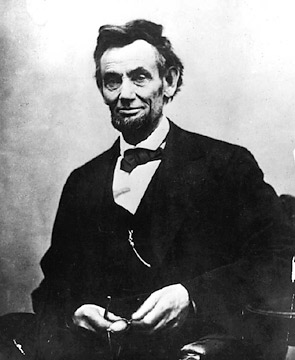 "I claim not to have controlled events, but confess plainly that events have controlled me."
The writer was President Abraham Lincoln, speaking of the cataclysmic Civil War, initiated not by Lincoln or the government he headed, but by insurgent forces who attacked a United States military installation on US soil.
Things happen over which we have no control and much of life is composed of our response to events. "If you want to make God laugh," said Father Myke, a World Trade Center hero on September 11, 2001, "tell Him what you plan to do tomorrow." This echoes wisdom found in the New Testament book of James:
Come now, you who say, “Today or tomorrow we will go to such and such a town and spend a year there, doing business and making money.” Yet you do not even know what tomorrow will bring. What is your life? For you are a mist that appears for a little while and then vanishes. Instead you ought to say, “If the Lord wishes, we will live and do this or that.” (James 4:13-15)And it isn't much different from the words of John Lennon in his song, Beautiful Boy: "Life is what happens to you, while you're busy making other plans..."
The point?
Stuff happens.
Even to presidents.
This is important to remember as the 2008 presidential campaign unfolds. In town hall meetings and debates, candidates are asked what they would do about the economy, the war in Iraq, the struggle with radical jihadists, global warming, and a whole host of other vital national and international concerns. Candidates respond with everything from sound bites to detailed programs on their web sites. And all of that's fine.
But beware! Events have a way of overtaking even presidents.
Franklin Roosevelt ran as a balanced budget conservative in his 1932 race for the presidency. But by the time he took the oath of office in March of the following year, he had come to believe that Keynesian deficit spending was necessary to give the economy a major boost. He also saw that the nation needed a major infusion of confidence and steel, assets he had in abundance as a result of his, by then, decade-long battle to overcome polio.
Because much of what happens during a presidential term of office can't be anticipated, there is something far more important to consider when deciding who will get our votes for president. In short, the characters of the people who vie for the presidency are more significant than their political philosophies or their position papers.
Character is forged in personal experience with adversity, not only in the adversity we personally experience, but also in the extent to which we're willing to stand with others in their adversity.
Often, the United States has been lucky. The presidents we've elected have largely, been unknown to us and what we have known of them has often been a public relations smoke screen.
Today, smoke screens are out there. But in this era of multiple information outlets and YouTube videos, we have a much better chance of knowing what makes our candidates for public office tick. We can get a better fix on their characters.
Hopefully, as this presidential election process continues, we will pay heed to the candidates' positions on the issues and look at their resumes. But more than anything, I hope, we'll consider their characters. It's their characters that will give us the best indication of how they might respond to the unknown events that loom in the futures of us all.
[By the way, here are links to a series I wrote that features one of Abraham Lincoln's most remarkable and laudable character traits, his capacity to change and grow:
Part 1
Part 2
Part 3
Part 4
Part 5
Part 6
Part 7]
Tuesday, January 29, 2008
Romney Claims Business Success Prepares Him to Handle Economy...Is That True?
With John McCain and Mitt Romney in a statistical tie there, Floridians are voting in their state's presidential primary.
 Concerns about the national economy have increased in recent weeks. In the face of these concerns, Romney has been touting his supposed superior capacity to deal with economic issues because of his business background.
So far as I can recall, only three US presidents have spent major portions of their adult lives in business: Herbert Hoover and the two Bushes.

Hoover was an authentic business success. After graduating from Stanford University, Hoover was a mining engineer who made millions for his company. He had an extraordinary ability to pick the right places to mine. Eventually, he negotiated a deal with his company, getting a piece of the profit on all the successful projects he initiated and becoming a millionaire before he was thirty. Hoover then became an independent contractor, making millions more.
After that, as most people know, the native Iowan headed a major relief effort, providing food and other help to Europeans in the post-World War I-era.
Hoover was seen as a can-do guy who knew how modern economies worked.
It was maybe inevitable then that Hoover should become involved in government work. Warren Harding appointed him to be Secretary of Commerce, a post he continued to hold throughout the tenure of Harding's successor, Calvin Coolidge.
During his years at Commerce, Hoover was ubiquitous, involving himself in a broad range of domestic and foreign policy matters. He was called "Secretary of Everything."
In 1928, there was simply no question that Hoover would be the Republican nominee for president. He won in a landslide over New York Governor Al Smith. Inaugurated in March, 1929, Hoover was president a scant seven months when the stock market crash hit.
In the face of the ensuing depression, the well-meaning Miracle Man seemed incapable of perceiving, let alone responding to, the crisis. At first, he denied that a major problem existed. Then, as he slowly realized the magnitude of the nation's woes, he offered ineffectual measures. He was trounced as he sought re-election in 1932. For all his undeniable acumen as a businessperson, a catalyst for major coordinated efforts, and a management genius, acknowledged as such by both President Truman and Eisenhower, two of his successors, Hoover was utterly incompetent in dealing with economic matters.
The Bushes were the inheritors of great wealth, acquired by George H.W. Bush's grandfather. They were two examples of the family tradition, which says that its male members will go into politics, but only after securing independent wealth, a pursuit buttressed by the family's notable capacity for easily acquiring initial capitalization. George H.W. Bush was, by most accounts, quite successful in his ventures into the Texas oil industry of the 1950s. The younger George appears to have been far less so, helped to success in spite of red-inking business practices in both oil and in major league baseball.
Of course, the elder Bush lost the presidency to Bill Clinton, whose campaign mantra was, "It's the economy, stupid." George H.W. Bush seemed detached from the economic difficulties then afflicting the country.
The younger Bush takes credit for forestalling recession through the enactment of tax cuts early in his term and is even now grappling with the current downturn in the economy.
Is business success (or failure) an indicator of a potential president's ability to deal with the economy? The number of presidents who actually spent much of their adult lives in business is small. So, it's difficult to know the answer to that question. But, based on the small sampling, the answer would appear to be no.
[UPDATE: I don't want this post to be interpreted as saying that those who spend large chunks of their lives in the business world shouldn't be president. My only point was and is that history doesn't suggest an automatic acceptance of Romney's argument that because he spent time as, essentially, a capital investment banker, he knows how to "manage" the US economy.]
Concerns about the national economy have increased in recent weeks. In the face of these concerns, Romney has been touting his supposed superior capacity to deal with economic issues because of his business background.So far as I can recall, only three US presidents have spent major portions of their adult lives in business: Herbert Hoover and the two Bushes.
Hoover was an authentic business success. After graduating from Stanford University, Hoover was a mining engineer who made millions for his company. He had an extraordinary ability to pick the right places to mine. Eventually, he negotiated a deal with his company, getting a piece of the profit on all the successful projects he initiated and becoming a millionaire before he was thirty. Hoover then became an independent contractor, making millions more.
After that, as most people know, the native Iowan headed a major relief effort, providing food and other help to Europeans in the post-World War I-era.
Hoover was seen as a can-do guy who knew how modern economies worked.
It was maybe inevitable then that Hoover should become involved in government work. Warren Harding appointed him to be Secretary of Commerce, a post he continued to hold throughout the tenure of Harding's successor, Calvin Coolidge.
During his years at Commerce, Hoover was ubiquitous, involving himself in a broad range of domestic and foreign policy matters. He was called "Secretary of Everything."
In 1928, there was simply no question that Hoover would be the Republican nominee for president. He won in a landslide over New York Governor Al Smith. Inaugurated in March, 1929, Hoover was president a scant seven months when the stock market crash hit.
In the face of the ensuing depression, the well-meaning Miracle Man seemed incapable of perceiving, let alone responding to, the crisis. At first, he denied that a major problem existed. Then, as he slowly realized the magnitude of the nation's woes, he offered ineffectual measures. He was trounced as he sought re-election in 1932. For all his undeniable acumen as a businessperson, a catalyst for major coordinated efforts, and a management genius, acknowledged as such by both President Truman and Eisenhower, two of his successors, Hoover was utterly incompetent in dealing with economic matters.
The Bushes were the inheritors of great wealth, acquired by George H.W. Bush's grandfather. They were two examples of the family tradition, which says that its male members will go into politics, but only after securing independent wealth, a pursuit buttressed by the family's notable capacity for easily acquiring initial capitalization. George H.W. Bush was, by most accounts, quite successful in his ventures into the Texas oil industry of the 1950s. The younger George appears to have been far less so, helped to success in spite of red-inking business practices in both oil and in major league baseball.
Of course, the elder Bush lost the presidency to Bill Clinton, whose campaign mantra was, "It's the economy, stupid." George H.W. Bush seemed detached from the economic difficulties then afflicting the country.
The younger Bush takes credit for forestalling recession through the enactment of tax cuts early in his term and is even now grappling with the current downturn in the economy.
Is business success (or failure) an indicator of a potential president's ability to deal with the economy? The number of presidents who actually spent much of their adult lives in business is small. So, it's difficult to know the answer to that question. But, based on the small sampling, the answer would appear to be no.
[UPDATE: I don't want this post to be interpreted as saying that those who spend large chunks of their lives in the business world shouldn't be president. My only point was and is that history doesn't suggest an automatic acceptance of Romney's argument that because he spent time as, essentially, a capital investment banker, he knows how to "manage" the US economy.]
Thursday, January 24, 2008
Who Would McCain, Romney, or Huckabee Pick for Vice President? (Part 1)
 Unless Rudy Giuliani pulls off a Florida surprise in next Tuesday's primary, there are now three Republicans with some chance of winning their party's presidential nomination: John McCain, Mitt Romney, and Mike Huckabee. Recently, I speculated on who might be the vice presidential running mates of Hillary Clinton or Barack Obama in the event that one of them becomes the Democratic nominee for president. But what about the remaining Republican contenders?
Each would have their own particular needs when it came to selecting running mates. In this post, I want to address what and who McCain will likely need in a running mate.
McCain should, by all rights, be the clear frontrunner, given the usual orderly succession of Republican presidential politics. That he isn't results in part, from the fact that neoconservatism, with its advocacy of Wilsonian intervention in foreign affairs, has at least temporarily changed the definition of conservatism. Additionally, on at least two major issues--immigration reform and campaign financing--McCain has departed from conservatism. Some will also mention his opposition to President Bush's 2002 tax cuts. Others will excoriate his participation in the Gang of Fourteen, ignoring how the compromise struck by those US Senators in 2005, made it possible for the President's conservative nominees for the US Supreme Court to be confirmed without controversy.
Be that as it may, McCain, an orthodox Goldwater-Reagan conservative who is an advocate of strong national defense, restrained government spending, Second Amendment rights, and an end to abortion, doesn't have the luxury that Ronald Reagan had in selecting running mates in 1976 and 1980.
Reagan, of course, didn't get the nomination in his 1976 challenge to Presdent Gerald Ford. But he came close partly because he made a daring and unprecedented announcement that if were nominated, his running mate would be moderately liberal Republican Senator Richard Schweiker. Reagan's conservative backers forgave him for this shrewd maneuver and moderately conservative to liberal Republicans gave Reagan a closer look, assured that he wasn't the right wing cromagnon they'd assumed he was. The ploy almost worked.
In 1980, Reagan announced to an electrified Republican convention immediatelty after he was nominated, on the night before he officially accepted the nomination, that his chief rival in the run-up to the convention, George H.W. Bush, had agreed to be his running mate. Before the elder Bush tapped the late strategist Lee Atwater to change his image to that of conservative fire-eater, he was regarded as a moderate to liberal wimp. Conservatives didn't much care for him. But Bush's frequent appearances on The Dick Cavett Show, especially when he was ambassador to the United Nations, would, Reagan undoubtedly reasoned, reassure moderates in the general electorate that he could be trusted in the White House.
Because McCain doesn't enjoy the trust of his fellow conservative Republicans, he will be forced to select an authentic, card-carrying conservative to be his vice presidential running mate. This will assuage the concerns of the Limbaugh wing of the party. But it will do him little good among a general electorate inclined to throw the Republicans in the Potomac because of the Bush war in Iraq and fears over the economy.
At present, Mike Huckabee, even though the neocon national security crowd and Wall Street conservatives made squeamish over his economic populism don't much care for him, would seem the likeliest running mate for McCain. (And vice versa.) The two seem to genuinely admire one another and each represent not only different elements of the Republican base, but also different important segments of the general electorate.
But one has the feeling that Democrats would relish having Huckabee on the ticket. His religious pronouncements are easy to misconstrue, for one thing. He probably also wouldn't soothe those Wall Street conservatives.
Whoever the seventy-one year old McCain chooses will have to be at least fifteen years his junior, which is to say someone in his or her fifties or younger. A governor or former governor would be good as well, offsetting concerns that McCain has spent too many years in Washington and has had no executive experience in politics.
A dash of drama for a ticket that would be entering the fall campaign as pronounced underdogs would also be helpful to McCain. Possibly the most interesting thing that McCain could do is announce that his running mate is a woman. And the Republicans may have a far larger stable of women qualified for the presidency and vice presidency than the Democrats have. But every potential running mate that McCain might consider must, for one reason or another, be dismissed: Elizabeth Dole and Kay Bailey Hutchinson are, like McCain, senators, the latter having sometimes been beclouded by ethical questions; Olympia Snow and Susan Collins, are both senators and more liberal than McCain needs to please critical neocons; and, maybe the woman most qualified to be President of the United States, former New Jersey governor and federal EPA administrator Christine Todd Whitman is also deemed too liberal.
McCain may tell the neocons where to get off and instead, gambling that upset conservatives are unlikely to vote for the Democratic ticket, pick someone completely off everybody's radar.
Or, he may roll the dice and select Joe Lieberman as his running mate. The 2000 Democratic nominee for vice president ostracized by the Move-On-wing of his party, forced to run as an independent in his most recent re-election bid in Connecticut, is currently campaigning for McCain anyway.
A McCain-Lieberman ticket would appeal to an electorate hungry for elected officials less vociferous in their partisanship and more oriented to seeking and implementing practical solutions to public policy needs. In Lieberman, McCain would have a running mate with proven vote-getting abilities in the northeast, a section of the country which Republicans have had to nearly write off in recent years.
Granted, Lieberman is more liberal than some of the potential Republican Veep candidates I've passed over above. But Lieberman's firm pro-Iraq War stance has made him an acceptable liberal to many conservative Republicans.
I'll examine Huckabee's and Romney's vice presidential imperatives in a post or two early next week.
Tuesday, January 22, 2008
Would Kennedy's Expression of Faith Be Acceptable in 2008?
 On November 22, 1963, President John F. Kennedy was scheduled to deliver one more speech during his tour of Texas. It was to have been given after he rode in the motorcade in which he ultimately died, felled by Lee Harvey Oswald's bullets.
In the speech, Kennedy was going to speak of the life and death struggle between the United States and the free world, on the one hand, and Soviet totalitarianism on the other. Kennedy, like his immediate predecessors Franklin Roosevelt, Harry Truman, and Dwight Eisenhower, believed that the US needed to be, in Roosevelt's phrase, "the arsenal of democracy."
But Kennedy also suggests in his undelivered speech, as he had in other speeches previously, that the US couldn't rely entirely on its military or economic might to confront Soviet totalitarianism. He asserts:
We in this country, in this generation, are-- by destiny rather than choice-- the watchmen on the walls of world freedom. We ask, therefore, that we may be worthy of our power and responsibility-- that we may exercise our strength with wisdom and restraint-- and that we may achieve in our time and for all time the ancient vision of "peace on earth, good will toward men." That must always be our goal-- and the righteousness of our cause must always underlie our strength. For as was written long ago: "Except the Lord keep the city, the watchman waketh but in vain. "What "was written long ago" is the first verse of Psalm 127. The Psalms, of course, were the worship song book of God's ancient people, the Israelites. It appears in what we Christians call the Old Testament, one of the 66 books of the Bible. Like Jews, Christians regard the Psalms as a sacred book, part of the Word of God to which the apostle Paul refers in the New Testament when he says, "All scripture is inspired by God and is useful for teaching, for reproof, for correction, and for training in righteousness, so that everyone who belongs to God may be proficient, equipped for every good work" (2 Timothy 3:16).
As a Christian, I believe that the verse cited by Kennedy speaks a profound truth. I'm convinced, from my admittedly biased perspective and from my study of History and of life, that if we believe that strength of arms or large sums of money will, alone, protect us from the horrors of the world, we are naive. Of course, in a world in which people do horrible things--a world, in which, the Bible teaches, sin has taken hold, things like governments and armies and police forces are necessary. Doing without those things, also from a Christian perspective, would be naive.
I believe that nations, as much as people, need God.
But it's less acceptable these days for presidential candidates or presidents themselves to dare to make assertions like the one Kennedy planned on making in Dallas on that horrible day.
To me, there is ample evidence from history demonstrating that even the strongest empires have, like the Soviet Union, rotted from the inside, been destroyed from the outside, or, as was the case with Rome, succumbed to both inside and outside forces, because of their failure to rely on God.
But if Kennedy were to say this today, he would be written off by some as a lunatic, derided by others for trying to force his religious views down others' throats, dismissed by others for simply appealing to people's religious sympathies without having such sympathies himself, or hailed by some for speaking the truth as he saw it.
In any case, a statement that would have been unexceptionable in 1963, would likely be deemed controversial, even inflammatory, today.
The reaction would be especially harsh if a Democratic president or a Democratic candidate for president were to make such a statement. For some reason, Democrats today are more generic in their allusions to faith. They risk riling up a portion of their base if they say too many nice things about God or about a specific understanding of God. By taking this hands-off approach to God and to the Judeo-Christian understanding of God, Democrats have effectively conceded many Christians, and not just those identified with the Religious Right, to the Republicans.
All of which makes Senator Barack Obama's overt expressions of faith in Jesus Christ and his willingness to challenge the Republicans for the votes of Christians, a willingness he expressed again in last night's Democratic debate, so interesting. Obama suggests that his views on things like equal opportunity are directly rooted in his faith in Christ and that if Democratic candidates advanced some of their ethical agenda as, in part, expressing their faith in Christ, Christians would give them a fair hearing and even their votes.
I have said many times before that as a Christian, I have zero interest in forcing others to adopt my faith or the ethic that I may think results from that faith. (Although I have every interest in sharing my faith in Christ in the hope that they too, will become followers of Christ.) But I've been critical of the affable Mike Huckabee, for example, for, I think, going over the line by campaigning as a "Christian leader" rather than as leader who happens to be a Christian.
But we definitely get a clearer picture of who a candidate is when she or he says things like Kennedy planned on saying on November 22, 1963. Granted, some pols may say them simply in an effort to garner votes. Kennedy himself may have done this. We know that he was an indifferent Christian at best. Be that as it may, the mere expression of such notions as those advanced by Kennedy in his undelivered speech, can tell us too, something about what the candidates think of the electorate.
The Democratic candidate who speaks with such specificity about his faith, whatever his or her faith, might warrant a chapter in Kennedy's Pullitzer Prize-winning book, Profiles in Courage.
What do you think?
[The picture above was taken during Kennedy's last actual speech, delivered in Fort Worth, on November 22, 1963. It's from the John F. Kennedy Library collection.]
[UPDATE: This post elicited a really interesting comment over at The Moderate Voice. It comes from one who identifies herself as Damozel:
Speaking as a Christian , I too believe that people need God. I also believe that a nation, like an individual human, needs a connection with God.I responded:
But I am married to an atheist who certainly doesn't seem to. Perhaps he does and doesn't know it, though he seems to be able to live a meticulously ethical life without it. In the meantime, he has a very low tolerance for what he calls "Christian name-dropping," meaning people talking about Christ in the social or political arena.
I don't particularly feel I need or want to know about a candidate's faith; it seems to me that this is a private matter. While I'm all for spreading the Gospel, I don't think Caesar is the right person to do the honors. After all---as Christ frequently reminds us in the Gospel---putting on a show of faith is the easiest thing in the world. He was particularly severe, wasn't he, against those who used their religious faith as a means of winning social advantage or approval....?.
Like Barack Obama, I am a Democrat because the party's concern with community and the welfare of others seems cognate with my beliefs about what Christ requires of me.
I'm sympathetic to him on that score, but it's not a point in his favor politically as far as I'm concerned for him to talk about it. As far as I know, ALL the candidates affect to be Christians of one kind or another. It doesn't seem to play much of a role in how any of them---including, as you rightly note, Kennedy---behave privately.
I don't see why it requires courage for even Dems to talk freely about God. It would take much more courage for a candidate to acknowledge atheism, agnosticim, or membership in a religion that the average American doesn't know anything about or understand. In any case, it's not something they ought to have to talk about, so long as they convince me they will operate within the law and make ethical choices....
Damozel:
By and large, I agree with your husband.
Mostly, I think that politicians should keep expressions of faith out of their political discussions. One reason for that is, more often than not, such talk represents nothing more than pandering.
For nearly thirty years now, for example, some Republican pols and many leaders of the Reigious Right have been eliciting some Christians' votes and financial backing by, as your husband puts it, "name dropping," draping their platitudes and platforms in Christian piety. Yet there's lots of evidence that, at least as it relates to the politicians, these expressions are mere plays for support.
I also don't believe that one can not posit a straight line between one's confessions about God and one's positions on political issues. I'm generally wary of politicians and preachers who do this. Rare is the political issue that is so clearly addressed in the Scriptures, for example, that a preacher or a pol can say, "Thus saith the Lord." That's why, while I do blog about politics, this pastor has almost never advanced a political position on issues. I don't want to drop the God bomb on people.
But, taking an example from history: The British politician William Wilberforce, one-time parishioner of John Newton, the former slave ship captain and composer of 'Amazing Grace,' took it as his life's mission to "reform the morals" of Great Britain. This led to his leadership in such causes as abolishing slavery in the British Empire and ending cruelty to animals. In fact, at one time or another, Wilberforce was an active member of the boards of some 400 organizations, whose causes he carried to Parliament. The thing that drove Wilberforce's positions on public positions was his faith in Christ and it would have been ridiculous for him to have pretended otherwise.
All I'm saying is that for a candidate to say, "One reason I feel this way" has to do with my faith in Christ, or God, or Allah, or whatever, is nothing more than "truth in advertising." They may be fibbing, in which case the voting public will have to attempt to be discerning.
I am wary of pols who talk about their faith all the time. Too often, they do so in an exclusionary way, as if to say, "I'm one of the righteous few (and such and so is not.)."
This is an unacceptable approach for Christian politicians. Christians believe that they are, like the rest of the human race, ordinary sinners who have been saved by the grace of God, not by their own merit. Christians are called to regard themselves as being no bettert--or no worse--than others and to put the interests of others ahead of their own.
But if one's religious convictions, whatever they may be, even atheism, have had an impact on one's positions on some issues, it would be disingenuous to not say so. And, in some circles, it would be, I think, quite courageous.
Thanks so much for your thoughful comments. I really enjoyed reading them!
Mark Daniels]
I've Been at It Again at 'The Moderate Voice'
Here. It's about the ironies of Fred Thompson's now-finished campaign for the presidency. A sampling:
One of my theories about leadership, an art that I’ve studied since I was a boy and which I’ve practiced for more than thirty years, is that it only belongs to those who persuade us to “buy into” them.
Buying into a leader involves a complicated and situationally-influenced combination of trust and likability. In 1960, for example, a slim majority of US voters bought into John Kennedy because his brand of youthful energy was compelling for a generation of Americans grown tired of the grandfatherly visage of Dwight Eisenhower. But, irrespective of whatever abilities or virtues Kennedy possessed as a leader, much of his ascendance was a triumph of packaging over reality. The forty-three year old Kennedy, a victim of various afflictions, was probably in poorer health than Eisenhower, even though the seventy-year old former general had suffered from a heart attack and a stroke during his time in the White House.
Whether Fred Thompson could have ever been packaged as a likable guy is anybody’s guess...
Thursday, January 17, 2008
Most Recent Posts at 'The Moderate Voice'
I've been speculating about who would be Senator Obama's and Senator Clinton's vice presidential running mates.
See here and here.
My most important posts on the 2008 presidential election appeared last year. The series, How Christians Might Think About the 2008 Presidential Election is linked in its entirety here.
See here and here.
My most important posts on the 2008 presidential election appeared last year. The series, How Christians Might Think About the 2008 Presidential Election is linked in its entirety here.
Wednesday, January 09, 2008
Clinton Wins in New Hampshire: Egg on My Face (for Now)
I thought that Barack Obama would beat Hillary Clinton in New Hampshire today...and handily. That wasn't to be. Why?
Apparently, female voters went for Clinton in a big way today. But the reason for that isn't manifestly obvious to me. Most of the Baby Boomer, college-educated women I know have said that, while they want to vote for a Democrat for president this year, they will never vote for Clinton. They don't trust her.200
Perhaps that mistrust of Clinton exists even among many of the women who voted for her in New Hampshire yesterday. But things happened over the weekend. One was the appearance that Obama and former Senator John Edwards ganged up on her during the debate on Saturday night. The other was her response to the question of a New Hampshire questioner who wondered how she was able to keep going on.
I have no doubt that response was genuine and perhaps, it caused many women to feel that they needed to stand with Clinton as she faced off against opponents they perceived to be bullying her. (If that's the case, then New Hampshire women rallied around Clinton the way that New York women rallied to her side in the face of apparent bullying by her Republican opponent in her 2000 Senate race.)
I still believe that Obama will be the Democratic nominee this year. But New Hampshire has given the Clinton campaign a reprieve for now.
Apparently, female voters went for Clinton in a big way today. But the reason for that isn't manifestly obvious to me. Most of the Baby Boomer, college-educated women I know have said that, while they want to vote for a Democrat for president this year, they will never vote for Clinton. They don't trust her.200
Perhaps that mistrust of Clinton exists even among many of the women who voted for her in New Hampshire yesterday. But things happened over the weekend. One was the appearance that Obama and former Senator John Edwards ganged up on her during the debate on Saturday night. The other was her response to the question of a New Hampshire questioner who wondered how she was able to keep going on.
I have no doubt that response was genuine and perhaps, it caused many women to feel that they needed to stand with Clinton as she faced off against opponents they perceived to be bullying her. (If that's the case, then New Hampshire women rallied around Clinton the way that New York women rallied to her side in the face of apparent bullying by her Republican opponent in her 2000 Senate race.)
I still believe that Obama will be the Democratic nominee this year. But New Hampshire has given the Clinton campaign a reprieve for now.
Tears in New Hampshire: Edmund Muskie and Hillary Clinton
 Going into the 1972 campaign to become the Democratic Party's nominee for president, the acknowledeged Dem frontrunner was Maine's senator, Edmund Muskie. Muskie had wowed the country four years before as Hubert Humphrey's vice presidential running mate with his soft-spoken eloquence.
But a Muskie nomination wasn't to be. First, came defeat for Muskie in the Iowa caucuses. Anti-Vietnam War senator George McGovern, piggybacking off of his chairmanship of the Democratic party committee that had reformed the presidential nominating process and building from his former chairmanship of the state Democratic apparatus in nearby South Dakota, beat Muskie, setting up a big battle in New Hampshire's primary, several weeks later.
The Nixon White House and many in the Republican Party regarded Muskie as the most formidable Democratic nominee. That's no doubt why a major New Hampshire newspaper, then read by a huge percentage of Granite State residents and ardently conservative both in its news coverage and editorial page content, went after Muskie full throttle.
First, it claimed that Muskie had made an insulting joke about French-Canadian Americans. This, at least in 1972, was a significant constituency in New Hampshire. Muskie was fending off these allegations when different ones appeared. These alleged that Muskie's wife told off-color jokes and was guilty of drunkenness.
The latter allegations were particularly hurtful to Muskie. He and his wife were extraordinarily close, their relationship cemented by their daily prayer, Scripture reading, and devotions.
An angry Muskie decided to challenge the newspaper publisher, William Loeb, with a rally in front of the paper's offices in Manchester. But emotion took hold of the Maine senator. He choked up and some claimed they saw tears fall as Muskie defended the woman he loved and faced the prospect that his once seemingly invincible campaign would fall apart.
When McGovern won the New Hampshire primary that year, many felt that his victory was at least in part attributable to Ed Muskie crying. Presidents, conventional wisdom said, can't cry.
Zoom forward to 2008. The once seemingly invincible campaign of the junior senator from New York, Hillary Clinton, has hit a major wall in Iowa. His name is Barack Obama. Iowa caucus-goers told the Democratic elites, "Not so fast" and gave the junior senator from Illinois an impressive victory.
Going into New Hampshire, Clinton, who has given as good as she's gotten when it comes to political attacks, was the clear target of her opponents' rhetoric. Undoubtedly, both Barack Obama and former North Carolina senator John Edwards saw New Hampshire as the place where Clinton's candidacy could become permanently derailed.
Then, just days before the primary, a sympathetic voter asked Clinton how she was able to keep going in the face of opposition. Clinton did not cry. But she was obviously choked with emotion. Clinton claimed that she churned on, in effect, because the country needed her. That may be and Clinton may actually believe that it's true.
Be that as it may, the incident may have been nothing more than a campaign footnote had it not been for the reaction of Edwards. Harking back to the conventional wisdom of 1972, he claimed that Clinton's show of emotion demonstrated that she wasn't fit to be president, evidently too soft to handle adversity.
The voters of New Hampshire, particularly many female voters, registered their disagreement with Edwards and gave Clinton an impressive victory there yesterday.
Leaving questions of gender aside for the moment, the experiences of Muskie in 1972 and Clinton in 2008, show us how different the United States is today. Americans not only more readily accept expressions of emotion in their candidates than they once did, they almost crave them.
This, in my estimation, is both good and bad. On the one hand, it can lead to an acceptance of emotions in their candidates as authentic expressions of their humanity. People want authenticity in their political leaders.
On the other hand, our culture has come to accept a kind of attenuated Freudianism, the unhealthy notion that for everybody's mental health, we all should spill each and every emotion we feel. But that's not authenticity. For example, the anger I may briefly feel today is best not expressed when tomorrow, I may feel something entirely different. Authenticity then, demands that I seek to find equilibrium, a fealty to who I am and seek to be over the long haul of life, rather than seeing myself as a teapot that must blow any time life disconcerts me.
Neither Muskie or Clinton should have been penalized for their choked up frustration on the verge of the New Hampshire primary in 1972 and 2008, respectively. Nor should we have thought less of President Bush for choking up in that famous Oval Office encounter with reporters after the attacks of September 11, 2001.
(I myself have been known to choke up on occasion when I preach or, as has happened a few weeks ago, I accepted the recognition of valued colleagues with whom I served on the corporate board of the Boys and Girls Clubs of Clermont County.)
For several generations of Democratic candidates steeped in the cool passion of their patron saint, John Kennedy, learning to be more open about their emotions will be unnatural. No doubt, John Kerry was hurt in 2004, because he so kept his emotions in Kennedyesque check. You see Kennedy's cool eloquence in Obama, who also uses the Gospel-train rhertoric of Martin Luther King, Jr. And, Senator Clinton, buffeted by the life-as-a-therapy session politics of her husband, has particularly taken refuge in the coolness of a Kennedy-like public persona.
Now though, candidates, who will do anything to connect with voters, may overlearn the lesson of Clinton's New Hampshire win. They may clamor for time with Dr. Phil and Barbara Walters to demonstrate their "authenticity." The temptation may be especially great for Clinton who led her victory speech last night with expressions of how full her heart was and told the crowd that in the crucible of the campaign there she had found her voice.
If candidates manufacture moments when they can leak a few tears or get choked up, the strategy is likely to backfire on them. The desire for authenticity is real this year. But the desire for self-control in those who lead them remains. A momentary, authentic tear or thickness of the throat is okay. But if candidates now try to give us a steady diet of it, they'd be well-advised to leave politics and get their own talk shows.
Monday, January 07, 2008
New Hampshire: Clarity for the Dems, Two Frontrunners for the GOP
New Hampshire's Republican primary was always a must-win for Massachusetts governor Mitt Romney. Now that it's clear that Romney is going to finish a distant second behind Arizona's senator, John McCain, Romney's campaign is all but over. But McCain's win in the Granite State will say the same thing that Mike Huckabee's win in Iowa four days ago said: Republican voters either want more choices (which they won't get) or they want more chances to choose (which are coming).
Iowa was always the ballgame for the Democratic nomination. Desperate to retake the White House, Democrats were bound to get in line behind the Iowa winner in order to focus on the general election. After Illinois' senator Barack Obama won in Iowa, his support in New Hampshire ballooned.
Following Iowa, Obama's win of the nomination was never in doubt. But a 10% margin of victory for the Illinois senator will make the continued campaigning of New York's senator Hillary Clinton and former North Carolina senator John Edwards untenable. Party leaders and contributors will send them the message to back off so that Dems can save their powder for the fight with the Republican nominee.
As of Wednesday morning, the big political story will be the Republican nomination fight. A New Hampshire win for McCain will give him a big boost in subsequent primaries. Party leaders, in the party that usually rewards its nomination to the next person in succession, may swallow their dislike of the Arizona hero in order to prevent Huckabee, this year's maverick Republican, from having a shot at the nomination.
The implosions of the Romney and Clinton candidacies are as analogous to each other as the successes of the Huckabee, McCain, and Obama campaigns have been to each other. Both the former Massachusetts governor and New York senator were favored by old hands in their parties who believed that with the amalgamation of enough money and consultant firepower, the deficiencies of their candidates--the negative reputation of Clinton and the cynical flip-flopping of Romney, among others--could be masked or overcome and the myth of inevitability be turned into a self-fulfilling prophecy. Clinton obviously had the backing of her husbands's political machine. Romney has enjoyed a lot of help from the Bush family and its allies, which has won the presidency in three of the past five national elections. Voters in the two parties, it turns out, have had something to say about the wisdom of the Clinton and Bush machines. Their message: "Nothing is inevitable. We'll be the ones to decide who gets to be president. (At least this year.)"
Meanwhile, voters in Iowa and New Hampshire, no doubt reflecting the views of the country, in their votes for Obama, McCain, and Huckabee, have said they want civility, fresh thinking, and, dare I say it, change.
[See here.]
[This was cross-posted at The Moderate Voice.]
Iowa was always the ballgame for the Democratic nomination. Desperate to retake the White House, Democrats were bound to get in line behind the Iowa winner in order to focus on the general election. After Illinois' senator Barack Obama won in Iowa, his support in New Hampshire ballooned.
Following Iowa, Obama's win of the nomination was never in doubt. But a 10% margin of victory for the Illinois senator will make the continued campaigning of New York's senator Hillary Clinton and former North Carolina senator John Edwards untenable. Party leaders and contributors will send them the message to back off so that Dems can save their powder for the fight with the Republican nominee.
As of Wednesday morning, the big political story will be the Republican nomination fight. A New Hampshire win for McCain will give him a big boost in subsequent primaries. Party leaders, in the party that usually rewards its nomination to the next person in succession, may swallow their dislike of the Arizona hero in order to prevent Huckabee, this year's maverick Republican, from having a shot at the nomination.
The implosions of the Romney and Clinton candidacies are as analogous to each other as the successes of the Huckabee, McCain, and Obama campaigns have been to each other. Both the former Massachusetts governor and New York senator were favored by old hands in their parties who believed that with the amalgamation of enough money and consultant firepower, the deficiencies of their candidates--the negative reputation of Clinton and the cynical flip-flopping of Romney, among others--could be masked or overcome and the myth of inevitability be turned into a self-fulfilling prophecy. Clinton obviously had the backing of her husbands's political machine. Romney has enjoyed a lot of help from the Bush family and its allies, which has won the presidency in three of the past five national elections. Voters in the two parties, it turns out, have had something to say about the wisdom of the Clinton and Bush machines. Their message: "Nothing is inevitable. We'll be the ones to decide who gets to be president. (At least this year.)"
Meanwhile, voters in Iowa and New Hampshire, no doubt reflecting the views of the country, in their votes for Obama, McCain, and Huckabee, have said they want civility, fresh thinking, and, dare I say it, change.
[See here.]
[This was cross-posted at The Moderate Voice.]
Saturday, January 05, 2008
"We’re having the wrong discussion about foreign policy"
New York Times columnist Paul Krugman began his piece yesterday by pointing out that on both Wednesday and Thursday, the price of oil briefly hit $100 a barrel.
What are the implications of that, beyond the effect that having that price stick might have?
Krugman says, that among other things, as this 2008 presidential campaign is unfolding, "we’re having the wrong discussion about foreign policy."
As he puts it:
For some time, I have been arguing that over the long haul, China is a greater threat to the peace and security of the United States--and of the world, particularly of Asia--than the radical jihadists. The jihadists, like all violent fringe groups will, eventually, burn themselves out, wear out their welcomes, or be co-opted. This doesn't mean that the US and the rest of the civilized world shouldn't deal with these thugs. But their movement simply doesn't have historical "legs." China--or, more accurately, the government of China--poses a more long term and a much bigger threat than the jihadists.
This is true even if the intentions of the government in Beijing are as benign as Krugman apparently believes them to be, that their only interest is in economic growth.
Krugman apparently ascribes no malevolence to the regime there. To take such a view means, I believe, overlooking the alarming growth of the Chinese military, the continued commitment of the government to repressing any movement toward democracy, and the continued menacing rhetoric regarding Taiwan. The Beijing government, I believe, is trying to use the country's remarkable economic growth to buy off a nation starved for the stuff of Western prosperity, gaining the population's acceptance of repression in exchange for HDTVs and cars.
Whatever Beijing's intentions, the country's growth, often at the expense of the environment, the safety of its products, and the economy of countries like the United States, poses a huge threat to this nation's economic and military security.
It deserves to be discussed in the presidential campaign.
But will it be?
[Of course, the US itself uses a disproportionate amount of the world's resources and needs to find ways to beat its addiction to oil. That too, is a topic worthy of more discussion in this presidential campaign.]
For more on the Chinese government's threat to the peace and security of the US and the world, go here, here, here, here, here, here, here, here, and here.
What are the implications of that, beyond the effect that having that price stick might have?
Krugman says, that among other things, as this 2008 presidential campaign is unfolding, "we’re having the wrong discussion about foreign policy."
As he puts it:
Almost all the foreign policy talk in this presidential campaign has been motivated, one way or another, by 9/11 and the war in Iraq. Yet it’s a very good bet that the biggest foreign policy issues for the next president will involve the Far East rather than the Middle East. In particular, the crucial questions are likely to involve the consequences of China’s economic growth.Krugman's argument is, I believe, right on target. We have to have a rational discussion about how we deal with China's economic growth, which finds the nation absorbing increasing amounts of global resources, all the while its government represses millions and menaces others.
Turn to any of several major concerns now facing America, and in each case it’s startling how large a role China plays.
Start with the soaring price of oil. Unlike the oil crises that followed the Yom Kippur War and the overthrow of the shah of Iran, this crisis wasn’t caused by events in the Middle East that disrupted world oil supply. Instead, it had its roots in Asia.
It’s true that the global supply of oil has been growing sluggishly, mainly because the world is, bit by bit, running out of the stuff: big oil discoveries have become rare, and when oil is found, it’s harder to get at. But the reason oil supply hasn’t been able to keep up with demand is surging oil consumption in newly industrializing economies — above all, in China.
Even now, China accounts for about only 9 percent of the world’s demand for oil. But because China’s oil demand has been rising along with its economy, in recent years China has been responsible for about a third of the growth in world oil consumption.
As a result, oil at $100 a barrel is, in large part, a made-in-China phenomenon.
For some time, I have been arguing that over the long haul, China is a greater threat to the peace and security of the United States--and of the world, particularly of Asia--than the radical jihadists. The jihadists, like all violent fringe groups will, eventually, burn themselves out, wear out their welcomes, or be co-opted. This doesn't mean that the US and the rest of the civilized world shouldn't deal with these thugs. But their movement simply doesn't have historical "legs." China--or, more accurately, the government of China--poses a more long term and a much bigger threat than the jihadists.
This is true even if the intentions of the government in Beijing are as benign as Krugman apparently believes them to be, that their only interest is in economic growth.
Krugman apparently ascribes no malevolence to the regime there. To take such a view means, I believe, overlooking the alarming growth of the Chinese military, the continued commitment of the government to repressing any movement toward democracy, and the continued menacing rhetoric regarding Taiwan. The Beijing government, I believe, is trying to use the country's remarkable economic growth to buy off a nation starved for the stuff of Western prosperity, gaining the population's acceptance of repression in exchange for HDTVs and cars.
Whatever Beijing's intentions, the country's growth, often at the expense of the environment, the safety of its products, and the economy of countries like the United States, poses a huge threat to this nation's economic and military security.
It deserves to be discussed in the presidential campaign.
But will it be?
[Of course, the US itself uses a disproportionate amount of the world's resources and needs to find ways to beat its addiction to oil. That too, is a topic worthy of more discussion in this presidential campaign.]
For more on the Chinese government's threat to the peace and security of the US and the world, go here, here, here, here, here, here, here, here, and here.
Friday, January 04, 2008
Two on the Iowa Caucuses
Several months ago, at the invitation of founder Joe Gandelman, I began blogging at The Moderate Voice. I've done some cross-posting between this blog and that one. But here are links to two Iowa caucus-related posts I wrote last night:
And the Winner in Iowa is...Change
Fearless Predictions
And the Winner in Iowa is...Change
Fearless Predictions
Monday, December 31, 2007
What Role Should Religion Play in Politics?
What role should religion play in politics?
That question has suggested itself for many reasons during the already too-long 2008 presidential campaign.
It’s a question of particular interest to me because I’m a lifetime political junkie, a student of history, and a Lutheran pastor.
There are, it seems to me, three main reasons we’re asking the question in a major way this year.
The first is the candidacy of former Massachusetts governor Mitt Romney, a Mormon. Personally, while I have the same disagreements with Mormonism as those advanced by evangelical Christians, I’ve never felt that Romney’s religion should preclude him from consideration for the presidency.
Article 6 of the Constitution says that there should be no religious test for holding federal office. As an American, I believe in the rightness of that provision.
But I also believe in it because I’m a Christian. Jesus’ command to love my neighbor entails appreciating the abilities and skills of all people, even those who don’t share my faith.
While polls show that there are some Christians who simply would not vote for a Mormon for president, I don’t think that this is anything like a majority view.
And frankly, I think that the question of whether a Mormon would be accepted in a position of political importance was answered in 1953. It was then that Ezra Taft Benson, a high official in the Mormon religion, was confirmed as Secretary of Agriculture in the Eisenhower Administration. In those days, the post was a lot more important and highly visible than it is today.
In 1968, Mitt Romney’s father, Michigan governor George Romney ran for the Republican presidential nomination. His bid came to grief over what I thought was a vicious misrepresentation of something he told a New Hampshire radio interviewer about the Johnson Administration’s attempts to, as he saw it, brainwash him regarding the War in Vietnam. The media and Romney’s opponents, Richard Nixon among them, portrayed the former auto executive as susceptible to brainwashing, not strong enough to be president. It’s a tragedy that George Romney’s candidacy was brought to an end in that way. Despite the exaggerations of his son, the elder Romney was deeply committed to civil rights. He was a can-do guy. But it wasn’t because of his Mormon religion that Romney, who later served as Secretary of Housing and Urban Development in the Nixon Administration, failed to become president. His Mormonism wasn’t even considered. Nor should it have been.
Two factors have made Mitt Romney’s Mormon affiliation significant this year. One is the importance of the Religious Right in the Republican coalition. Frankly, I dislike the Religious Right. (And the Religious Left, for that matter.) There is simply no way to draw a straight line from faith in Jesus Christ or the Bible as the Word of God to a consistent political philosophy. As a Christian leader, it deeply disturbs me when pastors or other Christian leaders presume to say that Jesus is a Republican or a Democrat. Or that God is a liberal or a conservative. Christians who make such claims subordinate the Deity, the One I believe to be Lord and Creator of heaven and earth, to temporary, temporal philosophies and preferences. In effect, they shove God aside and instead, worship their parties or platforms. Nonetheless, the Religious Right has put a premium on candidates conforming not just to their political views, but also their claimed religious doctrines.
Romney’s Mormonism also became important because, quite frankly, he made it that way. Over a year ago, Romney supporter Hugh Hewitt asked Christian pastor-bloggers to say whether they felt that Romney’s religion should preclude his being considered for president by Christians. Mine was the first reply Hewitt published, I believe. Simply, I said that, no, Christians should not dismiss a Romney candidacy because he was a Mormon.
But clearly, the Romney campaign felt something like paranoia on this issue. The prime campaign biography, written by my friend Hewitt, is called A Mormon in the White House? It was one of many elements of an effort on the part of the Romney campaign to earn the support of the Religious Right.
Every politician, of course, wants to gain support with important constituencies by demonstrating that they hold common beliefs and values. But Romney has appeared to attempt to appeal to the Religious Right by blurring the very real differences that exist between Christian beliefs and Mormon teachings.
This, it seems to me, was an incredibly stupid thing to do, politically speaking. That’s because the Religious Right has changed. For all my criticism of it, the Christian conservative political movement has attained a certain maturity. One characteristic of that maturity is that voters who identify with the movement no longer move in lockstep with their so-called “leaders.” Another is that neither its leaders or its rank and file voters expect that politicians are going to agree with them on every issue. Pat Robertson, after all, has endorsed Rudy Giuliani. The movement is also wary of pols who give lip service to all their issues yet, like many Republicans for the past twenty-five years, have done nothing to change what they see as wrong in Washington and the United States.
Mitt Romney would have done better at appealing to the Religious Right if he had, instead of trying to appear to be a kind of Baptist Mormon, simply said, as John Kennedy did of his Catholicism in 1960, “I’m not a Mormon running for president. I’m an American running for president who happens to be a Mormon.” He could have then taken his own religious affiliation off the table and simply demonstrated common political cause with those to whom he’s been trying to appeal.
Romney, in his “Faith in America” speech, delivered at the presidential library of George H.W. Bush, seemed, in part, to deliver such a message. But then, he said that freedom needs religion and religion needs freedom. While I personally believe that the Judeo-Christian tradition fosters the kind of civility and respect for neighbor that allows for the functioning of democracy, Christian faith, in particular, hasn’t needed freedom of religion to grow. Indeed, it seems to grow best and strongest when its natural inclination for subversiveness is given full vent. Historically, Christian faith has always grown strongest under the threat and persecution of repressive regimes. Freedom, then, isn’t a necessary prerequisite for religious belief. Nor is it impossible for freedom to develop without religion.
Be that as it may, after seeming to want to take religion off the table, Romney put it back, appearing to arrogantly tell those who have no faith that their participation in the political process was unwelcome.
A second reason we’re asking what role religion should play in the 2008 presidential campaign is the candidacy of Mike Huckabee. The former Arkansas governor is also a former Baptist pastor.
Being a pastor should not automatically disqualify a person from consideration for the presidency or any other political office. (Although as a pastor who has run for political office myself--I ran for the Ohio House of Representatives in 2004, I no longer think it’s a good idea for preachers to be candidates while still serving as pastors.) One ordained clergy person has served as president, James A. Garfield, his presidency cut short by an assassin’s bullet. (Garfield, a congressional veteran of unimpugned personal integrity, is considered to have been one of the most well-prepared persons ever to become president.)
Ordained clergy persons have served in other elective political offices with distinction. The late Father Robert Drinan, a Democrat from Massachusetts, served in Congress until Pope John Paul II banned priests from serving in elective political office, forcing Drinan to step down. Today, Ohio’s Democratic governor, Ted Strickland, a former Congressman, is popular.
But I have been disturbed by the ways in which the affable Huckabee has used his faith and his one-time status as a pastor. Advertisements in Iowa have touted him as a “Christian leader.”
He also, I believe, draws less than obvious lines between his religious and his political convictions.
Take the matter of homosexuality, for example. Most Christians accept the traditional teaching that homosexual practice is contrary to God’s will, on a par with premarital sex. Sex, it’s taught, is a gift from God reserved for married people to seal their relationship, provide for their mutual enjoyment, and, sometimes, to create families.
But this is a religious view, not a political one. The Christian should have no interest in imposing it on others through the political process in a pluralistic society. A Christian might well believe that if states authorize homosexual unions, it will not threaten traditional Christian marriages and it will allow states to do the same thing they do with heterosexual unions: safeguard health, ensure insurability, and provide for the custody of children and the disposition of property when relationships are broken by death or other causes.
Yet, Huckabee seems to want to impose a particular Christian approach to this issue. He seems to want to coerce people into living as if they were Christians. But Christian faith and Christian behavior can never be coerced.
A third reason we’re asking what role religion should play in the 2008 presidential campaign, I think, is the existence of a nasty strain of atheism exemplified by such people as journalist Christopher Hitchens. It dismisses any positive attributes associated with religious belief and, effectively, calls for its total elimination from cultural life. Frankly, I think that this is, partly, the natural and unfortunate pushback against the legalism and arrogance associated with the Religious Right, which has done great damage to the cause of Christ, in which I deeply believe. It saddens me.
So, what role should religion play in the 2008 campaign?
For all voters, I do think that questions about candidates’ religious convictions are legitimate insofar as they tell us something about them. These convictions may, in fact, tell us nothing. For one thing, candidates may lie about their religious convictions. Generations of politicians have said, “God bless America,” while, in their daily lives, worshiping their egos, their bank books, or their libidos, among other little gods. Candidates who espouse certain religious beliefs also may not, in fact, adhere to their convictions with much commitment.
But a candidates’ religion is at least as legitimate a field of inquiry as their resumes, hobbies, and organizational memberships. Each may tell voters something important about their presidential wannabes. (In turn, presidential candidates should feel as free to say, “This far and no more” in talking about their religious convictions as they do about, say, their sex lives.)
I wouldn’t necessarily vote against someone because he was an atheist (something I used to be) or for someone because she was a Lutheran (something I have been for the past thirty-one years). But I am interested in knowing what effect, if any, those convictions have on the ways candidates make decisions, view other people, prioritize justice, think about national life, and so on. This seems reasonable to me.
The problem is that some candidates seem more interested in running for national pastor than for President of the United States. That seems like a mistake to me.
[FYI: Here is a link to a series I did early this year on how Christians might view the 2008 presidential race. And here is a series on how one of our presidents, Abraham Lincoln, once dismissive of religious belief, theologized in his second Inaugural Address. Finally, here is a piece I wrote on the question of how Christian George W. Bush’s second Inaugural Address was. It wasn’t.]
[This is being cross-posted at RedBlue Christian.com and The Moderate Voice.]
That question has suggested itself for many reasons during the already too-long 2008 presidential campaign.
It’s a question of particular interest to me because I’m a lifetime political junkie, a student of history, and a Lutheran pastor.
There are, it seems to me, three main reasons we’re asking the question in a major way this year.
The first is the candidacy of former Massachusetts governor Mitt Romney, a Mormon. Personally, while I have the same disagreements with Mormonism as those advanced by evangelical Christians, I’ve never felt that Romney’s religion should preclude him from consideration for the presidency.
Article 6 of the Constitution says that there should be no religious test for holding federal office. As an American, I believe in the rightness of that provision.
But I also believe in it because I’m a Christian. Jesus’ command to love my neighbor entails appreciating the abilities and skills of all people, even those who don’t share my faith.
While polls show that there are some Christians who simply would not vote for a Mormon for president, I don’t think that this is anything like a majority view.
And frankly, I think that the question of whether a Mormon would be accepted in a position of political importance was answered in 1953. It was then that Ezra Taft Benson, a high official in the Mormon religion, was confirmed as Secretary of Agriculture in the Eisenhower Administration. In those days, the post was a lot more important and highly visible than it is today.
In 1968, Mitt Romney’s father, Michigan governor George Romney ran for the Republican presidential nomination. His bid came to grief over what I thought was a vicious misrepresentation of something he told a New Hampshire radio interviewer about the Johnson Administration’s attempts to, as he saw it, brainwash him regarding the War in Vietnam. The media and Romney’s opponents, Richard Nixon among them, portrayed the former auto executive as susceptible to brainwashing, not strong enough to be president. It’s a tragedy that George Romney’s candidacy was brought to an end in that way. Despite the exaggerations of his son, the elder Romney was deeply committed to civil rights. He was a can-do guy. But it wasn’t because of his Mormon religion that Romney, who later served as Secretary of Housing and Urban Development in the Nixon Administration, failed to become president. His Mormonism wasn’t even considered. Nor should it have been.
Two factors have made Mitt Romney’s Mormon affiliation significant this year. One is the importance of the Religious Right in the Republican coalition. Frankly, I dislike the Religious Right. (And the Religious Left, for that matter.) There is simply no way to draw a straight line from faith in Jesus Christ or the Bible as the Word of God to a consistent political philosophy. As a Christian leader, it deeply disturbs me when pastors or other Christian leaders presume to say that Jesus is a Republican or a Democrat. Or that God is a liberal or a conservative. Christians who make such claims subordinate the Deity, the One I believe to be Lord and Creator of heaven and earth, to temporary, temporal philosophies and preferences. In effect, they shove God aside and instead, worship their parties or platforms. Nonetheless, the Religious Right has put a premium on candidates conforming not just to their political views, but also their claimed religious doctrines.
Romney’s Mormonism also became important because, quite frankly, he made it that way. Over a year ago, Romney supporter Hugh Hewitt asked Christian pastor-bloggers to say whether they felt that Romney’s religion should preclude his being considered for president by Christians. Mine was the first reply Hewitt published, I believe. Simply, I said that, no, Christians should not dismiss a Romney candidacy because he was a Mormon.
But clearly, the Romney campaign felt something like paranoia on this issue. The prime campaign biography, written by my friend Hewitt, is called A Mormon in the White House? It was one of many elements of an effort on the part of the Romney campaign to earn the support of the Religious Right.
Every politician, of course, wants to gain support with important constituencies by demonstrating that they hold common beliefs and values. But Romney has appeared to attempt to appeal to the Religious Right by blurring the very real differences that exist between Christian beliefs and Mormon teachings.
This, it seems to me, was an incredibly stupid thing to do, politically speaking. That’s because the Religious Right has changed. For all my criticism of it, the Christian conservative political movement has attained a certain maturity. One characteristic of that maturity is that voters who identify with the movement no longer move in lockstep with their so-called “leaders.” Another is that neither its leaders or its rank and file voters expect that politicians are going to agree with them on every issue. Pat Robertson, after all, has endorsed Rudy Giuliani. The movement is also wary of pols who give lip service to all their issues yet, like many Republicans for the past twenty-five years, have done nothing to change what they see as wrong in Washington and the United States.
Mitt Romney would have done better at appealing to the Religious Right if he had, instead of trying to appear to be a kind of Baptist Mormon, simply said, as John Kennedy did of his Catholicism in 1960, “I’m not a Mormon running for president. I’m an American running for president who happens to be a Mormon.” He could have then taken his own religious affiliation off the table and simply demonstrated common political cause with those to whom he’s been trying to appeal.
Romney, in his “Faith in America” speech, delivered at the presidential library of George H.W. Bush, seemed, in part, to deliver such a message. But then, he said that freedom needs religion and religion needs freedom. While I personally believe that the Judeo-Christian tradition fosters the kind of civility and respect for neighbor that allows for the functioning of democracy, Christian faith, in particular, hasn’t needed freedom of religion to grow. Indeed, it seems to grow best and strongest when its natural inclination for subversiveness is given full vent. Historically, Christian faith has always grown strongest under the threat and persecution of repressive regimes. Freedom, then, isn’t a necessary prerequisite for religious belief. Nor is it impossible for freedom to develop without religion.
Be that as it may, after seeming to want to take religion off the table, Romney put it back, appearing to arrogantly tell those who have no faith that their participation in the political process was unwelcome.
A second reason we’re asking what role religion should play in the 2008 presidential campaign is the candidacy of Mike Huckabee. The former Arkansas governor is also a former Baptist pastor.
Being a pastor should not automatically disqualify a person from consideration for the presidency or any other political office. (Although as a pastor who has run for political office myself--I ran for the Ohio House of Representatives in 2004, I no longer think it’s a good idea for preachers to be candidates while still serving as pastors.) One ordained clergy person has served as president, James A. Garfield, his presidency cut short by an assassin’s bullet. (Garfield, a congressional veteran of unimpugned personal integrity, is considered to have been one of the most well-prepared persons ever to become president.)
Ordained clergy persons have served in other elective political offices with distinction. The late Father Robert Drinan, a Democrat from Massachusetts, served in Congress until Pope John Paul II banned priests from serving in elective political office, forcing Drinan to step down. Today, Ohio’s Democratic governor, Ted Strickland, a former Congressman, is popular.
But I have been disturbed by the ways in which the affable Huckabee has used his faith and his one-time status as a pastor. Advertisements in Iowa have touted him as a “Christian leader.”
He also, I believe, draws less than obvious lines between his religious and his political convictions.
Take the matter of homosexuality, for example. Most Christians accept the traditional teaching that homosexual practice is contrary to God’s will, on a par with premarital sex. Sex, it’s taught, is a gift from God reserved for married people to seal their relationship, provide for their mutual enjoyment, and, sometimes, to create families.
But this is a religious view, not a political one. The Christian should have no interest in imposing it on others through the political process in a pluralistic society. A Christian might well believe that if states authorize homosexual unions, it will not threaten traditional Christian marriages and it will allow states to do the same thing they do with heterosexual unions: safeguard health, ensure insurability, and provide for the custody of children and the disposition of property when relationships are broken by death or other causes.
Yet, Huckabee seems to want to impose a particular Christian approach to this issue. He seems to want to coerce people into living as if they were Christians. But Christian faith and Christian behavior can never be coerced.
A third reason we’re asking what role religion should play in the 2008 presidential campaign, I think, is the existence of a nasty strain of atheism exemplified by such people as journalist Christopher Hitchens. It dismisses any positive attributes associated with religious belief and, effectively, calls for its total elimination from cultural life. Frankly, I think that this is, partly, the natural and unfortunate pushback against the legalism and arrogance associated with the Religious Right, which has done great damage to the cause of Christ, in which I deeply believe. It saddens me.
So, what role should religion play in the 2008 campaign?
For all voters, I do think that questions about candidates’ religious convictions are legitimate insofar as they tell us something about them. These convictions may, in fact, tell us nothing. For one thing, candidates may lie about their religious convictions. Generations of politicians have said, “God bless America,” while, in their daily lives, worshiping their egos, their bank books, or their libidos, among other little gods. Candidates who espouse certain religious beliefs also may not, in fact, adhere to their convictions with much commitment.
But a candidates’ religion is at least as legitimate a field of inquiry as their resumes, hobbies, and organizational memberships. Each may tell voters something important about their presidential wannabes. (In turn, presidential candidates should feel as free to say, “This far and no more” in talking about their religious convictions as they do about, say, their sex lives.)
I wouldn’t necessarily vote against someone because he was an atheist (something I used to be) or for someone because she was a Lutheran (something I have been for the past thirty-one years). But I am interested in knowing what effect, if any, those convictions have on the ways candidates make decisions, view other people, prioritize justice, think about national life, and so on. This seems reasonable to me.
The problem is that some candidates seem more interested in running for national pastor than for President of the United States. That seems like a mistake to me.
[FYI: Here is a link to a series I did early this year on how Christians might view the 2008 presidential race. And here is a series on how one of our presidents, Abraham Lincoln, once dismissive of religious belief, theologized in his second Inaugural Address. Finally, here is a piece I wrote on the question of how Christian George W. Bush’s second Inaugural Address was. It wasn’t.]
[This is being cross-posted at RedBlue Christian.com and The Moderate Voice.]
Sunday, December 23, 2007
Approaching Iowa: A Tale of Alternative Universes
The results of the Iowa caucuses, coming on January 3, will likely tell different stories in the presidential nominating races of the Republican and Democratic parties.
That shouldn't be surprising. For months now, the campaigns for the two parties' nominations have unfolded like tales from parallel universes. The datelines and the timelines are the same, but the plotlines are altogether different.
Democratic voters are generally happy with their field of presidential contenders.
The Republicans have been restive. For months, people hankered for former Tennessee senator Fred Thompson to enter the race, for example. But once he did--"belatedly" according to the current bizarre standards, he was met by a collective yawn.
The respective parties' debates have found Democratic and Republican candidates spending time talking about different topics, almost as though they were speaking to two different countries. Democrats talk more about health care and Republicans focus more on illegal immigration.
But it's the difference in politics in the two parties that most interests me right now. The stakes associated with the Iowa caucuses and then, the New Hampshire primary, which happens on January 8, are very different for Democrats and Republicans.
At present, it appears that former Arkansas governor Mike Huckabee will win the Iowa caucuses in the Republican Party. That will afford the affable former clergyman a bit of a bounce in his bid for his party's nomination.
But it would be a mistake to conclude that Huckabee will automatically become the presumptive Republican nominee if he wins in Iowa. Such cautions are especially appropriate in the Republican universe.
In 1980, for example, George H.W. Bush narrowly won in Iowa, taking 32% of the vote. The elder Bush pronounced that he had Big Mo--momentum--in his corner as he headed to New Hampshire. Because the Bush family had strong New England roots, many presumed it would be a likely spot for a Bush to win, thrusting him toward the GOP presidential nomination. But it didn't happen. Big Mo shifted his allegiance and Ronald Reagan was nominated for the presidency.
 There's another reason an Iowa win might not give Huckabee a big boost from Big Mo. Iowa's Republican caucus-goers are both more conservative and more evangelical than voters in New Hampshire's primary. The composition of Iowa's Republican caucus-goers is advantageous to Huckabee. The composition of New Hampshire's likely primary-voters is not. Not only New Hampshire' Republican voters more moderate and dramatically less evangelical, the state also allows independents to cast votes in the parties' primaries.
While Huckabee can certainly capitalize on an Iowa win, it's likely that such a victory will say less about enthusiasm for him, at least for the moment, than about a decided lack of enthusiasm for the presumptive frontrunners going into Iowa, former Massachusetts governor Mitt Romney and former New York City mayor Rudy Giuliani.
A Huckabee win in Iowa then, will be a signal that the race for the GOP nomination is far from over. For Republicans, that will heighten New Hampshire's importance.
For some time, it's been clear that two members of the Republican field have built-in advantages for the New Hampshire primary race. One is Arizona's senator, John McCain, a maverick whose appeal among Granite State voters was strong enough to give him a win there in 2000.
But the Republican with overwhelming apparent advantages in New Hampshire was Romney. For any Massachusetts pol, campaigning in New Hampshire has always been like the Red Sox playing at Fenway Park. On the Democratic side, John Kennedy, Michael Dukakis, Paul Tsongas, and John Kerry all knew that they could count on New Hampshire to give their quests for the presidency boosts. In 1964, while he served as ambassador to South Vietnam for a Democratic president, former Massachusetts senator Henry Cabot Lodge, Richard Nixon's 1960 vice presidential running mate, won the New Hampshire presidential primary.
Given his advantages, the New Hampshire primary has always been a must-win for Romney. The stakes in the Granite State will only get bigger if he loses in Iowa. Failure to win in New Hampshire will spell the end of his quest for the nomination.
Romney operatives must be feeling that they're watching a train wreck, as their candidate, prone to gaffes and exaggerations, loses support in both Iowa and New Hampshire, watches Huckabee surpass him in the first state, and sees McCain revivify his New Hampshire constituency, all at Romney's expense.
 If Iowa and New Hampshire produce two different winners and the elimination of Romney from the field, as I expect they will, the winner of the Republican nomination will be unknown through at least the South Carolina primary on January 26. Front-loading be hanged, the Republicans will have a race on their hands.
 But in that parallel universe, the race for the Democratic nomination, a very different tale is likely to be told. In recent weeks, Illinois' senator Barack Obama, has been pulling even with or surpassing New York's senator, Hillary Clinton, not only in Iowa, but now in New Hampshire. If Obama wins in Iowa, as I expect that he will, the Democratic race, unlike the one among Republicans, will be effectively over. Barack Obama will then be the Democratic nominee.
The reason is simple. In 2004, the Democrats had a large field that included John Edwards, Wesley Clark, Joe Lieberman, Howard Dean, and John Kerry. When Kerry defied conventional wisdom and won in Iowa, Democratic voters became like traditional ward-heeling politicians, swallowing whatever misgivings they may have had about Kerry to back him. True-believing liberals forgot their loyalty to Dean and got on board with the Massachusetts senator. Democrats, many believing that the Bush Republicans had stolen the 2000 presidential election, were desperate to win. Dems decided to unite behind Kerry.
It almost worked. John Kerry got more votes than any Democratic presidential nominee in history. More than Franklin Roosevelt. More than Lyndon Johnson. Certainly more than Bill Clinton, who only mustered plurality votes in two successive elections. The problem is that George W. Bush got more votes, popular and electoral.
In the intervening years, the Democrats have built up even more desperation to put a Democrat in the White House. If the polls are to believed, quite a lot of independents and not a few Republicans agree with them. Democratic candidates are receiving more contributions from more contributors than their Republican counterparts. Crowds for Democratic candidates are larger and seemingly more enthusiastic than those for Republican candidates. Democratic rank-and-file voters, as much as the party's professionals, want to win in 2008.
If Obama defies the odds and stands down the formidable Clinton machine in Iowa, the trend toward the Illinois senator, in New Hampshire and elsewhere, will become a tidal wave.
Two parallel universes. Two differing scenarios. The result? The presidential nomination of the party which generally gives its nod to the candidate next in line up for grabs. The party which pioneered democratization in its nominating process to give more candidates a shot closing ranks to support one person ten months before the general election.
But, as I always say when making political prognostications: Or not.
[This has been cross-posted at The Moderate Voice.]
That shouldn't be surprising. For months now, the campaigns for the two parties' nominations have unfolded like tales from parallel universes. The datelines and the timelines are the same, but the plotlines are altogether different.
Democratic voters are generally happy with their field of presidential contenders.
The Republicans have been restive. For months, people hankered for former Tennessee senator Fred Thompson to enter the race, for example. But once he did--"belatedly" according to the current bizarre standards, he was met by a collective yawn.
The respective parties' debates have found Democratic and Republican candidates spending time talking about different topics, almost as though they were speaking to two different countries. Democrats talk more about health care and Republicans focus more on illegal immigration.
But it's the difference in politics in the two parties that most interests me right now. The stakes associated with the Iowa caucuses and then, the New Hampshire primary, which happens on January 8, are very different for Democrats and Republicans.
At present, it appears that former Arkansas governor Mike Huckabee will win the Iowa caucuses in the Republican Party. That will afford the affable former clergyman a bit of a bounce in his bid for his party's nomination.
But it would be a mistake to conclude that Huckabee will automatically become the presumptive Republican nominee if he wins in Iowa. Such cautions are especially appropriate in the Republican universe.
In 1980, for example, George H.W. Bush narrowly won in Iowa, taking 32% of the vote. The elder Bush pronounced that he had Big Mo--momentum--in his corner as he headed to New Hampshire. Because the Bush family had strong New England roots, many presumed it would be a likely spot for a Bush to win, thrusting him toward the GOP presidential nomination. But it didn't happen. Big Mo shifted his allegiance and Ronald Reagan was nominated for the presidency.
There's another reason an Iowa win might not give Huckabee a big boost from Big Mo. Iowa's Republican caucus-goers are both more conservative and more evangelical than voters in New Hampshire's primary. The composition of Iowa's Republican caucus-goers is advantageous to Huckabee. The composition of New Hampshire's likely primary-voters is not. Not only New Hampshire' Republican voters more moderate and dramatically less evangelical, the state also allows independents to cast votes in the parties' primaries.While Huckabee can certainly capitalize on an Iowa win, it's likely that such a victory will say less about enthusiasm for him, at least for the moment, than about a decided lack of enthusiasm for the presumptive frontrunners going into Iowa, former Massachusetts governor Mitt Romney and former New York City mayor Rudy Giuliani.
A Huckabee win in Iowa then, will be a signal that the race for the GOP nomination is far from over. For Republicans, that will heighten New Hampshire's importance.
For some time, it's been clear that two members of the Republican field have built-in advantages for the New Hampshire primary race. One is Arizona's senator, John McCain, a maverick whose appeal among Granite State voters was strong enough to give him a win there in 2000.
But the Republican with overwhelming apparent advantages in New Hampshire was Romney. For any Massachusetts pol, campaigning in New Hampshire has always been like the Red Sox playing at Fenway Park. On the Democratic side, John Kennedy, Michael Dukakis, Paul Tsongas, and John Kerry all knew that they could count on New Hampshire to give their quests for the presidency boosts. In 1964, while he served as ambassador to South Vietnam for a Democratic president, former Massachusetts senator Henry Cabot Lodge, Richard Nixon's 1960 vice presidential running mate, won the New Hampshire presidential primary.
Given his advantages, the New Hampshire primary has always been a must-win for Romney. The stakes in the Granite State will only get bigger if he loses in Iowa. Failure to win in New Hampshire will spell the end of his quest for the nomination.
Romney operatives must be feeling that they're watching a train wreck, as their candidate, prone to gaffes and exaggerations, loses support in both Iowa and New Hampshire, watches Huckabee surpass him in the first state, and sees McCain revivify his New Hampshire constituency, all at Romney's expense.
If Iowa and New Hampshire produce two different winners and the elimination of Romney from the field, as I expect they will, the winner of the Republican nomination will be unknown through at least the South Carolina primary on January 26. Front-loading be hanged, the Republicans will have a race on their hands.But in that parallel universe, the race for the Democratic nomination, a very different tale is likely to be told. In recent weeks, Illinois' senator Barack Obama, has been pulling even with or surpassing New York's senator, Hillary Clinton, not only in Iowa, but now in New Hampshire. If Obama wins in Iowa, as I expect that he will, the Democratic race, unlike the one among Republicans, will be effectively over. Barack Obama will then be the Democratic nominee.The reason is simple. In 2004, the Democrats had a large field that included John Edwards, Wesley Clark, Joe Lieberman, Howard Dean, and John Kerry. When Kerry defied conventional wisdom and won in Iowa, Democratic voters became like traditional ward-heeling politicians, swallowing whatever misgivings they may have had about Kerry to back him. True-believing liberals forgot their loyalty to Dean and got on board with the Massachusetts senator. Democrats, many believing that the Bush Republicans had stolen the 2000 presidential election, were desperate to win. Dems decided to unite behind Kerry.
It almost worked. John Kerry got more votes than any Democratic presidential nominee in history. More than Franklin Roosevelt. More than Lyndon Johnson. Certainly more than Bill Clinton, who only mustered plurality votes in two successive elections. The problem is that George W. Bush got more votes, popular and electoral.
In the intervening years, the Democrats have built up even more desperation to put a Democrat in the White House. If the polls are to believed, quite a lot of independents and not a few Republicans agree with them. Democratic candidates are receiving more contributions from more contributors than their Republican counterparts. Crowds for Democratic candidates are larger and seemingly more enthusiastic than those for Republican candidates. Democratic rank-and-file voters, as much as the party's professionals, want to win in 2008.
If Obama defies the odds and stands down the formidable Clinton machine in Iowa, the trend toward the Illinois senator, in New Hampshire and elsewhere, will become a tidal wave.
Two parallel universes. Two differing scenarios. The result? The presidential nomination of the party which generally gives its nod to the candidate next in line up for grabs. The party which pioneered democratization in its nominating process to give more candidates a shot closing ranks to support one person ten months before the general election.
But, as I always say when making political prognostications: Or not.
[This has been cross-posted at The Moderate Voice.]
Subscribe to:
Posts (Atom)