It's a brand new year and if you're like many people, amid all the hubbub and football games of January 1, you may already be one day behind in your new year's resolution to read the entire Bible in a year.
Averaging just over three chapters a day, it is possible for you to read all sixty-six books of the Scriptures by the end of 2013. So, if you didn't read your three chapters yesterday, don't give up!
There are many good reasons for reading the Bible.
We Lutheran Christians believe that the Bible is the Word of God because it gives faithful witness to the foundational Word Who gave life in the beginning and Who gives new life to those who turn from sin (repent) and believe (surrender one's life trustingly) in Jesus Christ.
The book of John in the New Testament says of Jesus, "In the beginning was the Word, and the Word was with God, and the Word was God...All things came into being in Him." It goes on to say that, "the Word became flesh and lived among us...From His fullness we have received grace upon grace..." (John 1:1-18) The Bible then is God's Word about the Word of God!
The Bible is also the place to find the authoritative answers revealed by God about God, forgiveness of sins, eternal life, and how to live our lives each day. As another place in the New Testament reminds us, "All scripture is inspired by God and is useful for teaching, for reproof, for correction, and for training in righteousness" (2 Timothy 3:16).
So, reading this book is important. But how can you stick with it? Here are a few tips.
First: You might want to recruit some friends who will read the Bible over the course of the year, then meet weekly to discuss it.
In 2011, we decided to read the Bible together in a year's time at Saint Matthew Lutheran Church in Logan, Ohio, the congregation I serve as pastor. Participants read at home, then joined in weekly discussion groups held on Wednesdays, one group meeting mornings and another in the evenings.
Reading the Bible together like this helps us to be accountable for doing the reading. It helps keep us "on task."
A group also affords us forgiveness and understanding when we, inevitably, fall behind from time to time.
And we learn a lot from others by reading and discussing God's Word together in this way.
Second: Find a translation with which you're comfortable.
We're blessed to live in a time in which there are many English translations of the Bible. Some are better than others, of course.
But if you find yourself tripping over the King James Version's thee's, thou's, and begats, consider reading the Bible in a translation that you can more readily understand.
Many translations can be found online, not costing you a penny.
Among my favorite translations are the New Revised Standard Version, the Good News Bible, the New International Version, and The Message. (One deficiency of The Message, by the way, is that it doesn't note the verses the way other translations and paraphrases of the Bible do.)
Third: Even if you do decide to use an online Bible over the course of the year, you should go to the expense of getting a basic commentary of the Bible.
Good commentaries will give you background information on the passages, explain the usage of certain words, and may even contain maps. The Eerdman's Companion to the Bible is one such book. The investment needed to buy this book will, if you use it as you read the Bible, be more than worth it!
Fourth: Consider getting a study Bible.
Such Bibles will contain some of the resources found in commentaries. You'll pay a bit more for a study Bible, but not have the expense of a commentary.
The Life Application Bibles, which exist in several different translations, are really great.
So too is The Student Bible with tremendous explanatory articles throughout by Philip Yancey and Tim Stafford.
Another great study Bible is The Lutheran Study Bible, published by Concordia Publishing House. While I disagree with my Lutheran Church/Missouri Synod brothers and sisters on some points of theology, especially in their understanding of the role of women, who I believe Scripture teaches are equal to men, I nonetheless find this study Bible extremely helpful.
I cannot endorse the study Bible published by my own denominational publishing house.
Fifth: Remember Jesus came into the world to give forgiveness. So, forgive yourself when you miss a day of reading the Bible or when events intrude and you miss a bunch of days.
The best thing to do when someone learning to ride a horse, bicycle, or skateboard falls is get back up and have at it again. The same is true of reading the Bible. Either pick up where you left off in your reading or, if you're using a list of dated readings, start in again for the readings assigned for the day.
Remember: Reading the Bible isn't about putting a notch on your belt or proving that you're a Super-Christian.
It's about getting to know God better, the way you do a friend.
A friend won't beat you up if you're unable to make the lunches you planned to have together. Friends understand.
So does God. The intentions of our hearts count a lot with God.
Enjoy getting to know God as your best friend by reading the Bible in 2013!
Showing posts with label John 1:1-18. Show all posts
Showing posts with label John 1:1-18. Show all posts
Wednesday, January 02, 2013

Sunday, February 27, 2011
Who is the Word of God? Why Should You Read His Book?
[This was shared during worship with the people of Saint Matthew Lutheran Church during worship this morning.]
John 1:1-3, 14
2 Timothy 3:16-17*
As you know, on Ash Wednesday, March 9, we begin a yearlong emphasis at Saint Matthew: Read the Bible in a Year.
The response to the announcement that we were going to read the Bible together in a year’s time has been gratifying! Some of our overachievers have already started reading the Bible. Several people have gotten or are looking at new Bibles, in translations that are more accessible. And I hope that those who, because of the current conditions of their eyes, find reading difficult will be able get an audio edition of the Bible, either through a vendor or at the library. (If you'd like help finding an audio Bible to purchase, let me know, and I'll try to help you with your selection.)
With Read the Bible in a Year coming in so short a time, I’m departing from my usual practice of preaching on the appointed lessons and instead today, focusing on two important passages of Scripture. I hope that they’ll help motivate and inspire you to join in reading the Bible this year. My aim is to do that by talking about two important questions:
That’s why John says of the Word of God, “He was in the beginning with God” and “All things were made through Him, and without Him nothing was made” and “We have beheld His glory.”
I’m not emphasizing the maleness of those pronouns. What I am emphasizing is that the Word of God is a Being with passions and preferences and a personality.
It’s this Personality that the Old Testament book of Genesis tells us spoke to chaos and brought the universe into being: “’Let there be light’ and there was light.” It was the Word of God that made the light and you and me and everything else.
The New Testament book of Colossians says of the One John refers to as the Word of God: “In Him all things in heaven and on earth were created, things visible and invisible…all things have been created through Him and for Him.” And it says that in Him “all the fullness of God was pleased to dwell.”
This Word of God, the One Who created the universe, took on flesh and, as John’s Prologue says, “dwelt, lived” among us.
The Bible confesses that Jesus is the Word of God.
God, it turns out, is the Great Communicator. He used His Word to communicate all that was needed to bring the universe into being.
And from the very beginning, He has communicated with His personal favorites, the apples of His eye, the pinnacles of creation, the only beings made in His image: the human race.
We human beings have often turned a deaf ear to the Word of God, of course. But God has never tired of communicating with us.
The Word of God ultimately came to us when He took on flesh, became one of us, bore our sin on the cross, and rose from the dead so His Word of forgiveness and new life could come to all who repent and believe in Jesus.
When we Lutheran Christians speak of the Word of God, we mean first and foremost, Jesus, the Second Person of the Trinity, Who sits on the right side—the power side—of God the Father. The Word of God is, above all, God the Son.
Some people claim to see a different God in the Old Testament than they see in Jesus in the New Testament. Lutherans never have seen such a difference.
And for good reason. When Jesus walked on this earth, He said that He and the Father were one. He quoted Old Testament Scripture and He said that He came not to abolish God’s Old Testament law, but to fulfill it. Everything He did and said was consistent with the Personality of God revealed in Old Testament times. The New Testament writers show how the law and the grace that Jesus communicated for all the world, Jews and Gentiles, was precisely the same law and grace God communicated to His people Israel in the Old Testament. The preacher of the New Testament book of Hebrews says of Jesus, the Word of God made flesh: “[He] is the same yesterday and today and forever.”
As Lutheran Christians, we believe that God speaks and has spoken to people with the same simple message through the centuries, one composed of two parts: Law and Promise.
The Law is the moral law as embodied in the Ten Commandments, which God has never rescinded, revoked, or amended.
The Promise is God’s promise of forgiveness and new life to all who will repent and believe in Him.
God has personalized that promise for the whole human race in Jesus. This is why Jesus has given us the great commission to make disciples of all the world.
It was in response to Jesus' great commission and to help people know the Word of God personally and so, have the chance to repent and believe in Jesus, that John wrote his Gospel. “Jesus did many other things in the presence of His disciples, which are not written in this book,” John writes near the end of his Gospel. “But these are written so that you may come to believe that Jesus is the Messiah, the Son of God, and that through believing you may have life in His Name.”
Jesus is the Word of God and the Bible is the Word of God because, through the Holy Spirit, the Church has learned that the Bible perfectly reflects the message the Word of God has been communicating since Adam and Eve: Turn from sin, trust in Me, and live. The Bible is God speaking law and promise to us: the law to drive us to Him, the promise to reconcile us to Him for eternity.
So, if the Bible’s message can be summarized in a few minutes, why spend a year reading it?
It’s simple, really. The crush of life—what The Small Catechism calls, “the devil, the world, and our sinful selves”—can turn us into amnesiacs. We can forget all about Jesus, the Word of God, hurtling through our lives without a clue of how to live or what to do.
But in the Bible, God helps us to remember. God knows we need reminding.
That’s why Luther said that the born-again Christians of his day weren’t born-again enough. They thought of repentance and faith in Christ as a one-and-done deal. But Luther said, rightly I think, that if we don’t keep coming back to God each day to repent and be renewed in His forgiveness and love, we can drift away from God and from eternity with Him.
Reading the Bible regularly can help correct our courses through life.
That leads to a second passage of Scripture I’d like to ask you to look up in the New Testament, 2 Timothy 3:16-17. It’s on page 690 in the pew Bibles. It says:
True story. Monique Govender grew up in a Hindu home in Durban, South Africa. Her family regularly worshiped numerous idols.
Then, in the space of twenty days, two of her siblings died. Monique’s mother became fearful and, maybe just to cover all her bases, began going to a church to secretly pray to the One the Christians said was the one and only God of the universe revealed in Jesus.
Monique’s father, an alcoholic and a physical abuser of his family, hated Christians. Maybe he’d met the kinds of counterfeit Christians who give Christianity a bad name. However it happened, he misunderstood Christian teachings.
Over the course of her childhood though, Monique encountered the Word of God at different times, each time having an impact on her. Once, at age four, she attended “a memorable church activity.” At seven, buying booze for her dad, she saw street performers do two skits: one about Jesus’ parable of the ten wise and foolish virgins and the other about Joseph, the son of Jacob from Old Testament times. Most influential of all was when she learned that her grandparents, lifelong Hindus, had come to faith in Jesus Christ and joined a local church.
At age 15, Monique herself came to faith in Christ. Then, her brother, after reading a Bible he had been given, came to believe in Jesus.
At first, Monique’s father was angry at his two children and refused to let his daughter worship at church. But, trusting in Jesus, the Word of God, Monique began to pray for her family, asking God to let her worship with other Christians and to help her father recover from his alcoholism and to stop being an abuser. “Eventually, she was allowed to go to church, and [amazingly] in time both her parents came to know Christ as well.”
Monique reflects on the goodness of God. “I am not sure of what God’s thoughts were for me, but in looking back, it seems like He’s been thinking about me. And it’s [amazing] to think that I was just an unknown girl…[But] God knew me, and even as a little child, I could feel that God was there with me.”
Jesus is the Word of God. The Bible is His book, written so that, no matter how “unknown” or alone or adrift or overwhelmed you may sometimes feel, God loves you.
God wants to be in relationship with you.
He wants to give you an abundant life here and in eternity.
He wants to guide you with His wisdom and love.
Read the Bible every day and let Jesus, the Word of God, speak His grace and truth into your life all the days of your life!
*The renderings of these two passages, as linked here, are from the New Revised Standard Version (NRSV) of the Bible. The Bibles in the pew racks of the Saint Matthew sanctuary are the New King James Version (NKJV).
John 1:1-3, 14
2 Timothy 3:16-17*
As you know, on Ash Wednesday, March 9, we begin a yearlong emphasis at Saint Matthew: Read the Bible in a Year.
The response to the announcement that we were going to read the Bible together in a year’s time has been gratifying! Some of our overachievers have already started reading the Bible. Several people have gotten or are looking at new Bibles, in translations that are more accessible. And I hope that those who, because of the current conditions of their eyes, find reading difficult will be able get an audio edition of the Bible, either through a vendor or at the library. (If you'd like help finding an audio Bible to purchase, let me know, and I'll try to help you with your selection.)
With Read the Bible in a Year coming in so short a time, I’m departing from my usual practice of preaching on the appointed lessons and instead today, focusing on two important passages of Scripture. I hope that they’ll help motivate and inspire you to join in reading the Bible this year. My aim is to do that by talking about two important questions:
- First, what do we Lutheran Christians mean when we speak of “the Word of God”?
- And second, why should we bother reading the Bible?
“In the beginning was the Word, and the Word was with God, and the Word was God. He was in the beginning with God. All things were made through Him, and without Him nothing was made that was made.” [Now, slide down to verse 14.] “And the Word became flesh and dwelt among us, and we beheld His glory, the glory as of the only begotten of the Father, full of grace and truth.”Long before the universe was created, there was the Word of God. This Word of God is not an “it.” Unlike an impersonal force, the Word of God can be known in the same way you know your family or your friends or your neighbors.
That’s why John says of the Word of God, “He was in the beginning with God” and “All things were made through Him, and without Him nothing was made” and “We have beheld His glory.”
I’m not emphasizing the maleness of those pronouns. What I am emphasizing is that the Word of God is a Being with passions and preferences and a personality.
It’s this Personality that the Old Testament book of Genesis tells us spoke to chaos and brought the universe into being: “’Let there be light’ and there was light.” It was the Word of God that made the light and you and me and everything else.
The New Testament book of Colossians says of the One John refers to as the Word of God: “In Him all things in heaven and on earth were created, things visible and invisible…all things have been created through Him and for Him.” And it says that in Him “all the fullness of God was pleased to dwell.”
This Word of God, the One Who created the universe, took on flesh and, as John’s Prologue says, “dwelt, lived” among us.
The Bible confesses that Jesus is the Word of God.
God, it turns out, is the Great Communicator. He used His Word to communicate all that was needed to bring the universe into being.
And from the very beginning, He has communicated with His personal favorites, the apples of His eye, the pinnacles of creation, the only beings made in His image: the human race.
We human beings have often turned a deaf ear to the Word of God, of course. But God has never tired of communicating with us.
The Word of God ultimately came to us when He took on flesh, became one of us, bore our sin on the cross, and rose from the dead so His Word of forgiveness and new life could come to all who repent and believe in Jesus.
When we Lutheran Christians speak of the Word of God, we mean first and foremost, Jesus, the Second Person of the Trinity, Who sits on the right side—the power side—of God the Father. The Word of God is, above all, God the Son.
Some people claim to see a different God in the Old Testament than they see in Jesus in the New Testament. Lutherans never have seen such a difference.
And for good reason. When Jesus walked on this earth, He said that He and the Father were one. He quoted Old Testament Scripture and He said that He came not to abolish God’s Old Testament law, but to fulfill it. Everything He did and said was consistent with the Personality of God revealed in Old Testament times. The New Testament writers show how the law and the grace that Jesus communicated for all the world, Jews and Gentiles, was precisely the same law and grace God communicated to His people Israel in the Old Testament. The preacher of the New Testament book of Hebrews says of Jesus, the Word of God made flesh: “[He] is the same yesterday and today and forever.”
As Lutheran Christians, we believe that God speaks and has spoken to people with the same simple message through the centuries, one composed of two parts: Law and Promise.
The Law is the moral law as embodied in the Ten Commandments, which God has never rescinded, revoked, or amended.
The Promise is God’s promise of forgiveness and new life to all who will repent and believe in Him.
God has personalized that promise for the whole human race in Jesus. This is why Jesus has given us the great commission to make disciples of all the world.
It was in response to Jesus' great commission and to help people know the Word of God personally and so, have the chance to repent and believe in Jesus, that John wrote his Gospel. “Jesus did many other things in the presence of His disciples, which are not written in this book,” John writes near the end of his Gospel. “But these are written so that you may come to believe that Jesus is the Messiah, the Son of God, and that through believing you may have life in His Name.”
Jesus is the Word of God and the Bible is the Word of God because, through the Holy Spirit, the Church has learned that the Bible perfectly reflects the message the Word of God has been communicating since Adam and Eve: Turn from sin, trust in Me, and live. The Bible is God speaking law and promise to us: the law to drive us to Him, the promise to reconcile us to Him for eternity.
So, if the Bible’s message can be summarized in a few minutes, why spend a year reading it?
It’s simple, really. The crush of life—what The Small Catechism calls, “the devil, the world, and our sinful selves”—can turn us into amnesiacs. We can forget all about Jesus, the Word of God, hurtling through our lives without a clue of how to live or what to do.
But in the Bible, God helps us to remember. God knows we need reminding.
That’s why Luther said that the born-again Christians of his day weren’t born-again enough. They thought of repentance and faith in Christ as a one-and-done deal. But Luther said, rightly I think, that if we don’t keep coming back to God each day to repent and be renewed in His forgiveness and love, we can drift away from God and from eternity with Him.
Reading the Bible regularly can help correct our courses through life.
That leads to a second passage of Scripture I’d like to ask you to look up in the New Testament, 2 Timothy 3:16-17. It’s on page 690 in the pew Bibles. It says:
All Scripture is given by inspiration of God [literally, it says all scripture is God-breathed; God invests His very life into the pages of this book!] and is profitable for doctrine, for reproof, for correction, for instruction in righteousness, that the [person] of God may be complete, thoroughly equipped for every good work.In the Bible, the Word of God—Jesus—gives us a treasury of tools by which God empowers us to live with faithfulness and to share God’s Word of law and promise that can bring eternity to all who believe in Jesus.
True story. Monique Govender grew up in a Hindu home in Durban, South Africa. Her family regularly worshiped numerous idols.
Then, in the space of twenty days, two of her siblings died. Monique’s mother became fearful and, maybe just to cover all her bases, began going to a church to secretly pray to the One the Christians said was the one and only God of the universe revealed in Jesus.
Monique’s father, an alcoholic and a physical abuser of his family, hated Christians. Maybe he’d met the kinds of counterfeit Christians who give Christianity a bad name. However it happened, he misunderstood Christian teachings.
Over the course of her childhood though, Monique encountered the Word of God at different times, each time having an impact on her. Once, at age four, she attended “a memorable church activity.” At seven, buying booze for her dad, she saw street performers do two skits: one about Jesus’ parable of the ten wise and foolish virgins and the other about Joseph, the son of Jacob from Old Testament times. Most influential of all was when she learned that her grandparents, lifelong Hindus, had come to faith in Jesus Christ and joined a local church.
At age 15, Monique herself came to faith in Christ. Then, her brother, after reading a Bible he had been given, came to believe in Jesus.
At first, Monique’s father was angry at his two children and refused to let his daughter worship at church. But, trusting in Jesus, the Word of God, Monique began to pray for her family, asking God to let her worship with other Christians and to help her father recover from his alcoholism and to stop being an abuser. “Eventually, she was allowed to go to church, and [amazingly] in time both her parents came to know Christ as well.”
Monique reflects on the goodness of God. “I am not sure of what God’s thoughts were for me, but in looking back, it seems like He’s been thinking about me. And it’s [amazing] to think that I was just an unknown girl…[But] God knew me, and even as a little child, I could feel that God was there with me.”
Jesus is the Word of God. The Bible is His book, written so that, no matter how “unknown” or alone or adrift or overwhelmed you may sometimes feel, God loves you.
God wants to be in relationship with you.
He wants to give you an abundant life here and in eternity.
He wants to guide you with His wisdom and love.
Read the Bible every day and let Jesus, the Word of God, speak His grace and truth into your life all the days of your life!
*The renderings of these two passages, as linked here, are from the New Revised Standard Version (NRSV) of the Bible. The Bibles in the pew racks of the Saint Matthew sanctuary are the New King James Version (NKJV).
Thursday, December 30, 2010
What I Want: A Wasted Life
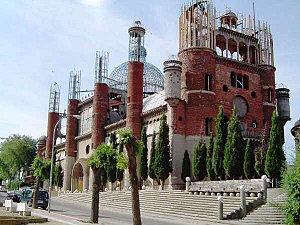
This BBC report tells about one-man's fifty-year plus project, undertaken after being expelled from a monastery for contracting tuberculosis.
The story appealed to me in several ways. Justo Gallego, the builder of a church building made of junk, who has no training in art or architecture, wanted to glorify Christ even though he could no longer be a monk.

One can argue whether this not-yet-completed and extravagantly unnecessary structure does glorify Christ. Some might dismiss the whole thing, perhaps rightly, as an eyesore. Or, as a danger to any who walk in it or near it. (There have never been any architectural plans or inspections of any kind.)
But before dismissing Gallego's church structure, consider some of the things this fifty-year effort may tell us about the life of faith and about Christ Himself.
Fifty-plus years ago, massive vaccination against TB had not begun in so-called developed countries, though there were treatment facilities that had some success. My mother, just a few years younger than Gallego, contracted the disease and spent some time at the Franklin County Tuberculosis Sanitorium in Columbus, when she was young.
Maybe the monastery lacked the capacity to care for Gallego as the sanitorium did for my mom. But his dismissal will do as a metaphor for what the institutional church sometimes does with those it doesn't know how to handle.
I myself have often experienced the institutional church as an organization peopled by gatekeepers whose function seems to be to tell people, "No." No, your service is not needed. No, you can't try to get that ministry started. No, you can't ask people for money to build that building.
When I was the pastor of a start-up congregation in the Cincinnati area, at least four times, our fledgling church hit goals for membership, giving, and worship attendance we were told would bring us a loan from our denomination to build our first facility, only to be told, "No" every time. The last time occurred after we'd had a capital campaign that raised precisely what our denominational officials told us we needed to raise. Our building committee, flush with excitement over the successful campaign, was shot down on lift-off by the denominational official with whom we met. "If you think you're going to build a church now," he told us, "you're smoking something funny." He wasn't done. "You're not the first ones to make a mistake like this, folks," he told us. "I make many mistakes," I finally said, "but this was not a mistake. We did exactly what you told us to do and now, you're saying that we can't forge ahead."
That night, we decided to forgo the "No" of the gatekeepers and, with the empowerment of God, erected the church's first building unit...after fourteen years of worshiping in a school gym. We found commercial lenders more excited about what we were doing as a church than our own denominational gatekeepers were.
You can't stop glorifying Christ, the Way, and the Truth, and the Life, the lifeline to God almighty, just because people with institutional power say, "No." Justo Gallego has lived that truth!
And how about the practicality of Gallego's structure? Is it necessary? Certainly, there are other churches in the Madrid suburbs, where he's built this building. And, who's to say that a Mass will ever be said there?
If the building is extravagantly unnecessary, then it is in good company. You see, that's exactly how I think of God's love for the whole human race. Extravagantly unnecessary. Richly superfluous.
Often, when I discuss Genesis 3, which recounts the fall of Adam and Eve into sin, people get (understandably) hung up on questions like: Why did God allow the tree of the knowledge of good and evil or the serpent to be in the garden of Eden in the first place? Where did the serpent come from? Is the serpent the same as the devil?
They're all good questions which we might take up with God some day. But to me, the most baffling question is this: Why didn't God give up the whole idea of creation as a bad project right then and there?
His most beloved creatures--the only ones created in His image--turned on Him and so, consigned the whole creation to centuries of groaning under the weight of their sin.
When I was a kid, playing with clay, and didn't like what had become of my creation, I smashed it and maybe, I'd start over again or, likely as not, put it away and move onto the next thing.
God didn't move onto the next thing! He kept His focus. He keeps it still. For God only knows how many centuries, He has been focused on one thing: Bringing the lost home. Being reconciled to the rebel human race.
God hasn't done this by forcing our return or coercing a forced reconciliation. He's been patient. He let one group of people in on His plan so that they could be a light to the nations until the moment was right.
Then, the one light who is life to all people showed up to live among us. Of course, being human and thick of head and thick of heart, we didn't recognize the Light when we saw Him. God blanketed the human race and the whole universe, in fact, with His extravagant love and all we could think to do was kill it. So we did. On a bad Friday we now recognize as good, we killed the Giver of life.
But God wasn't done loving us yet. Christ, the Light of the world, rose from the dead. His love is available to all who dare to turn from sin and turn to Him in trust. God's extravagantly unnecessary love turns us from God's enemies to God's friends.
A final aspect of Gallego's story that appeals to me is junk: The entire structure is made of leavings, left-overs, junk. In the New Testament, the apostle Paul wrote a couple of letters to a first-century church in Corinth whose members had gotten full of themselves and were starting to do the Adam and Eve thing, rebelling against God's will. Paul said some interesting things to these folks. Among them:
In another place, Paul, then being persecuted for sharing the love of Christ with others, tells the Corinthians about the treasure of God's love they carry in their bodies as baptized, believing Christians and says:
And here's the thing: God's love is a real extravagance. He's got plenty more where that came from. God's got so much love for us, in fact, that those of us who get it, can give it away and still not lose any of it.
When God's love comes to live in what the world calls "junk," the junk, like Justo Gallego's useless church building, can be a beautiful testimony to the greatness and grace of God. I want my life to be that kind of testimony.
There's a congregation in Denver, whose name I've mentioned before on this blog, a name I absolutely love. It's called The Scum of the Earth Church. It takes its name from more words from Paul's correspondence with the Corinthians, as translated in The New International Version (TNIV) of the Bible. It says:

But I want to waste my life glorifying Christ in whatever ways I can. I want to do it out of gratitude for the God Who "wasted" His extravagantly unnecessary love--His body, His blood, His grace--on me. I want to do it so that, in the end, none of that extravagantly unnecessary love is wasted, but accomplishes all it can do when God spends it on me...and you.
The story appealed to me in several ways. Justo Gallego, the builder of a church building made of junk, who has no training in art or architecture, wanted to glorify Christ even though he could no longer be a monk.

One can argue whether this not-yet-completed and extravagantly unnecessary structure does glorify Christ. Some might dismiss the whole thing, perhaps rightly, as an eyesore. Or, as a danger to any who walk in it or near it. (There have never been any architectural plans or inspections of any kind.)
But before dismissing Gallego's church structure, consider some of the things this fifty-year effort may tell us about the life of faith and about Christ Himself.
Fifty-plus years ago, massive vaccination against TB had not begun in so-called developed countries, though there were treatment facilities that had some success. My mother, just a few years younger than Gallego, contracted the disease and spent some time at the Franklin County Tuberculosis Sanitorium in Columbus, when she was young.
Maybe the monastery lacked the capacity to care for Gallego as the sanitorium did for my mom. But his dismissal will do as a metaphor for what the institutional church sometimes does with those it doesn't know how to handle.
I myself have often experienced the institutional church as an organization peopled by gatekeepers whose function seems to be to tell people, "No." No, your service is not needed. No, you can't try to get that ministry started. No, you can't ask people for money to build that building.
When I was the pastor of a start-up congregation in the Cincinnati area, at least four times, our fledgling church hit goals for membership, giving, and worship attendance we were told would bring us a loan from our denomination to build our first facility, only to be told, "No" every time. The last time occurred after we'd had a capital campaign that raised precisely what our denominational officials told us we needed to raise. Our building committee, flush with excitement over the successful campaign, was shot down on lift-off by the denominational official with whom we met. "If you think you're going to build a church now," he told us, "you're smoking something funny." He wasn't done. "You're not the first ones to make a mistake like this, folks," he told us. "I make many mistakes," I finally said, "but this was not a mistake. We did exactly what you told us to do and now, you're saying that we can't forge ahead."
That night, we decided to forgo the "No" of the gatekeepers and, with the empowerment of God, erected the church's first building unit...after fourteen years of worshiping in a school gym. We found commercial lenders more excited about what we were doing as a church than our own denominational gatekeepers were.
You can't stop glorifying Christ, the Way, and the Truth, and the Life, the lifeline to God almighty, just because people with institutional power say, "No." Justo Gallego has lived that truth!
And how about the practicality of Gallego's structure? Is it necessary? Certainly, there are other churches in the Madrid suburbs, where he's built this building. And, who's to say that a Mass will ever be said there?
If the building is extravagantly unnecessary, then it is in good company. You see, that's exactly how I think of God's love for the whole human race. Extravagantly unnecessary. Richly superfluous.
Often, when I discuss Genesis 3, which recounts the fall of Adam and Eve into sin, people get (understandably) hung up on questions like: Why did God allow the tree of the knowledge of good and evil or the serpent to be in the garden of Eden in the first place? Where did the serpent come from? Is the serpent the same as the devil?
They're all good questions which we might take up with God some day. But to me, the most baffling question is this: Why didn't God give up the whole idea of creation as a bad project right then and there?
His most beloved creatures--the only ones created in His image--turned on Him and so, consigned the whole creation to centuries of groaning under the weight of their sin.
When I was a kid, playing with clay, and didn't like what had become of my creation, I smashed it and maybe, I'd start over again or, likely as not, put it away and move onto the next thing.
God didn't move onto the next thing! He kept His focus. He keeps it still. For God only knows how many centuries, He has been focused on one thing: Bringing the lost home. Being reconciled to the rebel human race.
God hasn't done this by forcing our return or coercing a forced reconciliation. He's been patient. He let one group of people in on His plan so that they could be a light to the nations until the moment was right.
Then, the one light who is life to all people showed up to live among us. Of course, being human and thick of head and thick of heart, we didn't recognize the Light when we saw Him. God blanketed the human race and the whole universe, in fact, with His extravagant love and all we could think to do was kill it. So we did. On a bad Friday we now recognize as good, we killed the Giver of life.
But God wasn't done loving us yet. Christ, the Light of the world, rose from the dead. His love is available to all who dare to turn from sin and turn to Him in trust. God's extravagantly unnecessary love turns us from God's enemies to God's friends.
A final aspect of Gallego's story that appeals to me is junk: The entire structure is made of leavings, left-overs, junk. In the New Testament, the apostle Paul wrote a couple of letters to a first-century church in Corinth whose members had gotten full of themselves and were starting to do the Adam and Eve thing, rebelling against God's will. Paul said some interesting things to these folks. Among them:
Consider your own call, brothers and sisters: not many of you were wise by human standards, not many were powerful, not many were of noble birth. But God chose what is foolish in the world to shame the wise; God chose what is weak in the world to shame the strong; God chose what is low and despised in the world, things that are not, to reduce to nothing things that are, so that no one might boast in the presence of God. He is the source of your life in Christ Jesus, who became for us wisdom from God, and righteousness and sanctification and redemption, in order that, as it is written, “Let the one who boasts, boast in the Lord.” (1 Corinthians 1:26-31)Hey, big britches, Paul was saying, the world considered you junk. God loved you anyway. Died for you. Rose for you. In Christ, God turned what the world calls junk into gold. Don't start acting like junk!
In another place, Paul, then being persecuted for sharing the love of Christ with others, tells the Corinthians about the treasure of God's love they carry in their bodies as baptized, believing Christians and says:
But we have this treasure in clay jars, so that it may be made clear that this extraordinary power belongs to God and does not come from us.If you don't understand everything in that passage, don't worry about it now. Take this away from it: God's extravagantly unnecessary love can come to live inside you, no matter how broken or filled with sin you may feel you are...or may actually be.
We are afflicted in every way, but not crushed; perplexed, but not driven to despair; persecuted, but not forsaken; struck down, but not destroyed; always carrying in the body the death of Jesus, so that the life of Jesus may also be made visible in our bodies. For while we live, we are always being given up to death for Jesus’ sake, so that the life of Jesus may be made visible in our mortal flesh. So death is at work in us, but life in you. (2 Corinthians 4:7-12)
And here's the thing: God's love is a real extravagance. He's got plenty more where that came from. God's got so much love for us, in fact, that those of us who get it, can give it away and still not lose any of it.
When God's love comes to live in what the world calls "junk," the junk, like Justo Gallego's useless church building, can be a beautiful testimony to the greatness and grace of God. I want my life to be that kind of testimony.
There's a congregation in Denver, whose name I've mentioned before on this blog, a name I absolutely love. It's called The Scum of the Earth Church. It takes its name from more words from Paul's correspondence with the Corinthians, as translated in The New International Version (TNIV) of the Bible. It says:
To this very hour we go hungry and thirsty, we are in rags, we are brutally treated, we are homeless. We work hard with our own hands. When we are cursed, we bless; when we are persecuted, we endure it; when we are slandered, we answer kindly. We have become the scum of the earth, the garbage of the world—right up to this moment. (1 Corinthians 4:11-13)The church web site explains:
WHY SCUM?For all I know, Justo Gallego may be certifiably looney. He may have wasted the past fifty years. And Scum of the Earth Church may be a collection of crazy people.
It doesn’t sound like a church name … on purpose. We really want to connect with people who have no interest in “church” by society’s definition. There are plenty of churches for “normal people” and we think we have a unique calling to reach out to our otherwise unreached friends. Our name is integral to that process. Whether outcast by society (e.g., punks, skaters, ravers, homeless people…) or by the church itself, many who come can identify with the name “Scum of the Earth” since they have been previously treated as such.
More important to us, however, the name implies that being people of faith does not mean we are better than anyone else. We know many non-Christians who think Christians are out to cast judgment on them. Our name makes it clear that we aren’t about that. We are just aware of our need for God, as Scum of the Earth. Fortunately, God never sees us like that! But the name is humble and we like that.
But I want to waste my life glorifying Christ in whatever ways I can. I want to do it out of gratitude for the God Who "wasted" His extravagantly unnecessary love--His body, His blood, His grace--on me. I want to do it so that, in the end, none of that extravagantly unnecessary love is wasted, but accomplishes all it can do when God spends it on me...and you.
Sunday, August 15, 2010
Set Free!
[This was shared during worship with the people of Saint Matthew Lutheran Church in Logan, Ohio, earlier today.]
Galatians 4:1-7
A woman I worked with years ago, a Roman Catholic, was trying once at the end of a workday, to clarify what Lutherans believe about Mary, the mother of Jesus. “You don’t think she was a virgin, right?” she asked. I was surprised, but assured her, "No, we say that Jesus was 'conceived by the Holy Spirit and born of the virgin Mary' when we worship on Sunday mornings, just like you do."
I guess that I shouldn't have been too surprised though, because, oddly enough, there’s always been a lot of misunderstanding and disagreements among Christians over Mary.
Today, August 15, is a special day on church calendars all over the world. For our Roman Catholic friends, this is the Feast of the Assumption, commemorating the day that they say that Mary was bodily assumed into heaven at her death. Lutherans find no reason to believe that's what happened.
Be that as it may, we Lutherans believe that Mary has a lot to teach us about what it means to be a follower of Jesus Christ.
We also are amazed by the way in which God used this young teenager from an obscure village to bring the Messiah into the world. Mary herself was amazed by that and amazed too, that, based on her own experience, God so obviously cares about the eternal destinies of all the world’s "ordinary" people. (One thing we know for sure, though, is that while we all may be "ordinary" people, God's love for each of us is extraordinary!)
In today’s Gospel lesson, composed of the Magnificat, Mary’s song of praise which comes during her visit with Elizabeth, Mary sees God reversing the fortunes of both those who trust in God’s grace and of those who trust in the "gods" favored by most in the world. God, she says, “has brought down the powerful from their thrones, and lifted up the lowly; he has filled the hungry with good things, and sent the rich away empty. He has helped his servant Israel, in remembrance of his mercy, according to the promise he made to our ancestors, to Abraham and to his descendants for ever.”
Mary understood that in Jesus, God was turning the world on its head, ensuring that eternity will belong not to those who claw and take and scheme and reason their way to power or prominence or influence or other worldly advantages, but to those who trust totally in Christ.
Our Gospel lesson came up this past Advent Season. So, I want to turn our attention away from it and, in a move of which I think Mary would approv, away from Mary, toward the Lord she served.
Pull our your bulletins, please. In the very middle, you’ll find the text of our second lesson, expanded by three verses from what’s officially appointed for today. It’s Galatians 4:1-7.
Galatians, you’ll remember from our sermon series based on that book earlier this year, is a letter written by preacher and evangelist Paul to a church in an area that we know today as Turkey. The letter was written back around 50AD. The church in the city of Galatia was composed of Gentiles, that is non-Jews. Paul was anxious to refute false teachers who told the Galatian believers in Jesus that in order to be truly saved from sin and death, they not only needed to believe in Jesus, but also had to adopt Jewish religious law, like circumcision for men and certain food and feast days for all.
In Galatians, chapter 3, which immediately precedes our lesson, Paul has asserted that we justified in God’s eyes not by what we do, but by our faith in Christ; that all who are baptized in Christ are clothed in His forgiveness and the righteousness—or rightness with God—that Jesus came to give those who trust in Him; and that in Christ, all who repent and believe in Him, have the same status before God.
Then, at the start of chapter four where our lesson begins, Paul comes up with a great way to illustrate what religious law, even the Ten Commandments, can and, most importantly, cannot do toward securing a right relationship with God for we sinful human beings. Read those first two sentences from Galatians—verses 1 and 2--with me out loud now.
Anglican bishop and New Testament scholar N.T. Wright says that this passage shows how the story of the human race before the arrival of Jesus was one of “people who stand to inherit a fortune (of sorts) but who are quite unaware of the fact.”
In the meantime, like a parent hemming in toddlers who are bound to get themselves into trouble otherwise, God gave His law as a way of keeping things under control until the time was right.
This was true even of non-Jews who had never heard of Moses or the Ten Commandments because, as the Bible reminds us elsewhere, God has written His law on our hearts. No matter how much we may try to deny it, violate it, or excuse our breaching of it, the whole human race knows that there is a law of right and wrong.
One evidence of this may be that while human laws may be unjust or designed to serve the interests of certain groups, even the most corrupt of dictators will claim that his law conforms to a notion of right and wrong that all his citizens would agree on without having ever discussed it. That's because our notions of what's right and what's wrong come from God; it’s the law of right and wrong we all seem to know that hems our world in, at times just barely, from total chaos.
This is exactly what Paul is talking about when he writes in the next verse—read along with me silently:
But none of those things, however faithfully or impeccably executed, will transform you and me from minors or slaves in need of constant goading or hemming in by the law of God into the free inheritors of all that God wants to give to us. As Martin Luther writes in his commentary on this passage, “…mere outward decency does not constitute Christianity.” He goes on to explain, “The heathen observe the same restraints to avoid punishment or to secure the advantages of a good reputation. [But in] the last analysis such restraint is simple hypocrisy.”
It’s in the next two sentences, verses 4 and 5, that Paul gets into what can move us from slavery to becoming children of God, from minors hemmed in by God's law to heirs set free by God, inheritors of forgiveness and everlasting life with God. Read those next two sentences with me aloud, please.
And how did God do that? He sent the Son, Jesus. Jesus came from God and was God. But, He was also born of a woman, voluntarily born subject to the same law to which you and I are subject. Only Jesus perfectly kept the law so that when the law accused Him and put Him on a cross, it had the wrong guy. When Jesus was executed for our sins, Jesus redeemed—that is bought out of slavery all of us who live under the law. The result is that we are God’s children no matter what!
Paul does some celebrating in the last two verses of our lesson. Read along with me—with all the enthusiasm the words deserve, please:
Your conscience need never accuse you for sins you committed and for which you already repented!
You need never think that because you aren’t perfect, God doesn’t care about you!
The Savior you somehow just know can reach out to in your times of desperation, Whose Spirit prompts you to do just that, will stand by you and love you now and always!
The Savior Who came into the world to share our lives and deaths so that all with faith in Him can also share in His victory, His life, and His eternity with God, wants you to know that you are no longer hemmed in, no longer a slave to sin, no longer a minor pining for the day when you will be acceptable to God.
If you are baptized and trust in Christ alone, you are absolutely acceptable to God! And no one can take you from your Father's hands! In Christ, we are free to be God’s people, free to look forward with confidence to the certainty of eternity with God.
In his commentary on Galatians, Martin Luther quotes Saint Augustine, a great Catholic theologian revered as much by Lutherans as Catholics: “every [person] is certain of [their] faith, if [they have] faith.” Luther goes on to write, “We ought to feel sure that we stand in the grace of God, not in view of our own worthiness, but through [what Christ has done for us]. As certain as we are that Christ pleases God, so sure ought [the believer in Christ] be that we also please God, because Christ is in us.”
This was the faith that sustained Mary: faith in Christ and the good will of God for those who trust in Him. May that be our faith too!
Galatians 4:1-7
A woman I worked with years ago, a Roman Catholic, was trying once at the end of a workday, to clarify what Lutherans believe about Mary, the mother of Jesus. “You don’t think she was a virgin, right?” she asked. I was surprised, but assured her, "No, we say that Jesus was 'conceived by the Holy Spirit and born of the virgin Mary' when we worship on Sunday mornings, just like you do."
I guess that I shouldn't have been too surprised though, because, oddly enough, there’s always been a lot of misunderstanding and disagreements among Christians over Mary.
Today, August 15, is a special day on church calendars all over the world. For our Roman Catholic friends, this is the Feast of the Assumption, commemorating the day that they say that Mary was bodily assumed into heaven at her death. Lutherans find no reason to believe that's what happened.
Be that as it may, we Lutherans believe that Mary has a lot to teach us about what it means to be a follower of Jesus Christ.
We also are amazed by the way in which God used this young teenager from an obscure village to bring the Messiah into the world. Mary herself was amazed by that and amazed too, that, based on her own experience, God so obviously cares about the eternal destinies of all the world’s "ordinary" people. (One thing we know for sure, though, is that while we all may be "ordinary" people, God's love for each of us is extraordinary!)
In today’s Gospel lesson, composed of the Magnificat, Mary’s song of praise which comes during her visit with Elizabeth, Mary sees God reversing the fortunes of both those who trust in God’s grace and of those who trust in the "gods" favored by most in the world. God, she says, “has brought down the powerful from their thrones, and lifted up the lowly; he has filled the hungry with good things, and sent the rich away empty. He has helped his servant Israel, in remembrance of his mercy, according to the promise he made to our ancestors, to Abraham and to his descendants for ever.”
Mary understood that in Jesus, God was turning the world on its head, ensuring that eternity will belong not to those who claw and take and scheme and reason their way to power or prominence or influence or other worldly advantages, but to those who trust totally in Christ.
Our Gospel lesson came up this past Advent Season. So, I want to turn our attention away from it and, in a move of which I think Mary would approv, away from Mary, toward the Lord she served.
Pull our your bulletins, please. In the very middle, you’ll find the text of our second lesson, expanded by three verses from what’s officially appointed for today. It’s Galatians 4:1-7.
Galatians, you’ll remember from our sermon series based on that book earlier this year, is a letter written by preacher and evangelist Paul to a church in an area that we know today as Turkey. The letter was written back around 50AD. The church in the city of Galatia was composed of Gentiles, that is non-Jews. Paul was anxious to refute false teachers who told the Galatian believers in Jesus that in order to be truly saved from sin and death, they not only needed to believe in Jesus, but also had to adopt Jewish religious law, like circumcision for men and certain food and feast days for all.
In Galatians, chapter 3, which immediately precedes our lesson, Paul has asserted that we justified in God’s eyes not by what we do, but by our faith in Christ; that all who are baptized in Christ are clothed in His forgiveness and the righteousness—or rightness with God—that Jesus came to give those who trust in Him; and that in Christ, all who repent and believe in Him, have the same status before God.
Then, at the start of chapter four where our lesson begins, Paul comes up with a great way to illustrate what religious law, even the Ten Commandments, can and, most importantly, cannot do toward securing a right relationship with God for we sinful human beings. Read those first two sentences from Galatians—verses 1 and 2--with me out loud now.
“My point is this: heirs, as long as they are minors, are no better than slaves, though they are the owners of all the property; but they remain under guardians and trustees until the date set by the father.”What Paul is saying is that before God acted decisively by sending Jesus to the cross to take our punishment for sin, paying the debt we owe, our world was kept under control by the laws of God. The law acted as guardian and trustee over people too immature and too imprisoned by sin to live life the way God designed it to be lived.
Anglican bishop and New Testament scholar N.T. Wright says that this passage shows how the story of the human race before the arrival of Jesus was one of “people who stand to inherit a fortune (of sorts) but who are quite unaware of the fact.”
In the meantime, like a parent hemming in toddlers who are bound to get themselves into trouble otherwise, God gave His law as a way of keeping things under control until the time was right.
This was true even of non-Jews who had never heard of Moses or the Ten Commandments because, as the Bible reminds us elsewhere, God has written His law on our hearts. No matter how much we may try to deny it, violate it, or excuse our breaching of it, the whole human race knows that there is a law of right and wrong.
One evidence of this may be that while human laws may be unjust or designed to serve the interests of certain groups, even the most corrupt of dictators will claim that his law conforms to a notion of right and wrong that all his citizens would agree on without having ever discussed it. That's because our notions of what's right and what's wrong come from God; it’s the law of right and wrong we all seem to know that hems our world in, at times just barely, from total chaos.
This is exactly what Paul is talking about when he writes in the next verse—read along with me silently:
“So with us; while we were minors, we were enslaved to the elemental spirits of the world.”Now, for some people, that’s the end of the Christian story. They think that being Christian is about trying to live according to some rules, or trying to be nice people, or working to never make anybody upset or mad, or to fighting injustice. All of those things should be part of daily living for Christians. We should try to obey the law of God and, to glorify God and make the lives of our neighbors bearable, abide by the rules of society. We shouldn’t go out of our ways to cause strife or arguments and we should by all means fight injustice.
But none of those things, however faithfully or impeccably executed, will transform you and me from minors or slaves in need of constant goading or hemming in by the law of God into the free inheritors of all that God wants to give to us. As Martin Luther writes in his commentary on this passage, “…mere outward decency does not constitute Christianity.” He goes on to explain, “The heathen observe the same restraints to avoid punishment or to secure the advantages of a good reputation. [But in] the last analysis such restraint is simple hypocrisy.”
It’s in the next two sentences, verses 4 and 5, that Paul gets into what can move us from slavery to becoming children of God, from minors hemmed in by God's law to heirs set free by God, inheritors of forgiveness and everlasting life with God. Read those next two sentences with me aloud, please.
“But when the fullness of time had come, God sent his Son, born of a woman, born under the law, in order to redeem those who were under the law, so that we might receive adoption as children.”That phrase, “the fullness of time,” is important. The New Testament, including Philippians, was written in Greek, as you know. In Greek, there are two main words for time. The first is chronos, which refers to chronological time. The other word is kairos, which means God’s time. Paul is saying that at the right time, at the precise moment chosen by God, after everything had happened that needed to happen, God acted to free us, to give us our inheritance.
And how did God do that? He sent the Son, Jesus. Jesus came from God and was God. But, He was also born of a woman, voluntarily born subject to the same law to which you and I are subject. Only Jesus perfectly kept the law so that when the law accused Him and put Him on a cross, it had the wrong guy. When Jesus was executed for our sins, Jesus redeemed—that is bought out of slavery all of us who live under the law. The result is that we are God’s children no matter what!
Paul does some celebrating in the last two verses of our lesson. Read along with me—with all the enthusiasm the words deserve, please:
“And because you are children, God has sent the Spirit of his Son into our hearts, crying, ‘Abba! Father!’ So you are no longer a slave but a child, and if a child then also an heir, through God.”Ever been desperate enough to cry out to the God you know in Jesus, but not been sure what to say? Then know this: In those moments...in those moments when you knew that there was no one and nothing else you could turn to...that God’s Holy Spirit was telling you something. The mere impulse to pray demonstrates that you belong to Christ! Your desperation proves it because it's only in desperation that any of us are truly open enough and humble enough to admit our need of the God Who loved you so much that He went to a cross, open enough and humble enough to receive the inheritance of life and forgiveness we can't earn, but that God gives to all who trust in Christ. May we always be that desperate!
Your conscience need never accuse you for sins you committed and for which you already repented!
You need never think that because you aren’t perfect, God doesn’t care about you!
The Savior you somehow just know can reach out to in your times of desperation, Whose Spirit prompts you to do just that, will stand by you and love you now and always!
The Savior Who came into the world to share our lives and deaths so that all with faith in Him can also share in His victory, His life, and His eternity with God, wants you to know that you are no longer hemmed in, no longer a slave to sin, no longer a minor pining for the day when you will be acceptable to God.
If you are baptized and trust in Christ alone, you are absolutely acceptable to God! And no one can take you from your Father's hands! In Christ, we are free to be God’s people, free to look forward with confidence to the certainty of eternity with God.
In his commentary on Galatians, Martin Luther quotes Saint Augustine, a great Catholic theologian revered as much by Lutherans as Catholics: “every [person] is certain of [their] faith, if [they have] faith.” Luther goes on to write, “We ought to feel sure that we stand in the grace of God, not in view of our own worthiness, but through [what Christ has done for us]. As certain as we are that Christ pleases God, so sure ought [the believer in Christ] be that we also please God, because Christ is in us.”
This was the faith that sustained Mary: faith in Christ and the good will of God for those who trust in Him. May that be our faith too!
Sunday, January 03, 2010
The Christmas Story: The Word Made Flesh
[This was prepared to be shared during worship with the people of Saint Matthew Lutheran Church in Logan, Ohio, this morning.]
John 1:1-18
This morning, as we consider our Gospel lesson, I need to ask you to do a big favor for me.
I’m going to ask you to puncture the Sunday morning fog, to leave the New Year’s celebrating behind, and to even forget the fact that the Buckeyes CAN win the big ones and instead, put on your thinking caps.
God gave us brains and sometimes our faith is deepened when we use them to consider the amazing, life-changing truths God presents to us in Scripture. So, please pull out the Celebrate inserts, where the Gospel lesson is printed and sort of follow along this morning.
It starts, “In the beginning…” Now, the first thought that hits us when we read that phrase is of Genesis 1:1, the first chapter and verse in the first book of the Old Testament. There, we’re told that, “In the beginning,” God created the heavens and the earth.
But today’s Gospel lesson takes us to before that beginning, before God created anything, back when all that existed was God. And with three occurrences of the verb “was,” we’re told a lot about this God. Or, at least, we’re told about one person of God. It says, “In the beginning was the Word, and the Word was with God, and the Word was God.” This Word existed back when all that existed was God. So, if the only thing that existed was God and the Word was around, then the Word was God.
Now, that sounds pretty strange to us. We think of words as things that come from our mouths or that we read on a page or a computer screen. Words may describe something, we think, but they don’t actually live, do they? Don't they?
Let me ask you a question. Feel free to be un-Lutheran and shout out an answer. Do our words—our measly human words, I mean—have power? They sure do. Walk up to a person and tell them, “You’re stupid!” and I guarantee you will get a reaction of some kind. Words have power.
If that’s true for us, think how much more true that must be for God. God’s word must have power.
And in fact, when you think back to Genesis again, you find that we’re not told anything about the mechanics of how God created. It doesn’t say, “God took a teaspoon of hydrogen and mixed in some oxygen…” It says, “God said, ‘Let there be light!’; and there was light…God said, ‘Let the earth bring forth living creatures…’ And it was so.”
God spoke; things happened.
For God, there is no distinction between words and actions.
For God, words are actions. Powerful actions!
In the Old Testament book of Isaiah, God affirms this: “My word [God tells us]…shall not return to me empty, but it shall accomplish that which I purpose, and succeed in the thing for which I sent it.”
We believe that God’s Word still does what God sends it to accomplish. When a person is brought to the baptismal font and water is poured over her or his head in the Name of God the Father, God the Son, and God the Holy Spirit, we believe that the water connected with the Word of God brings them new life. God declares the baptized as His own. “You are sealed by the Holy Spirit and marked with the cross of Christ forever,” we say for God.
And we believe that the only way in which the baptized person’s bonds with God can be broken is if the baptized person herself or himself unrepentantly sins and chooses to walk their own way, rather than God’s way. (And even then, it won't be God Who breaks the bonds, only us.)
When God created, His Word did exactly what it set out to do. God’s Word created a perfect world.
But we know what happened next. Humanity rejected God. We decided to go our own way.
Unless God intervened, God knew that His whole creation, including the pinnacle of His creation, the apex, the ones created in the “image of God”—you and me—could be lost for all eternity. God is willing to allow us to choose separation from God. God lets humanity choose hell. But God refused and God still refuses to let us go without fighting for us.
And so, centuries ago, starting with a couple named Abraham and Sarah and their descendants, God began to speak His Word to us again.
God knew that we don’t always wear our thinking caps.
God knew that He would have to use many active words to gradually penetrate our skulls and our wills in order to get through to us.
God spent centuries wooing the human race, helping humanity to get to know Him as a God of perfect love and perfect justice, as God with a will—expressed in the Ten Commandments—and a desire to forgive our failure to keep those commandments.
God kept speaking His Words to humanity, particularly to Israel, until He was ready to invite the whole planet back into the eternal intimacy He has always wanted to share with all of us.
Let me try to illustrate to you what I think this centuries-long project of God has been like. Very soon after Ann and I started dating, I knew that I loved her. But I didn’t tell her right away. I waited a while. I knew that she wasn’t ready to hear that. In words and actions, I built up to the point when I could finally say, “I love you.” Even then, I didn’t know either if I would convince her of my love or that she would respond by loving me back.
When I remember the moment when I first told Ann that I loved her, I recall that—whether it was true for Ann or not—my words had power for me. My palms sweated. My heart raced. And I can tell you that those words were more than mere abstract representations of my emotions. When I said, “I love you,” I put myself out on the line. My words weren’t just words. They were me.
Look again to our Gospel lesson. Let your eyes move to the first few verses: “In the beginning was the Word, and the Word was with God, and the Word was God. He was in the beginning with God. All things came into being through him, and without him not one thing came into being. What has come into being in him was life, and the life was the light of all people. The light shines in the darkness, and the darkness did not overcome it.”
The word which we translate from the original Greek of the New Testament as overcome, is katlambenon. It can be translated as comprehend or understand, instead of overcome. I think it should be translated that way, meaning that the passage tells us that those mired in the darkness of sin or life without God may not comprehend or understand God’s love and will for them…Not because they’re stupid, but because they've let the sin of the world, the sin in themselves, and the sin that comes from the devil himself take their capacity for thinking away from them. They live in a fog. They refuse to hear when God is speaking to them. They refuse to see when God’s light breaks the darkness.
And make no mistake about it, on the first Christmas, when Jesus was born, God was speaking His definitive word to us all.
Christmas is more than a date on the calendar.
It is the cosmic equivalent of D-Day. On that date, God stormed the beaches of resistant human sin and darkness—our love of independence, our desire to be our own masters--and on a silent night shouted that He doesn’t intend for His fallen children to experience desperation and disappointment in this world or death and hell in the next.
Verse 14 tells us the Christmas story, “The Word became flesh and lived among us” and then John says, “we have seen His glory.”
God’s Word is more than just God’s power. God’s Word is God and we know Him as Jesus, the Christ Child…Jesus, the Crucified Savior…Jesus, the Risen Lord.
The New Testament book of Hebrews starts out with these words, “Long ago God spoke to our ancestors in many and various ways by the prophets [God was building up to telling us and showing us how much He loved us], but in these last days he has spoken to us by a Son, whom he appointed heir of all things, through whom he also created the worlds. He is the reflection of God’s glory and the exact imprint of God’s very being, and he sustains all things by his powerful word.” [Hebrews 1:1-3]
When I first started seminary, I resumed something I hadn't done for about five years; two days a week, I substitute taught. One day, I was teaching a sixth grade English class when a student came in with a note from the office. Ann had left a message with the secretary there. It said that our happy suspicions were true; we were going to be parents.
I believed this word and yet, the first break I had, I called Ann to get her assurances that it really was true.
The Word was made flesh and has lived among us. God the Word—God the Son, Jesus—has lived on this earth and lived this life. He has died for our sin and risen from the dead. Jesus’ life, death, and resurrection tell us Who God is—“God the only Son, who is close to the Father’s heart,” or lesson says, “had made [God] known.”
And our good news is that all who receive Jesus, who trust in Him as their only hope in an otherwise dark and hopeless world, are given the power to be the children of God. The Word of the Bible, all sixty-six books of it, is designed to assure us of this truth: All who repent and believe in Christ are saved as a gift of grace from God.
We are in a time of crisis in the Church and in the world. Both Church and world are mired in darkness, unable to trust in the Word made flesh, or in the Word of the Bible. We need reassurances that the Bible’s strange witness about God is true. That’s why John’s words for us today are important. God calls us to receive Jesus. If we can receive Him, God's Spirit will make it possible for us to believe in Him. If we truly believe—trust--in Him, our faith will be more than words we speak. They will be words we live—God’s Word made flesh in us. God's Word, Jesus Christ, will live in us.
This year, welcome Jesus every day. Receive Jesus and God’s Word—law and gospel—the stuff we like and the things we don’t want to even think about or consider—as God’s Word to us and for us. Trust in God’s Word. That is more than our heritage and theology as Lutherans; it is the only way to life forever with God. Amen

John 1:1-18
This morning, as we consider our Gospel lesson, I need to ask you to do a big favor for me.
I’m going to ask you to puncture the Sunday morning fog, to leave the New Year’s celebrating behind, and to even forget the fact that the Buckeyes CAN win the big ones and instead, put on your thinking caps.
God gave us brains and sometimes our faith is deepened when we use them to consider the amazing, life-changing truths God presents to us in Scripture. So, please pull out the Celebrate inserts, where the Gospel lesson is printed and sort of follow along this morning.
It starts, “In the beginning…” Now, the first thought that hits us when we read that phrase is of Genesis 1:1, the first chapter and verse in the first book of the Old Testament. There, we’re told that, “In the beginning,” God created the heavens and the earth.
But today’s Gospel lesson takes us to before that beginning, before God created anything, back when all that existed was God. And with three occurrences of the verb “was,” we’re told a lot about this God. Or, at least, we’re told about one person of God. It says, “In the beginning was the Word, and the Word was with God, and the Word was God.” This Word existed back when all that existed was God. So, if the only thing that existed was God and the Word was around, then the Word was God.
Now, that sounds pretty strange to us. We think of words as things that come from our mouths or that we read on a page or a computer screen. Words may describe something, we think, but they don’t actually live, do they? Don't they?
Let me ask you a question. Feel free to be un-Lutheran and shout out an answer. Do our words—our measly human words, I mean—have power? They sure do. Walk up to a person and tell them, “You’re stupid!” and I guarantee you will get a reaction of some kind. Words have power.
If that’s true for us, think how much more true that must be for God. God’s word must have power.
And in fact, when you think back to Genesis again, you find that we’re not told anything about the mechanics of how God created. It doesn’t say, “God took a teaspoon of hydrogen and mixed in some oxygen…” It says, “God said, ‘Let there be light!’; and there was light…God said, ‘Let the earth bring forth living creatures…’ And it was so.”
God spoke; things happened.
For God, there is no distinction between words and actions.
For God, words are actions. Powerful actions!
In the Old Testament book of Isaiah, God affirms this: “My word [God tells us]…shall not return to me empty, but it shall accomplish that which I purpose, and succeed in the thing for which I sent it.”
We believe that God’s Word still does what God sends it to accomplish. When a person is brought to the baptismal font and water is poured over her or his head in the Name of God the Father, God the Son, and God the Holy Spirit, we believe that the water connected with the Word of God brings them new life. God declares the baptized as His own. “You are sealed by the Holy Spirit and marked with the cross of Christ forever,” we say for God.
And we believe that the only way in which the baptized person’s bonds with God can be broken is if the baptized person herself or himself unrepentantly sins and chooses to walk their own way, rather than God’s way. (And even then, it won't be God Who breaks the bonds, only us.)
When God created, His Word did exactly what it set out to do. God’s Word created a perfect world.
But we know what happened next. Humanity rejected God. We decided to go our own way.
Unless God intervened, God knew that His whole creation, including the pinnacle of His creation, the apex, the ones created in the “image of God”—you and me—could be lost for all eternity. God is willing to allow us to choose separation from God. God lets humanity choose hell. But God refused and God still refuses to let us go without fighting for us.
And so, centuries ago, starting with a couple named Abraham and Sarah and their descendants, God began to speak His Word to us again.
God knew that we don’t always wear our thinking caps.
God knew that He would have to use many active words to gradually penetrate our skulls and our wills in order to get through to us.
God spent centuries wooing the human race, helping humanity to get to know Him as a God of perfect love and perfect justice, as God with a will—expressed in the Ten Commandments—and a desire to forgive our failure to keep those commandments.
God kept speaking His Words to humanity, particularly to Israel, until He was ready to invite the whole planet back into the eternal intimacy He has always wanted to share with all of us.
Let me try to illustrate to you what I think this centuries-long project of God has been like. Very soon after Ann and I started dating, I knew that I loved her. But I didn’t tell her right away. I waited a while. I knew that she wasn’t ready to hear that. In words and actions, I built up to the point when I could finally say, “I love you.” Even then, I didn’t know either if I would convince her of my love or that she would respond by loving me back.
When I remember the moment when I first told Ann that I loved her, I recall that—whether it was true for Ann or not—my words had power for me. My palms sweated. My heart raced. And I can tell you that those words were more than mere abstract representations of my emotions. When I said, “I love you,” I put myself out on the line. My words weren’t just words. They were me.
Look again to our Gospel lesson. Let your eyes move to the first few verses: “In the beginning was the Word, and the Word was with God, and the Word was God. He was in the beginning with God. All things came into being through him, and without him not one thing came into being. What has come into being in him was life, and the life was the light of all people. The light shines in the darkness, and the darkness did not overcome it.”
The word which we translate from the original Greek of the New Testament as overcome, is katlambenon. It can be translated as comprehend or understand, instead of overcome. I think it should be translated that way, meaning that the passage tells us that those mired in the darkness of sin or life without God may not comprehend or understand God’s love and will for them…Not because they’re stupid, but because they've let the sin of the world, the sin in themselves, and the sin that comes from the devil himself take their capacity for thinking away from them. They live in a fog. They refuse to hear when God is speaking to them. They refuse to see when God’s light breaks the darkness.
And make no mistake about it, on the first Christmas, when Jesus was born, God was speaking His definitive word to us all.
Christmas is more than a date on the calendar.
It is the cosmic equivalent of D-Day. On that date, God stormed the beaches of resistant human sin and darkness—our love of independence, our desire to be our own masters--and on a silent night shouted that He doesn’t intend for His fallen children to experience desperation and disappointment in this world or death and hell in the next.
Verse 14 tells us the Christmas story, “The Word became flesh and lived among us” and then John says, “we have seen His glory.”
God’s Word is more than just God’s power. God’s Word is God and we know Him as Jesus, the Christ Child…Jesus, the Crucified Savior…Jesus, the Risen Lord.
The New Testament book of Hebrews starts out with these words, “Long ago God spoke to our ancestors in many and various ways by the prophets [God was building up to telling us and showing us how much He loved us], but in these last days he has spoken to us by a Son, whom he appointed heir of all things, through whom he also created the worlds. He is the reflection of God’s glory and the exact imprint of God’s very being, and he sustains all things by his powerful word.” [Hebrews 1:1-3]
When I first started seminary, I resumed something I hadn't done for about five years; two days a week, I substitute taught. One day, I was teaching a sixth grade English class when a student came in with a note from the office. Ann had left a message with the secretary there. It said that our happy suspicions were true; we were going to be parents.
I believed this word and yet, the first break I had, I called Ann to get her assurances that it really was true.
The Word was made flesh and has lived among us. God the Word—God the Son, Jesus—has lived on this earth and lived this life. He has died for our sin and risen from the dead. Jesus’ life, death, and resurrection tell us Who God is—“God the only Son, who is close to the Father’s heart,” or lesson says, “had made [God] known.”
And our good news is that all who receive Jesus, who trust in Him as their only hope in an otherwise dark and hopeless world, are given the power to be the children of God. The Word of the Bible, all sixty-six books of it, is designed to assure us of this truth: All who repent and believe in Christ are saved as a gift of grace from God.
We are in a time of crisis in the Church and in the world. Both Church and world are mired in darkness, unable to trust in the Word made flesh, or in the Word of the Bible. We need reassurances that the Bible’s strange witness about God is true. That’s why John’s words for us today are important. God calls us to receive Jesus. If we can receive Him, God's Spirit will make it possible for us to believe in Him. If we truly believe—trust--in Him, our faith will be more than words we speak. They will be words we live—God’s Word made flesh in us. God's Word, Jesus Christ, will live in us.
This year, welcome Jesus every day. Receive Jesus and God’s Word—law and gospel—the stuff we like and the things we don’t want to even think about or consider—as God’s Word to us and for us. Trust in God’s Word. That is more than our heritage and theology as Lutherans; it is the only way to life forever with God. Amen
Wednesday, December 30, 2009
More on This Sunday's Gospel Lesson (John 1:1-18)
Ginger Barfield, Dean and vice president for Academic Affairs at Lutheran Theological Southern Seminary in Columbia, South Carolina, has good insights into this Sunday's Gospel lesson, here.
 The painting to the left by Matthias Grünewald is historically inaccurate. Obviously, the execution of John the Baptist (by beheading) occurred before the execution of Jesus by crucifixion. But Grünewald's portrayal as one who pointed to or witnessed to the Lordship of Jesus is accurate. You can click on the illustration to see it enlarged.
By the way, don't confuse John the Baptist with John, the writer of the Gospel of John.
Be sure to read Barfield's short commentary. She does a good job.
The painting to the left by Matthias Grünewald is historically inaccurate. Obviously, the execution of John the Baptist (by beheading) occurred before the execution of Jesus by crucifixion. But Grünewald's portrayal as one who pointed to or witnessed to the Lordship of Jesus is accurate. You can click on the illustration to see it enlarged.By the way, don't confuse John the Baptist with John, the writer of the Gospel of John.
Be sure to read Barfield's short commentary. She does a good job.
Monday, December 28, 2009
Faith Tidbit #1
[This begins a new series in which I'll present brief factoid about Biblical, Christian faith. I hope you enjoy it.]
The New Testament teaches that Jesus was (and is) both a man and God. See here.
The New Testament teaches that Jesus was (and is) both a man and God. See here.
Thursday, August 13, 2009
Christian Faith: The Basics, Part 39
Yesterday, we said that two of the tools the Holy Spirit uses in sanctifying believers in Christ is "the holy catholic Church" and "the communion of saints."
But how does this communion, the Church, come into being? Very simply, through the Word of God.
Before you skip ahead, thinking you know what I mean in talking about the Word of God, hold on.
When you saw that phrase, Word of God, you probably immediately thought of the Bible. And, of course, Christians believe that the Bible is the Word of God. My own Lutheran tradition says that the Bible is the "authoritative source and norm of our life, faith, and practice." The Church dares make no claims about the will of God that aren't supported by what is revealed about God's will in the Bible.
But the authority of the Bible, its "Word-ness," isn't self-referring. The Bible can be claimed to be the Word of God only because it faithfully and unerringly presents The Word of God, Jesus Christ, the second Person of the Trinity.
Employing language that would have been familiar to both his Jewish audience steeped in the Torah and to his Gentile audience knowledgeable of Greek philosophy, John wrote in the overture to his Gospel about Jesus Christ, the Word of God:
Paul, obviously writing about the Old Testament, the Bible he knew in the first century, said that, "all scripture is inspired by God [breathed or Spirit-ed by God] and is useful for teaching, for reproof, for correction, and for training in righteousness" [2 Timothy 3:16]. Inspired by the same God Who inspired the Old Testament writers, the Church has come to see what we call the New Testament as on a par with the writings to which Paul referred.
That phrase, inspired by God, is key to understanding the uniqueness of the Bible. Without the inspiration of God, the Bible wouldn't be the Word of God. It would just be writings on a par with a Sue Grafton mystery, the latest issue of People magazine, or a report on pork bellies.
To describe anything as being inspired by God is to say that it's God-breathed. It's infused with the Spirit of God.
In the Old Testament Hebrew, the word translated as spirit, which can also mean wind or breath, is ruach. In the first of two creation accounts found at the beginning of Genesis, God's ruach--breath, mighty wind, Spirit--moves over a primordial chaos and life comes into being. In the second creation account, God breathes His ruach--Spirit, breath--into stuff and human life comes into being.
The Greek New Testament word, pneuma, has the same multiple meanings as ruach. Before His crucifixion, Jesus promised that He would not leave His followers orphaned; He would send the Holy Spirit. This Spirit breathes new life--the life of God--into believers. The Holy Spirit is the One Who imparts faith and the power to live to Christ's followers even today. Christians today live the truth of what Jesus talked to Nicodemus about:
But if you've read the Bible, the reality of sinning, erring Christians won't surprise you. Yesterday, remember, we said that one definition for saints is forgiven sinners. The Church, as I've said elsewhere, is a fellowship of recovering sinners, people learning to give up their addictions to self or to the things they can see, hold, control, or manipulate, a gathering of people learning to rely totally on Christ. But we Christians are only learning these things. Sometimes even the most well-intentioned of believers forget. They sin. Or they err even while making good-faith efforts to follow Christ.
There are even, Jesus warns us, pseudo-Christians who hang out with the Church folk, but who are really far from God. That's a point of Jesus' parable about the wheat and the weeds. Out of kindness, in the hope that true faith in Christ will take hold in all people, inside and outside the Church, Christ lets the weeds grow beside the wheat. But there will be a reckoning.
In the meantime, old believers are sustained and new believers are created by the powerful Word of God, the good news about Jesus presented by words and actions. Paul writes:
But how does this communion, the Church, come into being? Very simply, through the Word of God.
Before you skip ahead, thinking you know what I mean in talking about the Word of God, hold on.
When you saw that phrase, Word of God, you probably immediately thought of the Bible. And, of course, Christians believe that the Bible is the Word of God. My own Lutheran tradition says that the Bible is the "authoritative source and norm of our life, faith, and practice." The Church dares make no claims about the will of God that aren't supported by what is revealed about God's will in the Bible.
But the authority of the Bible, its "Word-ness," isn't self-referring. The Bible can be claimed to be the Word of God only because it faithfully and unerringly presents The Word of God, Jesus Christ, the second Person of the Trinity.
Employing language that would have been familiar to both his Jewish audience steeped in the Torah and to his Gentile audience knowledgeable of Greek philosophy, John wrote in the overture to his Gospel about Jesus Christ, the Word of God:
In the beginning was the Word, and the Word was with God, and the Word was God. 2He was in the beginning with God. 3All things came into being through him, and without him not one thing came into being. What has come into being 4in him was life, 3through him. And without him not one thing came into being that has come into being. 4In him was life');" onmouseout="return nd();" and the life was the light of all people. 5The light shines in the darkness, and the darkness did not overcome it.The entire Bible is the Word of God because, it displays the Word of God: God the Son, Who was a the Second Person of the Trinity when God created the universe and Who entered the world to give new life to all who believe in Him.He was in the world, and the world came into being through him; yet the world did not know him. 11He came to what was his own, to his own home');" onmouseout="return nd();">* and his own people did not accept him. 12But to all who received him, who believed in his name, he gave power to become children of God, 13who were born, not of blood or of the will of the flesh or of the will of man, but of God.
And the Word became flesh and lived among us, and we have seen his glory, the glory as of a father’s only son, the Father’s only Son');" onmouseout="return nd();">* full of grace and truth. 16From his fullness we have all received, grace upon grace. 17The law indeed was given through Moses; grace and truth came through Jesus Christ. 18No one has ever seen God. It is God the only Son,It is an only Son, God, or It is the only Son');" onmouseout="return nd();">* who is close to the Father’s heart, bosom');" onmouseout="return nd();">* who has made him known. [John 1:1-5, 10-14, 16-18]
Paul, obviously writing about the Old Testament, the Bible he knew in the first century, said that, "all scripture is inspired by God [breathed or Spirit-ed by God] and is useful for teaching, for reproof, for correction, and for training in righteousness" [2 Timothy 3:16]. Inspired by the same God Who inspired the Old Testament writers, the Church has come to see what we call the New Testament as on a par with the writings to which Paul referred.
That phrase, inspired by God, is key to understanding the uniqueness of the Bible. Without the inspiration of God, the Bible wouldn't be the Word of God. It would just be writings on a par with a Sue Grafton mystery, the latest issue of People magazine, or a report on pork bellies.
To describe anything as being inspired by God is to say that it's God-breathed. It's infused with the Spirit of God.
In the Old Testament Hebrew, the word translated as spirit, which can also mean wind or breath, is ruach. In the first of two creation accounts found at the beginning of Genesis, God's ruach--breath, mighty wind, Spirit--moves over a primordial chaos and life comes into being. In the second creation account, God breathes His ruach--Spirit, breath--into stuff and human life comes into being.
The Greek New Testament word, pneuma, has the same multiple meanings as ruach. Before His crucifixion, Jesus promised that He would not leave His followers orphaned; He would send the Holy Spirit. This Spirit breathes new life--the life of God--into believers. The Holy Spirit is the One Who imparts faith and the power to live to Christ's followers even today. Christians today live the truth of what Jesus talked to Nicodemus about:
...5Jesus answered, ‘Very truly, I tell you, no one can enter the kingdom of God without being born of water and Spirit. 6What is born of the flesh is flesh, and what is born of the Spirit is spirit. same Greek word means both wind and spirit');" onmouseout="return nd();">* 7Do not be astonished that I said to you, “You Greek word for you here is plural');" onmouseout="return nd();">* must be born from above.” anew');" onmouseout="return nd();">* 8The wind same Greek word means both wind and spirit');" onmouseout="return nd();">* blows where it chooses, and you hear the sound of it, but you do not know where it comes from or where it goes. So it is with everyone who is born of the Spirit.’ [John 3:3-5]Fine, you may say, but what does all of this have to do with the Church? Sometimes, sadly, it seems very little. When you consider all of the strange and even sinful things that the institution we call "the Church" and indivduals who identify themselves as Christians do in the world, you can't help wondering if anyone is paying attention to the Word of God, be it Jesus or the Bible, at all.
But if you've read the Bible, the reality of sinning, erring Christians won't surprise you. Yesterday, remember, we said that one definition for saints is forgiven sinners. The Church, as I've said elsewhere, is a fellowship of recovering sinners, people learning to give up their addictions to self or to the things they can see, hold, control, or manipulate, a gathering of people learning to rely totally on Christ. But we Christians are only learning these things. Sometimes even the most well-intentioned of believers forget. They sin. Or they err even while making good-faith efforts to follow Christ.
There are even, Jesus warns us, pseudo-Christians who hang out with the Church folk, but who are really far from God. That's a point of Jesus' parable about the wheat and the weeds. Out of kindness, in the hope that true faith in Christ will take hold in all people, inside and outside the Church, Christ lets the weeds grow beside the wheat. But there will be a reckoning.
In the meantime, old believers are sustained and new believers are created by the powerful Word of God, the good news about Jesus presented by words and actions. Paul writes:
...faith comes from what is heard, and what is heard comes through the word of [or the word about] Christ. [Romans 10:17]The Church, not a building or an organization, but a living organism, is brought into being by the living, Holy Spirit-sustained Word of God. The Church happens wherever Jesus Christ is truly proclaimed. The Church happens wherever the Spirit blows and brings refreshment to those desperate enough to receive the Word of God.
Tuesday, August 04, 2009
The Lord of the Dance
[This was shared at a funeral today.]
A few lines from the book of the Old Testament prophet, Jeremiah:
In the Bible, dancing is, so far as I know, always associated with joy, with worshiping and praising God. Jeremiah’s message I just read was written to God’s people, the Hebrews, whose land had been overrun by a foreign empire and most of whom were living as slaves working in exile. Through Jeremiah, God tells His people that God had heard their cries of regret for past sins and their desire to live with God at the center of their lives again.
God would let them have their land back and on that day, God said, they would rejoice.
They would praise God.
They would dance.
We live in a fallen, imperfect world. We age and because of it, even people who were sterling athletes no longer run. Dancers no longer dance. And families and friends are left to grieve the loss of loved ones. At least, that’s how it is in this world.
But we can have hope!
God has taken pity on all of His children. God has overcome the power of sin and death over our lives. God did that through Jesus Christ.
Jesus made no bones about telling those who were interested that He was not just a carpenter from Nazareth, a man who spent almost His entire life in a town much smaller than Laurelville, but also God.
And Jesus—true man and true God—took all of our burdens—all our sin, all our aging, all our death, all our separation from God, the life-giver—and bore their weight on the cross. He died alone and rejected for us. Jesus lived and died the same life that you and I live and die.
But then, as more than five-hundred people saw, on the Sunday after His death, Jesus rose from the dead. Death could not contain the God-man Jesus. Suffering couldn't destroy Jesus. Sin couldn’t rob him of life.
An old Christian folk song calls the God we know in Jesus, The Lord of the Dance. Listen to some of its words:
Another time, Jesus told an old teacher of religious law, “For God so loved the world that He gave His only Son [that’s Jesus], so that everyone who believes in Him [that means, to trustingly give our whole lives to Jesus] may not perish but may have eternal life.”
It is hard to dance when the devil, when sin, when aging, when strokes, when loss, and when the burdens of life, are on your back. But when we renounce sin’s power over our lives and trustingly place ourselves in the hands of the God we see in Jesus Christ, we’re set free. We know that Jesus can be with us now. And we know that He will be with His followers, freed from the sin and death and limitations of this world, in eternity too. Jesus tells all who follow Him, “In my Father's house there are many dwelling places…I go to prepare a place for you…”
As those of you who knew and loved Juanita best take her earthly remains to the cemetery, I feel certain that she would want me to tell you that your dance need not end at the grave. The God Who promised to restore His people to their homeland and give them reason to dance can give you reason to dance, to rejoice, to praise God. And the God Who died on a cross and rose from death can give you freedom from sin and death and give you life with Him forever. The Bible says, “Everyone who calls on the Name of the Lord shall be saved.”
In its chorus, that old folk song summarizes God’s promises to all who believe in Him with these words:
A few lines from the book of the Old Testament prophet, Jeremiah:
Then shall the young women rejoice in the dance, and the young men and the old shall be merry. I will turn their mourning into joy, I will comfort them, and give them gladness for sorrow. [Jeremiah 31:13]Juanita loved to dance. Whether jitterbugging in the early days with her husband or by herself with a straw hat and a cane, I’m told, she loved to dance.
In the Bible, dancing is, so far as I know, always associated with joy, with worshiping and praising God. Jeremiah’s message I just read was written to God’s people, the Hebrews, whose land had been overrun by a foreign empire and most of whom were living as slaves working in exile. Through Jeremiah, God tells His people that God had heard their cries of regret for past sins and their desire to live with God at the center of their lives again.
God would let them have their land back and on that day, God said, they would rejoice.
They would praise God.
They would dance.
We live in a fallen, imperfect world. We age and because of it, even people who were sterling athletes no longer run. Dancers no longer dance. And families and friends are left to grieve the loss of loved ones. At least, that’s how it is in this world.
But we can have hope!
God has taken pity on all of His children. God has overcome the power of sin and death over our lives. God did that through Jesus Christ.
Jesus made no bones about telling those who were interested that He was not just a carpenter from Nazareth, a man who spent almost His entire life in a town much smaller than Laurelville, but also God.
And Jesus—true man and true God—took all of our burdens—all our sin, all our aging, all our death, all our separation from God, the life-giver—and bore their weight on the cross. He died alone and rejected for us. Jesus lived and died the same life that you and I live and die.
But then, as more than five-hundred people saw, on the Sunday after His death, Jesus rose from the dead. Death could not contain the God-man Jesus. Suffering couldn't destroy Jesus. Sin couldn’t rob him of life.
An old Christian folk song calls the God we know in Jesus, The Lord of the Dance. Listen to some of its words:
I danced in the morning when the world was begunThen, later on, these lines:
I danced in the Moon & the Stars & the Sun
I came down from Heaven & I danced on Earth
At Bethlehem I had my birth…
I danced on a Friday when the sky turned blackJesus told one of the sisters of his dead friend, Lazarus, “I am the resurrection and the life. Those who believe in me, even though they die, will live, and everyone who lives and believes in me will never die.”
It's hard to dance with the devil on your back
They buried my body & they thought I'd gone
But I am the Dance & I still go on!
They cut me down and I leapt up high
I am the Life that'll never, never die!
I'll live in you if you'll live in Me -
I am the Lord of the Dance, said He!
Another time, Jesus told an old teacher of religious law, “For God so loved the world that He gave His only Son [that’s Jesus], so that everyone who believes in Him [that means, to trustingly give our whole lives to Jesus] may not perish but may have eternal life.”
It is hard to dance when the devil, when sin, when aging, when strokes, when loss, and when the burdens of life, are on your back. But when we renounce sin’s power over our lives and trustingly place ourselves in the hands of the God we see in Jesus Christ, we’re set free. We know that Jesus can be with us now. And we know that He will be with His followers, freed from the sin and death and limitations of this world, in eternity too. Jesus tells all who follow Him, “In my Father's house there are many dwelling places…I go to prepare a place for you…”
As those of you who knew and loved Juanita best take her earthly remains to the cemetery, I feel certain that she would want me to tell you that your dance need not end at the grave. The God Who promised to restore His people to their homeland and give them reason to dance can give you reason to dance, to rejoice, to praise God. And the God Who died on a cross and rose from death can give you freedom from sin and death and give you life with Him forever. The Bible says, “Everyone who calls on the Name of the Lord shall be saved.”
In its chorus, that old folk song summarizes God’s promises to all who believe in Him with these words:
Dance then, wherever you may beMay God comfort you and may you allow God to lead you in the dance that lasts forever. May Jesus Christ be your guide and your Lord now and always. Amen
I am the Lord of the Dance, said He!
And I'll lead you all, wherever you may be
And I'll lead you all in the Dance, said He!
Sunday, January 04, 2009
The Word Made Flesh
[This was shared today during worship with the people of Saint Matthew Lutheran Church in Logan, Ohio.]
John 1:1-18
One of my favorite parts of the Christmas Candlelight Worship Service each year happens when the lights are dimmed, we hold our lit candles aloft, and listen again to the opening verses—the prologue—to John’s Gospel.
Like the familiar opening chapters of the Gospels of Matthew and Luke, these words too, tell the story of Christmas. But in them you’ll find no inn or manger, no shepherds or wise men, no star or shepherds. John’s account of the first Christmas, comprised of the first eighteen verses of his gospel, is told in more abstract terms and it goes way back even before the universe was created.
Back then, John says, in the time before time, when God was all there was, there was the Word, the Second Person of the Triune God composed of Father, Son, and Holy Spirit. John’s use of the term The Word for the One you and I know as Jesus Christ was no accident. The Word—ho logos in the original Greek of the New Testament--was a Greek philosophical term used for the creating agent of the universe.
But that term—The Word—would have also been meaningful to the Jews who were among the first to hear and read the Gospel of John. The Jews had a deep reverence for the Word of God. God spoke His Word, the Old Testament tells us, and creation came into being. By God’s Word, Israel came into being, was set free from slavery in Egypt, was called to obedience when it strayed, was guided, was punished when it sinned, was soothed and reassured when it repented and walked with God, and was promised a Savior. The Word of God, they knew (and know) is a powerful thing!
On hearing the prologue to John’s Gospel, first century Jews and non-Jews alike would have immediately understood what was being said about Jesus. They might not have liked it that John was saying that Jesus was God in the flesh. That, they may have thought was foolish or scandalous. But they wouldn’t have misunderstood him at all.
We don’t always have or take the opportunity to look at John’s prologue on Christmas Eve. We usually consider Matthew's or Luke's narratives of Jesus' birth. And so this morning, the Second Sunday of Christmas, I want to talk about three passages within the prologue.
The first is John's telling of the Christmas story itself. It's one of the most joyful passages in the entire Bible: “And the Word became flesh and lived among us…” God, the Creator of the universe, came into our world, still God, but shrunk, if you will, to human size, born in a cave. Why did God do that?
Journalist Philip Yancey says that he began to understand why the Word became flesh when, as a kid, he got an aquarium. He learned that managing a marine aquarium is a lot of work. He writes, “I had to run a portable chemical laboratory to monitor the nitrate levels and the ammonia content. I pumped vitamins and antibiotics and sulfa drugs and enough enzymes to make a rock grow. I filtered the water through glass fibers and charcoal, and exposed it to ultraviolet light.”
He goes on: “You would think, in view of all the [work I did]…on their behalf, that my fish would at least be grateful. Not so. Every time my shadow loomed above the tank they dove for cover into the nearest shell…Although I opened the lid and dropped in food on a regular schedule…they responded to each visit as a sure sign of my designs to torture them. I could not convince them of my true concern…”
The young Yancey came to believe that the only way to reach these fish he cared so much about would be to become one of them. He thought, “I would have to become a fish and ‘speak’ to them in a language they could understand.”
The Word—God the Great Communicator—became flesh and communicated His love to us through His words and His actions, including sacrificing Himself on a cross.
This has great practical significance for us. The God Who refused to stand off from us, wants us to do more than sit on the sidelines in life or in the Church: The Word made flesh calls His people to put flesh and bone behind our belief that He is Lord of all.
Unfortunately, most churches seem afflicted with living by the 80/20 Rule. You know what that is. It's the observation that in most organizations, including the Church, twenty percent of the people do eighty percent of the work while eighty percent of the people do twenty percent of the work. Twenty percent give eighty percent of the money and eighty percent give twenty percent of the money.
Often, particularly in small towns where people have known one another their whole lives, there can be great fear about trying to break out of that eighty percent pack and taking on a ministry. We can become paralyzed by the fear that we'll be criticized. Martin Luther has advice for us. Luther said whenever we were unclear about our what to do, we should pray about, consult with Christian friends, and read Scripture. If, after all of that, we remain unclear about our course of action, we should "sin boldly," doing what we think will honor God and do right by our neighbor.
Chances are that whenever we try to do something for the cause of Christ, we will be criticized. The only people who are never criticized are the people who do nothing. But if we're intent on being true to the Word made flesh, enacting Christ's love in the world, doing nothing is not an option. We need to be involved in ministry, service in Christ's Name!
Another passage in John’s Gospel is among the saddest in the Bible. It’s this: “He was in the world, and the world came into being through him; yet the world did not know him. He came to what was his own, and his own people did not accept him.”
God wants to help us. God wants to love us. God wants to be in our lives. But even when He comes to us, communicating all of His grace and His truth, we want to spurn God.
We know, in the words from Micah, that God has shown us what the He expects of us, “to do justice,…to love kindness, and to walk humbly with…God.” But we prefer looking out for number one.
We know that we’re to worship only God and yet we find millions of other things that we hold in higher esteem than God—from pleasure and ease to hard work that crowds out our relationships, from children we indulge to cold hard cash, from being thought of as important by the people in our community to whatever our drug of choice may be.
We know that we’re to love our neighbor as we love ourselves. But we love the sense of superiority we get when we gossip about and put others down.
We know that “a man leaves his father and mother and clings to his wife, and they become one flesh,” but we prefer making up on our own rules about sexuality.
In these ways and countless others, we, like the people who encountered Jesus back during His time on earth, often refuse to know Him or accept Him, rejecting His authority over our lives.
Fortunately, God is a stubborn lover. He’s like the guy I know who, without any planning or forethought, found himself one night telling a woman he had known for eight years, but only dated for a few weeks, “I love you.” At first, she said nothing in response to his declaration of love. She wasn’t sure that she loved this fellow, so quick to speak his mind and heart. Besides, she’d been hurt before. She didn’t know whether she wanted to risk loving someone else. But he was stubborn. Not certain that it would make any difference to the young woman, he kept insisting for several weeks that he loved her, that he wanted to spend his life with her. Then, one night, she embraced the man and said, “I love you.” She could have said no. But instead, Ann said yes to my love. January 11, will mark the thirty-fifth anniversary of our first date and August 2, will bring our thirty-fifth wedding anniversary. I am blessed because Ann returned my stubborn love.
Now, there’s no comparing my imperfect, human love to the love that God offers to us through Christ. But, just as Ann could have said no to me, God lets us say no to Christ, the Word made flesh. But God is so stubborn in love for us that even when we do say no, He won’t give up on us.
In the prologue to his Gospel, John observes of some who encountered Jesus during his time on earth: “to all who received him, who believed in his name, he gave power to become children of God, who were born, not of blood or of the will of the flesh or of the will of man, but of God.”
In Christ, God makes us His children.
In Christ, God stands with us, no matter what.
In Christ, God gives us an eternal inheritance that nothing and nobody can steal that from us.
No matter what you face in 2009, know that you are a child of God. The Word of God has come to you and to all who receive Him, who receive Hiis judgment and His grace, this is His simple message, “You are mine.”
John 1:1-18
One of my favorite parts of the Christmas Candlelight Worship Service each year happens when the lights are dimmed, we hold our lit candles aloft, and listen again to the opening verses—the prologue—to John’s Gospel.
Like the familiar opening chapters of the Gospels of Matthew and Luke, these words too, tell the story of Christmas. But in them you’ll find no inn or manger, no shepherds or wise men, no star or shepherds. John’s account of the first Christmas, comprised of the first eighteen verses of his gospel, is told in more abstract terms and it goes way back even before the universe was created.
Back then, John says, in the time before time, when God was all there was, there was the Word, the Second Person of the Triune God composed of Father, Son, and Holy Spirit. John’s use of the term The Word for the One you and I know as Jesus Christ was no accident. The Word—ho logos in the original Greek of the New Testament--was a Greek philosophical term used for the creating agent of the universe.
But that term—The Word—would have also been meaningful to the Jews who were among the first to hear and read the Gospel of John. The Jews had a deep reverence for the Word of God. God spoke His Word, the Old Testament tells us, and creation came into being. By God’s Word, Israel came into being, was set free from slavery in Egypt, was called to obedience when it strayed, was guided, was punished when it sinned, was soothed and reassured when it repented and walked with God, and was promised a Savior. The Word of God, they knew (and know) is a powerful thing!
On hearing the prologue to John’s Gospel, first century Jews and non-Jews alike would have immediately understood what was being said about Jesus. They might not have liked it that John was saying that Jesus was God in the flesh. That, they may have thought was foolish or scandalous. But they wouldn’t have misunderstood him at all.
We don’t always have or take the opportunity to look at John’s prologue on Christmas Eve. We usually consider Matthew's or Luke's narratives of Jesus' birth. And so this morning, the Second Sunday of Christmas, I want to talk about three passages within the prologue.
The first is John's telling of the Christmas story itself. It's one of the most joyful passages in the entire Bible: “And the Word became flesh and lived among us…” God, the Creator of the universe, came into our world, still God, but shrunk, if you will, to human size, born in a cave. Why did God do that?
Journalist Philip Yancey says that he began to understand why the Word became flesh when, as a kid, he got an aquarium. He learned that managing a marine aquarium is a lot of work. He writes, “I had to run a portable chemical laboratory to monitor the nitrate levels and the ammonia content. I pumped vitamins and antibiotics and sulfa drugs and enough enzymes to make a rock grow. I filtered the water through glass fibers and charcoal, and exposed it to ultraviolet light.”
He goes on: “You would think, in view of all the [work I did]…on their behalf, that my fish would at least be grateful. Not so. Every time my shadow loomed above the tank they dove for cover into the nearest shell…Although I opened the lid and dropped in food on a regular schedule…they responded to each visit as a sure sign of my designs to torture them. I could not convince them of my true concern…”
The young Yancey came to believe that the only way to reach these fish he cared so much about would be to become one of them. He thought, “I would have to become a fish and ‘speak’ to them in a language they could understand.”
The Word—God the Great Communicator—became flesh and communicated His love to us through His words and His actions, including sacrificing Himself on a cross.
This has great practical significance for us. The God Who refused to stand off from us, wants us to do more than sit on the sidelines in life or in the Church: The Word made flesh calls His people to put flesh and bone behind our belief that He is Lord of all.
Unfortunately, most churches seem afflicted with living by the 80/20 Rule. You know what that is. It's the observation that in most organizations, including the Church, twenty percent of the people do eighty percent of the work while eighty percent of the people do twenty percent of the work. Twenty percent give eighty percent of the money and eighty percent give twenty percent of the money.
Often, particularly in small towns where people have known one another their whole lives, there can be great fear about trying to break out of that eighty percent pack and taking on a ministry. We can become paralyzed by the fear that we'll be criticized. Martin Luther has advice for us. Luther said whenever we were unclear about our what to do, we should pray about, consult with Christian friends, and read Scripture. If, after all of that, we remain unclear about our course of action, we should "sin boldly," doing what we think will honor God and do right by our neighbor.
Chances are that whenever we try to do something for the cause of Christ, we will be criticized. The only people who are never criticized are the people who do nothing. But if we're intent on being true to the Word made flesh, enacting Christ's love in the world, doing nothing is not an option. We need to be involved in ministry, service in Christ's Name!
Another passage in John’s Gospel is among the saddest in the Bible. It’s this: “He was in the world, and the world came into being through him; yet the world did not know him. He came to what was his own, and his own people did not accept him.”
God wants to help us. God wants to love us. God wants to be in our lives. But even when He comes to us, communicating all of His grace and His truth, we want to spurn God.
We know, in the words from Micah, that God has shown us what the He expects of us, “to do justice,…to love kindness, and to walk humbly with…God.” But we prefer looking out for number one.
We know that we’re to worship only God and yet we find millions of other things that we hold in higher esteem than God—from pleasure and ease to hard work that crowds out our relationships, from children we indulge to cold hard cash, from being thought of as important by the people in our community to whatever our drug of choice may be.
We know that we’re to love our neighbor as we love ourselves. But we love the sense of superiority we get when we gossip about and put others down.
We know that “a man leaves his father and mother and clings to his wife, and they become one flesh,” but we prefer making up on our own rules about sexuality.
In these ways and countless others, we, like the people who encountered Jesus back during His time on earth, often refuse to know Him or accept Him, rejecting His authority over our lives.
Fortunately, God is a stubborn lover. He’s like the guy I know who, without any planning or forethought, found himself one night telling a woman he had known for eight years, but only dated for a few weeks, “I love you.” At first, she said nothing in response to his declaration of love. She wasn’t sure that she loved this fellow, so quick to speak his mind and heart. Besides, she’d been hurt before. She didn’t know whether she wanted to risk loving someone else. But he was stubborn. Not certain that it would make any difference to the young woman, he kept insisting for several weeks that he loved her, that he wanted to spend his life with her. Then, one night, she embraced the man and said, “I love you.” She could have said no. But instead, Ann said yes to my love. January 11, will mark the thirty-fifth anniversary of our first date and August 2, will bring our thirty-fifth wedding anniversary. I am blessed because Ann returned my stubborn love.
Now, there’s no comparing my imperfect, human love to the love that God offers to us through Christ. But, just as Ann could have said no to me, God lets us say no to Christ, the Word made flesh. But God is so stubborn in love for us that even when we do say no, He won’t give up on us.
In the prologue to his Gospel, John observes of some who encountered Jesus during his time on earth: “to all who received him, who believed in his name, he gave power to become children of God, who were born, not of blood or of the will of the flesh or of the will of man, but of God.”
In Christ, God makes us His children.
In Christ, God stands with us, no matter what.
In Christ, God gives us an eternal inheritance that nothing and nobody can steal that from us.
No matter what you face in 2009, know that you are a child of God. The Word of God has come to you and to all who receive Him, who receive Hiis judgment and His grace, this is His simple message, “You are mine.”
Saturday, September 08, 2007
So, Does It Matter Whether We Say That Bodies 'Lie in State' or 'Lie in Repose'?
That's the question that hit me after I wrote this post.
In the end, I suppose, it doesn't much matter. The deceased is just as dead, whatever term we use.
The Old Testment prophet Isaiah, who lived seven hundred years before the birth of Jesus, said:
Death without Christ is futile. Death for those who believe in Christ erases futility in this life and in the one to come.
In the end, I suppose, it doesn't much matter. The deceased is just as dead, whatever term we use.
The Old Testment prophet Isaiah, who lived seven hundred years before the birth of Jesus, said:
All people are grass, their constancy is like the flower of the field. The grass withers, the flower fades, when the breath of the Lord blows upon it; surely the people are grass. (see Isaiah 40:6-8)He goes on to say:
The grass withers, the flower fades; but the word of our God will stand forever.God's Word to the human race has ultimately and definitively been spoken in Jesus Christ. That Word is an affirmation of God's love for us, in spite of our sin, and a promise that all who renounce their sin and believe in Jesus Christ will live with God forever. When that happens, the powerful, affirming Word of God works life in us--a life that lasts forever:
So if anyone is in Christ, there is a new creation: everything old has passed away; see, everything has become new! (2 Corinthians 5:7)Years before his presidency, Abraham Lincoln wrote:
The death of a president may not be without its use in reminding us that we too must die. Death is the same with the high as with the low. But we are not so much roused by the fall of the many and distinguished as we are by that of well known name. By the latter, we are forced to muse and ponder.Lincoln is right, I think. To this day, the casket of a President, whether its remains are referred to as lying in state or in repose, can remind us of our own mortality and of our need for the God we meet in Jesus Christ, the One Who imbues this life with meaning and promises the free gift of infinite tomorrows with Him, that's a good thing.
Death without Christ is futile. Death for those who believe in Christ erases futility in this life and in the one to come.
Subscribe to:
Posts (Atom)