Showing posts with label The Reformation. Show all posts

Monday, October 30, 2023

Standing on the "Alones"

[Below, you'll find the message shared during worship with the people and friends of Living Water Lutheran Church, Centerville, Ohio, yesterday, Reformation Sunday, along with live stream videos of both services.]

John 8:31-36

On this Reformation Sunday, we consider an important question: What is a Lutheran?

Lutherans have always seen Christian faith, the faith commended to us in the Bible, as having three key truths: Grace alone; Faith alone; and Word alone.

What does that really mean?


When the thirty-three-year-old German monk and priest, Martin Luther, accidentally began the Reformation movement back in 1517, he found himself addressing both a religious elite who no longer cared about the Word of God, choosing to replace it with their own ideas and traditions, and Christian masses whose allegiance to the Church was as an institution and a habit, rather than a fellowship with the living God. No wonder that the elites hated Luther or that the emperor of the Holy Roman Empire put Luther under an imperial ban, meaning that anyone who saw him was authorized to kill Luther on sight!


Luther’s witness to the justification of sinful human beings by God’s grace through faith in Jesus, to the Lordship of Jesus Christ, and to the authority of the Bible as God’s Word undermined those who wanted to replace Jesus with other lords and the authority of the Bible with traditions and customs that brought them control or power. 


The experience of Luther and the other church reformers was nothing new. As I mentioned last Sunday, when you read the Old Testament, you see a recurring pattern in the life of God’s chosen people. God would call them to repent, trust in Him for life, and follow Him, and the people, feeling weak or vulnerable or afraid, would do so. For a time. Then, once they got a little food in their bellies, a tract of land to farm, a bit of wealth or power, they would mostly forget God. Or, they would make God into an indulgent Santa Claus who didn’t care if they repented, believed, or followed, so long as they were happy. Or, they would tinker with their faith, adding their own rules, intermingling the worship of other deities. It was to God’s people in these latter circumstances that God would send prophets to call people to repentance and faith in Him.


We see this rejection of God and of God’s Word in the people Jesus confronts in today’s Gospel lesson from John. Just before our lesson, Jesus foretells His crucifixion and resurrection. Then Jesus lifts up those three distinctives of Biblical faith, three distinctives that would become the three principles of the Lutheran movement within Christ’s Church. John tells us: "Then Jesus said to the Jews who had believed in Him, ’If you continue in my word, you are truly my disciples; and you will know the truth, and the truth will make you free.” (John 8:31-32)


Lutherans don't claim to have a corner on the truth market. But the Confessions of our movement, found in a book called The Book of Concord or Concordia, hold that Jesus is the Truth that sets us free. We believe that people are set free from sin, death, and futility, first of all, through God’s grace alone. Jesus doesn’t say, “Perform these deeds and I’ll set you free from sin and death.” He doesn’t say, “You’re just perfect the way you are so nothing needs to be done to make you righteous, or acceptable for life with God.” Instead, Jesus tells us that we are sinners who need to be righteous and then, on the cross, through His innocent suffering and death, does the hard work of taking our sin into His body while giving His perfect righteousness to us.

He does this as a free gift, an act of grace (or charity) from God for us. We are saved by God’s grace alone


Lutheran Christians also believe we are saved through faith alone. Faith is how God delivers the grace Jesus bore for us on the cross.

Jesus told His fellow Jews that they would only be free to be the people of God if they trusted or believed in Him, literally the original Greek says "remain in My Word."

To have faith is to remain rooted in Jesus and to draw life from Him alone. This is what Jesus means when He says elsewhere, “I am the vine; you are the branches. If you remain in me and I in you, you will bear much fruit; apart from me you can do nothing.” (John 15:5)


Faith, the gift God gives by His Word, both proclaimed and given in Holy Baptism and Holy Communion, overcomes our deadliest enemies: the devil, the sinful world, and our sinful selves. As Jesus tells Martha: “I am the resurrection and the life. Those who believe in me, even though they die, will live and everyone who lives and believes in me will live forever.” Then Jesus asks, “Do you believe this?”

Well, Christians, do you believe this? Do I? I mean, how is it possible for self-centered, untrusting people like us to have faith in Jesus?

The Small Catechism tells us, “I believe that I cannot by my own reason or strength believe in Jesus Christ my Lord or come to Him; but the Holy Spirit has called me through the Gospel [that is, the good news message that God the Father sent Jesus, God the Son, to save me from sin and death], enlightened me with His gifts [The Bible and the Sacraments], and sanctified and preserved me in the truth faith.”

In Jesus, God not only does everything needed to save me from myself, He also creates my faith in Jesus.

A Lutheran is someone who, because of God’s great grace or charity, gratefully receives the Word about Jesus that creates faith


Finally, Lutherans believe that we come to know God through the Word alone. Above all, we know God through “the Word made flesh,” Jesus. The Bible, the inspired Word of God, which is about Jesus from Genesis to Revelation, points us to the life God gives through Jesus. This Word brings us life with God.


In Martin Luther’s day, the Church added to or ignored the witness about Jesus found in the Scriptures. Luther and the other Reformers said that the Church dared not do or say anything contrary to the will of God revealed to us in the Bible. Second Timothy 3:16 says: “All Scripture is God-breathed and is useful for teaching, rebuking, correcting and training in righteousness...”

We all have our favorite sins and so we may not like the things that God calls sin. But we Lutherans believe that when the righteous, loving God of the universe and we disagree about how we should live our lives, God is right and we are wrong.

We may want to know much more than God reveals to us in Christ and in Scripture. But in the 66 books of the Bible, everything we need to know about God, about ourselves, about salvation, about how to live, and about Who can be trusted, is found.

We live in an era in which the Bible is routinely snubbed, dismissed, or misused. The Bible isn’t the writing of just one person claiming a hotline to God, as is true of the books of Islam or Mormonism. The Bible doesn’t claim to give us a means by which we can work our way to heaven or to a state of spiritual enlightenment, as is the case with eastern religions. The Bible is a library of books that tells us how God reaches out to us in our sin, repents us, saves us, loves us, and wants to be reconciled to us through the Savior He sent for us. The Bible is the Word from God that has the power to change the lives of anyone who stands under its authority. The New Testament book of Hebrews says, “...the word of God is living and active. Sharper than any double-edged sword, it penetrates even to dividing soul and spirit, joints and marrow; it judges the thoughts and attitudes of the heart.”


God saves through grace alone, faith alone, and Word alone. It was true in 33 AD, true in 1517, true today, and true for all eternity.

So, what is a Lutheran? At the least, Lutherans are people who stake their eternal lives on these three  truths.

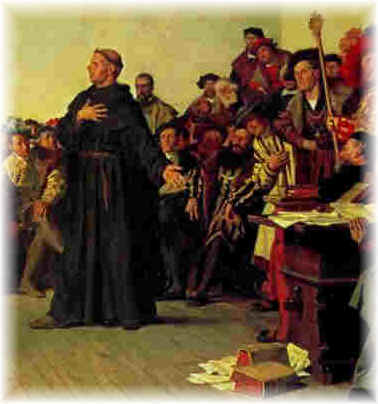
And when the world rejects or demeans or tries to tell us to reject the Bible's witness to these three essential truths, we must say with Luther who was commanded by the powers of the Church and of the State to recant or repudiate his witness for Christ, “Unless I am convinced by the testimonies of the Holy Scriptures or evident reason…I am bound by the Scriptures…and my conscience has been taken captive by the Word of God…I am neither able nor willing to recant. God help me.” 


May God help us to be true to our Lutheran heritage, not from a commitment to tradition, but from simple faith in Jesus, the One Who has borne the cross and opened eternity for us. 


May we be true to our good confession as Lutherans that we are saved from our very real enemies–sin, death, and the devil–by God’s grace through faith in Jesus Christ alone!

Faith in the Savior Who justifies sinners, making us innocent of our sin through His death on the cross, this faith is the best way to celebrate Reformation Sunday, today and always. Amen



Monday, October 30, 2017

A Reason to Celebrate

[This is the message shared during worship with the people and friends of Living Water Lutheran Church in Centerville, Ohio, yesterday, Reformation Sunday.]

John 8:31-36
Reformation Sunday is one of my favorite days on the Church calendar. And this year, of course, brings a special celebration of this day with the 500th. anniversary of Martin Luther posting his 95 Theses on the Wittenberg church door.


But there’s a bit of danger in all this celebrating of our Lutheran heritage. It can too easily become about Luther and our connection to him.

But Reformation Sunday isn’t a time to say, “Yay, us!” It’s a call to thanksgiving that we are only saved from sin and death by the power of God’s grace given to those who trust in the Word made flesh, Jesus Christ, as their God, Savior, and King.

It’s a truth of which we in the Church and the world we seek to reach in Christ’s names need to always be reminded! That's because, as long as we're on this earth, you and I will need to be open to the reformation of our faith, lives, and characters that God wants to accomplish in us.

The term, Lutheran was first used as a putdown by Luther’s accuser, Johann Eck. “None of you are Christians,” Eck was saying, “You’re Lutherans.”

Martin Luther hated the word, Lutheran. “I ask that my name be left silent and people not call themselves Lutheran, but rather Christians,” Luther said. “Who is Luther?...I have been crucified for no one...How should I, a poor stinking bag of worms, become so that the children of Christ are named with my unholy name? It should not be dear friends. Let us extinguish all factious names and be called Christians…”

While we can be thankful that God used Luther to re-awaken the Christian Church to the true teachings of God in His Word, Reformation Sunday calls us to live in the light of two fundamental truths.

The first truth is that I am a sinner whose sin will earn me eternal condemnation if I am not saved. As Paul puts it in Romans 6:23: “the wages of sin is death.”

The second truth is that Jesus Christ, God enfleshed and sinless, took the punishment of death I deserve for my sin on the cross, then was raised by God the Father, so all who turn from sin and follow Him are freed of sin and death and have eternal life with God.

I need saving and I can’t save myself: I can’t be good enough, sorry enough, or virtuous enough to be saved. Only Jesus Christ can save me.

And I am saved only by turning from sin and surrendering to the God we meet in Christ. Paul puts it all succinctly in Ephesians 2:8: “...it is by grace you have been saved, through faith—and this is not from yourselves, it is the gift of God…”

All of this leads to today’s gospel lesson. It records an encounter between Jesus and fellow Jews who believed in Him. In it, Jesus talks about what it means to be saved, what it means to be His disciple. And, because the New International Version translation of the Bible, which is the version we have in our sanctuary and which I usually use in preaching, is so horrible in translating the first verse of today’s gospel lesson, I’m going to be using the more accurate English Standard Version today. So, up here on the screens, take a look at our gospel lesson, please, John 8:31-36.

Verse 31: “So Jesus said to the Jews who had believed him, ‘If you abide in my word, you are truly my disciples, and you will know the truth, and the truth will set you free.’” 

There may not be two more important verses in all of Scripture than these!

That’s true because, first of all, Jesus here defines what belief or faith is.

When we speak of believing in something, we usually refer to intellectual assent, an opinion we have: “I believe that gravity exists”; “I believe that Oswald acted alone in killing Kennedy.”

But what Jesus means when He speaks of belief or faith in Him is more than intellectual assent. To believe in Jesus is to “abide in [His] word.”

The word translated as abide is, in John’s Greek, μείνητε, a verb, an action word meaning to remain, stay, stick it out. The people to whom Jesus first addressed these words believed that Jesus was something special; after all, they were part of the crowd of 5000 Jesus had fed with a few fish and pieces of bread. Their opinion was basically, “Jesus is a great dude.” But Jesus says that faith is not a personal opinion. Faith is abiding, standing fast, when the crosses come, the chips are down, the temptations are great.

This verse is also important because Jesus tells us what to abide in. Or more accurately, who we are to abide in.

Jesus says we’re to abide in His Word. Jesus means more than spending time in this book, the Bible, the Word of God. That book, the Bible, is worthy of spending our time in it not just because it contains the Word of God. It's worthy because it tells us about the Word of God.

John 1 tells us: “In the beginning was the Word, and the Word was with God, and the Word was God.” (John 1:1) And then, “The Word became flesh and made his dwelling among us.” (John 1:14) Faith is making our home on the strong foundation of Jesus, the Word of God, and staying there! Jesus says when we do this, we will be free.

Verse 33: “They [the Jews who believed in Jesus] answered him, ‘We are offspring of Abraham and have never been enslaved to anyone. How is it that you say, “You will become free”?’”

People who are enslaved are often quick to deny their slavery.

Someone tells a friend, “I think you have a drinking problem,” and the friend denies their addiction.

A woman is repeatedly abused by her husband and tells her parents, “He’s not really like that.”

A man embezzles from his company but actually believes it when he says, “I’m not a thief.”

Jesus’ fellow Jews, whose entire history was filled with times of enslavement to other nations, say, “We’ve never been slaves to anyone.”

Today, Jesus calls us to look at ourselves as we appear in the eyes of God. What enslaves us?

Materialism?

A love of comfort?

Selfishness?

Self-loathing?

Indifference to God and the hurting people around us?

These and every other sin stemming from our failure to remain rooted in the God we know in Jesus are what enslaves people, taking them away from God and the life that only God can give.

Christ wants us to see the truth.

And just as the Word is a person, Jesus Himself, so is the truth. Jesus says, “I am the way and the truth and the life. No one comes to the Father except through me” (John 14:6).

When we remain rooted in Christ, we see in the brilliance of God’s truth what enslaves us and we see too, that we can trust in the love and power of our crucified and risen Jesus to set us free to live, now and in eternity.

A woman once came to see me for counseling. “I started an affair with a no-good man, a really no-good man, years ago,” she told me. “He’s married and has no intention of leaving his wife. When I’m with him, he makes me feel loved and alive. But after he goes I wonder what I’m doing. I feel so rotten. So, I’ll tell him I’m not seeing him any more. Then he calls me a few months later and I cave in. I know it’s wrong. But I can’t get free.”

That woman was enslaved to her sin, enslaved to the idea that she needed this man to verify her worthiness as a human being. She understood that it was wrong, that her eternal destiny hung in the balance. But she was helpless to overcome her sin.

And here’s the thing: We are all helpless to resist sin when we try to do our own.

When God helps us to first, see our sins, and then, see the grace He offers in Christ, we are ready to be set free...not by our efforts to be good or religious or strong, but by Jesus Christ, Who died and rose for helpless sinners like you and me.

It is only when we know our helplessness and Who is the only One Who can help us that we will ever be free.

Paul puts it beautifully in 2 Corinthians 12:10: “...when I am weak, then I am strong.”

When I empty myself of all pretense of having it together, of being a good person, of being proud of my humility, it’s then that the God we meet in Jesus can fill us with God’s strength, God’s goodness, God’s love, God’s righteousness.

In other words, it’s only when we stop denying that we are sinners that we are open to the truth embodied in Jesus that we are “saved by grace through faith in Christ” alone!

An old saying puts it this way: When I’m at the end of me and God is all I’ve got, I realize that God is all I need!

I don’t always experience the fullness of God’s grace as God intends to give it to believers. I too often get in the way. But there are times when I do get out of the way.

This past week, I went to the deli again. Driving there, I asked, “Why do I almost always go to this deil? There’s another one closer.” “Just go,” I sensed God say.

When I got there, two different employees, neither one of them waiting on me, approached me about situations in their lives.

In that moment, Christ set me free from myself! Instead of denying our slavery to sin, you and I need to confess it, so that Jesus Christ can set us free. Not just once in a lifetime. Not just once a week. Not just at church. Not just at the deli. Always! We need to remain in Christ so that we’re free to live.

To the denial and cluelessness of the crowd who think that they’re free, Jesus says, starting at verse 34: “Truly, truly, I say to you, everyone who practices sin is a slave to sin. The slave does not remain in the house forever; the son remains forever. So if the Son sets you free, you will be free indeed.”


When Martin Luther, after steeping Himself in Scripture, came to see that God sets free all who repent and believe in Jesus Christ, he understood that sin and death need not be the last words for human beings. Even sinners like Martin Luther, Mark Daniels, you, and every human being, can be set free to live as God intended for us to live: His grateful, grown-up children, filled with the life and power of God, at ease in knowing that God will guide us through every moment in this fallen world, certain that we will live with God forever. Even now, through Christ and our faith in Him, we are free.

And that is what we can celebrate on this Reformation Sunday!


Monday, November 10, 2014

Happy Birthday, Martin Luther!

Martin Luther was born on this date in 1483. His work of reforming the Church goes on today. Everyone needs to hear the liberating message that we are saved from sin, death, and darkness solely by God's grace (God's charity) through faith in Jesus Christ. For more, see here.


Sunday, October 25, 2009

What is a Lutheran?

[This was shared during worship with the people of Saint Matthew Lutheran Church in Logan, Ohio, this morning.]

John 8:31-36
It happened more than twenty-five years ago in New England, where Lutherans are about as rare as the proverbial hen’s teeth. In his office, the pastor of a newly developing congregation received a telephone call. The caller had a simple question. “What is a Lutheranian?” she asked.

Overlooking that mispronunciation, the caller’s question is still a good and important one. Answering it isn’t some esoteric, theological head trip. After all, we are a Lutheran congregation, people who believe the Lutheran Confessions' understanding of Christian faith. If we can’t answer the question, “What is a Lutheran?” how Lutheran are we really?

On this Reformation Sunday, 2009, I want to talk with you about what a Lutheran is. For the historical background on Lutheranism and the Reformation, please take the red insert home with you today.*

But to answer our question, “What is a Lutheran?” I ask you to take a look at the bulletin cover. There, in addition to pictures of the Bible, of Martin Luther, and of Luther’s personal seal, you’ll also find three words printed over a single larger word. These convey what Lutherans see as the three foundational truths of Christian faith:
  • Grace alone,
  • Faith alone, and
  • Scripture alone (or Word alone).
Lutherans are people who, first and foremost, believe in grace alone, faith alone, and Word alone. But, what does this mean?

When the thirty-three year old German monk and priest, Martin Luther accidentally began the Reformation movement, he found himself addressing both a religious elite that no longer cared about the Word of God, choosing to replace it with their own supposed wisdom, and Christian masses whose allegiance was to the Church as an institution, a habit, rather than a personal fellowship with the living God.

No wonder that the elites hated Luther.

No wonder that the emperor of the Holy Roman Empire, a loose confederation of states supposedly bound together by their allegiance to the Roman Catholic Church, put Luther under an imperial ban, meaning that any one was authorized to kill Luther on sight.

Luther’s faithful witness to the Lordship of Jesus Christ and to the authority of the Bible undermined those who wanted to replace Jesus with other Lords and the authority of the Bible with traditions and customs that brought them comfort, control, or power.

But the experience of Luther and the other church reformers was nothing new. If you take time to read the Old Testament, you see a recurring pattern in the life of God’s chosen people, the Israelites or Jews. God would call them to repent, trust in Him for life, and follow Him, and the people, feeling weak or vulnerable or afraid, would do so. For a time. Then, once they got a little food in their bellies, a little tract of land to farm, a bit of wealth or power, they would mostly forget God.

Or, they would make God over into an indulgent Santa Claus who didn’t care if they repented, believed, or followed, so long as they had a good time.

Or, they would tinker with their faith, adding their own rules, intermingling the worship of other deities, maybe ensconcing wealth as a sign of God’s favor and love.

It was to God’s people in these latter circumstances that God would send prophets to call people back to God.

We see this rejection of God and of God’s Word in the people Jesus confronts in today’s Gospel lesson from John. Just before our lesson, Jesus once more foretells His crucifixion and resurrection. Then Jesus lifts up those three distinctives of Biblical faith, three distinctives that would become the three cornerstone principles of Lutheranism. "Then Jesus said to the Jews who had believed in Him,” our lesson begins, “’If you continue in my word, you are truly my disciples; and you will know the truth, and the truth will make you free.” Lutherans don't claim to have a corner on the truth market. But the Lutheran Confessions hold up certain truths which, often it seems, the world would rather forget.

Lutheran Christians believe that we are free from sin, death, and futility in our daily lives, first of all, through God’s grace alone. Jesus didn’t come to us and say, “Perform these religious acts and I will set you free from sin, death, and futile living.” Jesus came to us and offered new and everlasting life as a free gift, an act of charity from God.

Paul writes in the New Testament book of Romans, “For while we were still weak, at the right time Christ died for the ungodly [that’s all of us apart from a relationship with Christ]…God proves His love for us in that while we were still sinners Christ died for us.” The Greek New Testament word that is translated in our Bibles as grace is charitas, from which we get our English word, charity, a gift we cannot earn. We are saved by God’s grace alone.

The apostle John gets at this same reality in his first epistle, where he says, “In this is love, not that we loved God but that He loved us and sent His Son to be the atoning sacrifice for our sins.”

For the Christian, we believe, all depends on God's grace. Not our works. Nor our feelings. Not our thoughts. Only on God's grace. A friend of mine has the perfect response for those who ask Lutherans, “When were you saved?” “That’s easy,” my friend says, “on a hill outside Jerusalem two-thousand years ago.” What is a Lutheran? First of all, someone who believes that their salvation has nothing to do with them, but is a result of God’s grace, given in Christ, alone.

Lutheran Christians also believe we are saved through faith alone. Jesus told His fellow Jews that they would only be free to be the people of God if they persisted in trusting in Him.

Throughout the Gospel of John, we see Jesus described as the foundational Truth of the universe, God-in-the-flesh Who spoke creation into being. Life outside of a relationship with the God made known in Christ is a lie, disconnected from the only One Who can give us life.

That’s why, just a few verses after our Gospel lesson in John, Jesus will tell the same people that because they are unwilling to accept His Lordship and authority, His call to turn from sin and follow Him, they are really following a different father, “…[Y]ou cannot accept my word…” Jesus says, “[because] you are from your father the devil, and you choose to do your father’s desires. He was a murderer from the beginning and does not stand in the truth, because there is no truth in Him. When he lies, he speaks according to his own nature, for he is a liar and the father of lies. But because I tell the truth, you do not believe me.”

But faith, the gift God gives to those willing to receive it, can overcome what Martin Luther marked as our enemies—the devil, the world, and our sinful selves.

That’s why Jesus says elsewhere, “I am the way, and the truth, and the life. No one comes to the Father except through me…”

And to Martha, the sister of His friend Lazarus, Jesus says, “I am the resurrection and the life. Those who believe in me, even though they die, will live and everyone who lives and believes in me will live forever.”

What is a Lutheran? It’s someone who believes that God’s grace is taken in hand by those who dare to trust—to have faith in--Jesus Christ alone.

Finally, Lutherans believe that we come to know God through the Word alone. Above all, we know God through “the Word made flesh,” Jesus, and also through the definitive, authoritative, inspired Word of God, the Bible, a library of books inspired by God the Holy Spirit.

In Luther’s day, the Church added to and ignored the witness of God about Jesus and the will of God found in the Scriptures. Luther said that the Church dared not do or say anything contrary to the will of God revealed to us in the Bible.

Luther believed Paul’s words to the young pastor Timothy found in the New Testament, “All scripture is inspired by God and is useful for teaching, for reproof, for correction, and for training in righteousness…”

We may want to know much more, but everything you and I need to know about God, about ourselves, about how to live, and about who can be trusted, is found within the covers of the Bible. Knowing this truth will set us free.

That’s why the Lutheran Confessions say, “We believe, teach, and confess that the…writings of the Old and New Testaments are the only rule and norm according to which all doctrines and teachers alike must be appraised and judged…”**

We live in an era in which the Bible is routinely snubbed, dismissed, or misused. People ignore how unique and different the Bible is from all the other books of other religions.

The Bible isn’t the writing of just one person claiming a hotline to God, as is true of the books of Islam or Mormonism.

The Bible doesn’t claim to give us a means by which we can work or claw our way to heaven or a state of spiritual enlightenment, as is the case with eastern religions.

The Bible is a spiritually consistent revelation given by God to many people inspired by the Holy Spirit.

The Bible is a library of books that tell us how God reaches out to us, God saves us, God loves us, and how God wants to be reconciled to us.

And thousands of years of living with the Bible’s revelations of God, of Christ, and of the will of God have shown repeatedly that the Bible is more than just a collection of sixty-six ancient books.

It’s a book whose words from God have the power to change the lives of those who stand under their authority.

The New Testament book of Hebrews says, “The word of God is living and active, sharper than any two-edged sword, piercing until it divides soul from spirit…able to judge the thoughts and intentions of the heart.”

John ends the twentieth chapter of his Gospel by underscoring the life-giving power of the Bible, “Now Jesus did many other signs in the presence of his disciples, which are not written in this book. But these are written so that you may come to believe that Jesus is the Messiah, the Son of God, and that through believing you may have life in his name.”

God saves through grace alone, faith alone, and Word alone.

It was true in 33AD, true in 1517, true today, and true for all time.

What is a Lutheran?

At the least, Lutherans are people who stake their lives on those truths.

And when the world rejects or demeans or tries to tell us to reject the Bible's witness to these three essential truths, we must say with Luther, “"Unless I am convinced by the testimonies of the Holy Scriptures or evident reason…I am bound by the Scriptures…and my conscience has been taken captive by the Word of God…I am neither able nor willing to [reject dependence on Scripture]…God help me.”

And may God help us. Amen

*You can read that here.

**This is from Part One of the Formula of Concord, one of the foundational confessional documents of Lutheranism.

Saturday, October 24, 2009

What is Reformation Sunday, Anyway?

[Tomorrow is Reformation Sunday. Below is a little essay about Martin Luther and the Reformation, which I've written and rewritten, sometimes presented as a sermon, other times as a bulletin insert, and more recently, as a blog post, for a total of about twenty-five years now. I hope you find it helpful.]

He was born in November, 1483, in the German principality of Saxony. His father was a one-time coal miner who, through hard work, had risen to middle class status, the owner of several mines. His mother, who would exert so much influence over the boy was, in the custom of those times, a full-time housewife and mother.

His name was Martin Luther. From an early age, he exhibited great intelligence and many talents. As time passed, he would become an extraordinary preacher, theologian, and musician. These pursuits were far from his father’s intentions for young Martin. Hans Luther wanted the boy to become a lawyer in order to care for him and his wife in their old age.

That, in fact, was the trajectory on which Martin’s life was moving when a shattering experience intervened.

He was heading back to the university he attended when a ferocious thunderstorm arose. A lightning bolt knocked Luther to the ground. Understandably terrified, Martin cried out to the patron saint of miners. “Saint Ann,” he said, “save me; I will become a monk.”

I once told this story to Father Seavey Joyce, who served Saint Ann's parish in the same small town (Frankfort, Michigan) where I did my seminary internship. Seavey listened and wearing an impish smile, said, "I guess that goes to prove that even saints make mistakes." (He was kidding because Seavy also told me once that he was sure that one day the Roman Catholic Church would name Luther a saint.)

But of course, it wasn't Saint Ann who’d made a mistake. It was Martin Luther. In fact, in his moment of terror in the thunderstorm, he made several mistakes. Mistake one: Calling for supernatural help from anyone other than the God we know in Jesus Christ. Mistake two: Making a deal in the hopes of placating what Luther thought was an angry God. God doesn’t make deals.

But Luther became part of a long tradition of people who have done the right things for the wrong reasons.

In the Old Testament book of Genesis, for example, we find the true story of a young dreamer named Joseph. His father, Jacob, doted on the boy while virtually ignoring his ten other sons. Resentful, Joseph's brothers sold him into slavery and then took the coat their father had given to him and spattered it with blood. They showed it to Jacob. He concluded that Joseph had been killed by a wild animal.

The brothers had done the wrong thing. But it turned out that, unbeknownst to them, they played into God's plans for Joseph. Joseph was set down a difficult road that ultimately led him to become, in effect, the prime minister of Egypt, second in command after the Pharaoh. In that position, Joseph oversaw the storing of crops during seven bumper years in anticipation of seven years of famine, a famine that affected the entire Middle East.

Ultimately, Joseph was able to use the stored crops to save the lives of his very own family members and many others. Later, he was able to tell his brothers that when they sold him into slavery, "You meant it for evil. But God meant it for good so that many might be saved." Joseph's brothers had somehow done the right thing for the wrong reasons.

In the New Testament book of Matthew, we find the story of people who came to see the Christ Child. We call them "wise men." But they were really little more than astologers, people who made horoscopes and superstitiously believed that stars foretold occurrences on this planet. It's the sort of the practice that the Bible condemns completely. We're to depend on God and on nothing and nobody else. Yet, these wise men who followed the stars for the wrong reasons, at the end of their journey, came to the right conclusion: This baby was the Savior of the world.

Martin Luther’s entry into the monastery for the wrong reason turned out to be very right, indeed! I don’t think that his father ever forgave the young Luther for taking the vows of a monk and "abandoning" his family. When, several years later, Luther also was ordained a priest, his father, Hans, expressed the belief that Martin’s call might not have come from God, but from the devil.

Martin Luther, in fact, was a deeply disturbed young man, probably neurotic. He felt himself utterly and completely guilty of sin. He couldn’t imagine that a morally perfect God could or would forgive him. At times, Luther hated God. He believed that God was playing a vicious game with the human race: Demanding moral perfection and when none of our race were unable to attain it, gleefully sending us to hell.

Noting how disturbed Luther was, believing that a fully occupied life would crowd out his worries and fears, and recognizing how intelligent Luther was, his superiors decided that he would study to become a doctor of theology. He would teach at a new university being started in the Saxon town of Wittenberg.

At first, a new regimen of work, which included administering fourteen monasteries, pastoring a local church, and teaching at the new university, did nothing to assuage Luther’s loathing of God and of himself.

But then, something happened to change Luther’s life and world history. (And, over time, through the Reformation Luther began, my history.) Like most seminarians and priests of his day, Luther had never studied Scripture. He did so now, as he prepared for the classes he was teaching.

In the Bible, Luther found a God different from the one often preached in the Church of his day. He saw a God of grace and love Who reaches out to His children, Who charitably understands their fallen humanity, Who forgives and empowers right living, and promises eternity to all with faith in Him. He saw a God Who hates sin while loving sinners, Who calls all to repent for their sin and believe in His Son, Jesus.

He began to see this picture of God as he studied the book of Genesis in preparation for lectures to his students at Wittenberg. He met this God again in the Psalms. And, perhaps most clearly of all, Luther saw this God in the majestic New Testament book of Romans.

A key passage for him was Romans 1:16-17:
“For I am not ashamed of the gospel; it is the power of God for salvation to everyone who has faith, to the Jew first and also to the Greek. For in it the righteousness of God is revealed through faith for faith; as it is written, “The one who is righteous will live by faith.”
With his deepening knowledge of the Scriptures and the original Hebrew and Greek in which the Old and New Testaments, respectively, had been written, Luther’s understanding of God blossomed.

Up until this point in his life, Luther, like most of the people of his time, labored under the mistaken notion that righteousness was a state of moral perfection, a status God commanded of us, although none of us could ever attain it.


Now, Luther saw that righteousness is having a right relationship with God and that it can’t be secured by anything we do. He saw that while God does demand moral purity from us and that our sin earns us everlasting condemnation, God Himself took on flesh in the Person of Jesus Christ so that He could die in our place on the cross and all with faith in Jesus won't be condemned. Instead, God gives all with faith in Jesus forgiveness and everlasting life. That's what Romans means when it talks about salvation and salvation as God's gift to believers in Christ. Period.

Realizing all of this now, Luther, who studied in the tower of the monastery at Wittenberg had what was later called his “tower experience.” While studying God’s Word, Luther had an overpowering sense of the depths of God’s love for all of us--including himself. Coming to know that rigteousness is God’s gift which we can access when we turn from sin and entrust our lives to Christ, Luther said, was like having the gates of heaven thrown open to him! The faithful person would try to respond to the love of God given through Jesus Christ, of course. But, Luther knew, we can’t earn God’s love. It’s a gift called grace.

The once-neurotically ashamed Martin Luther became a joyful champion of the new life that God gives to all with faith in Christ. As he grew in the confidence he had in Christ and in God’s love for him, Luther grew bolder in sharing what he had learned about God from the Bible.

On October 31, 1517, he posted 95 theses--or propositions--for debate on the church door in Wittenberg. In those days, a scholar who wished to engage in discussion about important issues posted points on the doors of churches. Church doors were the Power Points, bulletin boards, or blogs of that time.

Luther’s theses were prompted by a common practice in the Roman Catholic Church of his day. The Church then taught that there was a place called “purgatory,” a sort of holding room that the dead supposedly went to between death and eternity. Purgatory was supposed to be a place where people were purified for entry into heaven. To raise money, the Church often authorized the mass sale of pieces of paper known as indulgences. These indulgences allowed people to buy hundreds or thousands of years out of purgatory for loved ones or even themselves.

Luther, certain that eternity was a free gift, was deeply offended by this practice. He would later say that if there were such a place as purgatory and the Pope, as head of the Church, had the capacity to free people from the place, he should do so out of simple Christian compassion and not accept a penny for doing so.

When Luther’s preaching against indulgences began to impact the bottom line on their sale, the Church went after him. At a gathering in the German city of Wurms, before the emperor, Luther was ordered to recant, or repudiate, all of his writings. He refused.

Ultimately, he came under what was known as an “imperial ban.” That meant that both the Church and the powerful Holy Roman Empire, a confederation of principalities and nations, agreed that if any one saw Martin Luther, he was to be killed on sight. Luther was labeled a heretic, a perverter of the Christian faith.

For the balance of his life, Martin Luther remained steadfast in proclaiming the God we see in Jesus Christ, the God of grace and God of glory. Among Luther’s last words were, “We are all beggars,” an acknowledgement that none of us is better or more important than others in God's eyes and that all with faith in Christ are the recipients of God’s charitable gifts: forgiveness and new life. We cannot earn them, but thank God, He loves to give them to those humble enough to surrender to Christ! Luther died in 1546.

We celebrate October 31 each year as Reformation Day because on All Saints Eve, Hallowed Evening or, as we call it, Halloween, in 1517, Luther’s 95 Theses began a major reformation of the Church. That reform movement goes on to this day. We celebrate the Sunday closest to October 31 each year as Reformation Sunday.

Martin Luther learned and then taught from God’s Word that our relationship with God and our freedom from sin and death don’t come from our works or from doing proscribed acts of ritual, religious or otherwise. These things come to us freely from a God Who, in Christ, shows us that He isn’t our enemy, but our very best friend.

Sunday, October 26, 2008

Set Free!

[This was shared during the Reformation Sunday celebration with the people of Saint Matthew Lutheran Church in Logan, Ohio today.]

John 8:31-36
Back in the Stone Ages, when I did my student teaching at Bishop Ready High School in Columbus, my supervising teacher was a terrific guy named Joe Palazzo. One day, after Joe observed me teach twelfth-grade Government class, he gave me two pieces of advice. First, he said: Get off of your mountain. Come down here with the kids. That’s where you can teach and they can learn. But he also gave a second and more important piece of advice. “All effective teaching, Mark, boils down to two principles: Repetition and concreteness. Repeat it in as many different ways and as many times as you can. And then, make it real. Help them to see it." The greatest teacher who ever lived was Jesus of Nazareth. He was often called rabbi, teacher, even by those who opposed Him and thought that His claims to be God and Savior of the world were out to lunch.

In our Gospel lesson for today, we find Jesus exemplifying Joe Palazzo’s principles of teaching in order to get across the most important message you and I will ever receive. Jesus tells us that He is the best friend we can have and that to be truly free, we need a connection to Him. He breaks this lesson down into three parts.

Part one: Jesus twice repeats, in different ways, a straightforward Biblical principle. Its this: Stick with Me and you’ll be free. At the beginning of our lesson, He says: “If you continue in my word, you are truly my disciples; and you will know the truth, and the truth will make you free.” Then, at the end of our lesson, He repeats this point in a different way: “If the Son makes you free, you will be free indeed.”

You and I might chafe under those words a bit. Jesus’ fellow Jews, people who had believed in Him, certainly reacted to His words. They told Jesus, in spite of a history of enslavement, that they had never been slaves to anybody. This claim demonstrates that denial is more than a river in Egypt. The last thing any of us wants to admit is that we aren’t free agents, doing exactly what we want to do in life. The daughter of friends of ours, when she was two years old, would grow indignant with anyone who tried to get in her way. “Mine a do it!” she would insist loudly.

Children aren’t the only ones who feel the need to prove that they are self-contained free agents. Adults do this, even when they’re in the clutches of addiction or sin. “I can quit any time!” says the alcoholic confronted with the truth about his destructive life style. “Good,” says someone who loves him, “quit.” “I don’t want to,” they’ll say, though the truth could actually be expressed with the words, “I can’t quit. I’m a slave to my addiction.”

In telling us, “Stick with me and you’ll be free,” Jesus implicitly tells us what He makes explicit in Part Two: “Everyone who commits sin is a slave to sin."

That rings true to me. The first time I remember a swear word passing through my lips, I was in the sixth grade. It was the day of the Halloween party and I was frustrated. Everyone had come to school in the costume they were going to wear on what we called Beggars’ Night in Columbus. I was dressed as a girl, complete with dress and make-up. I guess my mom and I were the only ones who didn't get the memo that said all students should bring a change of clothes. So, there I was at recess, playing Four Square with my classmates on the playground, the only one still in my Halloween costume. In drag!

All the other kids rode me pretty hard, which was frustrating enough. But then, Steve, a tough little guy who had started smoking when we were in the fourth grade in hopes that he could stunt his growth and become a jockey, spiked the ball in my square. I was out. “I guess you really are a girl,” one of my classmates said in words that in just a few years, we would regard not only as cruel but totally unenlightened. Frustrated that I was in a dress, upset that Steve had just knocked me out of the game, and mad about all the insults, I picked up the ball, slammed it to the pavement, and said the first curse word I ever spoke. “D-A-M-N!” I barked, not spelling it then as I did just now. “Wooo!” the kids said, “Daniels cussed!”

Here’s what I found. After I’d sworn once, misusing the gift of language and violating God’s will for human beings, it was a lot easier to do it a second time. Easier still to do it a third. Sin creates holes in our souls and unless we’re careful, sin will flood our lives, making us its slaves, sinking us into the muck of evil, far from God.

“When I first started raking money from the company, I was conscience-struck,” one man admitted. “But after awhile, it became easier. I had all sorts of justifications for it.” It’s easy to become the slave of sin. In fact, the Bible tells us that we have an inborn inclination to sin. That’s why Jesus’ promise, “Stick with me and you’ll be free,” is really good news!

So, how do we get free? Well, we don’t. Only God can free us. That leads to Part Three of Jesus’ lesson: The Son has the run of God’s kingdom. That's why when you stick with the Son, He will set you free!

I once got to know a local judge who seemed to take both his faith and his work seriously. Another man I knew was charged with a crime and brought before that judge. The man was clearly guilty. But I knew how remorseful he was and I intervened, asking the judge to go easy on him, not imposing prison time.

The judge listened to me and said, “I understand all that, Mark. I know how much he regrets his actions. But the law is the law.” “Yes, it is,” I told him, “and I know that you have no choice. I was just hoping you could think of another way to handle things. But whatever you do, I’ll respect your sentence.”

Jesus looks at us and our failure to love God and love neighbor and knows, just like that judge, that the law is the law. All sin is the failure to love God and love neighbor. And, the Bible says unequivocally that "the wages of sin"--the appropriate payment for sin--"is death."

But after finding us guilty and pronouncing our death sentence over us, Jesus does something extraordinary. He takes our punishment. That’s what He did when He voluntarily went to the cross, though He had no sin. He took the punishment that you and I deserve. All who remain with Jesus, everyone who sticks with Him, is set free from sin and death and have a life with God that never ends.

On a cross, Jesus made God’s love so concrete you can’t doubt how real it is. And from an empty tomb, He made clear His power and His desire to give us life that lasts forever. These are the greatest object lessons in human history!

Today, we celebrate the Reformation. The Reformation really began when a young monk and priest, Martin Luther, dogged by a sense of his own sin and his fear that an angry God would never forgive him, discovered the true nature of God is seen in the Good News of Jesus. “For God so loved the world that he gave his only Son, so that everyone who believes in him may not perish but may have eternal life.”

On October 31, 1517, All Saints Eve or Hallowed Eve—we call it Halloween, Martin Luther posted ninety-five theses for debate on the church door where he served as priest in Wittenberg, Germany. It began a movement within Christianity that continues to this day, a movement that reminds the world that salvation and new life aren’t things we earn or buy or steal; God sets us free to be our true selves—the selves God made us to be—through Jesus Christ and Jesus Christ alone!

The Bible teaches and Luther’s Small Catechism underscore that there are three things that enslave us, causing us to place our confidence in dead things like money, possessions, and religion. Those three things are the devil, the world, and our sinful selves. Jesus Christ can set us free from them.

She had a difficult childhood, sexually abused by her own father. In adulthood, she made success and pleasure her gods, anesthetizing herself with constant work, the mad chase for dollars, spending sprees that maxed out her credit cards, alcohol, marijuana, and other drugs. But nothing set her free from her sense of inadequacy, from the shame she felt for her victimization, from her guilt for the choices she made for selfishness and self-will. A friend invited her to a small group Bible study.

There, she heard Jesus’ parable of the prodigal son, a story that assures us that no matter how far we may stray from God, through Jesus Christ, God wants to welcome us home. God wants to set us free from all that enslaves us, kills us, or fills us with a sense of futility and meaninglessness. God wants to set us free to live abundant, eternal life with Him. “I’ve heard that story a million times,” she said. “I never realized that it was anything more than a story. I never knew it meant that God cares about me.” For the first time in her life, that woman began to sense the freedom to live that Christ wants us all to experience.

Jesus says, “If the Son makes you free, you will be free indeed.” On this Reformation Sunday, my challenge to you is simple: Dare to believe that! Dare to believe that Jesus’ death and resurrection are both object lessons and the means by which God sets you and me free to be the forgiven, confident, hopeful people we were made

Saturday, October 25, 2008

Martin Luther, Reformation Sunday, and the Grace That Saves Us

[This presentation about Martin Luther and the Reformation is something which I've written and taken through multiple rewrites and updates since I became a pastor in 1984. I've included it in several worship bulletins, used it as a sermon, handed it out to classes, and published it here several times. Tomorrow, October 26, will be celebrated as Reformation Sunday by Lutherans and many other Christians around the world. This explains why.]

He was born in November, 1483, in the German principality of Saxony. His father was a one-time coal miner who, through hard work, had risen to middle class status, the owner of several mines. His mother, who would exert so much influence over the boy was, in the custom of those times, a full-time housewife and mother.

His name was Martin Luther. From an early age, he exhibited great intelligence and many talents. As time passed, he would become an extraordinary preacher, theologian, and musician. These pursuits were far from his father’s intentions for young Martin. Hans Luther wanted the boy to become a lawyer in order to care for him and his wife in their old age.

That, in fact, was the trajectory on which Martin’s life was moving when a shattering experience intervened.

He was heading back to the university he attended when a ferocious thunderstorm arose. A lightning bolt knocked Luther to the ground. Understandably terrified, Martin cried out to the patron saint of miners. “Saint Ann,” he said, “save me; I will become a monk.”

I once told this story to Father Seavey Joyce, who served Saint Ann's parish in the same small town (Frankfort, Michigan) where I did my seminary internship. Seavey listened and wearing an impish smile, said, "I guess that goes to prove that even saints make mistakes." (He was kidding because Seavy also told me once that he was sure that one day the Roman Catholic Church would name Luther a saint.)

But of course, it wasn't Saint Ann who’d made a mistake. It was Martin Luther. In fact, in his moment of terror in the thunderstorm, he made several mistakes. Mistake one: Calling for supernatural help from anyone other than the God we know in Jesus Christ. Mistake two: Making a deal in the hopes of placating what Luther thought was an angry God. God doesn’t make deals.

But Luther became part of a long tradition of people who have done the right things for the wrong reasons.

In the Old Testament book of Genesis, for example, we find the true story of a young dreamer named Joseph. His father, Jacob, doted on the boy while virtually ignoring his ten other sons. Resentful, Joseph's brothers sold him into slavery and then took the coat their father had given to him and spattered it with blood. They showed it to Jacob. He concluded that Joseph had been killed by a wild animal.

The brothers had done the wrong thing. But it turned out that, unbeknownst to them, they played into God's plans for Joseph. Joseph was set down a difficult road that ultimately led him to become, in effect, the prime minister of Egypt, second in command after the Pharaoh. In that position, Joseph oversaw the storing of crops during seven bumper years in anticipation of seven years of famine, a famine that affected the entire Middle East.

Ultimately, Joseph was able to use the stored crops to save the lives of his very own family members and many others. Later, he was able to tell his brothers that when they sold him into slavery, "You meant it for evil. But God meant it for good so that many might be saved." Joseph's brothers had somehow done the right thing for the wrong reasons.

In the New Testament book of Matthew, we find the story of people who came to see the Christ Child. We call them "wise men." But they were really little more than astologers, people who made horoscopes and superstitiously believed that stars foretold occurrences on this planet. It's the sort of the practice that the Bible condemns completely. We're to depend on God and on nothing and nobody else. Yet, these wise men who followed the stars for the wrong reasons, at the end of their journey, came to the right conclusion: This baby was the Savior of the world.

Martin Luther’s entry into the monastery for the wrong reason turned out to be very right, indeed! I don’t think that his father ever forgave the young Luther for taking the vows of a monk and "abandoning" his family. When, several years later, Luther also was ordained a priest, his father, Hans, expressed the belief that Martin’s call might not have come from God, but from the devil.

Martin Luther, in fact, was a deeply disturbed young man, probably neurotic. He felt himself utterly and completely guilty of sin. He couldn’t imagine that a morally perfect God could or would forgive him. At times, Luther hated God. He believed that God was playing a vicious game with the human race: Demanding moral perfection and when none of our race were unable to attain it, gleefully sending us to hell.

Noting how disturbed Luther was, believing that a fully occupied life would crowd out his worries and fears, and recognizing how intelligent Luther was, his superiors decided that he would study to become a doctor of theology. He would teach at a new university being started in the Saxon town of Wittenberg.

At first, a new regimen of work, which included administering fourteen monasteries, pastoring a local church, and teaching at the new university, did nothing to assuage Luther’s loathing of God and of himself.

But then, something happened to change Luther’s life and world history. (And, over time, through the Reformation Luther began, my history.) Like most seminarians and priests of his day, Luther had never studied Scripture. He did so now, as he prepared for the classes he was teaching.

In the Bible, Luther found a God different from the one often preached in the Church of his day. He saw a God of grace and love Who reaches out to His children, Who charitably understands their fallen humanity, Who forgives and empowers right living, and promises eternity to all with faith in Him. He saw a God Who hates sin while loving sinners, Who calls all to repent for their sin and believe in His Son, Jesus.

He began to see this picture of God as he studied the book of Genesis in preparation for lectures to his students at Wittenberg. He met this God again in the Psalms. And, perhaps most clearly of all, Luther saw this God in the majestic New Testament book of Romans.

A key passage for him was Romans 1:16-17:
“For I am not ashamed of the gospel; it is the power of God for salvation to everyone who has faith, to the Jew first and also to the Greek. For in it the righteousness of God is revealed through faith for faith; as it is written, “The one who is righteous will live by faith.”
With his deepening knowledge of the Scriptures and the original Hebrew and Greek in which the Old and New Testaments, respectively, had been written, Luther’s understanding of God blossomed.

Up until this point in his life, Luther, like most of the people of his time, labored under the mistaken notion that righteousness was a state of moral perfection, a status God commanded of us, although none of us could ever attain it.

Now, Luther saw that righteousness is having a right relationship with God and that it can’t be secured by anything we do. He saw that while God does demand moral purity from us and that our sin earns us everlasting condemnation, God Himself took on flesh in the Person of Jesus Christ so that He could die in our place on the cross and all with faith in Jesus won't be condemned. Instead, God gives all with faith in Jesus forgiveness and everlasting life. That's what Romans means when it talks about salvation and salvation as God's gift to believers in Christ. Period.

Realizing all of this now, Luther, who studied in the tower of the monastery at Wittenberg had what was later called his “tower experience.” While studying God’s Word, Luther had an overpowering sense of the depths of God’s love for all of us--including himself. Coming to know that rigteousness is God’s gift which we can access when we turn from sin and entrust our lives to Christ, Luther said, was like having the gates of heaven thrown open to him! The faithful person would try to respond to the love of God given through Jesus Christ, of course. But, Luther knew, we can’t earn God’s love. It’s a gift called grace.

The once-neurotically ashamed Martin Luther became a joyful champion of the new life that God gives to all with faith in Christ. As he grew in the confidence he had in Christ and in God’s love for him, Luther grew bolder in sharing what he had learned about God from the Bible.

On October 31, 1517, he posted 95 theses--or propositions--for debate on the church door in Wittenberg. In those days, a scholar who wished to engage in discussion about important issues posted points on the doors of churches. Church doors were the Power Points, bulletin boards, or blogs of that time.

Luther’s theses were prompted by a common practice in the Roman Catholic Church of his day. The Church then taught that there was a place called “purgatory,” a sort of holding room that the dead supposedly went to between death and eternity. Purgatory was supposed to be a place where people were purified for entry into heaven. To raise money, the Church often authorized the mass sale of pieces of paper known as indulgences. These indulgences allowed people to buy hundreds or thousands of years out of purgatory for loved ones or even themselves.

Luther, certain that eternity was a free gift, was deeply offended by this practice. He would later say that if there were such a place as purgatory and the Pope, as head of the Church, had the capacity to free people from the place, he should do so out of simple Christian compassion and not accept a penny for doing so.

When Luther’s preaching against indulgences began to impact the bottom line on their sale, the Church went after him. At a gathering in the German city of Wurms, before the emperor, Luther was ordered to recant, or repudiate, all of his writings. He refused.

Ultimately, he came under what was known as an “imperial ban.” That meant that both the Church and the powerful Holy Roman Empire, a confederation of principalities and nations, agreed that if any one saw Martin Luther, he was to be killed on sight. Luther was labeled a heretic, a perverter of the Christian faith.

For the balance of his life, Martin Luther remained steadfast in proclaiming the God we see in Jesus Christ, the God of grace and God of glory. Among Luther’s last words were, “We are all beggars,” an acknowledgement that none of us is better or more important than others in God's eyes and that all with faith in Christ are the recipients of God’s charitable gifts: forgiveness and new life. We cannot earn them, but thank God, He loves to give them to those humble enough to surrender to Christ! Luther died in 1546.

We celebrate October 31 each year as Reformation Day because on All Saints Eve, Hallowed Evening or, as we call it, Halloween, in 1517, Luther’s 95 Theses began a major reformation of the Church. That reform movement goes on to this day.

Martin Luther learned and then taught from God’s Word that our relationship with God and our freedom from sin and death don’t come from our works or from doing proscribed acts of ritual, religious or otherwise. These things come to us freely from a God Who, in Christ, shows us that He isn’t our enemy, but our very best friend.

Monday, May 19, 2008

Luther and the Reformation

[This presentation about Martin Luther and the Reformation is something which I've written and taken through multiple rewrites and updates since I became a pastor in 1984. I shared it with a class at Saint Matthew Lutheran in Logan, Ohio, where I serve as pastor, that began meeting tonight. The class is using James Nestingen's wonderful study, Roots of Our Faith, as its basis.]

He was born in November, 1483, in the German principality of Saxony. His father was a one-time coal miner who, through hard work, had risen to middle class status, the owner of several mines. His mother, who would exert so much influence over the boy was, in the custom of those times, a full-time housewife and mother.

His name was Martin Luther. From an early age, he exhibited great intelligence and many talents. As time passed, he would become an extraordiary preacher, theologian, and musician. These pursuits were far from his father’s intentions for young Martin. Hans Luther wanted Martin to become a lawyer in order to care for him and his wife in their old age.

That, in fact, was the trajectory on which Martin’s life was moving when a shattering experience intervened.

He was heading back to the university he attended, when a ferocious thunderstorm arose. A lightning bolt knocked Luther to the ground. Understandably terrified, Martin cried out to the patron saint of miners. “Saint Ann,” he said, “save me; I will become a monk.”

I once told this story to Father Seavey Joyce, who served Saint Ann's parish in the same small town (Frankfort, Michigan) where I did my seminary internship. Seavey listened and wearing an impish smile, said, "I guess that goes to prove that even saints make mistakes." (He was kidding because Seavy told me once, he was sure that one day the Roman Catholic Church would name Luther one of its saints.)

But of course, it wasn't Saint Ann who’d made a mistake. It was Martin Luther. In fact, in his moment of terror in the thunderstorm, he made several mistakes. Mistake one: Calling for supernatural help from anyone other than the God we know in Jesus Christ. Mistake two: Making a deal in the hopes of placating what Luther thought was an angry God. God doesn’t make deals.

But Luther became part of a long tradition of people who have done the right things for the wrong reasons.

In the Old Testament book of Genesis, for example, we find the true story of a young dreamer named Joseph. His father, Jacob, doted on the boy while virtually ignoring his ten other sons. Resentful, Joseph's brothers sold him into slavery and then took the coat their father had given to him and spattered it with blood. They showed it to Jacob. He concluded that Joseph had been killed by a wild animal.

The brothers had done the wrong thing. But it turned out that, unbeknownst to them, they played into God's plans for Joseph. Joseph was set down a difficult road that ultimately led him to become, in effect, the prime minister of Egypt, second in command after the Pharaoh. In that position, Joseph oversaw the storing of crops during seven bumper years in anticipation of seven years of famine, a famine that affected the entire Middle East.

Ultimately, Joseph was able to use the stored crops to save the lives of his very own family members and many others. Later, he was able to tell his brothers that when they sold him into slavery, "You meant it for evil. But God meant it for good so that many might be saved." Joseph's brothers had somehow done the right thing for the wrong reasons.

In the New Testament book of Matthew, we find the story of people who came to see the Christ Child. We call them "wise men." But they were really little more than astologers, people who made horoscopes and superstitiously believed that stars foretold occurrences on this planet. It's the sort of the practice that the Bible condemns completely. We're to depend on God and on nothing and nobody else. Yet, these wise men who followed the stars for the wrong reasons, at the end of their journey, came to the right conclusion: This baby was the Savior of the world.

Martin Luther’s entry into the monastery for the wrong reason turned out to be very right, indeed! I don’t think that his father ever forgave the young Luther for taking the vows of a monk and "abandoning" his family. When, several years later, Luther also was ordained a priest, his father, Hans, expressed the belief that Martin’s call might not have come from God, but from the devil.

Martin Luther, it turns out, was a deeply disturbed young man, probably neurotic. He felt himself utterly and completely guilty of sin. He couldn’t imagine that a morally perfect God could or would forgive him. At times, Luther hated God. He believed that God was playing a vicious game with the human race: Demanding moral perfection and when we were unable to attain it, gleefully sending us to hell.

Noting how disturbed Luther was, believing that a fully occupied life would crowd out his worries and fears, and recognizing how intelligent Luther was, his superiors decided that he would study to become a doctor of theology. He would teach at a new university scheduled to be started in the Saxon town of Wittenberg.

At first, a new regimen of work, which included administering fourteen monasteries, pastoring a local church, and teaching at the new university, did nothing to assuage Luther’s loathing of God and of himself.

But then, something happened to change Luther’s life and world history. (And, over time, through the Reformation Luther began, my history.) Like most seminarians and priests of his day, Luther had never studied Scripture. He did so now, as he prepared for the classes he was teaching.

In the Bible, Luther found a different God than the one often preached in the Church of his day. He saw a God of grace and love Who reaches out to His children, Who charitably understands their fallen humanity, Who forgives and empowers right living, and promises eternity to all with faith in Him. He saw a God Who hates sin while loving sinners, Who calls all to repent for their sin and believe in His Son, Jesus.

He began to see this picture of God as he studied the book of Genesis in preparation for lectures to his students at Wittenberg. He met this God again in the Psalms. And, perhaps most clearly of all, Luther saw this God in the majestic New Testament book of Romans.

A key passage for him was Romans 1:16-17:
“For I am not ashamed of the gospel; it is the power of God for salvation to everyone who has faith, to the Jew first and also to the Greek. For in it the righteousness of God is revealed through faith for faith; as it is written, “The one who is righteous will live by faith.”
With his deepening knowledge of the Scriptures and the original Hebrew and Greek in which the Old and New Testaments, respectively, had been written, Luther’s understanding of God blossomed.

Up until this point in his life, Luther, like most of the people of his time, labored under the mistaken notion that righteousness was a state of moral perfection, a status God commanded of us, although none of us could ever attain it. Such a view made God a kind of contemptuous cat toying with human mice until they died.

Now, Luther saw that righteousness is having a right relationship with God and that it can’t be secured by anything we do. He saw that while God does demand moral purity from us and that our sin earns us everlasting condemnation, God Himself took on flesh in the Person of Jesus Christ so that He could die in our place on the cross and all with faith in Jesus won't be condemned. Instead, God gives all with faith in Jesus forgiveness and everlasting life. That's what Romans means when it talks about salvation and salvation as God's gift to believers in Christ. Period.

Realizing all of this now, Luther, who studied in the tower of the monastery at Wittenberg had what was later called his “tower experience.” While studying God’s Word, Luther had an overpowering sense of the depths of God’s love for all of us--including himself. Coming to know that rigteousness is God’s gift which we can access when we turn from sin and entrust our lives to Christ, Luther said, was like having the gates of heaven thrown open to him! The faithful person would try to respond to the love of God given through Jesus Christ, of course. But, Luther knew, we can’t earn God’s love. It’s a gift called grace.

The once-neurotically ashamed Martin Luther now became a joyful champion of the new life that God gives to all with faith in Christ. As he grew in the confidence he had in Christ and in God’s love for him, Luther grew bolder in sharing what he had learned about God from the Bible.

On October 31, 1517, he posted 95 theses--or propositions--for debate on the church door in Wittenberg. In those days, a scholar who wished to engage in discussion about important issues posted points on the doors of churches. Church doors were the Power Points, bulletin boards, or blogs of that time.

Luther’s theses were prompted by a common practice in the Roman Catholic Church of his day. The Church then taught that there was a place called “purgatory,” a sort of holding room that the dead supposedly went to between death and eternity. Purgatory was supposed to be a place where people were purified for entry into heaven. To raise money, the Church often authorized the mass sale of pieces of paper known as indulgences. These indulgences allowed people to buy hundreds or thousands of years out of purgatory for loved ones or even themselves.

Luther, now certain that eternity was a free gift, was deeply offended by this practice. He would later say that if there were such a place as purgatory and the Pope, as head of the Church, had the capacity to free people from the place, he should do so out of simple Christian compassion and not accept a penny for doing so.

When Luther’s preaching against indulgences began to impact the bottom line on their sale, the Church went after him. At a gathering in the German city of Wurms, before the emperor, Luther was ordered to recant, or repudiate, all of his writings. He refused.

Ultimately, he came under what was known as an “imperial ban.” That meant that both the Church and the powerful Holy Roman Empire, a confederation of principalities and nations, agreed that if any one saw Martin Luther, he was to be killed on sight. Luther was labeled a heretic, a perverter of the Christian faith.

For the balance of his life, Martin Luther remained steadfast in proclaiming the God we see in Jesus Christ, the God of grace and God of glory. Among Luther’s last words were, “We are all beggars,” an acknowledgement that none of us is better or more important than others in God's eyes and that all with faith in Christ are the recipients of God’s charitable gifts: forgiveness and new life. We cannot earn them, but thank God, He loves to give them to those humble enough to surrender to Christ! Luther died in 1546.

We celebrate October 31 each year as Reformation Day because on All Saints Eve, Hallowed Evening or, as we call it, Halloween, in 1517, Luther’s 95 Theses began a major reformation of the Church. That reform movement goes on to this day.

Martin Luther had learned from God’s Word that our relationship with God and our freedom from sin and death don’t come from our works or from doing proscribed acts of ritual, religious or otherwise. These things come to us freely from a God Who, in Christ, shows us that He isn’t our enemy, but our very best friend.