Wednesday, January 25, 2023

Tuesday, January 24, 2023
Sunday, January 22, 2023
What About Healing?
[A heavy snowfall hit our area shortly before today's worship services of Living Water Lutheran Church happened. A few folks were able to make the drive. Below you'll find both the message prepared for our two services and the live stream video. Have a blessed week, friends!]
Matthew 4:12-25
Matthew 4:12-25
A member of the first church I served as pastor–we’ll call him John–had a machine shop. There he fabricated farm equipment.
One day, two neighbor boys brought John a big barrel they wanted to have cut in two. John said that wouldn’t be a problem.
He cleaned out the barrel, which had previously contained some kind of chemicals, then took a torch to the barrel to cut it.
When the flame of the torch made contact with some of the chemical residue, the barrel exploded, crashing into John’s skull. He was life-flighted to a hospital forty miles away.
On arriving at the ER, I was ushered in to see and pray for John. He looked like someone from a war zone. The doctors said there was a 90% chance John would die that night; if he survived the night, he likely wouldn’t live long; and if he did survive, he likely would be severely damaged, mentally and physically.
I’m sure that because of Jesus, Who was invited to heal John by hundreds of praying people, John experienced miraculous healing. He thrives today.
John stands for dozens of people I’ve encountered through the years who have been given healing by Jesus, each of those healings a testimony to the power and grace of God given in Christ.
But through the years, I’ve been baffled and driven to ask God why some of the people for whom I and others have prayed through the years didn’t receive their miracles.
Why did six year old Isaac, who delighted the entire congregation during children’s sermons, die from a brain tumor within months of being diagnosed?
Why did Karen, a true disciple of Jesus, who had been a Peace Corps volunteer, worked as an environmental engineer, played guitar in the praise band, and gave every evidence of living in daily repentance and renewal, die at the age of thirty-seven after a painful fight with cancer, leaving behind a husband and two children?
Why did Sarah, after being diagnosed with leukemia at the age of fourteen and surviving two bone marrow transplants and five setbacks and remissions, whose faith in Jesus compelled her following one long hospitalization, to preach the Easter sermon at my former parish, die at the age of 21?
I have asked God about these and other deaths and tragedies I’ve seen Christians endure. Maybe you’ve done the same thing.
There’s a reason I mention all these people from my life and ministry.
Our gospel lesson for this morning is Matthew 4:12-25. It recounts early moments in Jesus’ earthly ministry.
Because it’s not yet time for Him to go to the cross, when He hears that John the Baptizer has been arrested, Jesus heads to the area in which He grew up, Galilee.
He begins His ministry there, fulfilling the prophecy given by God to Isaiah, that the Light of God’s new life and salvation would appear in Galilee, where people lived in darkness and the shadow of death.
After that, Matthew says that Jesus called four fishermen–Simon Peter, Andrew, James, and John–to follow Him and they do.
With these four in tow, Jesus begins to go all around Galilee, where He does three things. He preaches, teaches, and heals.
Jesus’ message, conveyed through His preaching, teaching, and healing, was: “Repent, for the kingdom of heaven has come near.” (Matthew 4:17)
Jesus, the Messiah promised by God, came into our world and our lives to bring the Kingdom of heaven to us.
Now, the term translated as kingdom is, in the Greek in which the New Testament was written, basileia. Literally, it means reign, R-E-I-G-N. But unlike worldly kingdoms or empires, the kingdom or reign of God isn’t confined to an ethnic group or to a geographic spot on a map. People live under the reign of God when the good news, the gospel, of Jesus comes to us and, despite the sin, death, and darkness of the world, we find ourselves believing in Jesus. The kingdom of heaven comes to us when we trust Jesus for everlasting forgiveness, life, help, and hope from God!
Now, no human being can decide to follow Jesus: Trusting God instead of ourselves is foreign to our nature. In our gospel lesson, for example, the four fishermen didn’t decide to follow Jesus; Jesus came to them and called them, giving them enough faith to set aside their nets and trust Him.
This is how God’s kingdom comes to us: Jesus and His Gospel Word envelop us in grace and, despite ourselves, we trust and follow.
The Small Catechism reminds us: “I believe that I cannot by my own reason or strength believe in Jesus Christ my Lord or come to Him; but the Holy Spirit [the One the risen and ascended Jesus has sent into the world] has called me through the Gospel, enlightened me with His gifts, and sanctified and preserved me in the true faith.”
When the Gospel of new life through faith in Jesus comes to us, causing us to turn from sin–to repent–and to believe in Jesus, we become citizens of a new, non-geographic kingdom. The passport, as Pastor Brian Wolfmueller notes, that allows us to emigrate from the kingdoms of sin, death, and hopelessness into God’s kingdom, is repentance and faith in Jesus that God gives us through His Word and through water, bread, and wine.
The kingdom of heaven is eternal. And yet those who believe in Jesus, live in it right now! This is the Kingdom Jesus proclaimed when He preached, taught, and healed.
But, you might say, “Pastor, I hear and read God’s Word. The miracle of repentance and faith are being worked in me. But what about healing? Are all those TV preachers right who say that if you’re not in perfect health or experiencing perfect happiness, you’re not a Christian?”
No, friends, they’re not right!
You’ll know that just by considering today’s gospel lesson. John the Baptizer, who faithfully proclaimed God’s good news and pointed to Jesus as “the Lamb of God Who takes away the sin of the world,” is in prison and will soon be executed.
And Jesus, God the Son, will soon go to a cross and receive the death sentence for our sins.
Life in this fallen old creation will bring suffering and death to everyone!
But the Kingdom of heaven has a strange quality. It’s both already and not yet.
Jesus has already come into our world.
He has already claimed you in Holy Baptism, won you to faith in Him by the power of His Word.
But until His second advent when He will call all the dead from the ashes and judge both the living and the dead, sin, death, and the devil still attack the human race, working to drive us away from God’s reign in which all who believe in Jesus will one day, live in perfect wholeness and health.
In His Kingdom, God will bring us everlasting healing, freedom from the afflictions of our sin-bound nature. When Jesus healed and when Jesus heals today, He points to, He gives a sign of, the final consummation of His kingdom in which there will be no more death or crying or mourning or pain. (Revelation 21:4)
The apostle Paul wrestled with the reality of suffering and death that comes even to those who, by faith, are part of Jesus’ kingdom. But, in the face of suffering and death, he also proclaims Jesus’ resurrection victory, a part of which belongs to all who live in the kingdom of heaven. Paul writes, “as in Adam all die, so in Christ all will be made alive. But each in turn: Christ, the firstfruits; then, when he comes, those who belong to him. Then the end will come, when he hands over the kingdom to God the Father after he has destroyed all dominion, authority and power. For he must reign until he has put all his enemies under his feet. The last enemy to be destroyed is death.” (1 Corinthians 15:22-26)
The point is that, through His death and resurrection, Christ has already conquered sin and death. He already has given everlasting citizenship in His Kingdom to all who believe, even to those like Isaac, Karen, and Sarah, whose suffering and death despite Jesus’ power over these things and prayers for their healing in Jesus’ name, so hurts those who grieve for them.
While, thank God, Jesus has already brought His kingdom to us by the Word, Baptism, and Communion, that kingdom has not yet come in its fullness.
God’s ultimate healing will, at a day and hour none of us know, come to all who repent and believe in Jesus.
Until the return of Jesus, our call is to trust and follow Him…and pray, as He has taught us, “Thy kingdom come, Thy will be done, on earth as it is in heaven.” Amen
One day, two neighbor boys brought John a big barrel they wanted to have cut in two. John said that wouldn’t be a problem.
He cleaned out the barrel, which had previously contained some kind of chemicals, then took a torch to the barrel to cut it.
When the flame of the torch made contact with some of the chemical residue, the barrel exploded, crashing into John’s skull. He was life-flighted to a hospital forty miles away.
On arriving at the ER, I was ushered in to see and pray for John. He looked like someone from a war zone. The doctors said there was a 90% chance John would die that night; if he survived the night, he likely wouldn’t live long; and if he did survive, he likely would be severely damaged, mentally and physically.
I’m sure that because of Jesus, Who was invited to heal John by hundreds of praying people, John experienced miraculous healing. He thrives today.
John stands for dozens of people I’ve encountered through the years who have been given healing by Jesus, each of those healings a testimony to the power and grace of God given in Christ.
But through the years, I’ve been baffled and driven to ask God why some of the people for whom I and others have prayed through the years didn’t receive their miracles.
Why did six year old Isaac, who delighted the entire congregation during children’s sermons, die from a brain tumor within months of being diagnosed?
Why did Karen, a true disciple of Jesus, who had been a Peace Corps volunteer, worked as an environmental engineer, played guitar in the praise band, and gave every evidence of living in daily repentance and renewal, die at the age of thirty-seven after a painful fight with cancer, leaving behind a husband and two children?
Why did Sarah, after being diagnosed with leukemia at the age of fourteen and surviving two bone marrow transplants and five setbacks and remissions, whose faith in Jesus compelled her following one long hospitalization, to preach the Easter sermon at my former parish, die at the age of 21?
I have asked God about these and other deaths and tragedies I’ve seen Christians endure. Maybe you’ve done the same thing.
There’s a reason I mention all these people from my life and ministry.
Our gospel lesson for this morning is Matthew 4:12-25. It recounts early moments in Jesus’ earthly ministry.
Because it’s not yet time for Him to go to the cross, when He hears that John the Baptizer has been arrested, Jesus heads to the area in which He grew up, Galilee.
He begins His ministry there, fulfilling the prophecy given by God to Isaiah, that the Light of God’s new life and salvation would appear in Galilee, where people lived in darkness and the shadow of death.
After that, Matthew says that Jesus called four fishermen–Simon Peter, Andrew, James, and John–to follow Him and they do.
With these four in tow, Jesus begins to go all around Galilee, where He does three things. He preaches, teaches, and heals.
Jesus’ message, conveyed through His preaching, teaching, and healing, was: “Repent, for the kingdom of heaven has come near.” (Matthew 4:17)
Jesus, the Messiah promised by God, came into our world and our lives to bring the Kingdom of heaven to us.
Now, the term translated as kingdom is, in the Greek in which the New Testament was written, basileia. Literally, it means reign, R-E-I-G-N. But unlike worldly kingdoms or empires, the kingdom or reign of God isn’t confined to an ethnic group or to a geographic spot on a map. People live under the reign of God when the good news, the gospel, of Jesus comes to us and, despite the sin, death, and darkness of the world, we find ourselves believing in Jesus. The kingdom of heaven comes to us when we trust Jesus for everlasting forgiveness, life, help, and hope from God!
Now, no human being can decide to follow Jesus: Trusting God instead of ourselves is foreign to our nature. In our gospel lesson, for example, the four fishermen didn’t decide to follow Jesus; Jesus came to them and called them, giving them enough faith to set aside their nets and trust Him.
This is how God’s kingdom comes to us: Jesus and His Gospel Word envelop us in grace and, despite ourselves, we trust and follow.
The Small Catechism reminds us: “I believe that I cannot by my own reason or strength believe in Jesus Christ my Lord or come to Him; but the Holy Spirit [the One the risen and ascended Jesus has sent into the world] has called me through the Gospel, enlightened me with His gifts, and sanctified and preserved me in the true faith.”
When the Gospel of new life through faith in Jesus comes to us, causing us to turn from sin–to repent–and to believe in Jesus, we become citizens of a new, non-geographic kingdom. The passport, as Pastor Brian Wolfmueller notes, that allows us to emigrate from the kingdoms of sin, death, and hopelessness into God’s kingdom, is repentance and faith in Jesus that God gives us through His Word and through water, bread, and wine.
The kingdom of heaven is eternal. And yet those who believe in Jesus, live in it right now! This is the Kingdom Jesus proclaimed when He preached, taught, and healed.
But, you might say, “Pastor, I hear and read God’s Word. The miracle of repentance and faith are being worked in me. But what about healing? Are all those TV preachers right who say that if you’re not in perfect health or experiencing perfect happiness, you’re not a Christian?”
No, friends, they’re not right!
You’ll know that just by considering today’s gospel lesson. John the Baptizer, who faithfully proclaimed God’s good news and pointed to Jesus as “the Lamb of God Who takes away the sin of the world,” is in prison and will soon be executed.
And Jesus, God the Son, will soon go to a cross and receive the death sentence for our sins.
Life in this fallen old creation will bring suffering and death to everyone!
But the Kingdom of heaven has a strange quality. It’s both already and not yet.
Jesus has already come into our world.
He has already claimed you in Holy Baptism, won you to faith in Him by the power of His Word.
But until His second advent when He will call all the dead from the ashes and judge both the living and the dead, sin, death, and the devil still attack the human race, working to drive us away from God’s reign in which all who believe in Jesus will one day, live in perfect wholeness and health.
In His Kingdom, God will bring us everlasting healing, freedom from the afflictions of our sin-bound nature. When Jesus healed and when Jesus heals today, He points to, He gives a sign of, the final consummation of His kingdom in which there will be no more death or crying or mourning or pain. (Revelation 21:4)
The apostle Paul wrestled with the reality of suffering and death that comes even to those who, by faith, are part of Jesus’ kingdom. But, in the face of suffering and death, he also proclaims Jesus’ resurrection victory, a part of which belongs to all who live in the kingdom of heaven. Paul writes, “as in Adam all die, so in Christ all will be made alive. But each in turn: Christ, the firstfruits; then, when he comes, those who belong to him. Then the end will come, when he hands over the kingdom to God the Father after he has destroyed all dominion, authority and power. For he must reign until he has put all his enemies under his feet. The last enemy to be destroyed is death.” (1 Corinthians 15:22-26)
The point is that, through His death and resurrection, Christ has already conquered sin and death. He already has given everlasting citizenship in His Kingdom to all who believe, even to those like Isaac, Karen, and Sarah, whose suffering and death despite Jesus’ power over these things and prayers for their healing in Jesus’ name, so hurts those who grieve for them.
While, thank God, Jesus has already brought His kingdom to us by the Word, Baptism, and Communion, that kingdom has not yet come in its fullness.
God’s ultimate healing will, at a day and hour none of us know, come to all who repent and believe in Jesus.
Until the return of Jesus, our call is to trust and follow Him…and pray, as He has taught us, “Thy kingdom come, Thy will be done, on earth as it is in heaven.” Amen
Wednesday, January 18, 2023
Sunday, January 15, 2023
The Servant Who Strives for Us
[Below you'll find the text of the message for this morning's worship with the people and friends of Living Water Lutheran Church in Centerville, Ohio, along with video of both the traditional and modern worship services.]
Isaiah 49:1-7
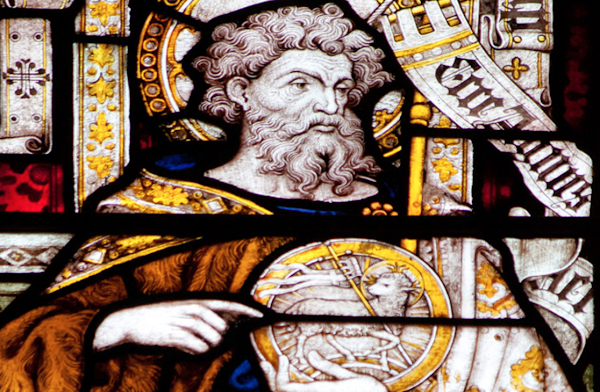
And so, after the Servant Jesus speaks in today’s first lesson, God the Father tells Jesus: “It is too small a thing [the original Hebrew carries the meaning of “too trifling a thing”] for you to be my servant to restore the tribes of Jacob and bring back those of Israel I have kept. [Jesus, in other words, wasn’t just going to save those in Israel who trusted in Him. The Father says:] I will also make you a light for the Gentiles, that my salvation may reach to the ends of the earth.” (Isaiah 49:6)
Jesus triumphs where we fail and then graciously offers to share His victory over sin and death with all who turn to Him in repentant faith! God the Father says of Jesus in our lesson: “To him who was despised and abhorred by the nation, to the servant of rulers: ‘Kings will see you and stand up, princes will see and bow down, because of the Lord, who is faithful, the Holy One of Israel, who has chosen you.” (Isaiah 49;7) John the Baptizer was right then when he said of Jesus, “Look, the Lamb of God, who takes away the sin of the world!.” (John 1:29)
Jesus died to set you free from sin and set you free to live in God’s loving embrace. The Servant has finished the work long ago foretold by the prophets. You are free from condemnation for all the ways you (and I) fall short, whether by worshiping ourselves or the things of the world, failing to honor parents or those in authority, murdering or committing adultery by thought, word, or deed, stealing, coveting, lying, or gossiping.
Isaiah 49:1-7
Ancient Israel failed. The descendants of Abraham and of Abraham’s grandson Jacob were given a mission by God. “I will bless you and make your name great, so that you will be a blessing,” God had told Abraham. (Genesis 12:2) Through Moses, He told Israel, “For this purpose I have raised you up, to show you my power, so that my name may be proclaimed in all the earth.” (Exodus 9:16) And the psalmist led worshipers in singing of God’s mission for ancient Israel: “May God be gracious to us and bless us and make his face shine on us—so that your ways may be known on earth, your salvation among all nations.” (Psalm 67:1-2)
Israel was to be a people saved, justified, declared innocent of sin, and thereby freed of the penalty of death, by God’s grace through faith in God and His promises. And Israel was to be a people who shared with all nations the good news of God’s grace for all who repent and believe in Him.
But Israel failed completely in its mission. Instead of putting its faith in the living God, Israel worshiped idols. Ancient Israel trusted in wealth, power, and status. Idolatry led, as it always does, to injustice. The people of Israel failed to love God with their whole hearts and failed to love their neighbors as they loved themselves. God repeatedly sent prophets to call the people to repentance and faith. Israel kept on as if God didn’t exist. So God allowed unrepentant ancient Israel to be conquered by foreign nations. Eventually, ancient Israel ceased to exist.
Despite the heartbreak of Israel’s faithfulness though, God hasn’t given up on saving the world–Jews or Gentiles–from sin, death, and eternal separation from Him. He still stands by the promise He made to the serpent, the devil, back in the garden of Eden: “I will put enmity between you and the woman, and between your offspring and hers; he will crush your head, and you will strike his heel.” (Genesis 3:15)
You remember how Israel got its name. One night, Jacob, Abraham’s grandson, wrestled with God. In the end, God gave Jacob the name, Israel. It means both Strives with God and God strives. The promises of God for the human race settled on Israel, Jacob, a sinner made a saint by grace through faith in God. Like you and me maybe, Jacob was always careening between striving against God and trusting God to strive for him. Jacob’s descendants were also called Israel. Eventually, they quit trusting in God to strive for them or to give them His promises.
Our first lesson for this morning, Isaiah 49:1-7, written about eight centuries before the birth of Jesus, shows us that God took the name of ancient Israel away from the descendants of Abraham. Instead, the true Israel, the One Who strives to bring the forgiveness of sins, the justification of sinners, and eternal life to all nations and peoples, is one man, a single Servant of God. Isaiah’s book has four passages known as Servant Songs, in which God points to this new Israel. The first of these songs comes in Isaiah 42, which begins, “Here is my servant, whom I uphold, my chosen one in whom I delight; I will put my Spirit on him, and he will bring justice to the nations.” (Isaiah 42:1) Centuries later, God the Father would signal that His Servant had come into the world. At the Jordan River, he would say of Jesus: “This is my Son, whom I love; with him I am well pleased.” Matthew 3:17)
The Servant Jesus speaks to us in today’s lesson from Isaiah: “Listen to me, you islands; hear this, you distant nations: Before I was born the Lord called me; from my mother’s womb he has spoken my name. He made my mouth like a sharpened sword, in the shadow of his hand he hid me; he made me into a polished arrow and concealed me in his quiver. He said to me, ‘You are my servant, Israel, in whom I will display my splendor.’”
Here, before His birth at Bethlehem, Jesus says that though He is God, He would be born to a woman. God the Father would make Jesus’ words like a sharpened sword, able to pierce all our pretense and pomposity, to cut away the sin that kills and give us life in His name. Jesus goes on to say that the “splendor,” or the power, majesty, and holiness of God is on full display in Himself. That, of course, turned out to be true. “No one has ever seen God,” the apostle John who knew Him would say of Jesus, “but the one and only Son, who is himself God…has made Him known.” (John 1:18)
But it isn’t by the power of His deity that Jesus does His saving work for us. To give us His salvation, Jesus had to bear our sins, suffer rejection, and go through death. He had to experience the same sense of futility and forgottenness we go through in our own lives. Jesus could only save us by immersing Himself in the depths of our sin, forsakenness, and death in order to pull us out of chaos and deliver us into the hands of our loving Father! Last week, feeling overwhelmed by bad news in the midst of good news, looking too much at the world and too little at Jesus, I asked Ann, “Do you think I’ve actually accomplished anything worthwhile in my life?” Have you been there? The truth is that we are all, in our own power and reason, like ancient Israel: failures. Friends, God understands. Jesus says in today’s Servant Song: “...I have labored in vain; I have spent my strength for nothing at all.” This is what Jesus felt on the cross. There He died for us, a Savior hated, despised, and defeated, crying out, “My God, my God, why have you forsaken me?” (Matthew 27:46)
But Jesus’ faithfulness to the Father and to us was not in vain! Because of the crucified and risen Jesus, the once-rejected, now vindicated Jesus, sin, death, and failure are the last words over the life of His Servant, or over the lives of those who trust in Him. Not the last words over your lives, friends! That’s why Jesus says to us today, “Yet what is due me is in the Lord’s hand, and my reward is with my God.” (Isaiah 49:4b) Jesus led the perfect life and offered it for your forgiveness! He died the death we deserve to give us the life with God we don’t deserve. Jesus is the light to all nations Israel never was and, without Him living in us, we never can be. Jesus succeeds where ancient Israel failed. Jesus succeeds where we fail, then hands the eternal benefits of His righteousness over to us as a free gift! This is why the apostle Paul says that God the Father gave Jesus, “the name that is above every name.” (Philippians 2:9)
And so, after the Servant Jesus speaks in today’s first lesson, God the Father tells Jesus: “It is too small a thing [the original Hebrew carries the meaning of “too trifling a thing”] for you to be my servant to restore the tribes of Jacob and bring back those of Israel I have kept. [Jesus, in other words, wasn’t just going to save those in Israel who trusted in Him. The Father says:] I will also make you a light for the Gentiles, that my salvation may reach to the ends of the earth.” (Isaiah 49:6)
Jesus triumphs where we fail and then graciously offers to share His victory over sin and death with all who turn to Him in repentant faith! God the Father says of Jesus in our lesson: “To him who was despised and abhorred by the nation, to the servant of rulers: ‘Kings will see you and stand up, princes will see and bow down, because of the Lord, who is faithful, the Holy One of Israel, who has chosen you.” (Isaiah 49;7) John the Baptizer was right then when he said of Jesus, “Look, the Lamb of God, who takes away the sin of the world!.” (John 1:29)
Jesus died to set you free from sin and set you free to live in God’s loving embrace. The Servant has finished the work long ago foretold by the prophets. You are free from condemnation for all the ways you (and I) fall short, whether by worshiping ourselves or the things of the world, failing to honor parents or those in authority, murdering or committing adultery by thought, word, or deed, stealing, coveting, lying, or gossiping.
Jesus, the Servant, has set us free from death, free from the unkind or indifferent condemnation that may come to you from a fallen world. Free of condemnation for both our self-congratulation and our self-reproach. We are free to live in the approval of God available to us only in Christ. Jesus’ words are still true: “For God so loved the world that he gave his one and only Son, that whoever believes in him shall not perish but have eternal life. For God did not send his Son into the world to condemn the world, but to save the world through him. Whoever believes in him is not condemned, but whoever does not believe stands condemned already because they have not believed in the name of God’s one and only Son.” (John 3:16-18)
Friends, repent and trust in Jesus the Servant each day and live in the freedom He has won for you, now and eternally. Amen

Sunday, January 08, 2023
So Why Did They Follow the Star?
[Below you'll find video of both of today's worship services with the people and friends of Living Water Lutheran Church in Centerville, Ohio, as well as the message for the day. Have a good week!]
Matthew 2:1-12
There’s a reason Christians sense themselves to be “living in the presence of overwhelming love.”
Back when I was an atheist, a Christian might have been able to convince me of God’s existence by one or both of several arguments.
They may have said, “A creation must have a Creator.” But even if I had agreed to that proposition, it would have left me far from a the belief in Jesus that assures believers they live in the presence of overwhelming love.
A Christian may have pointed to moral law, the sense of right and wrong that everyone seems to have, even if they don’t believe in God. “That sense of right and wrong came from Someone,” a Christian may have told me, “and that Someone is God.” But even if I’d been convinced of their argument, I still would have been far from knowing and believing in Jesus as Savior, King, God…my Savior, King, and God.
It took the Word of God about Christ in the words and the lives of people in the church to which Jesus once dragged me for me to become a believer in Jesus Christ. Even now, I can see them and picture the disciples of Jesus Who spoke God’s Word in such a way that caught my attention and gave me faith. There were the Dells, the Larsons, the Schneiders, and others. They were the “stars” God used to lead me to Jesus, to trusting in Him, to worshiping Him.
Through these ordinary saints who got knocked down by life and lifted up again by Jesus, who trusted Him for life even in the face of death, I came to trust Jesus too. They taught me in practice the truth of God’s Word which Jesus threw back at Satan when he tried to tempt Jesus: “Man shall not live on bread alone, but on every word that comes from the mouth of God.” (Matthew 4:4) Through them and their proclamation of God’s Word, I came to believe in Jesus. That’s no mystery, because as Paul says in Romans 10:17: “...faith comes from hearing the message, and the message is heard through the word about Christ.”
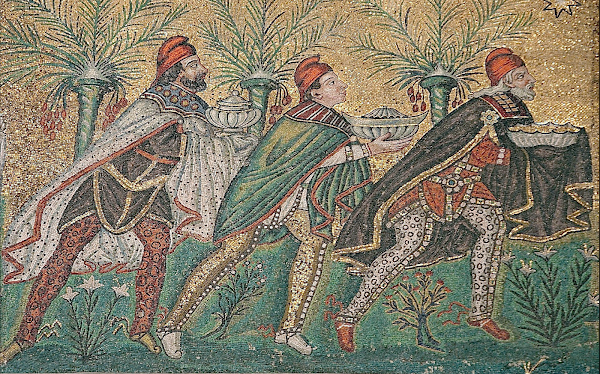
When the Magi heeded God’s Word to follow the star, they soon found themselves in the living presence of overwhelming love. They came into the presence of and worshiped Jesus, God in the flesh.
This is the God revealed to you in His Word and in the Word made visible in bread and wine and water.
He’s the God Who has died for your sin and was raised again by the Father so that as you, by the power of God’s Word, turn from sin each day and turn to Christ, you live knowing that You are loved deeply and overwhelmingly.
You know you have been set free from your slavery to sin and death, set free to live in God’s forgiveness and are saved to live forever with the God Who made you.
Whether because of our sin, the devil, or the evil in the world, it’s so easy for us, like the Magi, to get lost: to think we know better than God about right and wrong, to grow indifferent to God and His Word, to become spiritually proud or to wallow in self-condemnation.
But God’s Word about Jesus can set us straight and bring us into the presence of God and His love again and again. That can happen every time we listen to or read God’s Word or receive the Sacraments.
When we hear and are empowered by the Holy Spirit to trust God’s Word about Jesus our God and King, we can say with the psalmist, “He lifted me out of the slimy pit, out of the mud and mire; he set my feet on a rock and gave me a firm place to stand.” (Psalm 40:2)
Friends, it was God’s Word that led the Magi to Jesus and to faith in Him. And it’s God’s Word–in the Bible, in the words of Christians, in the Sacraments–that lead us to Jesus and to faith in Him.
You can trust in Him and in His Word! Amen

Matthew 2:1-12
We’re celebrating today as the Sunday of the Epiphany. Epiphany, of course, is a word we use for “AHA” moments, moments of clarity when we “get” things. The word comes to us from Greek and it literally means manifestation or appearance. During the Epiphany Season, we remember those times when Jesus most especially disclosed Himself to be God the Son and Savior of the world. January 6, Epiphany Day, annually remembers when the identity of the toddler Jesus as God and Savior was disclosed to Gentile visitors from the East and they worshiped Jesus. Because Epiphany didn’t fall on a Sunday, our Bible lessons this morning are the readings assigned for that day. Our Gospel lesson is Matthew 2:1-12.
This lesson, as I see it, raises three questions for us to consider.
First: What prompted the Magi to follow the star?
These were superstitious men. They didn’t believe in God. They made gods out of things they could see, touch, or manipulate. They were astrologers and mediums.
The Bible forbade such activities as idol worship. Leviticus 19:31, part of the “Holiness Code” that explains the Ten Commandments, says, “Do not turn to mediums or seek out spiritists, for you will be defiled by them. I am the Lord your God.”
And yet, to foreign idol-worshipers God gave a sign of the birth of the Messiah. That’s because it’s God’s pleasure and desire to make Himself and the grace by which He saves repentant sinners known to all people. God used a sign the Magi would notice in order to call them to worship Christ, the newborn King.
But would a star have been reason enough for them to set off on a journey to an unknown destination to see a King Who may have been indifferent to them? I doubt it.
The only thing that would have prompted them, I think, is that they must have heard or read the Word of God that promised the Messiah!
Scholars tell us that the Magi came from Babylon or Persia, lands that had once conquered God’s people and taken some of them to live in exile in their lands. One of the Judean exiles, Daniel, told the Babylonians and Persians in the fifth century BC about God’s promise of a Messiah, Who would make all things right between God and His fallen creation. “...the God of heaven will set up a kingdom that will never be destroyed,” God revealed through Daniel. “It will crush all [other] kingdoms and bring them to an end, but it will itself endure forever.” (Daniel 2:44)
After the star appeared to them, it was God’s Word, however deeply or well understood, that sent the Magi to follow the star to the Messiah.
Christians today wring their hands over the future of Christ’s Church. They ask, “What can we do?”
Our call is simply to receive and then to share the Word that out of His love for us, God sent the Son Jesus to die to take the condemnation for sin we deserve, then raised Him from the dead so that all who daily turn from sin and trust in Christ have the forgiveness of sin and everlasting life with God.
This Word gives more light to the world than any star ever could!
When John talked about Jesus entering our world, he called Jesus, the Light of the world and said, “The light shines in the darkness, and the darkness has not overcome it.” (John 1:5)
It was the Word they’d heard about a Messiah that compelled the wise men to follow the star. They wanted to see Jesus!
The second question is this: When did the Magi lose track of the star? We know they did lose track of it because Matthew tells us that following their visit to King Herod, “the star they had seen when it rose went ahead of them until it stopped over the place where the child was…” (Matthew 2:9) The star reappeared to the Magi!
Evidently, once they’d gotten close to Jerusalem, they reasoned they needn’t depend on the star sent by God any longer. If the Messiah was “the King of the Jews,” He had to be in the palace at Jerusalem, right? Or at least, the present King there would know where the newborn Messiah was. Or the priests and scribes who worked in the temple and synagogues would know.
So, like an overly-confident driver turning off his GPS in a strange place before he’s reached his destination, the Magi take their eyes off the star sent by God and take a detour. Instead of relying on the Word of God to reveal the Messiah to them, the Magi decide to rely on themselves to find Jesus.
We can do this in our own lives, relying on ourselves God’s Word. It’s always a mistake. “Trust in the Lord with all your heart,” Proverbs 3:5 reminds us, “and lean not on your own understanding.” Another passage in Proverbs tells us that, “There is a way that appears to be right, but in the end it leads to death.” (Proverbs 16:25)
If we’re to see Jesus in our daily lives or in eternity, we need to turn to where He promises to be: in the Word and in the Sacraments, in the fellowship of believers, in Christ’s Church.
The Magis’ visit hit King Herod and his hangers-on like a bomb! Herod loved power. He didn’t want a Messiah messing things up.
He pretended to be pleased though and called in the priests and teachers of the Law to learn, from God’s Word, where the child was to be born. The answer was in the Old Testament book of Micah: “But you, Bethlehem Ephrathah, though you are small among the clans of Judah, out of you will come for me one who will be ruler over Israel…” (Micah 5:2)
That leads then to our third question. When did the Magi finally find the Savior pointed to by the star? That’s simple: When they once more heard and trusted in the Word of God! That Word said the Baby would be born in Bethlehem. The passage from Micah led them to Jesus. When the star revealed Jesus’ location, they worshiped the Baby. Through God’s Word, they knew they were in the presence of God Himself!
There’s a writer and editor with whom I’ve interacted through my blog, Facebook, and Twitter for nearly twenty years now. She’s a self-described unbeliever, but deeply respectful of the belief she sees in some Christians. She wrote this past week that what she found unique about Jesus among all the religious figures of history is that He “is a living presence of overwhelming love” in the lives of those who believe in Him.
My heart fairly skipped a beat when I read those words! She sees that Jesus gives to believers what no other religion and no other philosophical system in the world can give: the assurance that, despite what we deserve because of our sin, we are loved by the God revealed in Jesus!
There’s a reason Christians sense themselves to be “living in the presence of overwhelming love.”
Back when I was an atheist, a Christian might have been able to convince me of God’s existence by one or both of several arguments.
They may have said, “A creation must have a Creator.” But even if I had agreed to that proposition, it would have left me far from a the belief in Jesus that assures believers they live in the presence of overwhelming love.
A Christian may have pointed to moral law, the sense of right and wrong that everyone seems to have, even if they don’t believe in God. “That sense of right and wrong came from Someone,” a Christian may have told me, “and that Someone is God.” But even if I’d been convinced of their argument, I still would have been far from knowing and believing in Jesus as Savior, King, God…my Savior, King, and God.
It took the Word of God about Christ in the words and the lives of people in the church to which Jesus once dragged me for me to become a believer in Jesus Christ. Even now, I can see them and picture the disciples of Jesus Who spoke God’s Word in such a way that caught my attention and gave me faith. There were the Dells, the Larsons, the Schneiders, and others. They were the “stars” God used to lead me to Jesus, to trusting in Him, to worshiping Him.
Through these ordinary saints who got knocked down by life and lifted up again by Jesus, who trusted Him for life even in the face of death, I came to trust Jesus too. They taught me in practice the truth of God’s Word which Jesus threw back at Satan when he tried to tempt Jesus: “Man shall not live on bread alone, but on every word that comes from the mouth of God.” (Matthew 4:4) Through them and their proclamation of God’s Word, I came to believe in Jesus. That’s no mystery, because as Paul says in Romans 10:17: “...faith comes from hearing the message, and the message is heard through the word about Christ.”
When the Magi heeded God’s Word to follow the star, they soon found themselves in the living presence of overwhelming love. They came into the presence of and worshiped Jesus, God in the flesh.
This is the God revealed to you in His Word and in the Word made visible in bread and wine and water.
He’s the God Who has died for your sin and was raised again by the Father so that as you, by the power of God’s Word, turn from sin each day and turn to Christ, you live knowing that You are loved deeply and overwhelmingly.
You know you have been set free from your slavery to sin and death, set free to live in God’s forgiveness and are saved to live forever with the God Who made you.
Whether because of our sin, the devil, or the evil in the world, it’s so easy for us, like the Magi, to get lost: to think we know better than God about right and wrong, to grow indifferent to God and His Word, to become spiritually proud or to wallow in self-condemnation.
But God’s Word about Jesus can set us straight and bring us into the presence of God and His love again and again. That can happen every time we listen to or read God’s Word or receive the Sacraments.
When we hear and are empowered by the Holy Spirit to trust God’s Word about Jesus our God and King, we can say with the psalmist, “He lifted me out of the slimy pit, out of the mud and mire; he set my feet on a rock and gave me a firm place to stand.” (Psalm 40:2)
Friends, it was God’s Word that led the Magi to Jesus and to faith in Him. And it’s God’s Word–in the Bible, in the words of Christians, in the Sacraments–that lead us to Jesus and to faith in Him.
You can trust in Him and in His Word! Amen
Subscribe to:
Posts (Atom)