That's the topic of historian George C. Edwards III's blog post over at History News Network.
Looking at presidents noted for their persuasive powers and legislative achievements, Edwards concludes that "the power to persuade" may be a bit overstated. I think that he's right.
Presidents (and other political actors) can persuade only as much as the moment allows. They can exploit and they can nudge, but they can't create consensus out of whole cloth. Woodrow Wilson and Jimmy Carter, for example, both learned this.
Abraham Lincoln admitted to having been controlled by events. But, in spite of the seeming fatalism of that admission, Lincoln is remembered, rightly, as a great and decisive president. The point is that he understood his moment.
Even without achieving their most cherished of personal goals--as was the case with Ronald Reagan, presidents can achieve great things if they have the vision not to see ahead, but to see their worlds as they are during their times in office.
The bottom line for me is this: President Obama's health care speech tomorrow night may clarify some things; but it will have little to do with what I expect will be the ultimate outcome, congressional passage of a new health care plan. Passage will happen because, the polling suggests, Americans are ready for some of the individual components of the plan. It's a ripe historical moment and Obama seems to understand that.
Showing posts with label US President. Show all posts
Showing posts with label US President. Show all posts
Tuesday, September 08, 2009

Tuesday, February 17, 2009
Rating Presidents: Not a "Parlor Game"
Historian Rick Shenkman has a point. The rating of presidents--a recent survey among historians called Abraham Lincoln our greatest president--probably doesn't even rise to the level of a parlor game. Parlor games, he says, have rules. But both historians and the public tend to rate presidents by highly movable goal posts.
I myself have been guilty of playing this game, having several years ago named my choices for the country's best presidents. (I remember that at the time, the whole country breathlessly awaited my decision.)
But I now think that, while I had good reason for picking the presidents I had on my list--my top four were Washington, Lincoln, FDR, and Eisenhower--it probably is silly to put together such ratings. The challenges facing Barack Obama, in spite of the overused rhetoric to the contrary, are not the same as those that faced Roosevelt. (The current set of presidential challenges are both less severe and more complicated than those Roosevelt dealt with, it seems.) Comparisons are tough and usually, subjective.
It's probably safe to say that Grover Cleveland was a better president than Franklin Pierce, though. (In his defense, Pierce would no doubt win any presidential tippling contest.) But generally, I suppose, it's always foolish to try comparing apples and oranges--or, Washingtons and Kennedys. Or Madisons and Wilsons.
At least that's what I think this week.
I myself have been guilty of playing this game, having several years ago named my choices for the country's best presidents. (I remember that at the time, the whole country breathlessly awaited my decision.)
But I now think that, while I had good reason for picking the presidents I had on my list--my top four were Washington, Lincoln, FDR, and Eisenhower--it probably is silly to put together such ratings. The challenges facing Barack Obama, in spite of the overused rhetoric to the contrary, are not the same as those that faced Roosevelt. (The current set of presidential challenges are both less severe and more complicated than those Roosevelt dealt with, it seems.) Comparisons are tough and usually, subjective.
It's probably safe to say that Grover Cleveland was a better president than Franklin Pierce, though. (In his defense, Pierce would no doubt win any presidential tippling contest.) But generally, I suppose, it's always foolish to try comparing apples and oranges--or, Washingtons and Kennedys. Or Madisons and Wilsons.
At least that's what I think this week.
Monday, February 18, 2008
Some Presidents' Day Readings
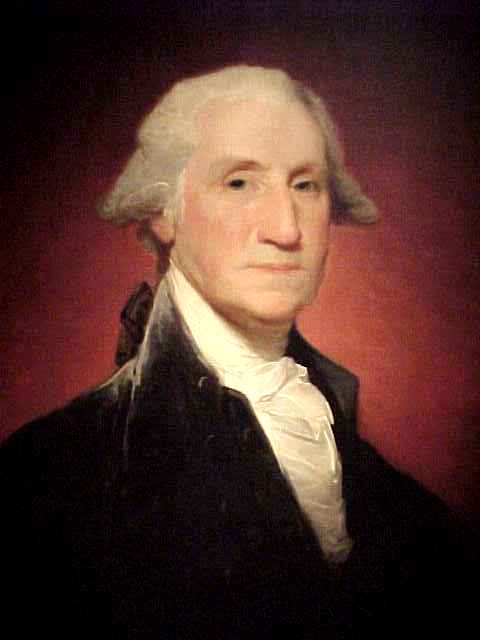 Here is a sampling of some of the posts on Presidents and the presidency that have appeared here at Better Living. Happy Reading!
A New Approach to Naming Our Greatest Presidents
The Other Adams
Note for 2008: Dump or Change Presidential Debates
Veterans' Day Reading
Carter's 'Living Faith'
His Excellency, Samuel Betances, and the Promise of America
Bush Takes Oath: Here Are Consequences, Unintended and Otherwise
My Picks for the Four Best US Presidents
The Rest of My Top Ten
The Book I Always Meant to Write
TR: Leadership and the Call to Sacrifice
Garry Wills' Account of James Madison's Presidency
Our Visit to the New Lincoln Museum in Springfield, Illinois
My Four Favorite Lincoln Books
I Like the US Way of Electing Presidents Better
The 'Curse' of Second Presidential Terms
Reflections on JFK's Assassination
Abraham Lincoln Really Was Great
'1776' Underscores Washington's Greatness
Image Making and the Crapshoot of American Democracy
The Dangers of Sanctimony
Schlesinger, Lincoln, and Preventive War
When Presidents Theologize
Would JFK Have Won in 1964?
Gerald Ford: Our Insurance Policy
Clinton and 'Experience'
To Be Normal May Mean To Be Great
Presidential Campaigns Are Too Long
The Grayson Letters and Presidential Health
Interpreting Lincoln's Second Inaugural 'Sermon' (seven parts)
Friday, September 07, 2007
Lying in State? Or Lying in Repose?
Today's official blog of Ohio's Republican Party announced funeral plans for Representative Paul Gilmor, who died several days ago. Included was an itinerary, which read partly:
Tuesday, September 11, 2007That term, lying in state, didn't look right to me. I was fairly certain that only the body of a President or that of a deceased person deginated for the honor by the sitting President could truly be said to be said to be lying in state.
The Ohio Statehouse9:00 a.m. – 11:00 a.m.
Columbus, Ohio 43215
Congressman Gillmor lies in state in the Statehouse Rotunda
This, I believed, had to do with the fact that, in addition to being the head of the government, the President is also the head of state. As head of government, the President's role is like that of prime ministers in other countries. But, as head of state, our Presidents, like Queen Elizabeth in England, are also symbols of our national sovereignty. (Unlike the queen, of course, the President is an elected and temporary symbol of the American state.)
Because of all of this, I thought it better to speak of Mr. Gillmor's body lying in repose.
A Wikipedia article on state funerals seems to buttress my view of things, when it states:
In the United States, state funerals are granted by law to Presidents-elect, sitting and former, and may be granted to other individuals as designated by the sitting president.The author of this piece could be misinformed, of course. Wikipedia isn't authoritative, after all.
I may or may not have been right in my assumptions about the two terms, lying in state and lying in repose. A 2005 article about the distinctions, appearing in Slate, has both clarified and confused my thinking. Written shortly after the funeral for the late Chief Justice William Rehnquist, the article notes:
Visitors filed past the body of U.S. Chief Justice William Rehnquist in Washington this week.
On Tuesday, both the president and the first lady viewed the casket, which sat atop the Lincoln catafalque in the Great Hall of the Supreme Court. Though some news organizations described Rehnquist as "lying in state," most called it "lying in repose." Is there a difference?But to say that a body is only lying in state if it's in the US Capitol shoots my definition to pieces. The Capitol, after all, is the seat of the legislative branch, not the executive. But even with this definition, one couldn't speak of Representative Gilmor's body reposed at the State House in Columbus as lying in state.
Only in Washington. Funeral directors throughout the country use the phrases interchangeably: A body that's put out for public viewing could be described as lying "in state" or "in repose." When Pope John Paul II passed away in April, the presentation of his body at St. Peter's Basilica was described both ways in the news media. But when you're talking about official U.S. government funerals, "lying in state" has a special meaning: You're only lying in state in the formal sense when your body is in the Rotunda of the Capitol Building in Washington.
The Slate article goes on to assert:
The distinction between "repose" and "state" got its first widespread attention during the state funeral of Ronald Reagan last year. Reagan's body, like those of many presidents before him, was put out for viewing in multiple places. First, his remains spent two days on display at the Reagan Library in California. Then they were sent across the country to the Capitol Building. (Only 10 presidents have lain in state; many others have lain in repose at the White House.) Those involved with the ceremony made sure the media had the terms right: Reagan was "in repose" on the West Coast and "in state" in Washington.This came as news to me. Speaking personally, I didn't remember anything having been made of the "in state" and "in repose" distinction during the Reagan funeral. My first memories of being educated on the supposed differences between the two terms goes back to 1963 and to arrangements surrounding the death of President Kennedy.
The long and short of it is that the Slate piece asserts that there really is no difference between the two terms, putting a lot of stock in the fact that funeral directors use them interchangeably. This also came as news to me. As a pastor, I've done many funerals since 1984. Funeral directors and others I know speak of the time when caskets--opened or closed--are on display and people can pay their respects not as lying in state or lying in repose, but as visitation. (Some laypeople still use the increasingly passe, layout, to describe a visitation.)
But, even accepting the Slate piece's assertion that funeral directors are behind what official Washington regards as a misuse of the term, lying in state, should their usage now be deemed authoritative?
My guess is that the widespread adoption of the term "lying in state," applied to pop stars like James Brown and Supreme Court justices like Rehnquist, goes back to my generation's experience of John F. Kennedy's death. For days, a nation with only three television networks simulcasting the memorials, the funeral, and the burial, was riveted by the tragedy. We saw the President's casket lying in state in the Capitol. The term came to refer to the body of any person lying in a casket in a public place where people could pay their respects.

Language and terminology get misused all the time. And, while common usage often gets its way and changes the ways words and phrases are defined by dictionary editors, it doesn't mean that those who insist that some terms are intended to mean specific things are always wrong.
It seems to me that to speak of our late Presidents' bodies lying in state, whether in the Capitol, the White House, or elsewhere, is a way of acknowledging our unique Constitutional system and a great opportunity to provide civics lessons to Americans.

[For more, see here.]
[THANKS TO: Joe Gandelman of The Moderate Voice for linking to this post.]
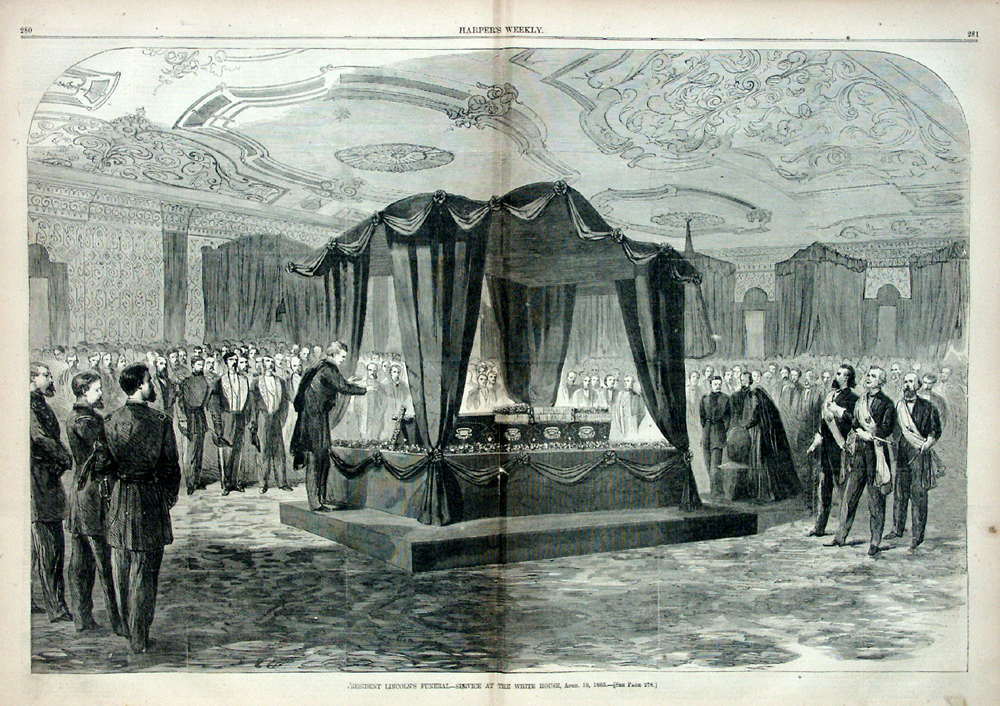
[Top image: A representation of President Abraham Lincoln's body lying in state in the White House Green Room in 1865. Lower image: A photograph of President John F. Kennedy's body lying in state in the White House East Room in 1963. Jacqueline Kennedy, JFK's widow, pored over the records of the Lincoln funeral and saw to it that her husband's funeral followed the precedents established then. You can click on the links to enlarge them.]
Tuesday, August 14, 2007
Preachers and Politics: Billy Graham as a Case Study
 A recent issue of TIME magazine excerpts a book that looks at evangelist Billy Graham's relationships with eleven US Presidents--from Harry Truman to George W. Bush.
But it does more than recount incidents from Graham's experience as presidential pastor.
Senator and former First Lady Hillary Clinton, one of the collection of one-time White House occupants who Graham knows best, told the authors that Graham is also a "political junkie." "He loved elections because he knew that you had to tell a story, you had to connect with people--all the things we talk about in politics," she says.
The President to whom Graham, a lifelong registered Democrat, was personally closest was Lyndon Johnson. As Graham recounts in his autobiography, his counsel often went way beyond the spiritual. Graham offered LBJ advice on the President's War on Poverty program and in fact, seriously weighed an offer to leave his evangelistic ministry to become Johnson's anti-poverty czar.
Graham is probably most well-known for his relationship with Richard Nixon, to whom he imparted advice and to whom he sometimes gave a prominent place at his crusades.
"But," Gibbs and Duffy write, "on the heels of Graham's crushing experience with the Nixon Administration, the evangelist recalibrated his relationship with the White House and kept his distance."
As some evangelical Christians started what became known as the Moral Majority or the Religious Right, Graham said:
Evangelicals can't be closely identified with any particular party or person. We have to stand in the middle, to preach to all the people, right and left. I haven't been faithful to my own advice in the past. I will in the future.I identify with Billy Graham. I'm a political junkie and I've likened the excitement I feel on election nights to what I felt as a kid on Christmas Eve. I was a Social Studies major and to this day, I love reading biographies and histories recounting the political leadership and maneuvering of pols. I keep up with current events. In a former life, I ran a congressional campaign and worked for the State House of Representatives in Columbus.
Three years ago, I made what I recently have described as one of my biggest mistakes as a pastor. Concerned about public school funding in Ohio, I ran for the State House of Representatives myself. The congregation I serve as pastor was okay with my making the bid. I'm sure that I could have juggled my schedule to have continued full time as a pastor and still served in the House.
But, in all honesty, I'm glad that I finished fourth in a five-way primary contest. Had I been elected, I might well have forfeited my ability to fulfill my call as a preacher of Jesus Christ's Gospel. As Graham puts it, we preachers are to reach out "to all the people, right and left." And everywhere else on the political spectrum.
I encourage Christians to be involved in the political process. To inform themselves about issues and candidates. To pray about what's right. To get involved in political campaigns. To vote.
But it's almost never the job of a pastor or of the Church as an institution to express a political preference.
What does God think about the War in Iraq? Or immigration reform? Or US terrorism policy? Or capital gains taxes? I don't know for sure and I don't know anyone else who does.
My job as a preacher is to invite people to turn from sin and follow Jesus. If I mix my political preferences in with my proclamation, it confuses people about the true content of God's message for us and, most dangerously, may unnecessarily alienate some people from Christ. Preachers who do politics make people feel excluded from Christ.
Some people will feel alienated from Christ and His Gospel anyway. The Gospel we preachers share isn't all happy talk. "When Christ calls a man, He bids him come and die," Lutheran theologian Dietrich Bonhoeffer wrote. The "old Adam" and the "old Eve," our inborn sinful selves whose prime impulse is to look out for ourselves, others be damned, must die.
A big part of following Jesus thus entails living in what Martin Luther called "daily repentance and renewal," bringing the old self and our sins to God, asking for cleansing, and the power to live this day in love for God and love for others.
All of this entails surrender, something that any audience a preacher might address will find difficult to swallow anyway. The preacher who then adds things to her or his proclamation, things like, "Oh yeah, to be right with God, you also have to vote this way or support this candidate," is adding an unnecessary obstacle to people having a relationship with God. They're diluting and changing the Gospel message they were called to proclaim. In that sense, they become no better than your friendly neighborhood peddler of cults.
Preachers should not, except in the most extreme circumstances, express political preferences. We have bigger fish to catch. Our focus should be to act as mouthpieces for Jesus' call that we die to sin, so that we can rise to live with God forever.
But there will be times when, in the political realm, the conflict between complete evil and good is so clear that a preacher will have to speak out. That was what happened to Bonhoeffer in Nazi Germany. Adolf Hitler's hatred was so obvious, so contrary to Christ's Gospel of love, that it was clear that every Christian preacher and leader should oppose it.
Few found the courage to do so. Bonhoeffer did. He joined a plot to overthrow Hitler and in the waning days of World War Two, after an extensive period of imprisonment, was executed.
Only those of the most extreme politics would suggest that we have faced a Hitler in US politics in recent years. I remember hearing a "Christian preacher" during the 1996 election cycle, saying that if Bill Clinton were re-elected to the presidency, it would be the last free election we ever had in America. We've had several since.
And today, people concerned about the expansive interpretation of executive power followed by the Bush Administration, compare the current president to Hitler. But it appears that our elective process is continuing to unfold and that, if the polls are credible, the 2008 presidential election race is the Democrats to lose.
Christians in this country and people in the country at large don't need to hear about the political preferences of preachers. Inquiring minds could care less.
What they really need to know from us is..
that God is for them when life doesn't make sense,They need to know that God wants to be with them now and forever.
that God wants to help them make the most of their lives,
that God can forgive the sins that cause them shame, and
that they can be made new.
Like Graham, I haven't always followed my own advice, although I've never expressed a political opinion from the pulpit. (Not that I know of, anyway.)
But that won't prevent me from befriending politicians, either. Whether the general public knows it or not, politicians are people too.
There's one local pol with whom I have regular contact. A few months ago, we had lunch together. I asked him if he'd like to pray before we dug into our Chipotle burritos. He said yes. I thanked God for our food and our time together and then I asked God to bless and guide my friend in his important work.
After we'd said, "Amen," I looked across the table and saw that his eyes glistened with tears. As he dabbed his eyes with his napkin he said, "I just can't get used to it. I'm always so moved and humbled when people pray for me. Thank you."
And when all is said and done, praying for politicians of both parties is one of the best things we can do for them, for our flocks, for our country, and for the world. Through prayer, we can ask God to go to leaders and counsel them. As the great Frank Laubach wrote years ago, "We can do more for the world with prayer than if we were to walk into Whitehall, London, or the Kremlin in Moscow, and tell those men [sic] what to do---far more! If they listened to our suggestions, we would probably be more or less wrong [emphasis mine]. But what God tells them, when they listen to Him, must be right. It is infinitely better for world leaders to listen to God than for them to listen to us."
Preachers would do well to emulate the course that has been Billy Graham's since the humiliation he experienced on learning that Richard Nixon, the President he most publicly embraced, had been so decidedly un-Christian in the conduct of his presidency. He's befriended pols and he's prayed for them. But he's decoded to act only as their pastor and preacher, not their counselor, confidante, or advocate.
Gibbs and Duffy conclude their TIME magazine excerpt:
Graham recalled these [presidential] friendships with the humility that comes with experience. "As I look back, I feel even more unqualified--to think I sat there and talked to the President of the United States," he said. "I can only explain that God was planning it in some ways, but I didn't understand it." He doesn't expect to make it back to the White House anytime soon, but he watches out for its occupant the best way he knows how. He does daily devotions, and whoever sits in the Oval Office will always have a place in his prayers.[Also see here.]
[THANKS TO: Article 6 Blog for linking to this post. Written by John Schroeder, also of Blogotional, the piece also takes a prominent fundamentalist theologian to task for his views on these matters.]
Tuesday, July 31, 2007
Michael Beschloss' 'Presidential Courage'
 Michael Beschloss' latest book, Presidential Courage: Brave Leaders and How They Changed America, 1789-1989, is a worthwhile read.
In it, Beschloss chronicles the fortitude demonstrated by George Washington, John Adams, Andrew Jackson, Abraham Lincoln, Theodore Roosevelt, Franklin Roosevelt, Harry Truman, John Kennedy, and Ronald Reagan in specific circumstances of their presidential tenures.
In each instance, the Presidents profiled risked their political futures and legacies, pushing policies they felt would help the country, in spite of the fierce opposition they knew they had to withstand.
In several instances, Beschloss portrays chief executives of both deep principle and great political wiliness, possessing that rare instinct for striking politically at just the right time.
That's certainly true of Washington's push for the Jay Treaty with Great Britain, an agreement that many of his contemporaries portrayed as a capitulation to the one-time Mother Country. But Washington knew that the accord would give the US the breathing room needed to develop as a nation, unencumbered by conflict with great European powers. Washington endured withering criticism and unlike his unlucky successor, John Adams, who was turned out of office for his efforts to keep the young republic out of war, emerged as beloved as he had been before the Jay controversy.
Washington, described elsewhere by historian Garry Wills as the greatest political figure in world history, may have had his twentieth-century counterpart in Franklin Roosevelt. FDR wasn't nearly as principled or personally ethical as Washington. Yet, this man who was both a charming extrovert and a loner who kept his own counsel, was able to negotiate the prevailing currents of American isolationism in order to prepare his country for war. Roosevelt, unlike most Americans, understood early that the territorial ambitions of Nazi Germany, Imperial Japan, and Fascist Italy would inevitably drag the United States into a world war, whether as arms supplier or combatant. As much as we laud vision in leaders, vision becomes problematic when the leader forsees unpleasant events, like world wars. One of my seminary professors used to tell me that a great communicator is one who can meet those she or he leads where they are and recognizing the variance between their positions, persuades people to gradually see things his or her way. Roosevelt was a great communicator and a great leader who, in the face of great peril, demonstrated presidential courage.
Most of the presidents profiled by Beschloss had certain rock-bottom principles that acted as compasses for their actions, irrespective of the possible political consequences. One exception might be John Kennedy, who finally saw the need for a civil rights initiative--stalled in Congress at the time of his assassination on November 22, 1963--but who was never enthusiastic about it. In fact, I question Kennedy's inclusion in this book.
Beschloss' book definitely aspires to be a popular history, in the best sense of that word. We need more such books, written to instruct interested adults, because, as Kennedy himself once wrote, "A knowledge of the past prepares us for the crises of the present and the challenge of the future."
Beschloss writes economically. Short sentences. Short paragraphs. But each paragraph is apt to reflect a number of original source materials. He may not have an advanced degree in History and he may be viewed somewhat disdainfully by historians who see his failure to talk about the history of ideas as a deficiency, but I like Beschloss. While prevailing ideas, the metaphysics of a given time, are important in looking at historical events, people--as individuals and in groups--make or respond to events. History is really the story of the human race. In this presidential version of Profiles in Courage, a book in which Kennedy wrote about courageous actions taken by members of the United States Senate, we see how some of our better presidents applied courage to their work.
With the 2008 election upon us, voters might very well ask, "When have the people seeking our votes this year demonstrated courage? When have they told constituents, friends, co-workers, or co-partisans things those folks might not have wanted to hear? When have they demonstrated that peculiar blend of idealism and wiliness every great politician...every great President...must have to accomplish great things?"
Occasionally, Beschloss gives attention to the religious views of the Presidents he studies, making me think that he may be planning on writing the very book I intend to write, one on the faith lives of our Chief Executives and how faith impacted their decision-making. In an era in which faith has become controversial, this would be a welcome and helpful book, I think.
Until Beschloss (or I) produce such a book, I recommend Presidential Courage.
[For related reading, see here, here, here and here.]
[THANKS TO: Joe Gandelman of The Moderate Voice for linking to this post.]
Wednesday, March 28, 2007
Legislation to 'Fix' Presidential Voting Process Would Make Things Worse
[Alert: What follows is just my opinion. I don't claim that, because I'm a pastor, any of my political opinions are somehow sanctified, touched by God's imprimatur. My opinions are just that, my opinions.]
Maryland legislators and evidently, its governor, are tired of seeing their state overlooked in presidential election years. They say that their ten electoral votes make them less important in electing Presidents than large states like California and New York or perennial swing states like Ohio and Florida.
But Maryland's legislature and governor appear poised to approve a plan which, in spite of their intentions, will, if adopted by other states, likely give their state even less say in who becomes President than they have now.
The proposal is being pushed nationally by an organization concerned that under the Constitution and its establishment of the electoral college, four presidential elections in all of US history have produced presidents who didn't receive popular vote majorities or pluralities. They want to have a popularly elected President, but daunted by the process involved in amending the Constitution, they've floated a bizarre proposal that's contained on the Maryland legislation.
Here's how The Washington Post explained it today:
But the bigger problem with the proposal was raised by legislative opponents of the proposal. Says The Post story:
In establishing the Electoral College, the Framers attempted to ensure that powerful larger states--like Virginia, New York, and Pennsylvania--didn't run roughshod over smaller ones. As in so many other places in the Constitution, they sought to prevent majorities from overwhelming minorities. As Christopher Collier and James Lincoln Collier write:
Maryland isn't ignored because its Electoral College delegation is paltry. The state's ten votes equal those of Wisconsin, Minnesota, and Arizona. It has more votes than Maine, New Hampshire, Vermont, Connecticut, Rhode Island, Delaware, West Virginia, South Carolina, Alabama, Mississippi, Lousiana, Arkansas, Kentucky, Iowa, Kansas, Oklahoma, Nebraska, North Dakota, South Dakota, Montana, Wyoming, Colorado, New Mexico, Utah, Nevada, Idaho, Oregon, Alaska, Hawaii, and the District of Columbia. Only eighteen states have more electoral votes than Maryland!
The real reason a state like Maryland might get ignored by presidential nominees is its predictability, not the size of its Electoral College delegation! The state's perennial habit of voting for Democrats for President means that Republicans skip the state and Democrats take it for granted.
Lest Marylanders view this assertion skeptically, consider California. Presumably, if the Republicans nominate Giuliani in 2008, that state would be in play for his party for the first time in many a presidential election cycle. In recent years, California has been regarded as being so likely to go for the Democratic candidate that Republicans have made little effort to win over voters there. This, in a state with 55 electoral votes, 20.3% of the total needed to get elected President! Predictability prevents Republicans from pitching their appeals to Californians and causes Democrats to take it for granted. If that's true for California, you can bet it's true for Maryland.
Proposals for converting to the popular election of Presidents may have merit. But since 1789, the Electoral College has been a hedge against disregarding the interests and concerns of smaller states (and communities). Before Maryland and other states throw away the College, they might want to consider what else they might be throwing away!
[Cross-posted at RedBlueChristian.com.]
[THANKS TO: Joe Gandelman of The Moderate Voice for linking to this post.]
Maryland legislators and evidently, its governor, are tired of seeing their state overlooked in presidential election years. They say that their ten electoral votes make them less important in electing Presidents than large states like California and New York or perennial swing states like Ohio and Florida.
But Maryland's legislature and governor appear poised to approve a plan which, in spite of their intentions, will, if adopted by other states, likely give their state even less say in who becomes President than they have now.
The proposal is being pushed nationally by an organization concerned that under the Constitution and its establishment of the electoral college, four presidential elections in all of US history have produced presidents who didn't receive popular vote majorities or pluralities. They want to have a popularly elected President, but daunted by the process involved in amending the Constitution, they've floated a bizarre proposal that's contained on the Maryland legislation.
Here's how The Washington Post explained it today:
The bill, which the [State] Senate approved 29 to 17 yesterday, would award the state's 10 electoral votes to the presidential candidate who wins the most votes nationwide -- not statewide.It's easy to see a huge problem with this proposal right off the bat. Let's say that in 2008, Maryland voters cast 65% of their ballots for Hillary Clinton, the presumptive Democratic nominee. But assume that the overall national vote total is closer: Rudy Giuliani beats Clinton by a whisker, 50.1% to 49.9%. Wouldn't Maryland voters, who made their sentiments overwhelmingly known, feel disenfranchised when they see their state's electoral votes give the win to Rudy?
But the bigger problem with the proposal was raised by legislative opponents of the proposal. Says The Post story:
Sen. Michael G. Lenett (D-Montgomery) ...said the system proposed could just switch the target for candidates from closely divided states to large cities with many voters -- a scenario that would not necessarily empower Maryland.Lennett is right. Under the Maryland bill, which wouldn't go into effect until states with a collective majority--270 votes--in the Electoral College adopted the same system, Presidential campaigns would likely be focused on vote-rich metropolitan areas only: New York, Los Angeles, Chicago, Philadelphia, Houston, Atlanta, and a handful of other places. Lost in the shuffle would be rural, small town, and suburban areas of all sorts.
In establishing the Electoral College, the Framers attempted to ensure that powerful larger states--like Virginia, New York, and Pennsylvania--didn't run roughshod over smaller ones. As in so many other places in the Constitution, they sought to prevent majorities from overwhelming minorities. As Christopher Collier and James Lincoln Collier write:
The system was worked out very carefully to strike a balance between the interests of big and small states. In a direct popular election the big states' votes would drown the votes of the small states, a situation the small states could hardly permit; but the big states could not allow the small states to have a disproportionate say in electing the chief executive...Contrary to causing states like Maryland to have less importance in choosing our Presidents, the Electoral College makes it possible for it and other states more say in the process than they would in a process decided solely on the basis of the popular vote.
Maryland isn't ignored because its Electoral College delegation is paltry. The state's ten votes equal those of Wisconsin, Minnesota, and Arizona. It has more votes than Maine, New Hampshire, Vermont, Connecticut, Rhode Island, Delaware, West Virginia, South Carolina, Alabama, Mississippi, Lousiana, Arkansas, Kentucky, Iowa, Kansas, Oklahoma, Nebraska, North Dakota, South Dakota, Montana, Wyoming, Colorado, New Mexico, Utah, Nevada, Idaho, Oregon, Alaska, Hawaii, and the District of Columbia. Only eighteen states have more electoral votes than Maryland!
The real reason a state like Maryland might get ignored by presidential nominees is its predictability, not the size of its Electoral College delegation! The state's perennial habit of voting for Democrats for President means that Republicans skip the state and Democrats take it for granted.
Lest Marylanders view this assertion skeptically, consider California. Presumably, if the Republicans nominate Giuliani in 2008, that state would be in play for his party for the first time in many a presidential election cycle. In recent years, California has been regarded as being so likely to go for the Democratic candidate that Republicans have made little effort to win over voters there. This, in a state with 55 electoral votes, 20.3% of the total needed to get elected President! Predictability prevents Republicans from pitching their appeals to Californians and causes Democrats to take it for granted. If that's true for California, you can bet it's true for Maryland.
Proposals for converting to the popular election of Presidents may have merit. But since 1789, the Electoral College has been a hedge against disregarding the interests and concerns of smaller states (and communities). Before Maryland and other states throw away the College, they might want to consider what else they might be throwing away!
[Cross-posted at RedBlueChristian.com.]
[THANKS TO: Joe Gandelman of The Moderate Voice for linking to this post.]
Subscribe to:
Posts (Atom)