Sunday, September 21, 2025

You Can Trust in Christ Now

 [This is a sermon for September 28, 2025, the Sixteenth Sunday after Pentecost. Churches without pastors, pastors whose other pressing duties have prevented them from preparing sermons, Bible study leaders, and others are free to use it. Just let me know if you do.]


Luke 16:19-31
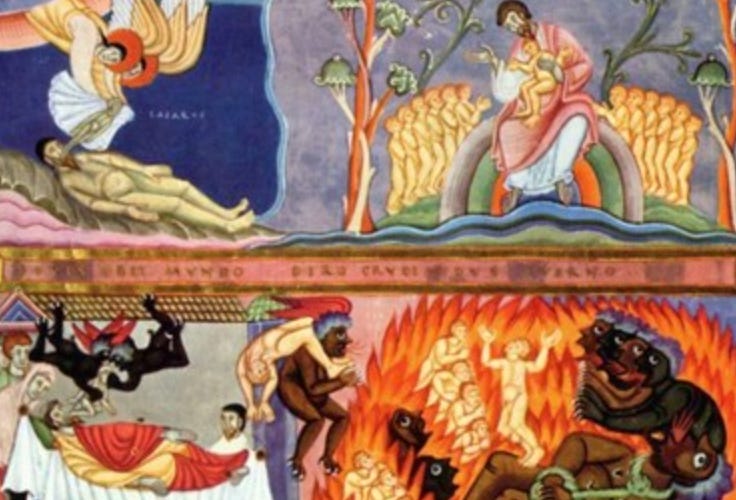
The story or parable that Jesus tells in today’s gospel lesson is well known to you. As Jesus tells it, there was a rich man, “who was dressed in purple and fine linen and lived in luxury every day.” (Luke 16:19)

From what Jesus says here, we know that the rich man wasn’t just rich; he was fabulously wealthy. Only the wealthy or kings could afford clothing made of linen or dyed purple. The rich man also lived in luxury, meaning that he didn’t just feast at weddings or holidays, but all the time. He wasn’t satisfied with what Jesus calls, “our daily bread.” This guy’s motto in life was, “More!”

Jesus then tells us about another character in the story: “At [the rich man’s] gate was laid a beggar named Lazarus, covered with sores and longing to eat what fell from the rich man’s table. Even the dogs came and licked his sores.” (Luke 16:20-21)

Lazarus, not to be confused with Jesus’ friend of the same name, is helpless. When dogs lick his open sores, he’s too weak to fend them off. And he can’t even place himself at the rich man’s gate. Someone else has to do that for him.

Maybe someone set Lazarus there, hoping the rich man would take pity on Lazarus. If that had been the hope, it was an unwarranted one. Lazarus lays at the rich man’s gate until he dies. The rich man dies at the same time. But when Lazarus dies, Jesus says, “the angels carried him to Abraham’s side,” or, more literally, Abraham’s bosom. Lazarus is in a place of peace and contentment to which those who trust in the God of Abraham, the God the whole world can now know in the crucified and risen Jesus, go.

Of the rich man, Jesus says he “died and was buried.” (Luke 16:22) But Jesus tells us that, unlike Lazarus, the rich man went to “Hades [hell], where he was in torment…” (Luke 16:23)

Let’s be clear. The rich man isn’t damned to an eternity of burning in unquenchable fire because he was rich in this world. Rather, he had condemned himself by putting his trust in the things of this world rather than in God. The Old Testament patriarch Abraham was, you’ll remember, wealthy. But Genesis 15:6 tells us that despite his sins and faults, about which the Bible was quite open, Abraham “believed the Lord, and [God] credited it to [Abraham] as righteousness.” Abraham was saved from sin and death by God’s grace through faith in the God you and I now meet in Jesus. The rich man in Jesus’ story didn’t trust in God.

As Jesus tells it, the rich man can see Lazarus, the poor man he once ignored, in the bosom of Abraham, safe in that place with God that all who believe in Him go to await their resurrections on the day Jesus returns to the earth. “Father Abraham,” the rich man cries, “have pity on me and send Lazarus to dip the tip of his finger in water and cool my tongue, because I am in agony in this fire.” (Luke 16:24)

The rich man calls Abraham “father” because he, a Jew, is genetically descended from Abraham. But as Jesus once told Jewish believers who were turning their backs on Him: “If you were Abraham’s children,...then you would do what Abraham did…” (John 8:39). In other words, if they were like Abraham, they would, like Abraham, trust in the God incarnate Who stood before them.

Abraham is tender, yet firm, in his reply to the rich man. “Son, remember that in your lifetime you received your good things, while Lazarus received bad things, but now he is comforted here and you are in agony. And besides all this, between us and you a great chasm has been set in place, so that those who want to go from here to you cannot, nor can anyone cross over from there to us.” (Luke 16:25-26)
Friends, once we are dead, it will be too late to turn to God for life.

It will also be too late to share with others the good news, the Gospel of new and everlasting life with God for all who trust in Jesus.

The rich man was a descendant of Abraham and Sarah, an heir of God’s salvation promises. But he had forgotten God.

One of my joys as a pastor is baptizing people—young or old, anyone who has never been previously baptized—in the name of God the Father, God the Son, and God the Holy Spirit. In Holy Baptism, we are crucified and raised again as God’s own children. God never reneges on the covenant He makes with us in Baptism. In the water connected with Jesus’ Gospel Word of promise, in the Bible, and in Holy Communion, Jesus sends His saving Word to call us to daily repentance and eternally saving faith in Jesus.

The rich man tragically walked away from God’s covenant with Him. He refused to receive God’s saving Word, which works faith in us. And so, Abraham says, the rich man must live with the consequences of his faithlessness, even as Lazarus enjoys the consequences of his faith: eternal life with God!

Now the rich man, resigned to an eternity separated from God, finally thinks about someone besides himself.

He asks Abraham to send Lazarus to warn his five brothers–Luke actually says, to thoroughly witness to them–so that they can repent for their sins and trust in God for life.

Abraham tells him, “No,” and that the rich man’s brothers already have Moses and the Prophets to be warned and have good news preached to them.

The phrase, “Moses and the Prophets,” refers to the witness of the entire Old Testament that God would send a Messiah, God in the flesh, to die for our sins, destroy their power to condemn us, and to rise for us, opening up life with God to all who trust in Jesus.

Today, the Word of God, both Old and New Testaments, and the Word given to us in Holy Baptism and Holy Communion, give witness for Jesus: His saving love, His power over death, His call to repentance and faith. God’s Word shows us that God loves us and that He has done everything needed to save us from sin, death, futility, and eternal condemnation.

The rich man says that if Lazarus went back to the world from the dead with the message that this heaven and hell thing is true and that they needed to put their trust in the God revealed in the crucified and risen Jesus, and not in the world, his brothers would repent and believe. But Abraham says, “If they do not listen to Moses and the Prophets, they will not be convinced even if someone rises from the dead.” (Luke 16:31)

You and I are blessed. Not only do we have the Word of Moses and the Prophets pointing forward to Jesus’ cross and empty tomb, we have the witness of the New Testament testifying that hundreds of people, however imperfectly, followed, witnessed, and risked their lives to tell the world that Jesus Christ died to destroy the power of sin and death and rose to give us eternity with God! And they had seen Him after He rose!

We have the witness of the once-tongue-tied and fearful Peter, who told the crowds on the first Christian Pentecost: “Jesus of Nazareth was a man accredited by God to you by miracles, wonders and signs, which God did among you through him, as you yourselves know. This man was handed over to you by God’s deliberate plan and foreknowledge; and you, with the help of wicked men, put him to death by nailing him to the cross. But God raised him from the dead, freeing him from the agony of death, because it was impossible for death to keep its hold on him.” (Acts 2:22-24)

When the crowds, recognizing that it was their sin–as it is our sin–that put the sinless Jesus on the cross, asked Peter how they could avoid the condemnation they deserved–the same condemnation we deserve for our sin–Peter told them: “Repent and be baptized, every one of you, in the name of Jesus Christ for the forgiveness of your sins…The promise is for you and your children and for all who are far off—for all whom the Lord our God will call.” (Acts 2:38-39)

That promise, friends, is for you and me too! Jesus has prepared a place at His everlasting banquet for all who trust in Him. By God’s grace, He died on the cross to give us His righteousness and gain a place for us in the Kingdom of God. Even when the world despises, dismisses, misunderstands, or slanders us for our faith in Jesus, we can trust in Him. All who trust in Christ know, like Lazarus in today’s lesson, that we will have an eternity of joy with our Savior.

For those who trust in the God we meet in Jesus, “weeping may stay for the night, but rejoicing comes in the morning…” (Psalm 30:5) Trust in Jesus, friends, until that bright morning when we see our Lord face to face in eternity. Amen

Wednesday, August 06, 2025

Faith Beyond Our Fears

[This is also a sermon for the Ninth Sunday after Pentecost, August 10, 2025. Churches without pastors and others are welcome to use it as they wish. God bless you.]

Genesis 15:1-6
Often in both the Old and New Testaments, when God or an angel sent by God encountered human beings, the first thing God or His messengers told people was, “Don’t be afraid.” One reason for saying this is that it’s intimidating to be in the presence of God or of angels who directly reflect the glory of God.

But there are other reasons for these admonitions. In one of his Christmas sermons, Martin Luther recounts how, on Christmas night, an angel visited shepherds.”Fear not,’ said the angel,” Luther noted. Luther then confessed: “I fear death, the judgment of God, the world, hunger, and the like.” Luther is right, isn’t he? We fear many things.

Parents fear for the safety of their kids when they send them off to school and when they see their teens get behind the wheel of a car. Grandparents fear that their children and grandchildren will turn from Christ and the Church. Employees fear being laid off. Consumers fear that inflation will eat up their savings and retirement accounts.

Fear is the opposite of faith. Faith trusts in God, in the promises of God, in the finished work of the crucified and risen Jesus assuring us that God will never leave us nor forsake us and that all who believe in Jesus will be raised from the dead even as Jesus was raised. To Christians who receive the Holy Spirit at their baptism, God’s Word says: “The Holy Spirit raised Jesus from the dead. If the same Holy Spirit [The Holy Spirit Who enables you to believe in Jesus. If the same Holy Spirit…] lives in you, He will give life to your bodies in the same way.” (Romans 8:11) Because faith is foreign to our natures, God even gives us faith in Jesus. “For it is by grace you have been saved, through faith—and this is not from yourselves, it is the gift of God…” we’re told in Ephesians 2:8. Faith overcomes fear when, by the power of the Holy Spirit working in God’s Word, we trust that “the one who believes in [Jesus] will live, even though they die…” (John 11:25)

In saying that fear is the opposite of faith, we’re not saying that we should throw caution to the wind! When the devil tempted Jesus to jump off the pinnacle of the temple, Jesus didn’t do it. Stupid is still stupid, even when you have faith! God’s Word tells us that our “bodies are temples of the Holy Spirit…You are not your own; you were bought at a price. Therefore honor God with your bodies.” (1 Corinthians 6:19-20) Jesus, by His death on the cross, has bought us out of our slavery to sin and death. We believe that these bodies, even after they’ve aged and deteriorated, even after death when we’ve been reduced to dust, will rise to live eternally with God. Since God values our physical bodies so much, we also are called to treat them with reverence.

But, friends, we need never fear that God has forgotten us. Or that we are alone. Or that our sins are too great for Him to forgive. Or that our prayers are too insignificant for Him to hear. Or that Jesus’ resurrection promises are for everyone but us. Because God acted on Good Friday and Easter Sunday to save us from sin, death, and condemnation, we need not fear anything! But as long as we live on this earth, the battle between faith and fear will rage within us.

We see this battle in Abram, later renamed Abram by God, the ancestral father of God’s people, ancient Israel, in our first lesson for this morning, Genesis 15:1-6. The book of Hebrews tells us: “By faith Abraham, when called to go to a place he would later receive as his inheritance, obeyed and went, even though he did not know where he was going.” (Hebrews 11:8)

Abraham had faith in God. He also often caved into fear, afraid that God couldn’t be trusted to keep His promises. Twice to save his own neck, he lied to kings through whose territory he traveled, claiming that his wife was actually his sister, nearly tripping the kings into adultery with Sarah. Afraid that God had forgotten His promise to provide Sarah and him with a son and many descendants, he went along with Sarah’s plan of impregnating Sarah’s slave Hagar. Fear can also cause us to underestimate God and to take sinful shortcuts because we don’t trust God to fulfill His promises.

When we join Abram in our lesson today, God has just done two amazing things for him. First, he helped Abram, in concert with some local potentates, to save the family of his relative Lot after they were kidnapped by several strong armies. It was, of course, God who had accomplished this impossible thing, an act of grace by God toward Abram and his family. After that, God sent Melchizedek, the king of a place called Salem, now known as Jerusalem, and also a priest of God, to Abram with bread and wine as signs that He hadn’t forgotten His promises.

After these things, Abram’s faith should have been strengthened. Instead, God finds Abram wallowing in fear. God tells Abram: “Do not be afraid, Abram. I am your shield, your very great reward.” (Genesis 15:1)

As Lutheran Christians, you know that God speaks to us with two Words. The first Word God speaks to us is His Law. The Law is His perfect will for human beings. The first of those laws is that we trust in God. “Trust in the Lord with all your heart and lean not on your own understanding…” God’s Word tells us. Proverbs 3:5) And, more directly, the First Commandment tells us: “You shall have no other gods before Me.” But, have you noticed that being told things like, “Trust in God” or “You shall have no other gods before Me” doesn’t make us less prone to putting other things ahead of God? At most, hearing God’s Law, even from the mouth of God Himself, makes us conscious of our need for repentance. But God’s Law, perfect though it is, cannot save us. It can’t make us righteous, acceptable to God, or prop up any religious self-improvement program.

So, after God tells Abram to not be afraid, Abram vents his fears: “‘Sovereign Lord, what can you give me since I remain childless and the one who will inherit my estate is Eliezer of Damascus?’ And Abram said, ‘You have given me no children; so a servant in my household will be my heir.’” (Genesis 15:2-3) Think about Abram’s words! “Elohim Yahweh,” he’s saying, “you’ve done some interesting things in my life. But when are You going to come through for me? When will You start paying off on that promise of nations of faithful people descending from my wife and me?”

Now, at this, God would have been justified in giving Abram a smackdown. But it’s now that God speaks not the Law to Abram, but the other Word God speaks to needy sinners like Abram…and you and me. God speaks words of promise, what we call Gospel, good news. “This man [Eliezer] will not be your heir,” God says, “but a son who is your own flesh and blood will be your heir.” Then God takes Abram outside and God tells Abram, “Look up at the sky and count the stars—if indeed you can count them….So shall your offspring be.” (Genesis 15:5)

Nothing about Abram’s objective situation has changed as of this moment. He and his wife are still childless. (And it will be another twenty years before their son Isaac is born.) They still aren’t sure where they’re going to live permanently. They can’t see the multitudes of nations that were to issue from them. But, by the power of the Word of God, Abram, at least at that moment, believed God’s gospel. Faith supplanted fear. God, you remember, once brought the universe into existence by speaking His Word into lifeless, disordered chaos. God brings faith into the lives of sometimes fearful people as He speaks His Word of promise and love into our chaos.

And so, the last verse of our lesson tells us that after God had preached His Word of promise to Abram: “Abram believed the Lord, and he credited it to him as righteousness.” (Genesis 15:6) Abram’s faith wasn’t Abram’s accomplishment. Faith, faith that saves us from sin and death, that takes hold of the promises of God, comes to us through God’s Word as a free gift. Standing under God’s Word of promise, hearing it, receiving it, as we do when we gather with God’s people to hear the promise delivered to us through the mouth of a preacher and to receive the promise delivered to us in, with, and under the bread and the wine–it’s is God’s Gospel Word of promise that gives us a faith in Christ that knows, in spite of our sins, including the sins of fear, dread, and despair, God counts us as righteousness. In Christ, God counts you as righteous. In Christ, all your sins are completely forgiven and you belong to God forever!

This is the faith that Abram had when He heard God’s Word. It’s the kind of faith that turns back to God again and again, even after sin and failure. It’s the kind of faith that today, the Word of God about Jesus Who died and rose for you, gives to you as you receive it.

In the Law, God tells us, “Do not fear.” In the Gospel, God says, “I have already overcome all that causes you to fear.”

Today, friends, God tells you that you need not be afraid. Nothing this world or our sins can do to us can separate those who take refuge in Jesus, from the God Who loves us and gave Jesus to die and rise to make us righteous, innocent, and fit for God’s kingdom in the eyes of God Himself. Just like Abram, we may not be able to see how God will fulfill His promises to us, promises of forgiveness and eternal life. Nonetheless, His Word comes to you who confess faith in Christ again this morning and He tells you, “You belong to God, now and forever.” This promise, more than any promise you have ever heard, you can believe is true. It is Christ, Who died and rose for you Who makes it true. Amen!