Job 19:23-27
[This was shared during a memorial service earlier today.]
It’s no secret to say that the last sixteen years of A’s life have been marked by more than a fair share of chaos and uncertainty. But today, we trust that, A is at peace.
The peace to which the believer in Jesus aspires isn’t just escape from this world. To be eternally dead or eternally condemned for our sin will not bring human beings peace at the ends of their earthly lives.
For believers in Jesus, God grants a different, a better peace.
Christians believe that because they have trusted in Christ, their peace isn’t just rest from this world, but life with God, life as it is meant to be.
Christians believe that the God Who promises never to leave us nor forsake us has something even greater in store for those who trust in Him when we pass from this life.
Jesus, the crucified and risen Lord, promises those who believe in Him: “I go and prepare a place for you, I will come back and take you to be with me that you also may be where I am.” (John 14:3).
And then Jesus says: “I am the way and the truth and the life. No one comes to the Father except through me.” (John 14:6)
The rest from the chaos and uncertainty that the God we know in Jesus gives us then, isn’t simply a body decaying in a graveyard, removed from the turmoils of this world, but a new, revitalized life with God: A rest from worry, pain, disease, and conflicts. A life filled with joy and adventure lived out in direct intimacy with the God Who made us, Who brings forgiveness to the repentant and life everlasting to those with faith in Christ.
This has always been the hope of those wrestling with the sin and darkness of this world. In the Old Testament, we read the history of a man named Job. Everyone knew that Job was faithful. Even God bragged about Job’s faithfulness.
But then one day, the chaos, uncertainty, death, and grief of this fallen world were unleashed by Satan on Job in one grievous swoop.
All of his property and holdings were destroyed, his estate trashed.
All of Job’s children were killed.
Then, Job was afflicted with disease, his body covered in open sores.
Job wrestled to trust God in the midst of these experiences. So-called friends came to tell Job that God was punishing Job.
But Job knew better.
He knew that he trusted in the God of all creation and that the bad things that happen to us in this world don’t come to us from God; they come from the evil that’s been in this world since Adam and Eve bit into the forbidden fruit (Genesis 3).
He knew that when the world’s chaos and uncertainty engulf us in this world, the pain of that hasn’t come from God, but that it is only God Who can help us, that we need Him even more and we need to trust Him even more.
You need to know that too.
To all who wrestle with the evil of this world, Jesus says, “I am with you always, even to the end of the age” (Matthew 28:20).
In whatever faces you in the days and years ahead, you can depend on God to be your strength, if you will dare to trust this God revealed to us all in Jesus Christ. When we, like Job, turn to God revealed in Jesus as we face life’s challenges, we can say: “The LORD is my strength and my shield; my heart trusts in him, and he helps me.” (Psalm 28:7)
But we can say much more than that. With Job we can say: “I know that my redeemer lives and that in the end he will stand on the earth.”
Jesus, God in the flesh, once crucified, bearing the condemnation you and I deserve for our sin, has bought us out of our slavery to sin, death, and chaos, by dying in our places. And, just as Job had foreseen centuries before Jesus’ birth, Jesus has stood on this earth, alive, after He had died, Jesus rose again!
And, Job knew, Jesus would stand on this earth once again, to bring this fallen universe to an end, to raise the dead and to give eternal life with God to those who have trusted in Him and to grant sin, darkness, and death to those who, by their rejection of Christ, have sought those things.
Job could say, as all believers in Jesus can say: “...after my skin has been destroyed, yet in my flesh I will see God; I myself will see him with my own eyes—I, and not another.”
This is the rest that God has in mind for us.
Beyond the gates of death in this world, He promises the joy of being totally and perfectly restored in the presence of the God Who loves us to all who believe in Jesus.
With our own eyes, we will see God.
I pray that today, by faith in Jesus, you will be comforted, that you will allow God’s healing to touch you and fill you.
The believer in Jesus knows the God Who stands with them, carries them, and empowers them through the dark passages of this life and the God Who will one day, welcome every believer in Jesus into His kingdom of peace, life, and forgiveness in eternity.
Jesus once said, “I am the resurrection and the life. The one who believes in me will live, even though they die; and whoever lives by believing in me will never die.”
Believe in Jesus today.
Trust that He can forgive your sins and make you new.
May Jesus and His promise to you of an everlasting place with Him be your strength and comfort today and all through your lives. Amen
[Blogger Mark Daniels is pastor of Living Water Lutheran Church in Centerville, Ohio.]
A sinner saved by the grace of God given to those with faith in the crucified and risen Jesus Christ. Period.
Showing posts with label Genesis 3. Show all posts
Wednesday, June 14, 2017
Friday, August 19, 2016
How to spot a liar
"You may think that fidgeting and not making eye contact are telltale signs that someone’s lying to you," writes Jenna Goudreau at motto, from the editors of TIME. "But according to Harvard Business School professor Amy Cuddy, there is no one nonverbal cue that’s a dead giveaway."
Cuddy, a psychologist says, though:
The Bible warns that no human being is righteous, no one. And lying, the attempt to avoid unpleasant disclosures, has been part of the human profile since Adam and Eve bit into the forbidden fruit and attempted to conceal it from God. In John 8, Jesus says that our fallen race are all children of "the father of lies," Satan. No amount of wriggling, dodging, or "explaining" can change that fact.
Some people are more dishonest than others, of course. Some people are more comfortable with lying. Some, as the old saying puts it, "lie when the truth would suit better." But we all need the help that only God can give to us in the honesty department.
The New Testament says that a reliance on Jesus Christ and the Holy Spirit He sends to all believers in Him, can empower us to speak "the truth in love." Doing so is part of growing into maturity as a disciple of Jesus.
Overcoming this sin, as is true of any sin, is a constant battle in this life for those who truly want to follow Christ and live life God's way. It begins (and is continued) with the simple acknowledgment that we're addicted to sin, to self-willed living, including lying. It continues with utter reliance on Christ for the grace of God that brings forgiveness for all sins and peace with God. And it continues on from there in daily seeking God's help to be authentic, loving truth-tellers.
People who lie to us can and do harm us, in many ways. But before we get too self-righteous, we need to look at ourselves. One of my favorite passages in the Old Testament offers a prayer that all of us might adopt as our own:
[Blogger Mark Daniels is pastor of Living Water Lutheran Church in Centerville, Ohio.]
Cuddy, a psychologist says, though:
...instead of looking for one big “reveal,” the best way to spot deception is to look for discrepancies across multiple channels of communication, including facial expressions, posture, and speech.
“Lying is hard work,” Cuddy says. “We’re telling one story while suppressing another, and if that’s not complicated enough, most of us are experiencing psychological guilt about doing this, which we’re also trying suppress. We just don’t have the brainpower to manage it all without letting something go — without ‘leaking.'”
The best way to catch these “leaks” is to look for differences between what people are saying and what they are doing, she says. Conflicting emotions, like a happy tone of voice paired with an agitated facial expression, can be particularly telling.Another way to spot a liar might be to take a look in the mirror. There are so many different ways we might be lying, most of which we might be apt to excuse as "a little white lie." "Does this dress make me look fat?" is a question dreaded by many husbands. ("Do I look as old as the other men in my class?" is the one dreaded by many wives.)
The Bible warns that no human being is righteous, no one. And lying, the attempt to avoid unpleasant disclosures, has been part of the human profile since Adam and Eve bit into the forbidden fruit and attempted to conceal it from God. In John 8, Jesus says that our fallen race are all children of "the father of lies," Satan. No amount of wriggling, dodging, or "explaining" can change that fact.
Some people are more dishonest than others, of course. Some people are more comfortable with lying. Some, as the old saying puts it, "lie when the truth would suit better." But we all need the help that only God can give to us in the honesty department.
The New Testament says that a reliance on Jesus Christ and the Holy Spirit He sends to all believers in Him, can empower us to speak "the truth in love." Doing so is part of growing into maturity as a disciple of Jesus.
Overcoming this sin, as is true of any sin, is a constant battle in this life for those who truly want to follow Christ and live life God's way. It begins (and is continued) with the simple acknowledgment that we're addicted to sin, to self-willed living, including lying. It continues with utter reliance on Christ for the grace of God that brings forgiveness for all sins and peace with God. And it continues on from there in daily seeking God's help to be authentic, loving truth-tellers.
People who lie to us can and do harm us, in many ways. But before we get too self-righteous, we need to look at ourselves. One of my favorite passages in the Old Testament offers a prayer that all of us might adopt as our own:
Search me, God, and know my heart; test me and know my anxious thoughts. See if there is any offensive way in me, and lead me in the way everlasting. (Psalm 139:23-24)"Show me my wrong, God," the psalm teaches us to pray to God, "and then lead me to life with You that never ends."
[Blogger Mark Daniels is pastor of Living Water Lutheran Church in Centerville, Ohio.]
Tuesday, January 07, 2014
Read the Bible in a Year (Day 1)
It's been your New Year's resolution for years, maybe. You've started with Genesis and gotten stuck in the "begat" mud and have never been able to move on.
Help is on the way!
We're starting your new year today!
Beginning today, I'll have a series of posts that will, by the grace of God, appear for the next 365 days. There will be a few notes and questions to ponder on the Bible passages for the day.
You can read the entire Bible in one calendar year by reading little more than three chapters a day. A friend suggested that a good format would be to read three chapters and a Psalm. I thought that was a great idea. The Psalms are the Old Testament's hymnal and book of prayer and they still speak powerfully in so many ways. (Sometimes we'll use a portion of a Psalm.)
Each day, I'll have hyperlinks to the chapters appointed and give you the option of reading them in three different renderings: The New International Version (TNIV); the English Standard Version (ESV); and Today's English Version (TEV, also known as the Good News Bible).
One brief word about the nature and authority of Scripture. The writers of the Bible saw themselves as conduits of the Word of God. The Holy Spirit has, through the centuries, led the Church to believe and experience that the Old Testament is God's Word for the human race, not human attempts to understand God.
As we'll have time to discuss in the coming year, historically, the Church, including the denomination of which I am now a part, the North American Lutheran Church (NALC), has held that the Bible is the authoritative source and norm of our life, faith, and practice.
There are things in the Bible we can't fully explain or understand. But its overall theme and story is of the God Who created and loves the human race and Who ultimately became one of us in Jesus Christ in order to offer His life as the pure sacrifice for our sins and then died and rose in order to open up new and everlasting life to those who turn from sin (repent) and believe in Christ as their only God and Savior...their only hope.
(And yes, that story is even told in the parts of Scripture that tell us about God sending His people into wars and such.)
The Christian view of Scripture is put well in 2 Timothy 3:16:
January 7:
Genesis 1: TNIV ESV TEV
Genesis 2: TNIV ESV TEV
Genesis 3: TNIV ESV TEV
Psalm 1: TNIV ESV TEV
Notes:
1. Genesis 1-2: The interest of Genesis in the universe's creation focuses on two basic questions: Who created the universe, especially its life, and why? Who, of course, is God. Why appears to be that God, self-sufficient yet filled with love and life, must, by His nature, give of His life and of His love. God is giving by His very nature.
2. Genesis 1:27-30: These verses demonstrate the special place humanity has in God's creation. First, God makes us in His image. We bear a special resemblance and relationship with God in our essence, not in our physical appearance because "God is spirit." The image of God has become distorted in us because of the condition of sin. Christ came into the world to restore the image of God to those who trust in Him. Death is the consequence of sin and even believers in Christ die. But like the Savior to Whom they surrender, they will rise to live with God eternally. Second, humanity is put in charge of the world God creates.
3. Genesis 2: The Hebrew names of Adam (man) and Eve (life) sound similar: ish and ishah. There are many such word plays throughout the Old Testament, written in Hebrew.
4. Genesis 3: Notice that the serpent told Eve the truth in a lying way. That's how subtle he was. In fact, Adam and Eve didn't immediately die. But death, which was never intended for them or their descendants--you and me--became part of the human condition when they transgressed God's will for them.
5. The Bible speaks of sin in two different ways. (1) First, as a condition of separation from God and from others. We see this in that Adam hid from God after he and Eve sinned. We see it too, in that Adam and Eve, so close a few verses earlier, blame each other for their common sin against God. Psalm 51:5, among other passages, affirm that we are born into the condition of sin we have inherited from our parents and, ultimately, the first humans.
(2) Second as those things we do, sins, that we do because we are sinners.
6. The grace (or undeserved charity) of God can be seen in several ways in Genesis 3: (1) First, God didn't do away with Adam and Eve as a good project gone bad as soon as they rebelled. He reached out to them.
(2) Second, God sewed clothing for them. Adam and Eve had been naked and ashamed. But once they had sinned, they became aware of how they could misuse their bodies and their lives. Mark Twain once said that man is the only animal that blushes...or needs to. Even today, God provides the world with "daily bread." The fact that millions go hungry is not a problem of God's provision, but of human selfishness...It's a sin issue.
(3) Third, God banished them from the Garden of Eden. It may seem cruel for the first human beings to have been barred from paradise. But the reason it had to be was simple: Had the two remained there, they would have gained access to the tree of life, but done so while still alienated from God and in sin. They would have been eternally separated from God and others. This is exactly how the Bible describes hell!
God has better plans in mind for Adam and Eve and their descendants. It's only when sin's power over our lives is eliminated that we can take eternal life as God intends for us from Him. That's why Jesus Christ, God in the flesh, was crucified. The cross is, for all who turn from sin and trust in Christ alone, the tree of life. (See this more literal rendering of Acts 5:30, from the New Revised Standard Version's translation of the Bible.) We submit to its verdict on our lives and to the crucifixion of our old selves so that our new selves can rise with Christ!
Points to Ponder:
1. How much of yourself do you see in Adam and Eve?
2. In light of the phrase, "her husband, who was with her," why have some believers pinned the blame for sin more onto Eve than Adam, do you suppose? What are the implications of this blame game?
3. Historically, New Testament scholars have seen the promise of Christ in Genesis 3:15. Can you see why this might be so? (Think about that before taking a gander here, if you like.)
Help is on the way!
We're starting your new year today!
Beginning today, I'll have a series of posts that will, by the grace of God, appear for the next 365 days. There will be a few notes and questions to ponder on the Bible passages for the day.
You can read the entire Bible in one calendar year by reading little more than three chapters a day. A friend suggested that a good format would be to read three chapters and a Psalm. I thought that was a great idea. The Psalms are the Old Testament's hymnal and book of prayer and they still speak powerfully in so many ways. (Sometimes we'll use a portion of a Psalm.)
Each day, I'll have hyperlinks to the chapters appointed and give you the option of reading them in three different renderings: The New International Version (TNIV); the English Standard Version (ESV); and Today's English Version (TEV, also known as the Good News Bible).
One brief word about the nature and authority of Scripture. The writers of the Bible saw themselves as conduits of the Word of God. The Holy Spirit has, through the centuries, led the Church to believe and experience that the Old Testament is God's Word for the human race, not human attempts to understand God.
As we'll have time to discuss in the coming year, historically, the Church, including the denomination of which I am now a part, the North American Lutheran Church (NALC), has held that the Bible is the authoritative source and norm of our life, faith, and practice.
There are things in the Bible we can't fully explain or understand. But its overall theme and story is of the God Who created and loves the human race and Who ultimately became one of us in Jesus Christ in order to offer His life as the pure sacrifice for our sins and then died and rose in order to open up new and everlasting life to those who turn from sin (repent) and believe in Christ as their only God and Savior...their only hope.
(And yes, that story is even told in the parts of Scripture that tell us about God sending His people into wars and such.)
The Christian view of Scripture is put well in 2 Timothy 3:16:
All Scripture is God-breathed and is useful for teaching, rebuking, correcting and training in righteousness...
January 7:
Genesis 1: TNIV ESV TEV
Genesis 2: TNIV ESV TEV
Genesis 3: TNIV ESV TEV
Psalm 1: TNIV ESV TEV
Notes:
1. Genesis 1-2: The interest of Genesis in the universe's creation focuses on two basic questions: Who created the universe, especially its life, and why? Who, of course, is God. Why appears to be that God, self-sufficient yet filled with love and life, must, by His nature, give of His life and of His love. God is giving by His very nature.
2. Genesis 1:27-30: These verses demonstrate the special place humanity has in God's creation. First, God makes us in His image. We bear a special resemblance and relationship with God in our essence, not in our physical appearance because "God is spirit." The image of God has become distorted in us because of the condition of sin. Christ came into the world to restore the image of God to those who trust in Him. Death is the consequence of sin and even believers in Christ die. But like the Savior to Whom they surrender, they will rise to live with God eternally. Second, humanity is put in charge of the world God creates.
3. Genesis 2: The Hebrew names of Adam (man) and Eve (life) sound similar: ish and ishah. There are many such word plays throughout the Old Testament, written in Hebrew.
4. Genesis 3: Notice that the serpent told Eve the truth in a lying way. That's how subtle he was. In fact, Adam and Eve didn't immediately die. But death, which was never intended for them or their descendants--you and me--became part of the human condition when they transgressed God's will for them.
5. The Bible speaks of sin in two different ways. (1) First, as a condition of separation from God and from others. We see this in that Adam hid from God after he and Eve sinned. We see it too, in that Adam and Eve, so close a few verses earlier, blame each other for their common sin against God. Psalm 51:5, among other passages, affirm that we are born into the condition of sin we have inherited from our parents and, ultimately, the first humans.
(2) Second as those things we do, sins, that we do because we are sinners.
6. The grace (or undeserved charity) of God can be seen in several ways in Genesis 3: (1) First, God didn't do away with Adam and Eve as a good project gone bad as soon as they rebelled. He reached out to them.
(2) Second, God sewed clothing for them. Adam and Eve had been naked and ashamed. But once they had sinned, they became aware of how they could misuse their bodies and their lives. Mark Twain once said that man is the only animal that blushes...or needs to. Even today, God provides the world with "daily bread." The fact that millions go hungry is not a problem of God's provision, but of human selfishness...It's a sin issue.
(3) Third, God banished them from the Garden of Eden. It may seem cruel for the first human beings to have been barred from paradise. But the reason it had to be was simple: Had the two remained there, they would have gained access to the tree of life, but done so while still alienated from God and in sin. They would have been eternally separated from God and others. This is exactly how the Bible describes hell!
God has better plans in mind for Adam and Eve and their descendants. It's only when sin's power over our lives is eliminated that we can take eternal life as God intends for us from Him. That's why Jesus Christ, God in the flesh, was crucified. The cross is, for all who turn from sin and trust in Christ alone, the tree of life. (See this more literal rendering of Acts 5:30, from the New Revised Standard Version's translation of the Bible.) We submit to its verdict on our lives and to the crucifixion of our old selves so that our new selves can rise with Christ!
Points to Ponder:
1. How much of yourself do you see in Adam and Eve?
2. In light of the phrase, "her husband, who was with her," why have some believers pinned the blame for sin more onto Eve than Adam, do you suppose? What are the implications of this blame game?
3. Historically, New Testament scholars have seen the promise of Christ in Genesis 3:15. Can you see why this might be so? (Think about that before taking a gander here, if you like.)
Thursday, December 30, 2010
What I Want: A Wasted Life
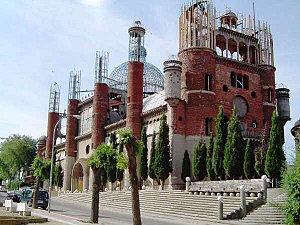
This BBC report tells about one-man's fifty-year plus project, undertaken after being expelled from a monastery for contracting tuberculosis.
The story appealed to me in several ways. Justo Gallego, the builder of a church building made of junk, who has no training in art or architecture, wanted to glorify Christ even though he could no longer be a monk.
One can argue whether this not-yet-completed and extravagantly unnecessary structure does glorify Christ. Some might dismiss the whole thing, perhaps rightly, as an eyesore. Or, as a danger to any who walk in it or near it. (There have never been any architectural plans or inspections of any kind.)
But before dismissing Gallego's church structure, consider some of the things this fifty-year effort may tell us about the life of faith and about Christ Himself.
Fifty-plus years ago, massive vaccination against TB had not begun in so-called developed countries, though there were treatment facilities that had some success. My mother, just a few years younger than Gallego, contracted the disease and spent some time at the Franklin County Tuberculosis Sanitorium in Columbus, when she was young.
Maybe the monastery lacked the capacity to care for Gallego as the sanitorium did for my mom. But his dismissal will do as a metaphor for what the institutional church sometimes does with those it doesn't know how to handle.
I myself have often experienced the institutional church as an organization peopled by gatekeepers whose function seems to be to tell people, "No." No, your service is not needed. No, you can't try to get that ministry started. No, you can't ask people for money to build that building.
When I was the pastor of a start-up congregation in the Cincinnati area, at least four times, our fledgling church hit goals for membership, giving, and worship attendance we were told would bring us a loan from our denomination to build our first facility, only to be told, "No" every time. The last time occurred after we'd had a capital campaign that raised precisely what our denominational officials told us we needed to raise. Our building committee, flush with excitement over the successful campaign, was shot down on lift-off by the denominational official with whom we met. "If you think you're going to build a church now," he told us, "you're smoking something funny." He wasn't done. "You're not the first ones to make a mistake like this, folks," he told us. "I make many mistakes," I finally said, "but this was not a mistake. We did exactly what you told us to do and now, you're saying that we can't forge ahead."
That night, we decided to forgo the "No" of the gatekeepers and, with the empowerment of God, erected the church's first building unit...after fourteen years of worshiping in a school gym. We found commercial lenders more excited about what we were doing as a church than our own denominational gatekeepers were.
You can't stop glorifying Christ, the Way, and the Truth, and the Life, the lifeline to God almighty, just because people with institutional power say, "No." Justo Gallego has lived that truth!
And how about the practicality of Gallego's structure? Is it necessary? Certainly, there are other churches in the Madrid suburbs, where he's built this building. And, who's to say that a Mass will ever be said there?
If the building is extravagantly unnecessary, then it is in good company. You see, that's exactly how I think of God's love for the whole human race. Extravagantly unnecessary. Richly superfluous.
Often, when I discuss Genesis 3, which recounts the fall of Adam and Eve into sin, people get (understandably) hung up on questions like: Why did God allow the tree of the knowledge of good and evil or the serpent to be in the garden of Eden in the first place? Where did the serpent come from? Is the serpent the same as the devil?
They're all good questions which we might take up with God some day. But to me, the most baffling question is this: Why didn't God give up the whole idea of creation as a bad project right then and there?
His most beloved creatures--the only ones created in His image--turned on Him and so, consigned the whole creation to centuries of groaning under the weight of their sin.
When I was a kid, playing with clay, and didn't like what had become of my creation, I smashed it and maybe, I'd start over again or, likely as not, put it away and move onto the next thing.
God didn't move onto the next thing! He kept His focus. He keeps it still. For God only knows how many centuries, He has been focused on one thing: Bringing the lost home. Being reconciled to the rebel human race.
God hasn't done this by forcing our return or coercing a forced reconciliation. He's been patient. He let one group of people in on His plan so that they could be a light to the nations until the moment was right.
Then, the one light who is life to all people showed up to live among us. Of course, being human and thick of head and thick of heart, we didn't recognize the Light when we saw Him. God blanketed the human race and the whole universe, in fact, with His extravagant love and all we could think to do was kill it. So we did. On a bad Friday we now recognize as good, we killed the Giver of life.
But God wasn't done loving us yet. Christ, the Light of the world, rose from the dead. His love is available to all who dare to turn from sin and turn to Him in trust. God's extravagantly unnecessary love turns us from God's enemies to God's friends.
A final aspect of Gallego's story that appeals to me is junk: The entire structure is made of leavings, left-overs, junk. In the New Testament, the apostle Paul wrote a couple of letters to a first-century church in Corinth whose members had gotten full of themselves and were starting to do the Adam and Eve thing, rebelling against God's will. Paul said some interesting things to these folks. Among them:
In another place, Paul, then being persecuted for sharing the love of Christ with others, tells the Corinthians about the treasure of God's love they carry in their bodies as baptized, believing Christians and says:
And here's the thing: God's love is a real extravagance. He's got plenty more where that came from. God's got so much love for us, in fact, that those of us who get it, can give it away and still not lose any of it.
When God's love comes to live in what the world calls "junk," the junk, like Justo Gallego's useless church building, can be a beautiful testimony to the greatness and grace of God. I want my life to be that kind of testimony.
There's a congregation in Denver, whose name I've mentioned before on this blog, a name I absolutely love. It's called The Scum of the Earth Church. It takes its name from more words from Paul's correspondence with the Corinthians, as translated in The New International Version (TNIV) of the Bible. It says:
But I want to waste my life glorifying Christ in whatever ways I can. I want to do it out of gratitude for the God Who "wasted" His extravagantly unnecessary love--His body, His blood, His grace--on me. I want to do it so that, in the end, none of that extravagantly unnecessary love is wasted, but accomplishes all it can do when God spends it on me...and you.
The story appealed to me in several ways. Justo Gallego, the builder of a church building made of junk, who has no training in art or architecture, wanted to glorify Christ even though he could no longer be a monk.
One can argue whether this not-yet-completed and extravagantly unnecessary structure does glorify Christ. Some might dismiss the whole thing, perhaps rightly, as an eyesore. Or, as a danger to any who walk in it or near it. (There have never been any architectural plans or inspections of any kind.)
But before dismissing Gallego's church structure, consider some of the things this fifty-year effort may tell us about the life of faith and about Christ Himself.
Fifty-plus years ago, massive vaccination against TB had not begun in so-called developed countries, though there were treatment facilities that had some success. My mother, just a few years younger than Gallego, contracted the disease and spent some time at the Franklin County Tuberculosis Sanitorium in Columbus, when she was young.
Maybe the monastery lacked the capacity to care for Gallego as the sanitorium did for my mom. But his dismissal will do as a metaphor for what the institutional church sometimes does with those it doesn't know how to handle.
I myself have often experienced the institutional church as an organization peopled by gatekeepers whose function seems to be to tell people, "No." No, your service is not needed. No, you can't try to get that ministry started. No, you can't ask people for money to build that building.
When I was the pastor of a start-up congregation in the Cincinnati area, at least four times, our fledgling church hit goals for membership, giving, and worship attendance we were told would bring us a loan from our denomination to build our first facility, only to be told, "No" every time. The last time occurred after we'd had a capital campaign that raised precisely what our denominational officials told us we needed to raise. Our building committee, flush with excitement over the successful campaign, was shot down on lift-off by the denominational official with whom we met. "If you think you're going to build a church now," he told us, "you're smoking something funny." He wasn't done. "You're not the first ones to make a mistake like this, folks," he told us. "I make many mistakes," I finally said, "but this was not a mistake. We did exactly what you told us to do and now, you're saying that we can't forge ahead."
That night, we decided to forgo the "No" of the gatekeepers and, with the empowerment of God, erected the church's first building unit...after fourteen years of worshiping in a school gym. We found commercial lenders more excited about what we were doing as a church than our own denominational gatekeepers were.
You can't stop glorifying Christ, the Way, and the Truth, and the Life, the lifeline to God almighty, just because people with institutional power say, "No." Justo Gallego has lived that truth!
And how about the practicality of Gallego's structure? Is it necessary? Certainly, there are other churches in the Madrid suburbs, where he's built this building. And, who's to say that a Mass will ever be said there?
If the building is extravagantly unnecessary, then it is in good company. You see, that's exactly how I think of God's love for the whole human race. Extravagantly unnecessary. Richly superfluous.
Often, when I discuss Genesis 3, which recounts the fall of Adam and Eve into sin, people get (understandably) hung up on questions like: Why did God allow the tree of the knowledge of good and evil or the serpent to be in the garden of Eden in the first place? Where did the serpent come from? Is the serpent the same as the devil?
They're all good questions which we might take up with God some day. But to me, the most baffling question is this: Why didn't God give up the whole idea of creation as a bad project right then and there?
His most beloved creatures--the only ones created in His image--turned on Him and so, consigned the whole creation to centuries of groaning under the weight of their sin.
When I was a kid, playing with clay, and didn't like what had become of my creation, I smashed it and maybe, I'd start over again or, likely as not, put it away and move onto the next thing.
God didn't move onto the next thing! He kept His focus. He keeps it still. For God only knows how many centuries, He has been focused on one thing: Bringing the lost home. Being reconciled to the rebel human race.
God hasn't done this by forcing our return or coercing a forced reconciliation. He's been patient. He let one group of people in on His plan so that they could be a light to the nations until the moment was right.
Then, the one light who is life to all people showed up to live among us. Of course, being human and thick of head and thick of heart, we didn't recognize the Light when we saw Him. God blanketed the human race and the whole universe, in fact, with His extravagant love and all we could think to do was kill it. So we did. On a bad Friday we now recognize as good, we killed the Giver of life.
But God wasn't done loving us yet. Christ, the Light of the world, rose from the dead. His love is available to all who dare to turn from sin and turn to Him in trust. God's extravagantly unnecessary love turns us from God's enemies to God's friends.
A final aspect of Gallego's story that appeals to me is junk: The entire structure is made of leavings, left-overs, junk. In the New Testament, the apostle Paul wrote a couple of letters to a first-century church in Corinth whose members had gotten full of themselves and were starting to do the Adam and Eve thing, rebelling against God's will. Paul said some interesting things to these folks. Among them:
Consider your own call, brothers and sisters: not many of you were wise by human standards, not many were powerful, not many were of noble birth. But God chose what is foolish in the world to shame the wise; God chose what is weak in the world to shame the strong; God chose what is low and despised in the world, things that are not, to reduce to nothing things that are, so that no one might boast in the presence of God. He is the source of your life in Christ Jesus, who became for us wisdom from God, and righteousness and sanctification and redemption, in order that, as it is written, “Let the one who boasts, boast in the Lord.” (1 Corinthians 1:26-31)Hey, big britches, Paul was saying, the world considered you junk. God loved you anyway. Died for you. Rose for you. In Christ, God turned what the world calls junk into gold. Don't start acting like junk!
In another place, Paul, then being persecuted for sharing the love of Christ with others, tells the Corinthians about the treasure of God's love they carry in their bodies as baptized, believing Christians and says:
But we have this treasure in clay jars, so that it may be made clear that this extraordinary power belongs to God and does not come from us.If you don't understand everything in that passage, don't worry about it now. Take this away from it: God's extravagantly unnecessary love can come to live inside you, no matter how broken or filled with sin you may feel you are...or may actually be.
We are afflicted in every way, but not crushed; perplexed, but not driven to despair; persecuted, but not forsaken; struck down, but not destroyed; always carrying in the body the death of Jesus, so that the life of Jesus may also be made visible in our bodies. For while we live, we are always being given up to death for Jesus’ sake, so that the life of Jesus may be made visible in our mortal flesh. So death is at work in us, but life in you. (2 Corinthians 4:7-12)
And here's the thing: God's love is a real extravagance. He's got plenty more where that came from. God's got so much love for us, in fact, that those of us who get it, can give it away and still not lose any of it.
When God's love comes to live in what the world calls "junk," the junk, like Justo Gallego's useless church building, can be a beautiful testimony to the greatness and grace of God. I want my life to be that kind of testimony.
There's a congregation in Denver, whose name I've mentioned before on this blog, a name I absolutely love. It's called The Scum of the Earth Church. It takes its name from more words from Paul's correspondence with the Corinthians, as translated in The New International Version (TNIV) of the Bible. It says:
To this very hour we go hungry and thirsty, we are in rags, we are brutally treated, we are homeless. We work hard with our own hands. When we are cursed, we bless; when we are persecuted, we endure it; when we are slandered, we answer kindly. We have become the scum of the earth, the garbage of the world—right up to this moment. (1 Corinthians 4:11-13)The church web site explains:
WHY SCUM?For all I know, Justo Gallego may be certifiably looney. He may have wasted the past fifty years. And Scum of the Earth Church may be a collection of crazy people.
It doesn’t sound like a church name … on purpose. We really want to connect with people who have no interest in “church” by society’s definition. There are plenty of churches for “normal people” and we think we have a unique calling to reach out to our otherwise unreached friends. Our name is integral to that process. Whether outcast by society (e.g., punks, skaters, ravers, homeless people…) or by the church itself, many who come can identify with the name “Scum of the Earth” since they have been previously treated as such.
More important to us, however, the name implies that being people of faith does not mean we are better than anyone else. We know many non-Christians who think Christians are out to cast judgment on them. Our name makes it clear that we aren’t about that. We are just aware of our need for God, as Scum of the Earth. Fortunately, God never sees us like that! But the name is humble and we like that.
But I want to waste my life glorifying Christ in whatever ways I can. I want to do it out of gratitude for the God Who "wasted" His extravagantly unnecessary love--His body, His blood, His grace--on me. I want to do it so that, in the end, none of that extravagantly unnecessary love is wasted, but accomplishes all it can do when God spends it on me...and you.
Subscribe to:
Posts (Atom)

