Showing posts with label Mark 13:1-13. Show all posts

Sunday, November 18, 2018

Keep Planting Those Apple Trees

[This message was shared during worship with the people and friends of Living Water Lutheran Church in Centerville, Ohio.]

Mark 13:1-13
During our recent trip to the Reformation Era places in Germany, a small item for sale appeared in several shops. It was a figure of a smiling Martin Luther, holding an apple in one hand and a shovel in the other. The trinket draws its inspiration from a quote, probably falsely attributed to Luther: “Even if I knew that tomorrow the world would go to pieces, I would still plant my apple tree.”

Although Luther likely never said this, it sounds like something he would say. Luther never concerned himself very much with the end of this world. He was certain as a Christian disciple who believed in Jesus, he was safe in the hands of Christ, no matter what might happen in this world. (Luther was also fond of trees, although it was usually Katy, his wife, who took care of the planting and the farming.) 

More importantly, these words attributed to Luther could serve well as a summary of what Jesus tells us in today’s gospel lesson, Mark 13:1-13

As you know, many people get hung up on questions about when the world will end and how we’ll know that it’s about to happen. Today, Jesus, God-in-the-flesh, tells us, “Don’t give any of that a thought. Just keep trusting in Me and focus on what I am calling You to do.” 

In other words, even if you and I knew that Jesus was returning to close the book on the life of this dying, sin-riddled world today or a half-hour from now, we should, each of us, in our own ways, keep at the life and calling of a disciple of Jesus.

Let’s consider exactly how Jesus makes that point and what it means for how we live today by looking at our lesson, starting at verse 1. “As Jesus was leaving the temple, one of his disciples said to him, ‘Look, Teacher! What massive stones! What magnificent buildings!’”  

Many ancient accounts say that the not-yet-then-completed temple was one of the most beautiful and imposing buildings in the world. But Jesus was unimpressed. Verse 2: “‘Do you see all these great buildings?’ replied Jesus. ‘Not one stone here will be left on another; every one will be thrown down.’” 

In Old Testament times, you'll remember, people in the city of Babel decided that they would build a gigantic skyscraper to “make a name for ourselves” (Genesis 11:4). Of course, people still do that kind of thing, building monuments to their egos, individual and corporate. (I think of all the stadia with the names of one corporation or another splattered across them.)

Even congregations do this, erecting elaborate buildings designed to wow and impress people with just how wonderful their church is even as they forget altogether what a church is, a fellowship of disciples of Jesus built on Word and sacrament, and forgetting that buildings are just tools churches can use to pursue their mission of being and making disciples. 

When buildings or busy-work or happy hours become the end-alls and be-alls of a congregation’s life, the mission of the church--the reason for the building--gets forgotten. I’m glad to be part of a congregation that hasn’t forgotten its mission!

Jesus tells the disciples: “Take a good look at this place. One day it will be rubble.” In 70 AD, when the Romans violently suppressed an armed rebellion by the Judeans, the temple would be smashed to bits. The second temple built by Herod was little more than a monument designed to impress and win over the people over whom he illegitimately ruled. 

The apostle Peter, who was with Jesus when He spoke His prophecy about the temple, later told the first-century churches in Asia Minor, “God opposes the proud but shows favor to the humble” (1 Peter 5:5). I can’t help thinking that Peter may have been remembering this very moment in the temple when he cited those words.

Verses 3 and 4: “As Jesus was sitting on the Mount of Olives opposite the temple, Peter, James, John, and Andrew asked him privately, Tell us, when will these things happen? And what will be the sign that they are all about to be fulfilled?’” 


Four of the apostles approach Jesus on the QT. They probably had been disturbed by Jesus’ prophecy of a destroyed temple. So they ask: (1) When will this happen? (2) What will be signs that it’s about to happen? The apostle Paul would later say that “Jews demand signs” (1 Corinthians 1:22). He clearly knew his own people. 

But it’s interesting to note that while Jesus tells the apostles the signs, He doesn’t tell them when things will happen. There’s a good reason for that...and we’ll talk about that in a moment. But for now, I want to make sure you keep listening; so, I’m going to leave you in suspense.

Verse 5: “Jesus said to them: ‘Watch out that no one deceives you. Many will come in my name, claiming, ‘I am he,’ and will deceive many.” 


In the two-thousand years since Jesus died and rose, there have been many fake messiahs and false gospels. Jesus says that we have to watch out for the deceivers, lest they waste our time in this life and rob us of the life to come because we’ve placed our trust in someone or something other than in the God revealed to all of us in Jesus.

During my quiet time a few days ago, I was struck by Jesus’ words in John 10:5. He says, “...they [His sheep, His disciples] will never follow a stranger; in fact, they will run away from him because they do not recognize a stranger’s voice.” The charlatans of this life--the devil, the world, and our sinful selves--will always try to sell us on false gospels:


  • “Follow your heart,” says one false gospel. 
  • “Follow your mind,” says another. 
  • “Follow your desire,” yet another. 
  • “Get what you want,” one tells us. 
  • “Work hard to be worthy of God’s love,” says another. 

But these are all worldly lies and not the gospel. And those who put their trust in Jesus, who know Him and seek to follow Him each day, will never follow a false gospel or a stranger who pushes a false gospel.

Of course, picking Jesus’ voice out from all the noise of the world isn’t always an easy proposition. The false gospels of this world can twist or drown out the call of Jesus to humbly follow Him if we don’t daily acclimate ourselves to listening for His voice


That’s why a daily quiet time of reading God’s Word, seeking His will for us, praying in repentance, dying to ourselves so that we can rise anew each day as God’s children, and soaking up the grace God makes available to us through Jesus is so important

As Luther did say, “We need to hear the gospel everyday because we forget it everyday.”

Jesus goes on to describe the signs of the end: “When you hear of wars and rumors of wars, do not be alarmed. Such things must happen, but the end is still to come. Nation will rise against nation, and kingdom against kingdom. There will be earthquakes in various places, and famines. These are the beginning of birth pains.” 


The signs Jesus describes were going on then; they’re going on today. Jesus may as well have said, “When you see the sinful, dying world hurtling along just as it always has, take it as a sign that the end is near. The new creation I will bring in its fullness when I return is in labor pains until then.”

Jesus goes on to say that the days before His return will also be filled with persecution and arrest for those who dare to follow Him. There has never been a time in the two-thousand years since Jesus spoke these words that the Church hasn’t faced persecution somewhere in the world. You and I are fortunate that we don’t face persecution in the United States, although some people ridicule faith in Christ. 


As the apostle Peter also wrote to the churches in Asia Minor, then under the threat of persecution: “Dear friends, do not be surprised at the fiery ordeal that has come on you to test you, as though something strange were happening to you.” (1 Peter 4:12) For disciples of Jesus, persecution is SOP, standard operating procedure.

For human beings not yet experiencing the love and grace of God received through faith in Jesus Christ, the entire idea of letting anyone be the Lord of their lives, even the God Who created them and took on flesh and died and rose for them, that idea is repulsive. Many call faithful submission to Jesus weak. They call trusting faith imbecilic. 

All human beings are born in sin and so, we’d rather be our own gods. When Christians, by their lives, words, and deeds remind folks of human sin and the need we all have of the forgiveness and new life that only comes to us through surrender to Jesus, we will not be universally popular

And sometimes, we will face outright persecution, even death, for proclaiming that Jesus is Lord. This too is merely a sign that we’re living in a world that’s going to die.

But it should also remind us of something else. Verse 13: “Everyone will hate you because of me, but the one who stands firm to the end will be saved.” 


You can breathe now. I’ve ended the suspense. We’re not to worry about when the end will come or what the signs will be

Through Christ, we have been saved from all the world’s thrashing, hating, self-glorification, and death. Our call is simply to stand firm with Jesus

As Jesus says elsewhere, “...whoever lives by believing in me will never die” (John 11:26). That’s a promise that can sustain us through all circumstances!

I once heard a speaker ask, “What would you do if you knew you could never fail?” Jesus’ words to us today pose a different question: “How will you live knowing that in Jesus Christ, you will never die?” 


Well, for one thing, you’ll probably be bolder in following Jesus and telling others about the new life He gives to those who believe in Him. 

You’ll be less spooked and fearful of the world. Every time you read a bad headline, you can say, “There’s the world being the world again.” 

And you may have--I hope that we all will have--a greater sense of urgency about the mission of Christ’s Church, the mission of this church: to be and to make disciples who... 

  • reach up in worship, praise, and awe for God; 
  • reach in to grow together and lovingly, prayerfully support one another in our life with Christ; and
  • reach out to make new disciples for Jesus. 

We don’t know when Jesus will return. We don’t know when our lives on this earth will end. 

Until either or both of those events occur, keep planting your apple trees, living your life in the light of God’s love for you. 

Keep trusting Jesus! Amen

[I'm the pastor of Living Water Lutheran Church in Centerville, Ohio.]

Sunday, November 15, 2015

Stand Firm

[This was shared during worship with the people and friends of Living Water Lutheran Church earlier today.]

Mark 13:1-13
What I know about birth pangs or labor pains is, as it can only be for any man, second-hand knowledge, from having seen my wife go through labor with our two kids. So I’m not an expert. I just know that labor is hard and I wonder if we men were the ones who gave birth whether the world’s population would be much smaller.

I bring this up because, as New Testament scholar N.T. Wright points out, the key to understanding today’s Gospel lesson, Mark 13:1-13, is verse 8, where Jesus says, “Nation will rise against nation, and kingdom against kingdom. There will be earthquakes in various places, and famines. These are the beginning of birth pains.”

In the Old Testament, especially in the writings of the prophets, the imagery of labor pains coming before the birth of God’s kingdom in people’s lives was often used.

But here, Jesus uses the image of birth pangs in this passage differently. He’s not talking about the end of the world (He slides into a discussion of that seamlessly later on in Mark, chapter 13) or about the establishment of God’s eternal kingdom, but about the end of the temple in Jerusalem. That’s an event that happened in 70 AD, about forty years after Jesus spoke these words, when the Romans tore it down.

But, as we consider the news coming out of Paris this weekend, there’s a lot for us to learn as modern followers of Jesus from today’s Gospel lesson. It begins: “As Jesus was leaving the temple, one of his disciples said to him, ‘Look, Teacher! What massive stones! What magnificent buildings!” “Wow!” the disciple is saying, “isn’t this a great place?”

But Jesus seems unimpressed with the temple. Look at verse 2: “‘Do you see all these great buildings?’ replied Jesus. ‘Not one stone here will be left on another; every one will be thrown down.’”

Jesus is t
elling the disciple who remarked on the temple’s beauty to never confuse the eternal power of God with buildings, no matter how imposing or pretty. The worship of God cannot be confined to beautiful buildings made with human hands!

True worship is the offering of our whole lives to God everywhere we go.

Buildings crumble and fall or are brought down from explosions detonated by human sin and hatred. Only God and those who turn from sin and trust in Jesus Christ as their only hope, will endure, eternally, even after life on this fragile planet has ended.


Jesus was telling the disciples, including us, “Don’t put your trust in buildings, or traditions, or liturgies, or human beings or political or economic systems. Don’t even trust yourselves."
Put your trust in Christ alone!

Go back to the lesson, to verse 3. Jesus is now sitting opposite the temple on the Mount of Olives and four of the apostles--Peter, James, John, and Andrew--have a question. Verse 4: “‘Tell us, when will these things happen? And what will be the sign that they are all about to be fulfilled?’”

Notice this:
In answering the four apostles' question, Jesus never actually answers their question.

Jesus isn't being evasive in not answering them. Rather, He has a more important point to make!

Verse 5: “Watch out that no one deceives you. Many will come in my name, claiming, ‘I am he,’ and will deceive many. When you hear of wars and rumors of wars, do not be alarmed. Such things must happen, but the end is still to come. Nation will rise against nation, and kingdom against kingdom. There will be earthquakes in various places, and famines. These are the beginning of birth pains.”

Every single thing Jesus describes as signs of the impending destruction of the temple are events that have been going on from the moment Adam and Eve rebelled against God and consigned all of us to our inborn bondage to sin. As Ecclesiastes 1:9, in the Old Testament, says: “..there is nothing new under the sun.” That verse doesn't say that history repeats itself. History doesn't repeat itself. One of the thing that sets Biblical faith apart from the ancient religions of the world is that, unlike them, it doesn't have a cyclical, but a linear view of history. The Bible doesn't teach that the same thing happens again and again a cycle of futility. Instead, Biblical faith believes that history is taking us somewhere. Rather, Ecclesiastes reminds us that the world is no more and no less sinful or foreboding today than it was the moment God banished Adam and Eve from the garden.

Different sins become more popular at different times. Or, as I sometimes put it, different specific sins go in and out of style. But the same old condition of sin, death, disasters, calamities, warring, and yes, even terrorism, have been going on for centuries. That reality isn't new.

The temple came down at the precise moment when Jesus foresaw that it would. But the disciples and no one else had any need to know when that would happen.

As hard as it is for we human beings to accept, there are some things we cannot know and never will know.

Actuarial tables may give us averages, but only God knows the exact moment He has appointed for the ends of our earthly lives. Psalm 31:15 says: "My times are in Your hand..."

Scientists may be able to make plausible guesses about the reasons for and the date when the destruction of the universe will happen.

But only God knows the time appointed for that to happen.

In fact, only God the Father knows when that moment will come. Jesus, God the Son, says, "...about that day or hour no one knows, neither the angels in heaven, nor the Son, but only the Father" (Mark 13:32).

So, Jesus doesn’t tell the disciples when the temple will fall or what the signs of its impending destruction will be.

His non-answer told them that they were asking the wrong questions
.

What Jesus is telling them and us is that, no matter what painful or difficult things may come to us along life’s way, the future is ultimately in God’s hands
. Our call is to trust in Him even in the midst of uncertainties and our own limitations.

He's also saying that
all the painful things that happen in this world, no matter how calamitous are just the labor pains of God's new creation. That’s why Jesus says in verse 8: “These are the beginning of birth pains.”

Fact is, o
ur entire life on this earth constitutes the labor pains of the new heaven and the new earth all who believe in Christ will live in and enjoy after this entire universe has fallen down, Christ returns, and the dead who have died believing in Him will rise again.

Romans 8:22 says that “the whole creation has been groaning as in the pains of childbirth right up to the present time” for that moment when, finally and fully, sin, death, and futility are put under Christ’s feet and the pain and tears of this fallen world will be things of the past.
This should give us hope! Our job is to keep focused on that hope, no matter what.

The athlete who keeps her focus firmly on her goal of winning  the prize endures all sorts of difficulties--arduous training, endless practice, injuries and physical rehabilitation--in order to attain her goal. When we live each day in the certainty that God saves from sin and death all who retain their faith in Christ and have eternity with God as the prize for which they race, we can say with the apostle Paul, “ I consider that our present sufferings are not worth comparing with the glory that will be revealed in us” when, in the resurrection, we who believe in Jesus Christ will see Him face to face!

 (Romans 8:18)

But faith isn’t fatalism.

We’re not to sit around, letting life wash over us while waiting for Jesus to show up with a bunch of angels playing harps. (I personally hate harps, by the way!)

In fact, throughout Mark 13, where Jesus does go on to talk about the end of the world, Jesus tells us what we’re to do as we await the unfolding of God’s plans for our world and for our lives.

In Mark 13:5; Jesus says, “Watch out that no one deceives you.” Don’t let others tell you they know some truth about God not revealed in the Bible!

In verse 9, Jesus warns Christians to “You must be on your guard,” so that we do not give up on trusting in Him.

Then, in verse 23, Jesus tells us to watch out for people who point us to false Christs or to false versions of the real Jesus Christ and lead us away from eternal life with God.

And in verse 33, Jesus says to “Be on guard! Be alert! You do not know when that time will come.”

Assured of our eternal futures, God sets us free to be about the business Christ has given us to do.

We're to reach up, worshiping and praying to God.

We're to reach in, giving and deriving support for our faith journey from other believers in Christ's Church as we study God's Word and pray together.

And we're to reach out, sharing the good news of new and everlasting life for all who turn from sin and believe in Jesus Christ with others.


When Jesus offered Himself on the cross, He was the perfect sacrifice for our sins. Then He rose from the dead, opening up eternity to all who trust in Him. We don’t know what may happen to us or to the world in whatever time passes between this moment and the moment when the risen, ascended Jesus returns to bring judgment on this old world and bring the fullness of His kingdom to all who have believed in Him.
But we do know that there is no safer place we can be in this world (and the next) than in the hands of the God Who holds the future of this world and of eternity itself in His hands.

A new world is being born in this messy world in which we live.

The labor pains we endure in
this world are painful, even, as we saw again this past Friday night in Paris, deadly.

But if we will be patient and hold on tightly to Christ, we’ll have strength for the journey and an eternity of joy with Christ and all who, like us, have trusted in Him.

As Jesus promises at the end of today’s Gospel lesson: “...the one who stands firm to the end will be saved.” Stand firm!


Amen


Sunday, November 15, 2009

All That Matters

[This was shared during worship with the people of Saint Matthew Lutheran Church in Logan, Ohio, this morning.]

Mark 13:1-13
A few years ago, I heard a couple tell about a party they had for three other couples at their house. All eight of these people were committed Christians who were also highly successful. Much of their conversation revolved around the latest job offers, the houses they were building, the new cars they'd just bought, and the latest gizmos and gadgets they'd acquired. Their conversation took a more serious turn though, when one of the men reminded them all about the fate awaiting this earth according to the Bible. "One day," he said, "this will all burn."

Let's pray.

God: Remind us this morning of what is truly important. In Jesus' Name. Amen

In last week’s Gospel lesson from Mark, you’ll remember, Jesus contrasted the large offerings to the temple made by powerful religious/political elites (what one of the kids during last week's Children's Sermon called bishodents, mixtures of bishops and preidents) to the paltry offering made by a poor widow. Jesus said that because the widow gave all she had to live on, while the bishodents put in their leftovers, the widow's offering was worth infinitely more than theirs.

That should have been a warning sign to the disciples (and to us). God doesn’t value the things that we often value.

Bigger isn't necessarily better.

Influence doesn't mean moral rightness.

A seminary diploma doesn't indicate deeper faithfulness.

God doesn't always look at things the same way that the world does.

This is the same principle that God revealed to the ancient judge Samuel hundreds of years before the birth of Jesus.

Samuel had gone to Bethlehem in order to anoint a son of a man named Jesse as the new king of Israel. Samuel was about to give the honor to the handsome Eliab. Eliab evidently looked like a king. But God said, "Do not look on his appearance or on the height of his stature...for the Lord does not see as mortals see; they look on the outward appearance, but the Lord looks on the heart..."--that is, on the faith and the motivations a faith relationship with God creates in people.

Even if the disciples didn’t remember an incident which, even for them, would have been part of their ancient religious history, they might have understood that big isn’t always better or that outwardly religious or successful doesn’t necessarily mean closeness to God, from Jesus' encounter with the rich man.

There, you’ll remember, Jesus told an evidently religious wealthy man that his riches were getting in the way of his eternity with God. But apparently, the first disciples were as thick-headed, slow-hearted, and faithless as I am much of the time!

In any case, our Gospel lesson for today finds a disciple, Jesus' words extolling the faithfulness of the poor widow still ringing in his ears, commenting on the beauty of the large stones and large buildings of the temple. (Maybe he was trying to change the subject.) “Look, Teacher," he says, "what large stones and what large buildings!”

The temple complex in first century Judea was enormous. It was also visually stunning. Many world travelers of the day saw it and declared it to be the most beautiful building they’d ever seen.


Setting at the top of Mount Zion in Jerusalem, the one-time site of a threshing floor purchased by King David one-thousand years before, this particular temple had been built more recently by King Herod as a symbol of his dubious claim to the throne of David.

The temple was the center of Jewish worship, the place where the dispersed Jewish population from throughout the Mediterranean basin came for festivals like the Passover.

For first-century Judeans like Jesus’ first followers, the temple was not just the place where they believed the presence of God lived in the holy of holies. It was also a focal point of national pride. The Romans may have conquered them, they felt, but in the cavernous temple, the God of all creation met them.

“Just look at this place,” the disciple tells Jesus. Jesus doesn't miss a beat. He asks all of the disciples to do some looking themselves.

“Do you see all these great buildings?” Jesus asks. “Some day, they will all be thrown down. Not one stone will be left.”

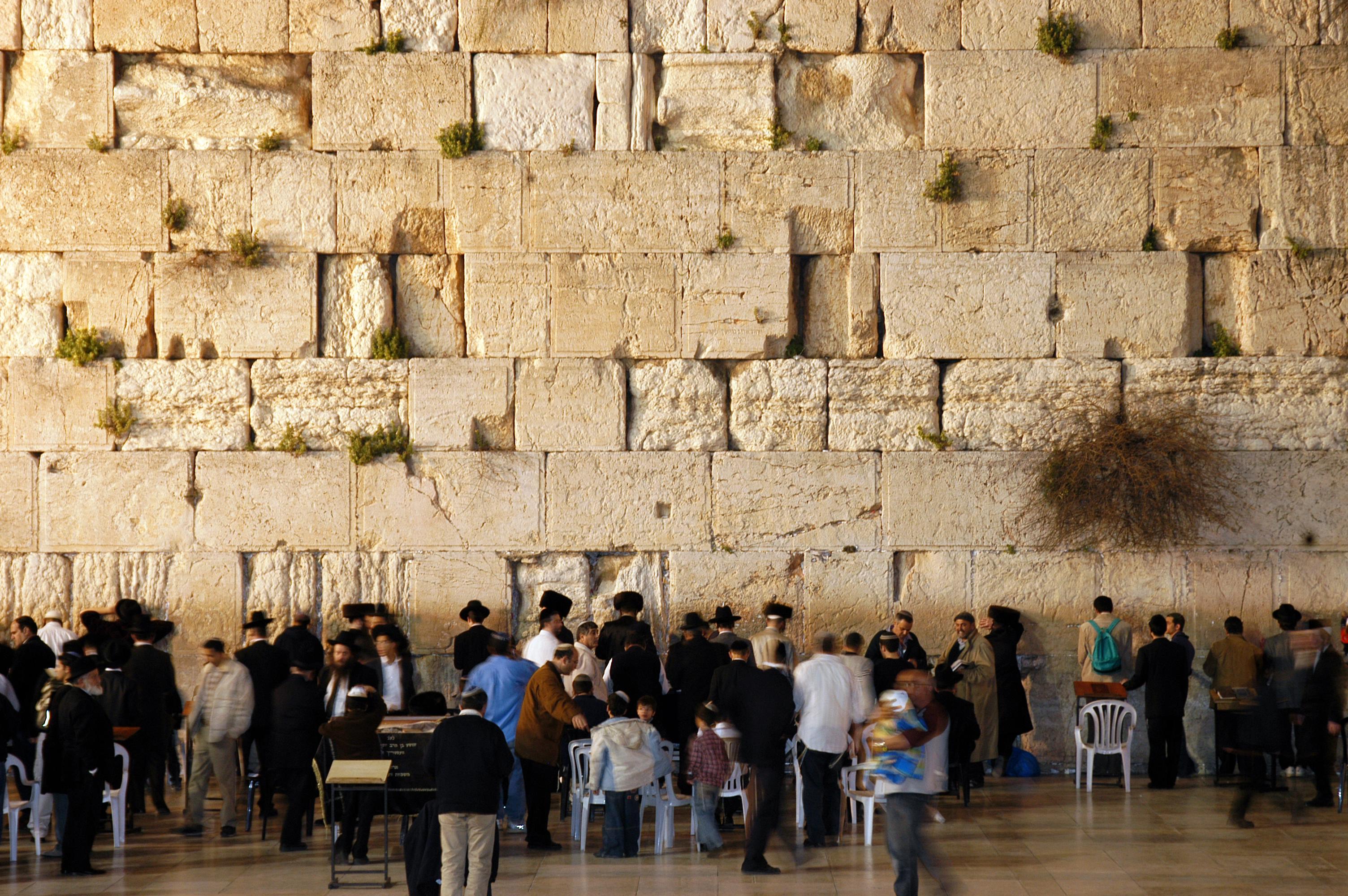
Jesus is right, of course. In 70AD, thirty plus years after His death and resurrection, the Romans would destroy the temple. Today, it’s the site of the third holiest mosque of Islam. All that’s left of the temple is the Western Wall, which you see pictured in books and movies, a place where pious Jews and others pray and also leave written prayer requests in the crevices between the ancient stones.


Bigger isn’t better.

What we think to be holy and inviolable may not be what it seems.

By the time Jesus was born and conducting His ministry in Judea, God’s people had walked far from God. So far from God, in fact, that when the real presence of God Himself showed up on the earth in the person of Jesus Christ, they joined with the rest of the world in a conspiracy to kill Him on a cross.

In His flesh, Jesus was the real holy of holies and Jews and Gentiles saw in Him the chance to get rid of God and to be their own bosses. They put more stock in the things of this world that can be seen—buildings, mortar, personal strength, power, money, military might—than they did in God, Who when they finally caught a glimpse of Him—was a carpenter from Nazareth they thought they could easily kill off.

But as Jesus speaks with the disciples in today’s lesson, all of that lay a few days ahead. Right now, they’re frightened by His words. They want Jesus to tell them more about the future. “When will the temple be destroyed?” they wonder. “What signs will point out that it’s about to happen?” For them, these questions were more than queries about the future of a building. For them, the end of the temple was tantamount to the end of the world.

People have always wanted to get special insight into the future. There's a whole cottage industry built around people's interest in knowing when the world will end and how it will come about. The Left Behind books are in that category. So is the new film evidently based on ancient Mayan mythology, 2012.


But whenever Jesus was asked for insights into cataclysmic events like the destruction of the ancient temple or the end of the world, He gave no inside information. He didn’t tell us to hide in caves, commandeer a nuclear weapon, or drink a steady diet of spring water and Tofu.

And in today’s lesson, in talking about the signs associated with the demise of the temple, Jesus simply gives a series of signs that had already happened repeatedly in history before He speaks and which have happened repeatedly since. He says that counterfeit preachers will come along claiming to speak for Him even though their words have nothing to do with God’s revealed Word in the Bible. He says that there will be wars and rumors of wars, enmity among nations, earthquakes, and famines. Those things were prevalent then; they’re prevalent today.

So, what is Jesus telling us? Just this, I think: We live in an imperfect world; but don’t let it take you in.

Your faith cannot be built on the fleeting things of this world, even those made of granite, stone, or marble.

We need to build on the God Who has revealed Himself in Jesus Christ, the Word of God made flesh.

True story of two young preachers, friends, each regarded as among the best at their trade: They specialized in reaching out to young people with the Good News of Jesus Christ. They spoke to teenagers and university students across the country. Thousands came to faith or experienced a deepened faith through their preaching.

Each though, early in their careers, went through crises in their faith. They each began to question the authority of Scripture, dogged by things they couldn’t fully understand or explain in the Bible. One renounced his faith, becoming an atheist.

The other, in California, where he was on a preaching and missionary tour, took a walk through a field. He agonized in prayer over his doubts. He came to a large rock. He set his Bible on the rock and kneeled in submission to God. Pointing to his Bible, Billy Graham told God, “I don’t understand everything in this book. But I intend to trust in You and in this book.” Through the access he gave to God, God built up Billy Graham’s faith. And through his ministry, millions of people have come to faith in Jesus or had their faith in Jesus strengthened.

Every day, you and I confront the same issues that confronted Billy Graham as he took that walk some sixty years ago and that confronted the disciples as they walked through the imposing temple grounds in Jerusalem.

Who and what will you trust?

Who or what will you live for?

No matter when cataclysm or the end of this world may come, we each need to know how we’re going to live. What will be most important to us?

What will be our highest priority? Will it be the paychecks, the safe life, the best house, the nicest car, the greatest applause, the most power?

These things fade, die, crumble, or pass away as surely as the temple in Jerusalem did.

In Mark 13:13, after telling His followers all that they were likely to endure just for being His followers—persecution, trial, betrayal, death—the very things He would endure just a few days after He speaks these words--Jesus says this, “But the one who endures to the end will be saved.”

The one whose heart is fixed on Christ rather than on the rewards of this dying world, will live with God forever.

As a younger man, I had absolutely outsized ambitions. I wanted to be a best-selling author. I wanted to be President. I wanted to be a big shot.

But I can honestly say today that when I see the love and grace of God given to me in Christ despite my sinfulness and when I see that God has, thankfully, never given me the punishment I deserve, I have finally arrived at only one ambition in life.

All I want is to endure in faithfulness.

I just want to live each day to the glory of God, no matter what God asks me to do.*

I’m comforted by the fact that, even though I fail and sin each day, those who turn to God in repentance and make faithfulness to Christ their aim--those who endure, will be saved from sin and death and hopelessness by the God Who went to a cross for all who trust in Jesus.

Endure in trusting in Jesus.

Build your life on Him.

That’s the way of salvation.

As we prepare for Consecration Sunday next week, don’t worry about the future. Make following Christ today—each day, one day at a time--your one and only aim in life.

That’s all that matters.

Amen

*I should say that most of the time this is what I want. Or better yet, it's what I want to want. But I am a selfish sinner and there are times when I want to glorify myself--or at least be comfortable--more than I want to glorify Christ.