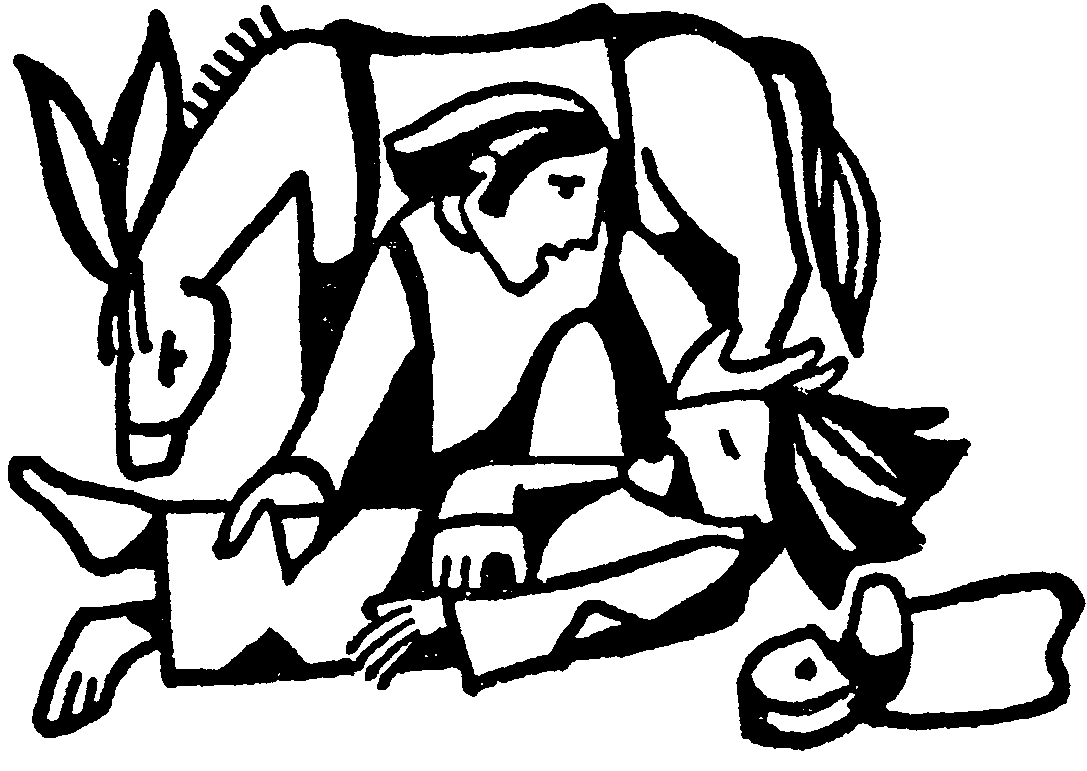
Matthew 2:13-23
The moral law of God is, you know, summarized in the Ten Commandments. In the first commandment, God tells us, “You shall have no other gods before Me.” The Small Catechism’s explanation of the commandment tells us, “We should fear, love, and trust in God above all things.” Clarifying things more, The Large Catechism says, “…to have a god is nothing other than trusting and believing Him with the heart…whatever you set your heart on and put your trust in is truly your god.”
We have a lot of gods in our world, don't we? That's because we tend to set our hearts on things other than God.
As we begin a new year, we need to ask ourselves: Who is our God? Or, who is our King? This is important because the thing we want most in life is to be our own gods.
I bring all of this up for two reasons. First, because whenever we violate any of God’s commandments–and we inevitably do violate His commandments, whether by thought, word, or deed all the time, we also violate the first commandment. When we lie or steal, covet, murder, gossip, take God’s name in vain, or dishonor our parents, we violate the first commandment. That’s true because with every sin, we either worship the sin itself, or worship ourselves by holding our judgments about right and wrong to be superior to God’s judgments, or we do both.
The second reason I bring it up is that the question of who your god is, who is the ultimate authority over your life, is the central question of today’s gospel lesson.
You know the story well. About two years after Jesus’ birth, Magi from the East visit Him. After they leave the house where the infant Jesus is living with Joseph and Mary, Joseph is warned in a dream to take Jesus to Egypt until God says otherwise. King Herod wants to kill Jesus. Herod is so intent on being god and king of Judea--being the boss of everyone--that, unlike the Magi, he not only refuses to worship the newborn King, he wants Him dead.
Herod deserves to be compared to other murderous despots in history, like Adolf Hitler or Vladimir Putin. But let’s not sidestep the truth. We’re in no more of a hurry to worship God than Herod was. We are sinners and we would prefer to reign over our own lives or give our worship to the gifts of God–things like health, wealth, authority, sex, luxury–rather than worshiping God. We are born that way. But being born with an orientation to sin doesn’t make our sinning right. As Paul says in Romans, the human race falls prey to worshiping the creatures rather than the Creator.
We had a video call the other night with our son and our nearly two-year-old granddaughter. She is, in my unbiased view, completely sweet and adorable. But our son tells us that she has a new favorite word: No. We all want to be our own bosses, our own ultimate authorities. So, one thing we all have in common with Herod is that we are sinners bent on self-worship.
Because Herod has learned of the location where prophecy said the Messiah was to be born but didn’t know the child’s identity, he orders that every male child under the age of two be murdered. This is a disturbing tale. Years ago, after reading a sermon I had preached on these verses from Matthew and posted on my blog, a man in Northumberland in England wrote to me angrily, “The Christmas story tells us that if your son is threatened, then you save him and let the others take their chances.”
The man’s anger was maybe understandable but, I think, misdirected for two reasons. First, He seemed to think that God had willed the deaths of these babies. If there’s anything I’m sure of about our God, it’s that He Who formed us and loves us, never would will the murder of any other parents’ children. This is the God Who told Isaac and the people of Israel not to sacrifice their children.
Even our lesson for today shows that God didn't will the murder of the innocents. There are three places in the lesson that note the fulfillment of prophecy. Two of them indicated by the prepositions used in the original Greek that the fulfillment of prophecies cited was what God desired. But in verse 17, where we're told of Herod's murderous act, the citation says that the weeping of Rachel for her children would happen because of the sinfulness of human beings, not because God desires it to happen.
But second and more importantly, that angry man forgot that God used Joseph to save Jesus from Herod’s armed troops so that Jesus, God the Son, could later go to the cross. There, Jesus bore the sins of us all, setting us free from the damnation and eternal separation from God we all deserve. Jesus wasn’t spared execution when Joseph whisked Him off to Egypt, any more than you and I are spared the horrors of a universe drowning in sin and death. Instead, Jesus was the last of the Bethlehem innocents to die.
Jesus would also be executed by a human race, Jew and Gentile, bent on having and being its own gods and kings. The difference between His death and the deaths of the other babies in Bethlehem and the deaths of us all is that His life and His life alone offered on a cross paid the eternal debt we all owe God for our sin.
Jesus fulfilled the prophecy given to Isaiah: “...he was pierced for our transgressions, he was crushed for our iniquities; the punishment that brought us peace was on him, and by his wounds we are healed.” (Isaiah 53:5)
Despite what my angry commentator said, God didn’t spare Jesus on that horrible day in Bethlehem and let everyone else “take their chances.” Jesus was born so that He could die for us. Jesus knew this. Referring to His death on the cross as His baptism, Jesus once said: “I have a baptism to undergo, and what constraint I am under until it is completed!” (Luke 12:50)
The death of the sinless Christmas Child on the cross at Calvary was the perfect act of obedience to God that you nor I neither desire nor are able to perform. It was for His submission to death on the cross that, “God [the Father] exalted him to the highest place and gave him the name that is above every name…” (Philippians 2:9)
Jesus was sent to Egypt not to be spared the hardships, adversities, and death of this world, but so He enter into those hardships, adversities, and death and redeem them by winning an eternity of peace, rest, and salvation for all who believe in Him.
Herod was a king who wanted power for himself. Jesus is the King Who surrendered the advantages of His deity in order to make it possible for each of us to be justified by God’s grace through faith in Him alone.
Jesus freely gives blessings none of us deserve: forgiveness, God’s presence with us through the joys and sorrows of this life, and life with God that never ends.
Because Jesus went to the cross, we can say with the apostle Paul: “He who did not spare his own Son, but gave him up for us all—how will he not also, along with him, graciously give us all things?” (Romans 8:32)
Jesus is no haughty, distant despot. Although our sin put Him on His cross, He makes us His friends.
Friends, Jesus is our only hope and sure foundation today, in this new year, and always. He’s now accomplished all that He came to do for us, which is why the last of the Bethlehem innocents would declare with His dying breath on the cross, “It is finished!” This year, you can trust in Jesus and what He has done for you. You can claim Him as your gracious, loving King! Amen