[This sermon was shared at Ash Wednesday worship at Saint Matthew Lutheran Church in Logan, Ohio, earlier this evening.]
Matthew 6:1-6, 16-21
True story: Years ago, the B-List movie star Fernando Lamas was guest hosting a TV talk show. He introduced his first guest for the evening, another actor and asked, “How are you doing?” “Not so well,” the guest said. “You see, I’ve been very sick. It’s been a tough road.”
The B-List star’s response was a classic, one that comedian Billy Crystal turned into a Saturday Night Live routine. “Yes,” he said. “But you look marvelous and that’s the main thing.”
For many of us today, looking good is the main thing. Many women, in a desire to “look good,” spend thousands of dollars on cosmetics and facelifts. Many men, wanting to appear successful, will overextend themselves financially just to have the biggest houses, the newest cars, and luxury box seats at the football game. Many teens feel that they simply must have the latest stuff from Hollister and Abercrombie & Fitch, or they’ll lose face among their peers.
Does any of this strike you as a bit ridiculous?
We seem to have elevated shallowness to a place of high value in our society. Just consider all the time we spend listening to stories about Lindsay Lohan, Paris Hilton, and Britney Spears, their brushes with the law and time in the slammer. It’s appalling!
Lest we get too far up on our high horses, though, Jesus reminds us tonight that we Christians can be shallow, too. We can become obsessed with “looking good” as Christians, appearing holy, or devoted, or repentant, or faithful. We can be so hung up on looking like Christians that we fail to actually be Christians.
In our Gospel lesson, Jesus addresses the overarching issue of Christian piety. One dictionary defines piety as, “reverence for God or devout fulfillment of religious obligations.” Piety is good. Genuine piety happens when imperfect human beings, like you and me, strive to follow Jesus Christ in our daily lives. But Jesus warns us: “Beware of practicing your piety before others in order to be seen by them; for then you have no reward from your Father in heaven.”
The rewards which every believer in Jesus Christ wants, the gifts that we can not earn but only receive when we renounce our sin and trust in Jesus, are having God in our lives today and living with God for eternity. Jesus tells us that we risk losing these rewards when, instead of living our lives to express gratitude and love for an audience of one, God Himself, we decide to make looking good in the eyes of others our greatest goal. Or at least one of our goals.
There may be more of this happening among we Christians than we realize, this big desire to appear Christian more than to be Christian. Last year, I met a man whose ministry worked with men from all across the country. He does retreats on sexual purity and pornography. He said that at these gatherings of Christian men, he always conducts an anonymous paper survey. Over the years, anywhere between 20 to 50% of all these men describe themselves as having a problem with pornography that impacts their marriages or other relationships.
Whether those percentages hold up for all Christian men isn’t important. What is important is that it’s possible for Christians to experience a disconnect between the faith we confess and the lives we lead.
We may look good and have the accolades of our fellow Christians, even as we privately wallow in sins from which we can’t seem to extricate ourselves, sins for which we can’t even muster the strength to repent.
Lent is a time of spiritual renewal. Admittedly, it’s a season of the Church Year invented not by God, but by we Christians. Nonetheless, I think that Lent can be helpful to us. It’s a time when we remind one another to lay aside those sins and habits that keep us from having a joyful, fulfilling relationship with God and to instead live our lives for Jesus Christ alone.
That’s why at Lent, on Ash Wednesday, we always begin with this Gospel lesson, words of Jesus taken from His Sermon on the Mount as recorded in Matthew’s Gospel. In each issue Jesus addresses in this lesson, He’s giving the same message: If your focus is on looking like a good person to others, you risk losing your relationship with God, your eternal life.
Instead, we’re to be transparent before God, admitting our sins and enlisting His power to help us overcome them.
Jesus says, “When you give alms--that is, charity to the poor, don’t call attention to yourself. Give without taking credit for it.
"When you pray, mostly do it in private; and when you pray in public, talk to God, not other people.
"Whenever you fast--giving up food or drink--don’t go around with a hangdog face so that everybody can see what a pious Christian you are; instead, clean yourself up and let the joy of God radiate from you.
"And don’t be stingy with your money. The stingy who stack up lots of cash only make themselves susceptible to thievery. Instead, be generous. Invest in people. Invest in what Christ calls all Christians to do, the work of God in the world: loving God and loving neighbor.”
Every year, I hear from people about the things they’re giving up for Lent, things like coffee, candy, cake, cigarettes, movies, text messaging, one night a week of no TV. Those things are fine, of course. But the thought often crosses my mind that if these things are worth giving up or cutting down on for the forty days of Lent, maybe they’re also worth giving up or cutting down on all through the year.
Back in my seminary days, I worked at Ross Laboratories in Columbus. Just before Lent, some of the women in the area where I worked decided that they would give up "cussing" for Lent. They set up a jar in the office and every time one of them swore, they put a nickel into it. That jar got pretty heavy before Easter rolled around! But, for the life of me, I can't figure out what good their little "Lenten discipline" did them. They just kept swearing like stevedores.
Unless our Lenten disciplines--the stuff we give up or the habits we add on--help us to glorify God and to grow closer to Christ, they risk being meaningless.
Several years ago, friends of mine decided to help fix food for the people at a homeless shelter. It became a way that their family grew closer to Christ and loved their neighbor.
And I once knew a man who had a coworker going through a tough time and made it his habit to anonymously send the coworker ten and twenty dollars every week or so. He felt so good doing this, that he continued his "discipline" after Lent was over.
None of these people were broadcasting that information to me about their Lenten disciplines. I just happened to learn of their Christian acts in the course of talking with them about other things. But it seems to me that it’s these habits of discipleship that are the kinds of things that we should be doing in Lent and all through the year.
They’re done not to impress others. But they become ways for us to tell God...
* Thank You for Jesus and His cross.
* Thank You for loving me, as we sang a short time ago, just as I am.
* Thank You for saving me from sin and death and eternal separation from You.
During this Lenten season, I invite you to militate against our common sinful impulse to look good to other people and to instead turn your focus onto Jesus Christ and His purpose for your life.
I want to urge you to embrace a new spiritual discipline, one that you’ll do not just during Lent, but all your life. It’s the discipline that the risen Jesus described to His first followers, on a Judean hillside, just before He ascended into heaven. It too, is described in Matthew’s Gospel. (I wish that I could have been there.) Here’s what Jesus said: “Go therefore and make disciples of all nations...”
Jesus was telling His disciples, including us: Be intent not on looking like a Christian, but on being Christian enough...
* to share Christ with others,
* invite them to know the Savior, and
* ask them to worship with you.
A person who was on that hillside with Jesus, the apostle Peter, says that when we take it on ourselves to invite others to follow Jesus, Who saves sinners like us, we are fulfilling our highest purpose. In the first of two Biblical books Peter wrote, he says to us: “you are a chosen race, a royal priesthood, a holy nation, God’s own people, in order that you may proclaim the mighty acts of him who called you out of darkness into his marvelous light.”
Inviting our neighbors and friends to leave the darkness of life without Christ and the Church is a great spiritual discipline for all of us to embrace this Lenten season. In fact, I think that it’s the perfect Lenten discipline. That’s because when we’re witnesses for Jesus, we take the focus off of ourselves and our selfish obsessions. Instead, our focus is simply to introduce our friends to our very best Friend, Jesus, our God and Savior.
People who live as witnesses for Jesus Christ may not “look good” in the eyes of the world. But in the eyes of God, being a witness for Christ is the very best way for us to tell God we love Him and the best way for us to love our neighbor!
Wednesday, February 06, 2008

Tuesday, February 05, 2008
How Christians Might Think About the 2008 Presidential Election
That's the name of a series of posts I wrote last year. Their purpose wasn't to push a particular agenda. I don't believe that there is one political agenda. To try to distill God or God's will to a set of political proscriptions is a bit like trying to cram the universe onto an iPod. But I do believe that as Christians, there are certain prisms through which we're called to look at our lives in the world, including the political world.
Here are links to all the installments of that series:
Part 1
Part 2
Part 3
Part 4
Part 5
Part 6
Part 7
Here are links to all the installments of that series:
Part 1
Part 2
Part 3
Part 4
Part 5
Part 6
Part 7
Should Romney Withdraw?
 Conventinal wisdom says that Mike Huckabee (pictured at the left) has hurt Mitt Romney's presidential bid. The notion is that Huck denies Romney the votes of true conservatives.
But tonight, MSNBC polling shows that among evangelical Protestants, a core constituent group among Republicans, the vote was roughly evenly split among Romney, Huckabee, and John McCain, each polling about 30%.
One clear conclusion of these results is that evangelicals, though conservative, cannot be regarded as a monlith.
And, more broadly, that means that it has been highly presumptuous for the Romney people to say that, were it not for Mike Huckabee's bothersome candidacy, he would be the natural recipient of the votes of true conservatives.
The Huckabee campaign could, with credibility, argue that it is Romney who should make way for the former Arkansas governor. Unlike Romney, Huckabee has always been pro-life and always favored to a constitutional amendment defining marriage as one man and one woman for life. Romney's bona fides as a conservative are clearly questionable, at best.
But, in spite of his suggestion that the Constitution be amended to conform to the Bible, Huckabee's votes in the Bible Belt, where frontrunner John McCain has not been as strong--except in South Carolina, estabishes him as the frontrunner to be John McCain's vice presidential running mate.
After Super Tuesday, what I argued here, that the likeliest Republican ticket would be either McCain-Huckabee or Huckabee-McCain, seems even likelier.
What is clear is that, unless Romney pulls off a miracle in California tonight, Republicans who don't like McCain will at least privately argue that the former Massachusetts governor should withdraw to make way for a conservative, Mike Huckabee.
[UPDATE: Thanks to The New York Times for linking to the Moderate Voice version of this post.]
Ash Wednesday, Beginning Lent, is Tomorrow
 Tomorrow, Christians all over the world will be celebrating Ash Wednesday. It begins a forty-day season of spiritual renewal and preparation that precedes Easter Sunday. The season is called Lent.
Actually, there are more than forty days between Ash Wednesday and Easter. But the Sundays that fall during Lent are never counted as part of that somber season. For Christians, Sundays are always "little Easters," days when the resurrection of Jesus Christ from the dead is celebrated.
Lent emphasizes other aspects of Christian belief, which is why many churches, including Saint Matthew Lutheran Church in Logan, Ohio, where I serve as pastor, along with other area churches, hold special Lenten services on Wednesday nights during this period.
The word Lent is from Middle English and means spring, the season of the year with which Lent somewhat corresponds.
According to Philip H. Pfatteicher and Carlos R. Messerli, writing in a book called Manual on the Liturgy, "Lent [as a season of the Church Year] derives from the [period of] preparation of [adult] candidates for Baptism [in the Church's early history]. By the middle of the fourth century at Jerusalem, candidates for Baptism fasted for 40 days, and during this period...[instructional] lectures...were delivered to them."
Of course, forty is an important number in the Bible. Jesus was tempted in the wilderness for forty days. The Old Testament book of Exodus says that God's people wandered in the wilderness for forty years. The rains that produced the great flood recorded in the book of Genesis lasted forty days and forty nights. So, it was natural that Lent would become a forty-day period.
Pfatteicher and Messerli say that after Christian faith was legalized in the Roman Empire in 313 A.D., "the period of preparation for Baptism became a general period of preparation of all Christians for Easter." That continues to this day.
Ash Wednesday itself, say Pfatteicher and Messerli, features a mood of "penitence and reflection on the quality of our faith and life." The goal is to call believers to remember their mortality, dependence on God, and need to seek God's help in disciplining themselves to surrender every part of their lives to Jesus Christ.
At our congregation tomorrow evening, we'll begin our time of worship together with the singing of Just As I am, Without One Plea, followed by corporate confession, the reading of Bible lessons, and then, the imposition of ashes on the foreheads of the repentant. Each person will receive this sign with the words, “Remember that you are dust, and to dust you shall return.”
Ashes, in a Jewish and Christian context, suggest three things:
- judgment and God’s condemnation of sin;
- our total dependence upon God for life; and
- repentance, joyful turning back to God.
Ashes are also a symbol of cleansing and renewal. This makes sense when you think about it. When I was a boy and would lodge splinters into my hands, I'd go to my dad. Dad inspected things and soon, got a needle from my mom's sewing kit, and pulled out his lighter. He turned the tip of the needle over and over again in the flame of the lighter for maybe thirty seconds and after that, wave the needle through the air to cool it off. Then, he used it to pick the splinter out of my hand. Of course, the reason that Dad ran the needle through the flame was to kill off any bacteria that might cause infection.
In the Greek of the New Testament, the word for fire is pur, from which we get such English words as purge, pure, and purify, among others. When we open ourselves to letting Jesus Christ be in charge of our lives, He begins to purge us of all the old, destructive habits that previously blocked God's presence from our lives and He creates a place of purity where He can live with us and transform our lives. The old life is burnt away and a new life begins.
Just as baptismal water suggests death and brand new life with God...so do the ashes of Ash Wednesday.
Sunday, February 03, 2008
Does Eli Deserve a Hybrid?
 I watched a lot of today's Super Bowl matchup between the New York Giants and the New England Patriots. Like anyone who saw this game, I was impressed by the 80-yard-plus winning drive led by Giant quarterback Eli Manning in its final minutes.
But as I watched the post-game presentation of the Lombardi Trophy to the Giants, I was more than a bit put-off.
Fox analyst and former NFL great Terry Bradshaw interviewed Manning and announced that the Giant QB had won the Super Bowl MVP award. Then, as he handed the keys to a new hybrid vehicle to Manning, Bradshaw told him take it for a ride because "you deserve it."
Now, at one level, that was just something to say, polite and laudatory words. But I flinched when I heard them.
Eli Manning is a fine quarterback and he did a great job. But, as I recollect, he is paid handsomely for his work and he also picked up a little more change during this post-season. He did his job competently and well, even as people maligned him and second-guessed him this season.
But does he deserve a hybrid? Or any of the added baubles that he and other superior-performing athletes get?
I know. It's all about the marketplace. The NFL attracts lots of fans who buy tickets and the league creates a product for which TV networks pay tons to broadcast. Supply and demand; the bigger the demand, the more the revenue. And the more hybrids. I get it.
And I don't fault Manning for cashing his paychecks. If I were talented in a way that was broadly valued by our society and economy, I wouldn't say, "Aw, you don't have to pay me the millions you had in mind to write on that check."
But that verb Bradshaw used, deserve, really bugged me.
This past week, I was the guest of a young man at workshop site. Stefan is differently abled. Several weeks ago, as I was visiting his family and him, he asked if I would come to the county facility where he and about thirty other differently-abled people do contract work for Smead. They package tabs for notebooks. The work they do may not be as difficult as reading a defense, but it's productive work done by people who many may be inclined to ignore or dismiss.
And the people at the facility where they work--from nurses to clerical workers, from drivers to cooks--what do they deserve for competently and compassionately creating an atmosphere in which others can thrive?
And how about the teachers who make sure our kids know how to read? Or the nurses who work long shifts in intensive care units?
I truly believe that the value of one's work or the fulfillment it brings cannot be measured in dollars and cents. Many people who voluntarily take up demanding work do it despite low pay...or at least pay that's substantially lower than what they could get in the NFL. They do it because they feel that's what they want to do or were made to do or will be most fulfilled in doing.
But sometimes I wish that we as a society would pay them what they deserve.
[The picture above is from Yahoo News.]
Transfiguration: What Was the Point?
 [This sermon was shared during worship with the people of Saint Matthew Lutheran Church in Logan, Ohio, this morning.]
Matthew 17:1-9
In Tucson, Arizona, they have laws limiting the brightness of street lights at night. These regulations exist to avoid interfering with what astronomers call “good seeing” at a nearby telescope.
Maybe that was why Jesus took Peter, James, and John to the top of a mountain, as we’re told about in today’s Gospel lesson. Jesus may have wanted to give these three key followers, the ones He had chosen to be the leaders of His leadership group, “good seeing,” a clear vision of Who He is. The account of what happened that day also shows us Who Jesus can be for every one of us.
What Peter, James, and John saw was spectacular! While standing on top of that mountain, Jesus was “transfigured...and His face shone like the sun, and his clothes became dazzling white.”
Then, two Old Testament figures showed up. One was Moses, the one to whom God gave the Ten Commandments and who was Israel’s leader out of Egypt, through the wilderness, about 1500 years before the birth of Jesus. The other was Elijah, a prophet whose ministry began about 870 years before Jesus was born and came to an end when God sent a chariot to taxi him to heaven. The two of them represent the two great strains of Old Testament tradition, the law and the prophets.
You can imagine that Peter and the others were impressed by the amazing sight of the transfigured Jesus, along with these important Old Testament people!
Peter was so impressed, in fact, that he spoke up, foot firmly in mouth as almost always was the case with him, and said, “Lord, it is good for us to be here; if you wish, I will make three dwellings here, one for You, one for Moses, and one for Elijah.” That word translated as dwellings could mean everything from huts to temples. I think it’s safe to bet that Peter was thinking in grander terms at that moment. He wanted to build three religious shrines.
It didn’t take long for his suggestion to be vetoed. A bright cloud came down from heaven and from it, the voice of God the Father said, “This is My Son, the Beloved; with Him I am well pleased; listen to Him!”
This command to listen to Jesus would have hit Peter with a jab! Just six days before, Peter had confessed his belief that Jesus was the Son, or the very reflection, of God, on earth to be our Savior and King. Jesus applauded Peter's answer. But then He told Peter and the others that He was to be crucified in Jerusalem and rise again on the third day after His death.
The very mention of such a possibility had been repulsive to Peter. "This will never happen to You, Lord," Peter tried to tell Jesus. But Jesus, angered by this well-intentioned attempt to thwart Him in His mission of dying and rising for us, turned to Peter and said, "Get behind Me, Satan." "Listen," Jesus was telling Peter, "to what I'm saying; not what you want Me to say!"
Now, on the mount of Transfiguration, Peter clammed up and, along with the other two disciples, fell to the ground, terrified. Jesus went to them and He touched them and He told them, “Get up. Don’t be afraid.” As the three lifted themselves off the ground and tentatively looked, they discovered that, Moses, Elijah, the cloud, and the dazzling brightness were gone. Only Jesus remained.
So, what was the point of Jesus’ transfiguration? There were many points, I suppose. But I want to zero in on just a few this morning.
Point number one clearly was that Jesus is God the Son, God in the flesh, come to earth with the full approval of God the Father.
Point number two is seen in God’s implicit rejection of Peter’s proposal to build three shrines. Three years ago, Ann’s mom took her on a trip to the Mediterranean. Among their stops were Rome and the Vatican. I was interested in Ann’s impressions of this place with its grand basilica and priceless works of Christian art. I shouldn’t have been surprised by her reaction, but I was. Like virtually every person I have ever known to go there, Ann said that she had been totally turned off by all the money spent on a religious shrine and wondered whether God is really glorified by it all.
Be that as it may, we know that God isn’t necessarily glorified by buildings, icons, symbols, rituals, or holy words. The Bible says that we, followers of Jesus, are the temples of God. In other places, it says that we’re to be living stones built on the cornerstone of Jesus Christ. Too often, our religious stuff may be nothing more than monuments to our own egos and supposed piety. But the God we know through Jesus Christ doesn’t build His kingdom with brick and mortar. He builds it in the lives of those who turn from sin and follow Jesus. That, I’m sure, is one reason that God cut Peter off when he offered to start a construction project.
A third point that I think we’re to take from the Transfiguration may be the most important one. It can be seen in that simple, moving moment when Jesus approached the frightened disciples, touched them, and told them to get up and not be afraid. The God we meet in Jesus Christ wants to touch us with His love, to bring us God’s forgiveness, and to banish fear from our lives.
A Physics professor from a prestigious university called on a pastor. As the pastor tells it, the professor “was a very intelligent man…haunted by irrational fears and worries that were interfering with his work and making his life miserable.” The physicist’s fears, as often is true of our irrational fears, were born of shame he felt over past sins. He had repented many times and had certainly been forgiven by God. But God’s grace seemed too good to be true. He had blocked forgiveness—and God Himself—from his life and so, allowed fear the final say in his day to day living.
After some discussion, the pastor suggested that “every night…[before] going to bed, [the professor] place a chair beside his bed and tell himself that Jesus was sitting in that chair all night, watching over him and lifting the burden from his shoulders.”
The professor was skeptical. “That sort of fantasy is for children,” he said. The pastor reminded him that the Bible tells us to come to Christ like little children. Maybe that was because children found it easier to trust God than most adults do. “All you need is a grain of faith—one about the size of mustard seed will do,” the pastor said.
Reluctantly, the physicist agreed to try the pastor’s prescription. After two weeks, he called the church office. “I was about ready to give up on that idea of yours. But two nights ago…suddenly I knew…that the Lord actually was there beside me. I’m sure of it. And I believe the grip that guilt and fear and worry and all that depressing stuff had on me is broken. For the first time in years, I actually feel free.” The man was free of his fears because he allowed Christ to come into his life and touch him where he lived.
When we let Christ reach out to us where we live each day, everything changes. A pastor was driving along a country road, came to a corner, and saw an elderly woman walking along with a heavy load in her arms. He stopped beside her, rolled down his window, explained that he was the pastor of a neighboring church, and offered the woman a ride. She recognized him and said that she would love a ride. She climbed into the front seat and closed the door. As they pulled away, the pastor asked her, “Why don’t you put that load in the back seat?” “Oh, it’s kind enough of you to give me a ride. I can still carry this, though,” she said. They rode in silence for a time and then the pastor said, “Thank you for giving me an inspiration for my next Sunday message.” “How did I do that?” the woman wondered. “Well, I think our relationship with God is a lot like you and that heavy package you’re still holding in your arms. We trust God to get us through life, but not to help carry the burdens.”
The God Who came to this world and touched the frightened disciples on the mountain, Who went to a cross and rose from a grave, wants to come to you this morning and each day of your life. He wants to help you carry your burdens. He wants to be your chief counselor, the One you turn to even when the whole world seems to have turned away.
This week, why not make this your prayer at the beginning of each day?: “Lord Jesus, all day long, help me to see You and Your greatness. And please, Lord, when I’m afraid, touch Me, with Your compassionate Love.”
And then, like the disciples becalmed by Jesus on the mountain, face your day with confidence and a hope that nothing can destroy!
Saturday, February 02, 2008
Thank You, Charlie Lehardy!
Charlie Lehardy is one of the most consistently thoughtful and wise bloggers around. That's why I'm so honored that he takes the time to recommend things that I write. He did that here. Thank you, Charlie.
From the Trivial Pursuit File
 My blogging friend, Pastor Jeff, has posted something called a MEME, which is basically a blogging challenge or chain letter. He stipulated that I should:
1. Pick up the nearest book ( of at least 123 pages).Directly in front of me on the shelving unit of the computer desk at which I'm working is a book I read several years ago, How the Irish Saved Civilization: The Untold Story of Ireland's Heroic Role from the Fall of Rome to the Rise of Medieval Europe by Thomas Cahill. I had pulled it out to look something up recently. If you haven't read it, it's a fascinating book, not the least reason being its profile of Saint Patrick.
2. Open the book to page 123.
3. Find the fifth sentence.
4. Post the next three sentences.
5. Tag five people. [That is, ask five other bloggers to respond to the same MEME.]
Here are the three sentences I found just beyond the first five sentences on page 123, which just happens to be the beginning of chapter 5:
By 461, the likely year of Patrick’s death, the Roman Empire is careening in chaos, barely fifteen years away from the death of the last western emperor. The accelerated change is, at this point, so dramatic we should not be surprised that the eyes of historians have been riveted on it or that they have failed to notice a transformation just as dramatic--and even more abrupt--taking place at the empire’s periphery. For as the Roman lands went from peace to chaos, the land of Ireland was rushing even more rapidly from chaos to peace.Cahill's thesis is that the Irish church saved ancient wisdom and was the home of a rubust, joyous, grace-filled faith in Christ.
Hope Shifting?
This morning during my devotional time, I read a passage of the New Testament I've read many times, but noticed something I'd not seen before. (That seems to be happening to me a lot lately.)
The passage is in the book of Colossians, a letter written by the first century preacher and evangelist Paul to a group of Christians in Colosse, a town in Asia Minor, modern day Turkey. Paul is talking about how, through Jesus Christ, God reconciles people once hostile to God and to God's ways to Himself. He says:
When I'm especially out of my mind, I delude myself with the notion, in spite of my inborn tendency toward sin, a tendency I express in my mind and my actions countless times each day, that I can be sinless enough to earn a place at God's table.
But that's not possible. Our sins leave us with an impossible debt we can't pay off. And, as Paul writes elsewhere, "the wages of sin is death."
That's why Jesus went to a cross. Through His death there, He paid off our debt. All who turn from their sin and place their hope in Christ alone are reconciled with God.
That part is clear enough not only from this passage in Colossians, but from countless others as well. Here's the part of the passage in Colossians I never noticed before: "...provided that you continue securely established and steadfast in the faith, without shifting from the hope promised by the gospel..."
Show me the things in which you invest your hope and I can tell you what your priorities are. Show me what you place your biggest hope in, and I'll show you who or what your god is. We all have gods, even atheists. It's the object of our greatest desire.
Paul says that there's great spiritual danger in shifting the bases of our hope. "If only I get that job...that wife...that car...that bit of entertainment...that lover...that whatever," we tell ourselves, "then our lives will be fulfilled...then we'll be happy."
As a Christian and a pastor, I've discovered hundreds of ways to shift my ultimate allegiance and hope from Christ, toward seemingly pious and faithful things: "If only we could have 200 in worship...If only I could pastor a big church...If only I could get that book published...If only we could feed a thousand hungry people, then..." But unless our hope is rooted in Jesus Christ alone, unless our allegiance is to Him, we're only play acting in our faith.
It's so easy to shift our hopes to the immediate rewards of this world rather than keeping them on the God we can't see...the God Who came into our world in the person of Jesus Christ and died and rose for sinners like us. I know that it's easy for me to be hope-shifter.
And I must confess that very often, I place my hope where it doesn't belong. Thank God He doesn't judge us for our aberrant behavior. He judges us solely on Who and what we place our hope in when, like the prodigal son in Jesus' famous parable, we come to ourselves.
But there is only one way to fulfill the destinies of our lives, one way to be reconciled with God and so, to experience peace with God and peace with ourselves. And that's to keep our hope fixed on Jesus Christ.
The great thing about God is that even when we allow sin to control our lives and we let our hope shift away from Christ, we can be reconciled anew. That's why one of the key elements of the Christian life is to live, in Martin Luther's phrase, in "daily repentance and renewal." We seek forgiveness. We ask God to give us midcourse corrections. And He graciously makes them happen. He infuses us with new hope!
Where is your hope? If it's in Christ, you have life with God forever. And there's nothing better than that!
The passage is in the book of Colossians, a letter written by the first century preacher and evangelist Paul to a group of Christians in Colosse, a town in Asia Minor, modern day Turkey. Paul is talking about how, through Jesus Christ, God reconciles people once hostile to God and to God's ways to Himself. He says:
"...[God] has now reconciled in his fleshly body through death, so as to present you holy and blameless and irreproachable before him— provided that you continue securely established and steadfast in the faith, without shifting from the hope promised by the gospel that you heard..." [Colossians 1:22-23]God loves sinners, which is a lucky break for me, since I am a sinner. I'd rather do what I want to do than love God or love my neighbor. That proves that I'm a sinner.
When I'm especially out of my mind, I delude myself with the notion, in spite of my inborn tendency toward sin, a tendency I express in my mind and my actions countless times each day, that I can be sinless enough to earn a place at God's table.
But that's not possible. Our sins leave us with an impossible debt we can't pay off. And, as Paul writes elsewhere, "the wages of sin is death."
That's why Jesus went to a cross. Through His death there, He paid off our debt. All who turn from their sin and place their hope in Christ alone are reconciled with God.
That part is clear enough not only from this passage in Colossians, but from countless others as well. Here's the part of the passage in Colossians I never noticed before: "...provided that you continue securely established and steadfast in the faith, without shifting from the hope promised by the gospel..."
Show me the things in which you invest your hope and I can tell you what your priorities are. Show me what you place your biggest hope in, and I'll show you who or what your god is. We all have gods, even atheists. It's the object of our greatest desire.
Paul says that there's great spiritual danger in shifting the bases of our hope. "If only I get that job...that wife...that car...that bit of entertainment...that lover...that whatever," we tell ourselves, "then our lives will be fulfilled...then we'll be happy."
As a Christian and a pastor, I've discovered hundreds of ways to shift my ultimate allegiance and hope from Christ, toward seemingly pious and faithful things: "If only we could have 200 in worship...If only I could pastor a big church...If only I could get that book published...If only we could feed a thousand hungry people, then..." But unless our hope is rooted in Jesus Christ alone, unless our allegiance is to Him, we're only play acting in our faith.
It's so easy to shift our hopes to the immediate rewards of this world rather than keeping them on the God we can't see...the God Who came into our world in the person of Jesus Christ and died and rose for sinners like us. I know that it's easy for me to be hope-shifter.
And I must confess that very often, I place my hope where it doesn't belong. Thank God He doesn't judge us for our aberrant behavior. He judges us solely on Who and what we place our hope in when, like the prodigal son in Jesus' famous parable, we come to ourselves.
But there is only one way to fulfill the destinies of our lives, one way to be reconciled with God and so, to experience peace with God and peace with ourselves. And that's to keep our hope fixed on Jesus Christ.
The great thing about God is that even when we allow sin to control our lives and we let our hope shift away from Christ, we can be reconciled anew. That's why one of the key elements of the Christian life is to live, in Martin Luther's phrase, in "daily repentance and renewal." We seek forgiveness. We ask God to give us midcourse corrections. And He graciously makes them happen. He infuses us with new hope!
Where is your hope? If it's in Christ, you have life with God forever. And there's nothing better than that!
Friday, February 01, 2008
Second Pass at This Sunday's Bible Lessons (February 3, 2008)
 [This is the second pass at this Sunday's Bible lessons. For more on what these posts are about, see the first pass for the week here.]
This Sunday's Bible Lessons:
Exodus 24:12-18
Psalm 2 or Psalm 99
2 Peter 1:16-21
Matthew 17:1-9
General Comments (continued):
9. Psalm 2: Churches are given two choices for the Psalm this week. We'll be using Psalm 2. It appears to be a coronation psalm, used as a hymn of praise as a new Israelite king was enthroned.
10. In it, God is pictured as laughing at the presumption of those who would conspire against His anointed king or His people. This has nothing to do with the intrinsic power of the king and everything to do with the power of God Himself.
11. The last verse of the psalm is interesting in light of its use on this special Sunday. "Happy are those who take refuge in Him," that is, in God, it says. On the mount of Transfiguration, Peter appears to want to take refuge in three booths memorializing a moment when the glory of God appeared to him. But Jesus says that the disciples who were with him and he himself must go to the valley below. We're called to take refuge in God in the midst of the everyday places and challenges of life.
12. 2 Peter 1:16-21: Here, Peter exhorts first century churches and us to pay heed to the eyewitness accounts of those who were with Jesus and saw His ministry personally. In declaring that Jesus died and rose, they weren't palming off "cleverly devised myths," but were recounting what they saw.
Peter then goes on to tell about how he saw the glory of God in the person of the transfigured Jesus.
Verse-by-Verse Comments: Matthew 17:1-9:
1Six days later, Jesus took with him Peter and James and his brother John and led them up a high mountain, by themselves.
(1) Like Moses, who took only Joshua with him to the top of Mount Sinai to receive the tablets on which the Ten Commandments were inscribed, Jesus takes only Peter, James, and John with Him to the mount of Transfiguration.
These three were, in spite of their faults, the inner-inner circle of Jesus' early followers. Jesus spent the most time with their three, no doubt because they would be the leaders of the early Church. Next, Jesus spent time with the twelve, who included these three.
The twelve are part of that group called apostles. (Paul would be added to their number after Jesus' resurrection and ascension.) The word apostle, apostolos in the original Greek of the New Testament, means sent one. The twelve were to go into the world, sharing the good news of Jesus' life, death, and resurrection and establishing congregations.
The group with whom Jesus spent the next largest block of time was the disciples. The word disciple, mathetes in the Greek, means student or follower. Rabbis, or teachers, were often itinerant and as they went about teaching, their disciples followed them, both spiritually and physically. The total number of disciples Jesus had is unknown. But the New Testament claims that more than five-hundred people saw the risen Jesus and that only those who had followed Jesus--however imperfectly--saw Him after the resurrection.
The group with whom Jesus spent the least amount of time was "the crowds."
(2) This event took place "six days" after Jesus told His disciples that He would be going to Jerusalem, be rejected by the priests and the people, suffer death on a cross, and then, rise from the dead. Peter, at least, was repulsed by this idea, upbraiding Jesus for even suggesting that successfully displace the Romans and the puppet king Herod, to take control of Judea. But Jesus would have none of the disciples' selfish dreams. He had come to die for the sins of the world and not even those how were counted among His followers would stand in His way.
2And he was transfigured before them, and his face shone like the sun, and his clothes became dazzling white.
(1) This event is recounted in such understated terms that one could almost miss it. To be transfigured is to have one's appearance change. Jesus' appearance was apparently transformed so that the glory of God shone from Him.
In Exodus 19:21, God warned Moses to warn the people against looking at God directly when He revealed Himself. The powerful light of His visage would be so great that if they looked at Him, they would die. Even the reflected light of God was seen in Moses' face after his encounters with God.
In the Gospel lesson though, the disciples are both terrified and privileged by the chance to see glory of God shining from Jesus. It's not a secondhand, mediated light like the ancient Israelites had seen in Moses' face. This is the real deal. In the Transfiguration, Jesus was giving His three main disciples that He was God.
3Suddenly there appeared to them Moses and Elijah, talking with him.
(1) How Peter, James, and John knew that they were seeing Moses and Elijah is unexplained. Maybe they had name badges like you see at conferences: "Hello, My Name is...Moses."
(2) But the significance of their appearing with Jesus at this moment is unmistakably clear. Moses was the lawgiver and Elijah was Israel's greatest prophet. They represent the two great strands of God's self-disclosure as recorded in the Old Testament, the law and the prophets. Throughout his gospel, Matthew is at pains to show how Jesus was not a departure from Old Testament faith, but the fulfillment of it.
4Then Peter said to Jesus, “Lord, it is good for us to be here; if you wish, I will make three dwellings here, one for you, one for Moses, and one for Elijah.” 5While he was still speaking, suddenly a bright cloud overshadowed them, and from the cloud a voice said, “This is my Son, the Beloved; with him I am well pleased; listen to him!”
(1) In his account of the Transfiguration, Luke says that Peter suggests the erection of booths results from not knowing what he was saying. Matthew conveys the same point by telling us that God interrupted Peter.
(2) So, what was wrong with Peter's suggestion?
Well intentioned though it may have been, it was born of the human desire to bottle up God, to put God's glory in a box and then pull it out at times of our choosing.
BUT GOD IS A DEVOURING FIRE! He breaks out in the times and places of His choosing.
There is no way that Peter, James, and John, as they set out with Jesus, could have anticipated this blazing outbreak of God and His glory. Moments like these are reserved by God as means by which He can reassure His followers of His presence, His love, and His power.
Now, we can be assured that any time we call on the Name of the Lord, God will be present. But moments like those on the Mount of Transfiguration are rare, putting it in the category of a miracle. If miracles happened every day, we wouldn't call them miracles. We'd call them the stuff that happens every day.
Miraculous self-disclosure by God cannot be boxed in a booth. But such events can give us strength, comfort, and encouragement when we step down from the mountaintops to live each day.
Peter's proposed booths would have domesticated God, turned Him into the creature of human beings. But God cannot be tamed. He will not be domesticated.
Nor can you bottle up miracles, no matter what the armies of false preachers and teachers may tell us to the contrary!
(3) The words spoken by God the Father here are the same spoken by the voice from heaven when Jesus was baptized in Matthew 3:17.
6When the disciples heard this, they fell to the ground and were overcome by fear.
(1) The person whose first reaction to coming into the presence of God's majesty and glory isn't fear is clueless. God's perfection and power should humble us. Recognition of God's glory should also cause us to recognize our own sinfulness and need of forgiveness.
(2) Falling to the ground was more than an involuntary response born of fear. It was also a spontaneous expression of worship.
7But Jesus came and touched them, saying, “Get up and do not be afraid.”
(1) The God we meet in Jesus Christ doesn't want us to remain quaking in fear. He wants to be our God, for sure. But He also wants to be our Savior and our Friend. God wants to bring us forgiveness and new life. He wants a relationship with His children.
8And when they looked up, they saw no one except Jesus himself alone.
(1) The moment had passed. The point was made. The revelation of Who Jesus was--God as well as man--had happened. Now, it was time to go down from the mountaintop so that Jesus could fulfill His mission of death and resurrection for the sinners of the world.
After we've been consoled and empowered by the presence of God during our times of worship, Bible reading, prayer, receiving the Sacrament, or time in Christian fellowship, it's time for us to live our lives, carrying Christ's Good News with us wherever we go.
(2) After the Father says, “This is my Son, the Beloved; with him I am well pleased; listen to him!," He leaves the disciples to look to and to follow Jesus. THIS IS WHAT WE ARE LEFT TO DO AS WELL. We don't need signs. We only need Jesus. (I say this because it's the truth, but believe you me, I sometimes hanker for signs as much as anyone else! After thirty-two years of being a Christian, I'm still just beginning to learn how to follow Jesus.)
9As they were coming down the mountain, Jesus ordered them, “Tell no one about the vision until after the Son of Man has been raised from the dead.”
(1) Why does Jesus tell the three disciples with Him to keep their mouths shut about what they had seen until after His resurrection? I know that I would have been busting a gut to say something.
Maybe this is the reason: Until after Jesus' death and resurrection, the Transfiguration would be a disconnected and meaningless event, a sign that seemed to point to nothing but itself. You can't really make sense of it until you know Jesus Who suffered and died on a cross.
- Without the cross, you may think that following Christ is all glorious mountaintop experiences.
- Without the cross, you may forget how great the gap sin has created between God and us.
- Without the cross, you may think that you don't need to repent or daily turn to God for the strength to resist sin.
- Without the cross, those who heard Peter, James, and John tell about the Transfiguration might have thought that God's glory only consisted of blazing brightness.
Thursday, January 31, 2008
"It's Character, Stupid"
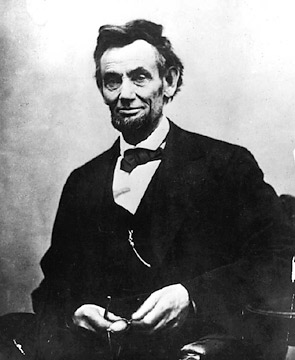 "I claim not to have controlled events, but confess plainly that events have controlled me."
The writer was President Abraham Lincoln, speaking of the cataclysmic Civil War, initiated not by Lincoln or the government he headed, but by insurgent forces who attacked a United States military installation on US soil.
Things happen over which we have no control and much of life is composed of our response to events. "If you want to make God laugh," said Father Myke, a World Trade Center hero on September 11, 2001, "tell Him what you plan to do tomorrow." This echoes wisdom found in the New Testament book of James:
Come now, you who say, “Today or tomorrow we will go to such and such a town and spend a year there, doing business and making money.” Yet you do not even know what tomorrow will bring. What is your life? For you are a mist that appears for a little while and then vanishes. Instead you ought to say, “If the Lord wishes, we will live and do this or that.” (James 4:13-15)And it isn't much different from the words of John Lennon in his song, Beautiful Boy: "Life is what happens to you, while you're busy making other plans..."
The point?
Stuff happens.
Even to presidents.
This is important to remember as the 2008 presidential campaign unfolds. In town hall meetings and debates, candidates are asked what they would do about the economy, the war in Iraq, the struggle with radical jihadists, global warming, and a whole host of other vital national and international concerns. Candidates respond with everything from sound bites to detailed programs on their web sites. And all of that's fine.
But beware! Events have a way of overtaking even presidents.
Franklin Roosevelt ran as a balanced budget conservative in his 1932 race for the presidency. But by the time he took the oath of office in March of the following year, he had come to believe that Keynesian deficit spending was necessary to give the economy a major boost. He also saw that the nation needed a major infusion of confidence and steel, assets he had in abundance as a result of his, by then, decade-long battle to overcome polio.
Because much of what happens during a presidential term of office can't be anticipated, there is something far more important to consider when deciding who will get our votes for president. In short, the characters of the people who vie for the presidency are more significant than their political philosophies or their position papers.
Character is forged in personal experience with adversity, not only in the adversity we personally experience, but also in the extent to which we're willing to stand with others in their adversity.
Often, the United States has been lucky. The presidents we've elected have largely, been unknown to us and what we have known of them has often been a public relations smoke screen.
Today, smoke screens are out there. But in this era of multiple information outlets and YouTube videos, we have a much better chance of knowing what makes our candidates for public office tick. We can get a better fix on their characters.
Hopefully, as this presidential election process continues, we will pay heed to the candidates' positions on the issues and look at their resumes. But more than anything, I hope, we'll consider their characters. It's their characters that will give us the best indication of how they might respond to the unknown events that loom in the futures of us all.
[By the way, here are links to a series I wrote that features one of Abraham Lincoln's most remarkable and laudable character traits, his capacity to change and grow:
Part 1
Part 2
Part 3
Part 4
Part 5
Part 6
Part 7]
Wednesday, January 30, 2008
First Pass at This Sunday's Bible Lessons (February 3, 2008)
[Each week, I take one or more "passes" at the Bible lessons for the succeeding Sunday. They give background information on the texts as a way of helping the people of Saint Matthew Lutheran Church in Logan, Ohio, the congregation I serve as pastor, to prepare for worship. Since we use the appointed lessons of the Revised Common Lectionary, a version of which is used by most Christians in the world, hopefully these passes will also help others.]
This Sunday's Bible Lessons:
Exodus 24:12-18
Psalm 2 or Psalm 99
2 Peter 1:16-21
Matthew 17:1-9
General Comments:
1. This Sunday brings us to the celebration of the Transfiguration of Our Lord. This event, recounted slightly differently by the Gospel writers Matthew, Mark, and Luke, is important. Like all the Gospel lessons for this Epiphany season, the Transfiguration, when Jesus' appearance blazed with the glorious light of heaven before His three closest followers, is a manifestation of Jesus' deity.
2. But the Transfiguration, which in Matthew's Gospel is recounted immediately after Jesus tells His disciples that He will die on a cross and which is ended with Jesus' insistence that He, Peter, James, and John must leave their mountaintop experience and go to the troublesome world below, is the perfect bridge between the seasons of Epiphany and Lent. Epiphany begins with magi bringing gifts for the Baby King, Jesus, and continues with celebrations of Jesus' Deity. Lent points us toward Good Friday. The Baby King, affirmed on a mountaintop by God the Father, came to earth to die for our sins. Jesus, in effect, tells the disciples--and us--that it's time to quit celebrating the revelation of Jesus as God and get on with addressing the why, what, and how of God becoming a man.
3. All the texts for this Sunday point to moments when the glory of God came to dwell among people on earth.
4. Exodus 24:12-18: Moses ascends the mountain to encounter God. There, God will give Moses stone tablets inscribed with the Ten Commandments.
But once on the mountaintop, Moses and his assistant (and eventual successor) Joshua, must wait for six days. God will not be rushed. Of course, God will listen to our prayers, even those we fire up from the shower, while driving in traffic, or doing our jobs. But, when the God of the universe has things to communicate to us, He wants our undivided attention. Far too often, as Ole Hallesby and others point out, we miss out on the blessings and guidance God wants to give to us because we fail to wait for God.
Waiting, when we have and make the time for it, allows us to "be still and know" that God really is God. It's incredibly comforting and encouraging when, in the midst of our super-busy days, we let God penetrate the clutter of our days so that He can reach us.
God made Moses take the time.
5. Moses' six-day wait also evokes memories of the first creation account in Genesis. There, we're told, God created for six days and then rested on the seventh.
6. Mountaintops, in the ancient near East, were often places where so-called theophanies took place. The word theophany refers to a God-appearing.
Mountaintops were also places on which ancient peoples built altars to worship. A scandal of Israel's life is that, after God had given His people the promised land, many of them built altars to false gods.
7. In v.14, because he and Joshua were going to the mountaintop, Moses delegates the responsibility of judging the disputes of the Israelites to Aaron and Hur.
I often received good-natured teasing from the people of my former congregation for delegating tasks to others. But it's a wise and venerable tradition. In Genesis 18, Moses' father-in-law, Jethro, after observing the time and effort Moses was investing in judging the disputes of the people, advised that if Moses didn't start delegating, he would wear himself out. When leaders delegate, they save themselves wear and tear and can address other issues.
Another advantage of delegating responsibility is that it increases the sense of ownership people have for their people, their church, their company, and their church.
Of course, those to whom we delegate responsibilities don't always discharge them well. Aaron, Moses' brother, had a sort of mixed record when Moses gave him responsibilities.
But this too, can be instructive to the leader, alerting her or him to the weaknesses of others, areas in which others may need more instruction or a little TLC, and giving the leader an understanding of the areas of giftedness and abilities of others, in turn informing the leader as to how best to employ the gifts and abilities of people.
8. The appearance of God to Moses on Mount Sinai was like a devouring fire. Too often, we Christians sentimentalize God. We read a phrase like, "God is love," taken from First John, and we turn God into some indulgent grandfather who, to paraphrase C.S. Lewis, doesn't care what we do so long as a good time is had by all.
That is not the picture of God we get from His self-disclosure in both the Old and New Testaments.
God's love isn't some syrupy banality. It's a tough commitment to what is best for us and implacable enmity to anything that isn't good for us.
And God isn't some mushy, befuddled old codger. God is a devouring fire!
To those willing to submit to Him and His authority over their lives, this fire will light our way. This fire will also purge sin from our lives, never a painless process. He will accept no rivals for absolute Lordship of our lives.
No wonder then that so often, when people have encountered God in His holiness, as happens also in the Gospel lesson for this Sunday, they quake in fear. When we see God in all His glory, we see pure goodness and it condemns us. But God has no desire to condemn us. It's why nearly as often as people quake in fear before God, He or His emissaries tell the fearful, "Do not be afraid."
The God of devouring fire is for us. Thank God!
[More on these lessons later, I hope.]
This Sunday's Bible Lessons:
Exodus 24:12-18
Psalm 2 or Psalm 99
2 Peter 1:16-21
Matthew 17:1-9
General Comments:
1. This Sunday brings us to the celebration of the Transfiguration of Our Lord. This event, recounted slightly differently by the Gospel writers Matthew, Mark, and Luke, is important. Like all the Gospel lessons for this Epiphany season, the Transfiguration, when Jesus' appearance blazed with the glorious light of heaven before His three closest followers, is a manifestation of Jesus' deity.
2. But the Transfiguration, which in Matthew's Gospel is recounted immediately after Jesus tells His disciples that He will die on a cross and which is ended with Jesus' insistence that He, Peter, James, and John must leave their mountaintop experience and go to the troublesome world below, is the perfect bridge between the seasons of Epiphany and Lent. Epiphany begins with magi bringing gifts for the Baby King, Jesus, and continues with celebrations of Jesus' Deity. Lent points us toward Good Friday. The Baby King, affirmed on a mountaintop by God the Father, came to earth to die for our sins. Jesus, in effect, tells the disciples--and us--that it's time to quit celebrating the revelation of Jesus as God and get on with addressing the why, what, and how of God becoming a man.
3. All the texts for this Sunday point to moments when the glory of God came to dwell among people on earth.
4. Exodus 24:12-18: Moses ascends the mountain to encounter God. There, God will give Moses stone tablets inscribed with the Ten Commandments.
But once on the mountaintop, Moses and his assistant (and eventual successor) Joshua, must wait for six days. God will not be rushed. Of course, God will listen to our prayers, even those we fire up from the shower, while driving in traffic, or doing our jobs. But, when the God of the universe has things to communicate to us, He wants our undivided attention. Far too often, as Ole Hallesby and others point out, we miss out on the blessings and guidance God wants to give to us because we fail to wait for God.
Waiting, when we have and make the time for it, allows us to "be still and know" that God really is God. It's incredibly comforting and encouraging when, in the midst of our super-busy days, we let God penetrate the clutter of our days so that He can reach us.
God made Moses take the time.
5. Moses' six-day wait also evokes memories of the first creation account in Genesis. There, we're told, God created for six days and then rested on the seventh.
6. Mountaintops, in the ancient near East, were often places where so-called theophanies took place. The word theophany refers to a God-appearing.
Mountaintops were also places on which ancient peoples built altars to worship. A scandal of Israel's life is that, after God had given His people the promised land, many of them built altars to false gods.
7. In v.14, because he and Joshua were going to the mountaintop, Moses delegates the responsibility of judging the disputes of the Israelites to Aaron and Hur.
I often received good-natured teasing from the people of my former congregation for delegating tasks to others. But it's a wise and venerable tradition. In Genesis 18, Moses' father-in-law, Jethro, after observing the time and effort Moses was investing in judging the disputes of the people, advised that if Moses didn't start delegating, he would wear himself out. When leaders delegate, they save themselves wear and tear and can address other issues.
Another advantage of delegating responsibility is that it increases the sense of ownership people have for their people, their church, their company, and their church.
Of course, those to whom we delegate responsibilities don't always discharge them well. Aaron, Moses' brother, had a sort of mixed record when Moses gave him responsibilities.
But this too, can be instructive to the leader, alerting her or him to the weaknesses of others, areas in which others may need more instruction or a little TLC, and giving the leader an understanding of the areas of giftedness and abilities of others, in turn informing the leader as to how best to employ the gifts and abilities of people.
8. The appearance of God to Moses on Mount Sinai was like a devouring fire. Too often, we Christians sentimentalize God. We read a phrase like, "God is love," taken from First John, and we turn God into some indulgent grandfather who, to paraphrase C.S. Lewis, doesn't care what we do so long as a good time is had by all.
That is not the picture of God we get from His self-disclosure in both the Old and New Testaments.
God's love isn't some syrupy banality. It's a tough commitment to what is best for us and implacable enmity to anything that isn't good for us.
And God isn't some mushy, befuddled old codger. God is a devouring fire!
To those willing to submit to Him and His authority over their lives, this fire will light our way. This fire will also purge sin from our lives, never a painless process. He will accept no rivals for absolute Lordship of our lives.
No wonder then that so often, when people have encountered God in His holiness, as happens also in the Gospel lesson for this Sunday, they quake in fear. When we see God in all His glory, we see pure goodness and it condemns us. But God has no desire to condemn us. It's why nearly as often as people quake in fear before God, He or His emissaries tell the fearful, "Do not be afraid."
The God of devouring fire is for us. Thank God!
[More on these lessons later, I hope.]
Tuesday, January 29, 2008
Romney Claims Business Success Prepares Him to Handle Economy...Is That True?
With John McCain and Mitt Romney in a statistical tie there, Floridians are voting in their state's presidential primary.
 Concerns about the national economy have increased in recent weeks. In the face of these concerns, Romney has been touting his supposed superior capacity to deal with economic issues because of his business background.
So far as I can recall, only three US presidents have spent major portions of their adult lives in business: Herbert Hoover and the two Bushes.

Hoover was an authentic business success. After graduating from Stanford University, Hoover was a mining engineer who made millions for his company. He had an extraordinary ability to pick the right places to mine. Eventually, he negotiated a deal with his company, getting a piece of the profit on all the successful projects he initiated and becoming a millionaire before he was thirty. Hoover then became an independent contractor, making millions more.
After that, as most people know, the native Iowan headed a major relief effort, providing food and other help to Europeans in the post-World War I-era.
Hoover was seen as a can-do guy who knew how modern economies worked.
It was maybe inevitable then that Hoover should become involved in government work. Warren Harding appointed him to be Secretary of Commerce, a post he continued to hold throughout the tenure of Harding's successor, Calvin Coolidge.
During his years at Commerce, Hoover was ubiquitous, involving himself in a broad range of domestic and foreign policy matters. He was called "Secretary of Everything."
In 1928, there was simply no question that Hoover would be the Republican nominee for president. He won in a landslide over New York Governor Al Smith. Inaugurated in March, 1929, Hoover was president a scant seven months when the stock market crash hit.
In the face of the ensuing depression, the well-meaning Miracle Man seemed incapable of perceiving, let alone responding to, the crisis. At first, he denied that a major problem existed. Then, as he slowly realized the magnitude of the nation's woes, he offered ineffectual measures. He was trounced as he sought re-election in 1932. For all his undeniable acumen as a businessperson, a catalyst for major coordinated efforts, and a management genius, acknowledged as such by both President Truman and Eisenhower, two of his successors, Hoover was utterly incompetent in dealing with economic matters.
The Bushes were the inheritors of great wealth, acquired by George H.W. Bush's grandfather. They were two examples of the family tradition, which says that its male members will go into politics, but only after securing independent wealth, a pursuit buttressed by the family's notable capacity for easily acquiring initial capitalization. George H.W. Bush was, by most accounts, quite successful in his ventures into the Texas oil industry of the 1950s. The younger George appears to have been far less so, helped to success in spite of red-inking business practices in both oil and in major league baseball.
Of course, the elder Bush lost the presidency to Bill Clinton, whose campaign mantra was, "It's the economy, stupid." George H.W. Bush seemed detached from the economic difficulties then afflicting the country.
The younger Bush takes credit for forestalling recession through the enactment of tax cuts early in his term and is even now grappling with the current downturn in the economy.
Is business success (or failure) an indicator of a potential president's ability to deal with the economy? The number of presidents who actually spent much of their adult lives in business is small. So, it's difficult to know the answer to that question. But, based on the small sampling, the answer would appear to be no.
[UPDATE: I don't want this post to be interpreted as saying that those who spend large chunks of their lives in the business world shouldn't be president. My only point was and is that history doesn't suggest an automatic acceptance of Romney's argument that because he spent time as, essentially, a capital investment banker, he knows how to "manage" the US economy.]
 Concerns about the national economy have increased in recent weeks. In the face of these concerns, Romney has been touting his supposed superior capacity to deal with economic issues because of his business background.
So far as I can recall, only three US presidents have spent major portions of their adult lives in business: Herbert Hoover and the two Bushes.
Hoover was an authentic business success. After graduating from Stanford University, Hoover was a mining engineer who made millions for his company. He had an extraordinary ability to pick the right places to mine. Eventually, he negotiated a deal with his company, getting a piece of the profit on all the successful projects he initiated and becoming a millionaire before he was thirty. Hoover then became an independent contractor, making millions more.
After that, as most people know, the native Iowan headed a major relief effort, providing food and other help to Europeans in the post-World War I-era.
Hoover was seen as a can-do guy who knew how modern economies worked.
It was maybe inevitable then that Hoover should become involved in government work. Warren Harding appointed him to be Secretary of Commerce, a post he continued to hold throughout the tenure of Harding's successor, Calvin Coolidge.
During his years at Commerce, Hoover was ubiquitous, involving himself in a broad range of domestic and foreign policy matters. He was called "Secretary of Everything."
In 1928, there was simply no question that Hoover would be the Republican nominee for president. He won in a landslide over New York Governor Al Smith. Inaugurated in March, 1929, Hoover was president a scant seven months when the stock market crash hit.
In the face of the ensuing depression, the well-meaning Miracle Man seemed incapable of perceiving, let alone responding to, the crisis. At first, he denied that a major problem existed. Then, as he slowly realized the magnitude of the nation's woes, he offered ineffectual measures. He was trounced as he sought re-election in 1932. For all his undeniable acumen as a businessperson, a catalyst for major coordinated efforts, and a management genius, acknowledged as such by both President Truman and Eisenhower, two of his successors, Hoover was utterly incompetent in dealing with economic matters.
The Bushes were the inheritors of great wealth, acquired by George H.W. Bush's grandfather. They were two examples of the family tradition, which says that its male members will go into politics, but only after securing independent wealth, a pursuit buttressed by the family's notable capacity for easily acquiring initial capitalization. George H.W. Bush was, by most accounts, quite successful in his ventures into the Texas oil industry of the 1950s. The younger George appears to have been far less so, helped to success in spite of red-inking business practices in both oil and in major league baseball.
Of course, the elder Bush lost the presidency to Bill Clinton, whose campaign mantra was, "It's the economy, stupid." George H.W. Bush seemed detached from the economic difficulties then afflicting the country.
The younger Bush takes credit for forestalling recession through the enactment of tax cuts early in his term and is even now grappling with the current downturn in the economy.
Is business success (or failure) an indicator of a potential president's ability to deal with the economy? The number of presidents who actually spent much of their adult lives in business is small. So, it's difficult to know the answer to that question. But, based on the small sampling, the answer would appear to be no.
[UPDATE: I don't want this post to be interpreted as saying that those who spend large chunks of their lives in the business world shouldn't be president. My only point was and is that history doesn't suggest an automatic acceptance of Romney's argument that because he spent time as, essentially, a capital investment banker, he knows how to "manage" the US economy.]
Sunday, January 27, 2008
Christ Lightens Our Darkness, Calls Us to Follow
 [This sermon was shared today during worship with the people of Saint Matthew Lutheran Church in Logan, Ohio.]
Matthew 4:12-23
The call came late in the afternoon on a bleak day for Ann and me. We had learned earlier that day that Ann had miscarried. I was in seminary at the time and when Ann called me with the news, I sped home to be with her. That’s when the call came. The caller was a faculty member from seminary. “I understand you’ve had some troubles,” he said. “What can I do to help?”
Other than praying for us, I told him, his call was help enough. It was a little light in our momentary darkness, a reminder of the love and care of God that reaches out to us even in dark, sad times.
We need that light always, but some times more than others.
Our first lesson for today, taken from the book of the Old Testament prophet, Isaiah, addresses a people living in darkness. Written in 733 BC, Isaiah’s homeland of Judah was all that was left of the larger land God had once given to His people. Their national life was darkened by the awful prospect of invasion from countries to their north or domination by the Assyrian Empire, the regional superpower. On top of that, their religious life was not what it could be, many of the people having wandered far from God.
It was a dark time. But Isaiah said that God was on His way, bringing light for their darkness, light that would help them to see God’s love, provision, and power, light that would help them to see their way through the darkness. He writes: “…There will be no gloom for those who were in anguish…The people who walked in darkness have seen a great light; those who lived in a land of deep darkness— on them light has shined.”
Our Gospel lesson for this morning recounts events that happened more than seven centuries after Isaiah gave his prophecy. Judah, His homeland, was, in many ways, still in darkness. The country was occupied by a foreign empire; in this era, it was the Romans. Violent puppet kings, with no legitimate claim to the crown, drawn from the Herod family, were on the throne. The people were horribly overtaxed and forced to endure all sorts of indignities. Some shortsightedly thought that the solution to their problems were political. But God had other ideas.
It’s then that Jesus began His public ministry. Our lesson tells us that Jesus did two things as He began.
First: He brought God’s long-promised light to people’s lives. He said, “Repent, for the kingdom of heaven has come near.” Of course, we’ve talked about that word “repent” before. It means more than simply being sorry for one’s sins. It also means that we’ve turned away from our sins, repudiating its power over us, and have turned back to God, asking Him to be the Lord over all our lives and our decisionmaking.
But, look at what Jesus says He’s bringing to us: the kingdom of heaven. Throughout Matthew’s Gospel, Jesus is quoted as using that phrase, kingdom of heaven. If we’re a bit lazy in our listening, we might think that Jesus is talking about a place, far-off, a sweet-by-and-by heaven. But that isn’t what Jesus means when He talks about the kingdom of heaven. Whenever anybody in His time talked about heaven in this way, they were talking about God. In Jesus, God’s kingdom comes to us. In Jesus, God Himself comes to us.
We need God come to near to us, don't we? There is power and there is comfort when we know that God is near. In the movie, The Color Purple, one character tells another, “When you walked into the room, I knew there was a God.” We long for that assurance! In Jesus Christ, the world comes to see that God isn’t content to stand far off, watching His children suffer or wallow in sin. He comes near to us!
Many of you may know the story of Corrie ten Boom, a Dutch Christian alive at the time that Nazi Germany overran her land. Because she and her family were Christians, they were horrified by the death camps to which the Nazis were sending. And so, they allowed their home to become a hiding place for Jews seeking to escape the Netherlands. They were found out and sent off to the very camps out of which they were trying to keep their Jewish neighbors. During the course of the war, incarcerated in the camps, Corrie’s father and sister and the members of her extended family all were killed. Only Corrie survived.
One of the things that sustained Corrie through that dark time was a place that she and her sister set up in a section of the camp reserved for garbage. Nobody else wanted to be there. But in the midst of the refuse and the maggots and the stench, Corrie and her sister had established a kind of sanctuary. It was there each night that they went to pray, to praise God for the forgiveness of sin and new life that belongs to all who believe in Jesus Christ. In her book, The Hiding Place, Corrie ten Boom writes that in time, that horrible garbage dump was the place she most wanted to be. It was the place where the light of God, fully revealed to the world in Jesus Christ, came to her darkened life.
Christ's light is still coming to us. About ten years ago, a friend of mine was dying. He lay for some time in a Cincinnati hospital, under the care not only of the nurses who worked there, but also of his wife, who is a nurse, and of hospice. It was, in many ways, a most remarkable scene, one that plays out in scores of hospital rooms and bed rooms every single day. But my friend and his wife were also deeply trusting followers of Jesus. For as long as my friend remained conscious, he would spend time talking with Jesus, worshiping Jesus, listening to his wife read Scripture.
In the last days of his life, employees of the hospital would ask if they could come into Sig’s room. They wanted to pay their respects, of course. But many of them said that they wanted to be in that room with him because they felt, as they never had in their lives, the very presence of Jesus. Even though Sig was dying, the place also seemed to be pulsing with the very life of Jesus. In that room, the Lord assured us that He was still the light of the world and that death is not the end of the line for those who follow Him!
As Jesus began His public ministry, He brought the light of heaven into our darkened world. He’s still doing that for those who dare to believe in Him.
But, according to our Gospel lesson, Jesus did a second thing as He began His ministry: He gave His followers a ministry.
In our lesson, Jesus approaches four fishermen—Simon Peter, Andrew, James, and John—and tells them, “Follow Me. I’m going to make you fishers of people.”
This incident is so familiar to us that we may miss what’s really going on here. We may think that to be really faithful to Jesus, we have to leave our nets, or leave our computers, or leave our desks, our trucks or assembly lines, our cash registers, classrooms or kitchens. But the fact is, although Jesus calls all Christians to spread the light of His love, to invite others to worship and follow Him, not all of us are meant to be preachers who venture far from home.
This is a good thing because, as people told me when I visited Germany a few years ago, there can sometimes be too many preachers. There, they have the saying that preachers are like manure. Spread around they do a lot of good. But too many of them brought together stinks. The fact is that God calls us to all sorts of ministries.
Several years ago, I remember reading an article in a magazine by a woman who, filled with a desire to spread the Good News that all who turn from sin and follow Jesus have everlasting life, was sure that God wanted her to become a missionary. She told her husband, who was a bit skeptical. “Honey,” he said, “in all honesty, you really haven’t made much of an effort to share the Gospel with people you know. Shouldn’t you try doing that before you take me off to Africa or Asia with you?”
He had a point, the woman realized. And so, she prayed, asking God to show her how she could share Christ with her neighbors. Then, it dawned on her. Any time a new family moved into her neighborhood, she would bake bread for them and welcome them. That’s it. In time, she became “the bread lady.” The new neighbors would call the bread lady to ask about good mechanics, reliable doctors, and so forth. But they also talked with her about other things and in the course of her conversations with these neighbors who became friends, she was also able to share the light of Christ and invite them to worship with her.
And we are never too old for doing our ministries. At a conference I attended a few years ago, the speaker talked about how her daughter, who was going through a terrible divorce after her husband had left her, one day got a strange phone call. "Mrs. Smith," the elderly woman said, "I was wondering: Do you love Jesus?" "Yes," Mrs. Smith, the conference speaker said, "I do love Jesus. But I sometimes wonder if he's abandoned me. I still love Jesus, though." "I'm glad to hear that," the woman responded. "I don't often get that answer."
Now, Mrs. Smith was curious. "Who are you?" she asked her caller. The woman explained that she was an elderly widow, losing her eyesight. Saddened over the deaths of so many of her friends and frustrated with her more limited physical abilities, one day this woman had poured out her heart to God. "What good am I?" she asked the Lord. "What can I do but sit around and wait to die?" The answer popped into her head in the form of two words: telephone and Jesus.
She priced a special line for telephones and learned that for a certain budgeted amount, she could make so many calls a month. She had the phone installed, pulled out the phone book, and started with the A's.
Making calls every day, over the course of several years, that elderly woman who thought that she was no good to God or anybody else, gently called hundreds of people to faith in Jesus Christ!
Now, that may not be our style as Lutherans. But the lesson is clear: Jesus, the Light of the world, calls all of us to fish for people, to serve God and neighbor. We may not even have to leave our living rooms to follow!
Jesus began His ministry, declaring that He had brought the light of heaven to our darkened world and calling four people to become fishers of people.
You and I who are privileged to be part of Christ’s Church today are a band of sisters and brothers with a message and a ministry. The message: Jesus is the light of the world. The ministry: To share Jesus in whatever ways we can.
May God empower us and bless us as we bear the light of Christ into every dark place we encounter.
Friday, January 25, 2008
One and Only Pass at This Sunday's Bible Lessons (January 27, 2008)
[To help the people of Saint Matthew Lutheran Church in Logan, Ohio, where I'm the pastor, I present these "passes" on the appointed lessons for the succeeding Sunday. Because we use lessons drawn from the Revised Common Lectionary, I hope that other Christians using the same texts each weekend, will find them helpful as well.]
The Bible Lessons:
Isaiah 9:1-4
Psalm 27:1, 4-9
1 Corinthians 1:10-18
Matthew 4:12-23
General Comments:
1. As we come to the second to last Sunday of the Epiphany season, the lessons for this Sunday deal with common Epiphany themes: the light of God, revealing His character and purposes; sharing the saving Good News of Jesus Christ; and God's desire for all people to follow Christ and be saved from sin and death.
2. These themes will be drawn together completely next week, when we celebrate the Transfiguration of Our Lord, just before the start of the Lenten season on February 3.
A Few Comments on the Texts:
1. Isaiah 9:1-4: Few would dispute that this passage was composed in about 733BC by the original Isaiah. It was a frightening time for God's people, Judah, the southern kingdom, all that remained of greater Israel, the rest of which had already been conquered.
Isaiah pictures it as a dark time when the people of God looked for the light of hope. Northern neighbors threatened their nation. King Ahaz considered forming an alliance with the Assyrian Empire in order to get the help needed to fight off the probable invaders. But that too, was a course fraught with danger, both for Ahaz and for his country.
2. Isaiah foresees a ray of hope. He says that God will deliver Judah. He conveys this prophecy of hope in a poem which extends beyond our appointed lesson to include Isaiah 9:5-7:
3. In verse 1, we're told that the awaited king will come from "Galilee of the nations." This, of course, refers to the region near the Sea of Galilee. Although part of Judah--also sometimes called Judea, many of God's people regarded the people from this area suspiciously and disdainfully.
That's because the region was also home to many non-Jews. The term for non-Jews was Gentiles, ethnoi in the original Greek of the New Testament. It means "the nations."
The jarring prophecy from Isaiah then, is that Judah's great deliverer would come from a suspect region of Judah. And in fact, there were Gentiles and numerous other suspicious characters on the family trees of Jesus' earthly parents, Mary and Joseph.
The area where Jesus would grow up some seven-hundred years after Isaiah wrote the words of our first lesson, was far more cosmopolitan than other parts of Judah. Those in the fishing trade would have, by necessity, been conversant in several languages. So would the people of tiny Nazareth, which was located not far from major trade routes linking the East with Africa and southern Europe.
4. Psalm 27:1, 4-9: The light motif is seen in this lesson, too. We who live in the First World, where we take electric light so for granted, sometimes forget how dark the darkness can be. It also causes us to forget how brilliantly illuminating the light of Sun, stars, and Moon can be. If you've ever been without light in a remote area, you know both how frightening darkness can be and how welcome the light is.
For people in the ancient world, darkness was foreboding. This is why people preferred to be in the safe confines of walled cities at night.
But the psalmist says that there is brighter light and a firmer stronghold that we can have: God Himself.
Like Paul in the New Testament, David would say, "If God is for us, who is against us?" (Romans 8:31)
These aren't triumphal, self-aggrandizing declarations that David is making. Instead, they're the statements of a grateful, undeserving sinner thankful for the amazing grace of God!
5. 1 Corinthians 1:10-18: As I mentioned in the pass at last week's lessons, there were tons of problems in the church that existed in the first-century Greek city of Corinth. Here, the first century preacher and evangelist Paul, who started the church, deals with one of the problems: factionalism. As Paul writes in verse 12:
Many divided churches can trace their fractured lives to the ungodly penchant for memorializing Christians rather than following the living Christ. Paul would have none of that! Even if one of those the Corinthian Christians memorialized was him.
6. One of the things I always smile over in this text is the passage in which Paul wrestles to remember who he did and didn't baptize:
7. Paul concludes with a simple, true observation:
8. Matthew 4:12-23: After being tempted in the wilderness by the devil and after the arrest of John the Baptist, Jesus begins His public ministry. On hearing of John's arrest, Jesus goes to the very Galilean region Isaiah mentioned in our first lesson. But Jesus doesn't go to Nazareth. Instead, He settles in Capernaum. Some suggest that Jesus did this because it would have been easier to escape from the authorities who had just arrested John--who had, after all, proclaimed Jesus to be the Messiah--from Capernaum than it would have been from Nazareth.
The editors of The Life Application Bible suggest other possible reasons for Jesus' move:
9. Whatever the reasons for Jesus' move, Matthew cites Isaiah 9:1-2 and points out that Jesus did, in fact, come from "Galilee of the nations."
10. In v. 17, we see the basic message which Jesus proclaimed, the same message which John the Baptist, the one charged with preparing the way for Jesus, had proclaimed:
12. In speaking of fishing for people, Jesus was employing imagery familiar to Simon and Andrew. Part of what we see in God coming to earth and being one of us in the person of Jesus is God's commitment to making Himself accessible to us. Jesus often used words, images, and stories that His listeners could readily identify with and understand.
The Bible Lessons:
Isaiah 9:1-4
Psalm 27:1, 4-9
1 Corinthians 1:10-18
Matthew 4:12-23
General Comments:
1. As we come to the second to last Sunday of the Epiphany season, the lessons for this Sunday deal with common Epiphany themes: the light of God, revealing His character and purposes; sharing the saving Good News of Jesus Christ; and God's desire for all people to follow Christ and be saved from sin and death.
2. These themes will be drawn together completely next week, when we celebrate the Transfiguration of Our Lord, just before the start of the Lenten season on February 3.
A Few Comments on the Texts:
1. Isaiah 9:1-4: Few would dispute that this passage was composed in about 733BC by the original Isaiah. It was a frightening time for God's people, Judah, the southern kingdom, all that remained of greater Israel, the rest of which had already been conquered.
Isaiah pictures it as a dark time when the people of God looked for the light of hope. Northern neighbors threatened their nation. King Ahaz considered forming an alliance with the Assyrian Empire in order to get the help needed to fight off the probable invaders. But that too, was a course fraught with danger, both for Ahaz and for his country.
2. Isaiah foresees a ray of hope. He says that God will deliver Judah. He conveys this prophecy of hope in a poem which extends beyond our appointed lesson to include Isaiah 9:5-7:
For all the boots of the tramping warriors and all the garments rolled in blood shall be burned as fuel for the fire. For a child has been born for us, a son given to us; authority rests upon his shoulders; and he is named Wonderful Counselor, Mighty God, Everlasting Father, Prince of Peace. His authority shall grow continually, and there shall be endless peace for the throne of David and his kingdom. He will establish and uphold it with justice and with righteousness from this time onward and forevermore. The zeal of the Lord of hosts will do this.Most scholars today tell us that these words most immediately referred to a king who would stand up to potential invaders and be the channel through whom God's deliverance would come to His people. But many others would insist that the words also apply to a future king, Jesus.
3. In verse 1, we're told that the awaited king will come from "Galilee of the nations." This, of course, refers to the region near the Sea of Galilee. Although part of Judah--also sometimes called Judea, many of God's people regarded the people from this area suspiciously and disdainfully.
That's because the region was also home to many non-Jews. The term for non-Jews was Gentiles, ethnoi in the original Greek of the New Testament. It means "the nations."
The jarring prophecy from Isaiah then, is that Judah's great deliverer would come from a suspect region of Judah. And in fact, there were Gentiles and numerous other suspicious characters on the family trees of Jesus' earthly parents, Mary and Joseph.
The area where Jesus would grow up some seven-hundred years after Isaiah wrote the words of our first lesson, was far more cosmopolitan than other parts of Judah. Those in the fishing trade would have, by necessity, been conversant in several languages. So would the people of tiny Nazareth, which was located not far from major trade routes linking the East with Africa and southern Europe.
4. Psalm 27:1, 4-9: The light motif is seen in this lesson, too. We who live in the First World, where we take electric light so for granted, sometimes forget how dark the darkness can be. It also causes us to forget how brilliantly illuminating the light of Sun, stars, and Moon can be. If you've ever been without light in a remote area, you know both how frightening darkness can be and how welcome the light is.
For people in the ancient world, darkness was foreboding. This is why people preferred to be in the safe confines of walled cities at night.
But the psalmist says that there is brighter light and a firmer stronghold that we can have: God Himself.
Like Paul in the New Testament, David would say, "If God is for us, who is against us?" (Romans 8:31)
These aren't triumphal, self-aggrandizing declarations that David is making. Instead, they're the statements of a grateful, undeserving sinner thankful for the amazing grace of God!
5. 1 Corinthians 1:10-18: As I mentioned in the pass at last week's lessons, there were tons of problems in the church that existed in the first-century Greek city of Corinth. Here, the first century preacher and evangelist Paul, who started the church, deals with one of the problems: factionalism. As Paul writes in verse 12:
...each of you says, “I belong to Paul,” or “I belong to Apollos,” or “I belong to Cephas,” or “I belong to Christ. [Cephas is the Latin version of the name, Petros, Peter]But Paul condemns that sort of thinking. Neither Apollos, Cephas, nor Paul was the sinless king who died on a cross for them. That was Jesus!
Many divided churches can trace their fractured lives to the ungodly penchant for memorializing Christians rather than following the living Christ. Paul would have none of that! Even if one of those the Corinthian Christians memorialized was him.
6. One of the things I always smile over in this text is the passage in which Paul wrestles to remember who he did and didn't baptize:
I thank God that I baptized none of you except Crispus and Gaius, so that no one can say that you were baptized in my name. (I did baptize also the household of Stephanas; beyond that, I do not know whether I baptized anyone else.) (1 Corinthians 1:14-16)Apparently, Paul wasn't keeping score (or maintaining very good parish records). He was just doing his job, which he describes in verse 17:
For Christ did not send me to baptize but to proclaim the gospel, and not with eloquent wisdom, so that the cross of Christ might not be emptied of its power.Of course, my call as a pastor is different from Paul's; I'm called to preach the Gospel (the Good News of new and everlasting life that comes to all who turn from sin and follow Jesus Christ) and to baptize. (And to keep records, I guess.)
7. Paul concludes with a simple, true observation:
For the message about the cross is foolishness to those who are perishing, but to us who are being saved it is the power of God. (1 Corinthians 1:18)When I was an atheist, the Gospel seemed ridiculous. But when I allowed myself to trust Jesus, it became the power that changed and is changing my life forever. (Romans 1:16-17)
8. Matthew 4:12-23: After being tempted in the wilderness by the devil and after the arrest of John the Baptist, Jesus begins His public ministry. On hearing of John's arrest, Jesus goes to the very Galilean region Isaiah mentioned in our first lesson. But Jesus doesn't go to Nazareth. Instead, He settles in Capernaum. Some suggest that Jesus did this because it would have been easier to escape from the authorities who had just arrested John--who had, after all, proclaimed Jesus to be the Messiah--from Capernaum than it would have been from Nazareth.
The editors of The Life Application Bible suggest other possible reasons for Jesus' move:
He probably moved (1) to get away from intense opposition in Nazareth, (2) to have an impact on the greatest number of people (Capernaum was a busy city and Jesus' message could reach more people and spread more quickly), and (3) to utilize extra resources and support for his ministry.It's possible that people are overthinking Jesus' motives here. Capernaum was just twenty miles from Nazareth. According to Luke's Gospel, Nazareth had repudiated Jesus and His claims of being the Messiah. Jesus would later counsel His disciples to make attempts to share the Good News and the call to repentance wherever they went, but also not to waste time or energy in places they weren't wanted:
If anyone will not welcome you or listen to your words, shake off the dust from your feet as you leave that house or town. (Matthew 10:14)Jesus may have done this in Nazareth and simply settled in the hometown of some Galilean fishermen who had received His message gladly: Simon Peter, Andrew, James, and John. This too, conforms to the counsel Jesus would give to His disciples:
Whatever town or village you enter, find out who in it is worthy, and stay there until you leave. (Matthew 10:11)Many believe that Jesus lived in the home of Peter, when He wasn't traveling, throughout His ministry years.
9. Whatever the reasons for Jesus' move, Matthew cites Isaiah 9:1-2 and points out that Jesus did, in fact, come from "Galilee of the nations."
10. In v. 17, we see the basic message which Jesus proclaimed, the same message which John the Baptist, the one charged with preparing the way for Jesus, had proclaimed:
"Repent [that is turn from sin and to God], for the kingdom of heaven has come near."11. Our Gospel lesson from John last week would suggest that the encounter between Jesus and the brothers Simon Peter and Andrew in Matthew 4:18 isn't their first meeting. But this doesn't make the brothers' quick acquiescence to Jesus' call to follow any less remarkable. We are to call whenever our Lord calls us, but not many of us will be called to leave our home areas. We can follow Jesus' call and stay in the places we've lived our whole lives.
12. In speaking of fishing for people, Jesus was employing imagery familiar to Simon and Andrew. Part of what we see in God coming to earth and being one of us in the person of Jesus is God's commitment to making Himself accessible to us. Jesus often used words, images, and stories that His listeners could readily identify with and understand.
Thursday, January 24, 2008
Who Would McCain, Romney, or Huckabee Pick for Vice President? (Part 1)
 Unless Rudy Giuliani pulls off a Florida surprise in next Tuesday's primary, there are now three Republicans with some chance of winning their party's presidential nomination: John McCain, Mitt Romney, and Mike Huckabee. Recently, I speculated on who might be the vice presidential running mates of Hillary Clinton or Barack Obama in the event that one of them becomes the Democratic nominee for president. But what about the remaining Republican contenders?
Each would have their own particular needs when it came to selecting running mates. In this post, I want to address what and who McCain will likely need in a running mate.
McCain should, by all rights, be the clear frontrunner, given the usual orderly succession of Republican presidential politics. That he isn't results in part, from the fact that neoconservatism, with its advocacy of Wilsonian intervention in foreign affairs, has at least temporarily changed the definition of conservatism. Additionally, on at least two major issues--immigration reform and campaign financing--McCain has departed from conservatism. Some will also mention his opposition to President Bush's 2002 tax cuts. Others will excoriate his participation in the Gang of Fourteen, ignoring how the compromise struck by those US Senators in 2005, made it possible for the President's conservative nominees for the US Supreme Court to be confirmed without controversy.
Be that as it may, McCain, an orthodox Goldwater-Reagan conservative who is an advocate of strong national defense, restrained government spending, Second Amendment rights, and an end to abortion, doesn't have the luxury that Ronald Reagan had in selecting running mates in 1976 and 1980.
Reagan, of course, didn't get the nomination in his 1976 challenge to Presdent Gerald Ford. But he came close partly because he made a daring and unprecedented announcement that if were nominated, his running mate would be moderately liberal Republican Senator Richard Schweiker. Reagan's conservative backers forgave him for this shrewd maneuver and moderately conservative to liberal Republicans gave Reagan a closer look, assured that he wasn't the right wing cromagnon they'd assumed he was. The ploy almost worked.
In 1980, Reagan announced to an electrified Republican convention immediatelty after he was nominated, on the night before he officially accepted the nomination, that his chief rival in the run-up to the convention, George H.W. Bush, had agreed to be his running mate. Before the elder Bush tapped the late strategist Lee Atwater to change his image to that of conservative fire-eater, he was regarded as a moderate to liberal wimp. Conservatives didn't much care for him. But Bush's frequent appearances on The Dick Cavett Show, especially when he was ambassador to the United Nations, would, Reagan undoubtedly reasoned, reassure moderates in the general electorate that he could be trusted in the White House.
Because McCain doesn't enjoy the trust of his fellow conservative Republicans, he will be forced to select an authentic, card-carrying conservative to be his vice presidential running mate. This will assuage the concerns of the Limbaugh wing of the party. But it will do him little good among a general electorate inclined to throw the Republicans in the Potomac because of the Bush war in Iraq and fears over the economy.
At present, Mike Huckabee, even though the neocon national security crowd and Wall Street conservatives made squeamish over his economic populism don't much care for him, would seem the likeliest running mate for McCain. (And vice versa.) The two seem to genuinely admire one another and each represent not only different elements of the Republican base, but also different important segments of the general electorate.
But one has the feeling that Democrats would relish having Huckabee on the ticket. His religious pronouncements are easy to misconstrue, for one thing. He probably also wouldn't soothe those Wall Street conservatives.
Whoever the seventy-one year old McCain chooses will have to be at least fifteen years his junior, which is to say someone in his or her fifties or younger. A governor or former governor would be good as well, offsetting concerns that McCain has spent too many years in Washington and has had no executive experience in politics.
A dash of drama for a ticket that would be entering the fall campaign as pronounced underdogs would also be helpful to McCain. Possibly the most interesting thing that McCain could do is announce that his running mate is a woman. And the Republicans may have a far larger stable of women qualified for the presidency and vice presidency than the Democrats have. But every potential running mate that McCain might consider must, for one reason or another, be dismissed: Elizabeth Dole and Kay Bailey Hutchinson are, like McCain, senators, the latter having sometimes been beclouded by ethical questions; Olympia Snow and Susan Collins, are both senators and more liberal than McCain needs to please critical neocons; and, maybe the woman most qualified to be President of the United States, former New Jersey governor and federal EPA administrator Christine Todd Whitman is also deemed too liberal.
McCain may tell the neocons where to get off and instead, gambling that upset conservatives are unlikely to vote for the Democratic ticket, pick someone completely off everybody's radar.
Or, he may roll the dice and select Joe Lieberman as his running mate. The 2000 Democratic nominee for vice president ostracized by the Move-On-wing of his party, forced to run as an independent in his most recent re-election bid in Connecticut, is currently campaigning for McCain anyway.
A McCain-Lieberman ticket would appeal to an electorate hungry for elected officials less vociferous in their partisanship and more oriented to seeking and implementing practical solutions to public policy needs. In Lieberman, McCain would have a running mate with proven vote-getting abilities in the northeast, a section of the country which Republicans have had to nearly write off in recent years.
Granted, Lieberman is more liberal than some of the potential Republican Veep candidates I've passed over above. But Lieberman's firm pro-Iraq War stance has made him an acceptable liberal to many conservative Republicans.
I'll examine Huckabee's and Romney's vice presidential imperatives in a post or two early next week.
"Socrates was a Lutheran Pastor"
That's the title of this post in which my son, Philip, discusses his decision-making process regarding going to seminary to prepare for becoming a pastor.
Wednesday, January 23, 2008
What is Love?
My son tackles that important topic in a post over on his blog. A sampling:
When we love someone we are now faced with the truly terrifying fact that we are performing the very act that God Himself performed at the beginning of the age and then at the turning point of history. It was from love that God acted out and created His joy. And when we are allowed to love, we feel like a child who is being allowed to drive His father's car for the first time; intimidated but exhilarated at the same time. It is this and a hundred more things that make love worthwhile. That is what love truly is.Read the whole thing!
Subscribe to:
Posts (Atom)